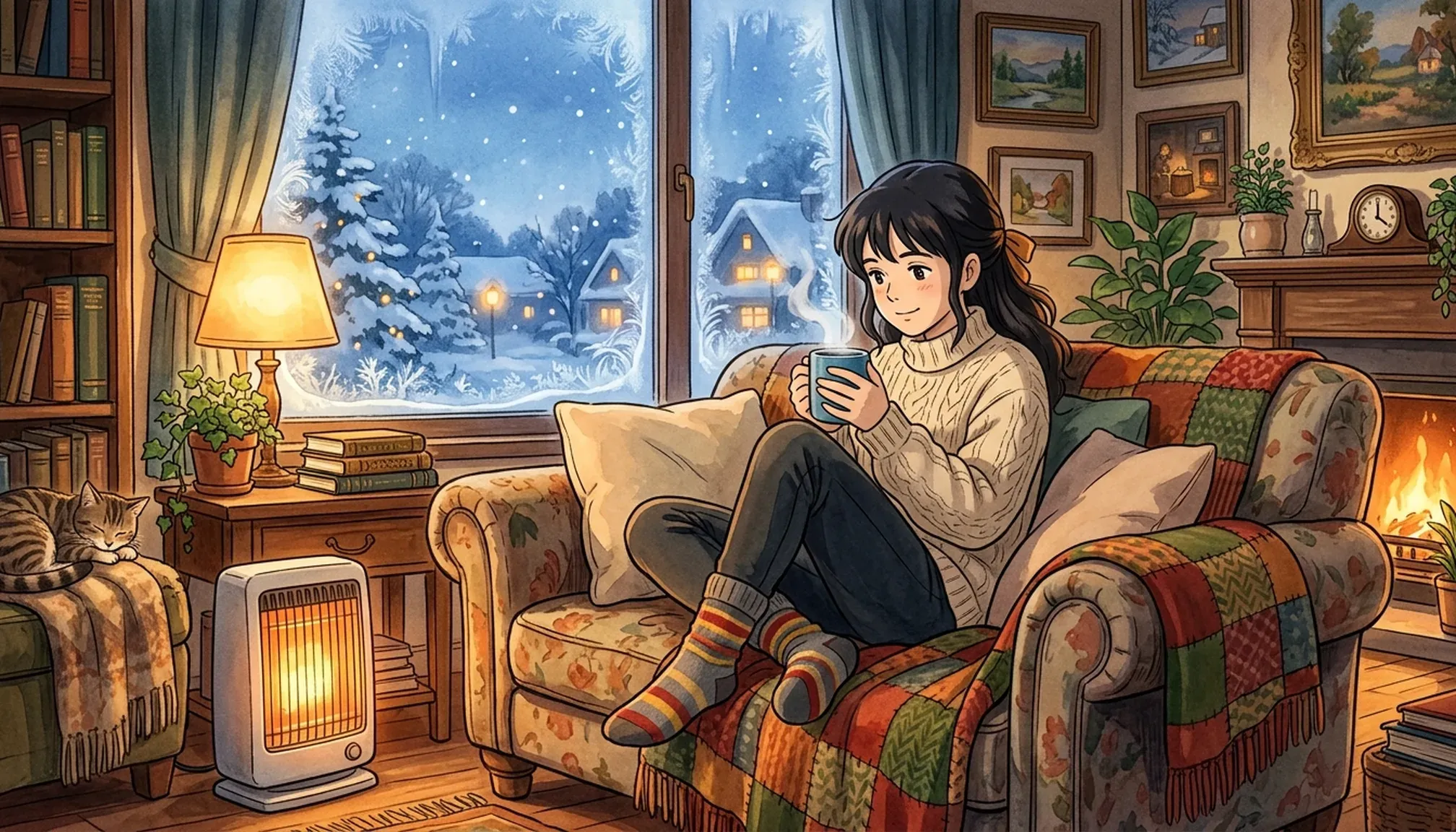
When the coldest, darkest days of the year arrive, many people feel their body asking for something different: more rest, warm food, and constant layers. Traditional Chinese Medicine (TCM) has been observing exactly this for thousands of years. In this tradition, winter self-care is not a luxury but an essential part of living in harmony with nature. In this article, we explain in plain language why winter is a time for turning inward, how to protect your body from the cold, and how techniques like acupuncture and moxibustion can support you during the coldest season.
What Does Chinese Medicine Say About Winter?
In Chinese medicine, health means living in accordance with the cycles of nature. Winter is the season of withdrawal: the energy of living things draws inward, just as trees drop their leaves and store their sap in the root. For humans, this means winter is not the time to consume, rush around, and burn through energy without restraint, but to save your strength for the rebirth of spring.
If we keep up the hectic pace of other seasons in winter, with too little sleep, skipped warm meals, and exposure to the cold, the body suffers. It is very common to feel more tired, with a stiff neck, a tense back, cold hands, or a greater tendency to catch colds. According to TCM, these symptoms have a lot to do with Cold settling into the body and energy circulating with difficulty.
The good news is that with a few simple habits you can support your body through this season and arrive at spring with more balance.
Turn Inward: Winter Rest
Sleep More, Without Guilt
In winter, nights are long and days are short. Chinese medicine suggests the opposite of our modern rhythm: go to bed earlier and spend your mornings at an unhurried pace. Trying to go to bed a little earlier than usual and getting up when there is still enough daylight helps the body recover and hold on to its warmth.
You don't need to sleep extra hours: it is enough to keep to your schedule, avoid screens right before bed, and create a warm, dark environment in your bedroom. Adequate rest is the first health measure TCM recommends in this season.
Slow Down
If you can, set aside your most demanding projects for these months and prioritize what is essential. This doesn't mean being inactive, but choosing gentle activities: midmorning walks, yoga, tai chi, stretching at home. Moving in winter is important to keep circulation flowing, but always in moderation and dressed warmly.
Protect Your Neck and Lower Back
Cold slips in through specific areas of the body that Chinese medicine considers especially vulnerable. Two are key in winter:
The neck and shoulders. Going outside with your neck uncovered in the middle of winter is one of the most common causes of tension and discomfort. A scarf, although it may seem like a minor detail, acts as a very effective protective barrier.
The lower back and abdomen. Keeping this area covered helps retain body heat. At home, you can drape a light blanket over your lower back while you work, and outdoors, wear clothing that covers your back and kidney area well.
It is also a good idea to avoid damp clothing for long periods: after a shower or exercise, dry off thoroughly and change right away. According to TCM, the combination of cold and dampness is one of the factors that takes the greatest toll on the body.
Warm Food and Seasonal Cooking
Cook Warm Meals for Cold Days
In winter, our appetite calls for stews, creamy soups, broths, and soups, and that is no coincidence. Chinese medicine recommends food that is cooked and served hot in this season, because the body spends less energy digesting it and it brings warmth from within.
Some simple ideas:
Soups and puréed soups made with seasonal vegetables (pumpkin, carrot, parsnip, leek, radish).
Stews with legumes, vegetables, and a little meat or fish.
Warm whole grains at breakfast and dinner.
Warm teas and herbal infusions throughout the day, instead of very cold drinks.
Mild spices such as ginger, cinnamon, or black pepper in small amounts, which add warmth and aid digestion.
Avoid Cold Excesses
Cutting back in winter on cold salads, very cold dairy, ice cream, and iced drinks is classic TCM advice. It isn't about forbidding anything, but about adjusting amounts: if you eat something cold, pair it with warm, cooked food. Listen to your body: it usually tells you quite clearly what it needs in each season.
Bundle Up, Inside and Out
Dressing in layers is the most practical strategy: a base layer that wicks away moisture, a middle layer that holds in heat (wool, for example), and an outer layer that shields you from wind and rain. Your hands, feet, ears, and head also need attention: the extremities get cold easily and lose heat quickly.
Keep in mind, too, sudden changes in temperature: going from a very warm house out into the freezing street is a strain on the body. Keeping your home at a moderate temperature, avoiding very intense air conditioning, and airing out the house first thing in the morning help your body adapt better.
Acupuncture and Moxibustion: Support in the Coldest Season
How Can Acupuncture Help in Winter?
Acupuncture involves inserting very fine needles into specific points on the body to support balance and the circulation of energy. The World Health Organization recognizes acupuncture as part of traditional medicine, and research into its possible applications is ongoing.
In winter, many people come in for acupuncture sessions to address common symptoms of the season: a persistent feeling of cold, tension in the neck and back, fatigue, or trouble sleeping. From the TCM perspective, cold makes circulation flow less freely, and acupuncture can help relax the muscles and promote a general sense of well-being.
Moxibustion: Warmth That Feels Good
Moxibustion, also known as moxa, is another traditional technique that involves applying gentle heat to areas of the body by burning dried mugwort. The warmth of moxa is especially appreciated in winter, because it offers a warm, relaxing sensation that, according to tradition, helps counteract the effect of the cold outdoors.
Many people describe it as a comforting relief on cold or tense areas of the body. Like acupuncture, it should always be performed by a trained, accredited professional.
A Complement, Never a Substitute
It is important to be clear: Traditional Chinese Medicine is a complement that can support your well-being, but it never replaces the diagnosis and treatment of your doctor. If you have persistent symptoms, intense pain, or any health problem that worries you, see a health professional first.
A Winter Routine at Home: A Practical Summary
To wrap up, here is a short list of ten winter self-care habits according to Chinese medicine:
Go to bed a little earlier and take care of your rest.
Always dress warmly when you go out, paying special attention to your neck and lower back.
Prioritize food that is cooked and served hot.
Drink warm beverages throughout the day.
Keep up gentle, regular physical activity, without overdoing it.
Slow down and conserve energy: winter is for saving your strength.
Avoid damp clothing and sudden changes in temperature.
Don't neglect your hands and feet: wear gloves and warm socks.
Consider acupuncture or moxibustion as support, always with qualified professionals.
If symptoms persist or get worse, see your doctor.
Frequently asked questions
Why do I catch colds more easily in winter?
Cold and changes in temperature demand more effort from the body to stay in balance. From the perspective of Chinese medicine, exposing your neck and back to cold or wind makes discomfort more likely. Dressing warmly, eating warm food, and resting well are simple preventive measures.
What can I eat in winter according to Chinese medicine?
Soups, creamy soups, stews, and broths, cooked seasonal vegetables, legumes, whole grains, and warm beverages. The general idea is to prioritize food that is cooked and hot, and to cut back on excesses of very cold foods and drinks.
Can I do moxa at home?
Moxibustion should always be applied with professional judgment: it works with heat, and there is a risk of burns if the technique isn't mastered. See an accredited professional and don't improvise at home.
Does acupuncture hurt?
Acupuncture needles are very thin, much thinner than those used for a blood test. Most people describe the sensation as a slight tingling, heaviness, or local warmth, not as pain. If you feel discomfort at any point, the practitioner will adjust the treatment.
Does Chinese medicine replace my doctor?
No. Traditional Chinese Medicine is a complement to caring for your health and never a substitute for conventional medicine. If you have severe or persistent symptoms, or any that worry you, see your doctor or your usual health care provider.
Take Care of Your Winter With Balance
Winter is not an enemy to be fought, but a season that invites you to take care of yourself differently: rest, eat with warmth, protect your body, and slow down. If you would like to go deeper into these habits or find out whether acupuncture or moxibustion can support you this season, the best course is to see a qualified, accredited professional who can evaluate your situation individually.