If you're like so many people, you've probably spent years trying creams, cleansers, and skincare routines, and yet the acne keeps coming back, especially during stressful periods, hormonal changes, or stretches of careless eating. Traditional Chinese Medicine (TCM) looks at acne very differently from the usual approach: it doesn't see it only as a skin problem, but as a reflection of something happening inside the body. In this article we explain, in plain language, why TCM believes pimples appear, which eating and lifestyle habits may be making your skin worse, and how acupuncture and other Chinese medicine treatments can help you manage acne as a complement to conventional dermatology.
Why doesn't Traditional Chinese Medicine see acne as just a skin problem?
From the standpoint of conventional medicine, acne is linked to pores clogged by excess oil, the presence of bacteria, and inflammation. TCM doesn't contradict this, but it adds a question it considers essential: why do some people produce that excess oil and inflammation while others don't?
The answer from Chinese medicine is that the skin is like a shop window onto what's happening inside. When the body works in harmony, the skin stays clear and balanced. When there are internal imbalances, the body tries to "push out" that excess through the surface, and one of the exits is precisely the skin of the face, back, or chest. That's why TCM doesn't treat only the pimple that has already appeared; it looks to understand and correct what is producing it.
What is "internal Heat" and how is it related to acne?
One of the key concepts in Traditional Chinese Medicine is internal Heat. To understand it, imagine your body as a boiler: some processes generate heat naturally (digesting, moving, thinking), and there are mechanisms that regulate it. When that heat builds up too much, or when the body's ability to cool down and rebalance weakens, you get what TCM calls internal Heat.
This excess Heat tends to "rise" toward the upper part of the body and inflame the tissues. In visible terms, it shows up as symptoms such as:
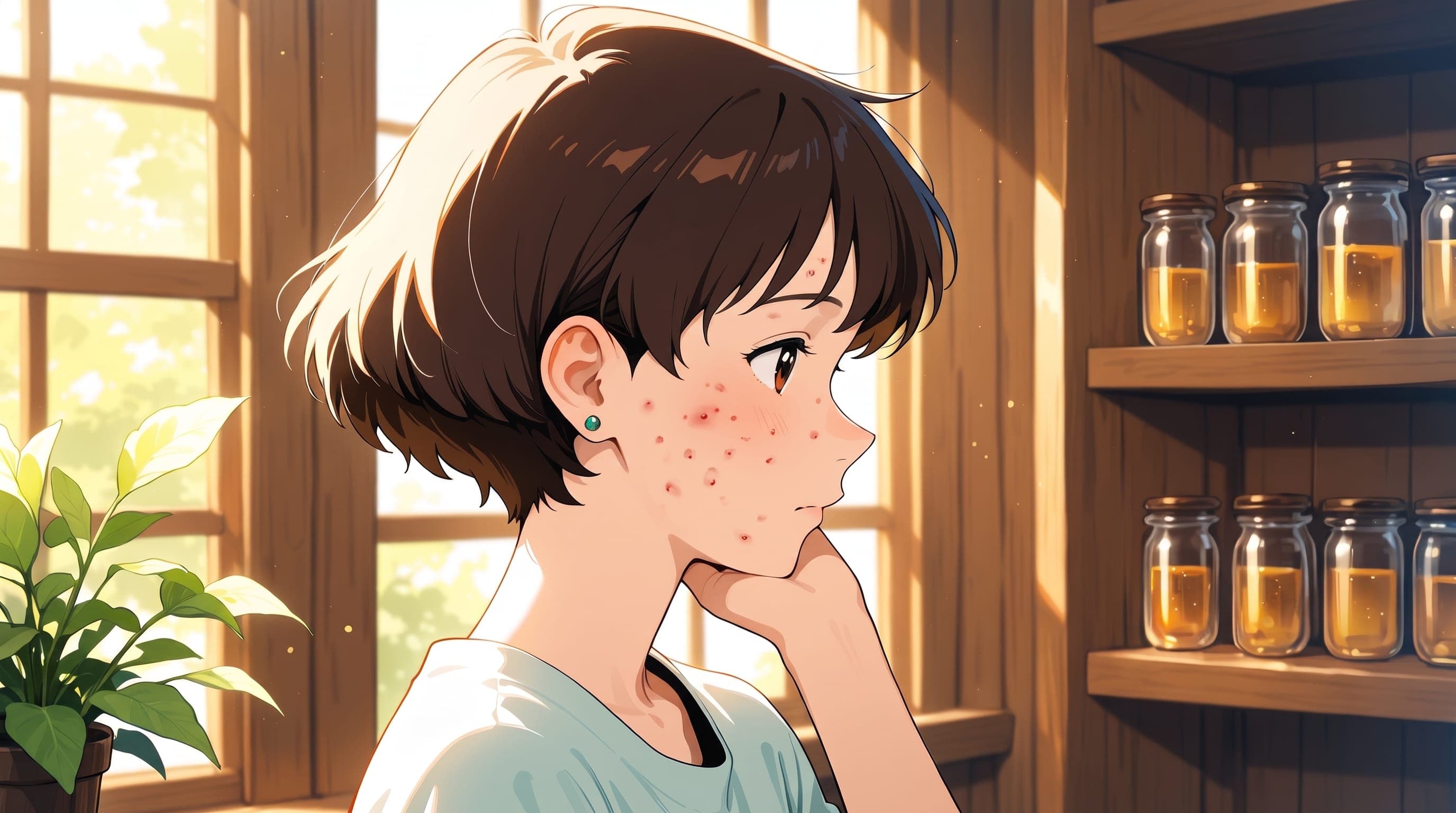
Red, inflamed, or pus-filled pimples
Redness and a sensation of hot skin
Thirst, dry mouth, or bad breath
Scabs that leave dark marks as they heal
A tendency to sweat or have hot flashes
The idea is simple: where there's Heat, there's inflammation, and where there's inflammation, the skin reacts. Inflammatory acne (those red, painful little bumps) is, from the TCM perspective, the classic expression of internal Heat.
What role do "Dampness" and oiliness play in breakouts?
Another important concept is internal Dampness. In TCM, Dampness refers to a kind of "liquid heaviness" that builds up when the body doesn't process fluids well. Think of it as waterlogged ground: nothing flows easily, and everything becomes dense and sticky.
When Dampness combines with Heat (what TCM describes as "Damp-Heat"), the result is a perfect environment for pimples: oily skin, clogged pores, blackheads, cysts, or deep bumps that take a long time to go away. It's the kind of skin that always seems to "sweat oil," that turns shiny by midmorning even after you've washed it, and where marks take months to fade.
In Chinese medicine, internal Dampness is usually associated with a digestion that's working too hard. When the digestive system is weak or overloaded, food isn't transformed properly and waste builds up that the body can't clear quickly. That excess ends up showing on the skin.
Does diet affect acne according to Chinese medicine?
Yes, and a lot. TCM holds that certain foods "feed" internal Heat and Dampness, and that cutting back on them can make a real difference to your skin. This isn't about permanent bans, but about observing how your body reacts:
Very greasy and fried foods: they add Heat and make digestion harder.
Too much dairy: TCM considers it a generator of internal Dampness, and some modern studies are also exploring its possible link to acne.
Refined sugars and sweets: they feed Heat and can worsen inflammation.
Very spicy foods and alcohol: they raise internal Heat directly, especially in people prone to hot flashes or redness.
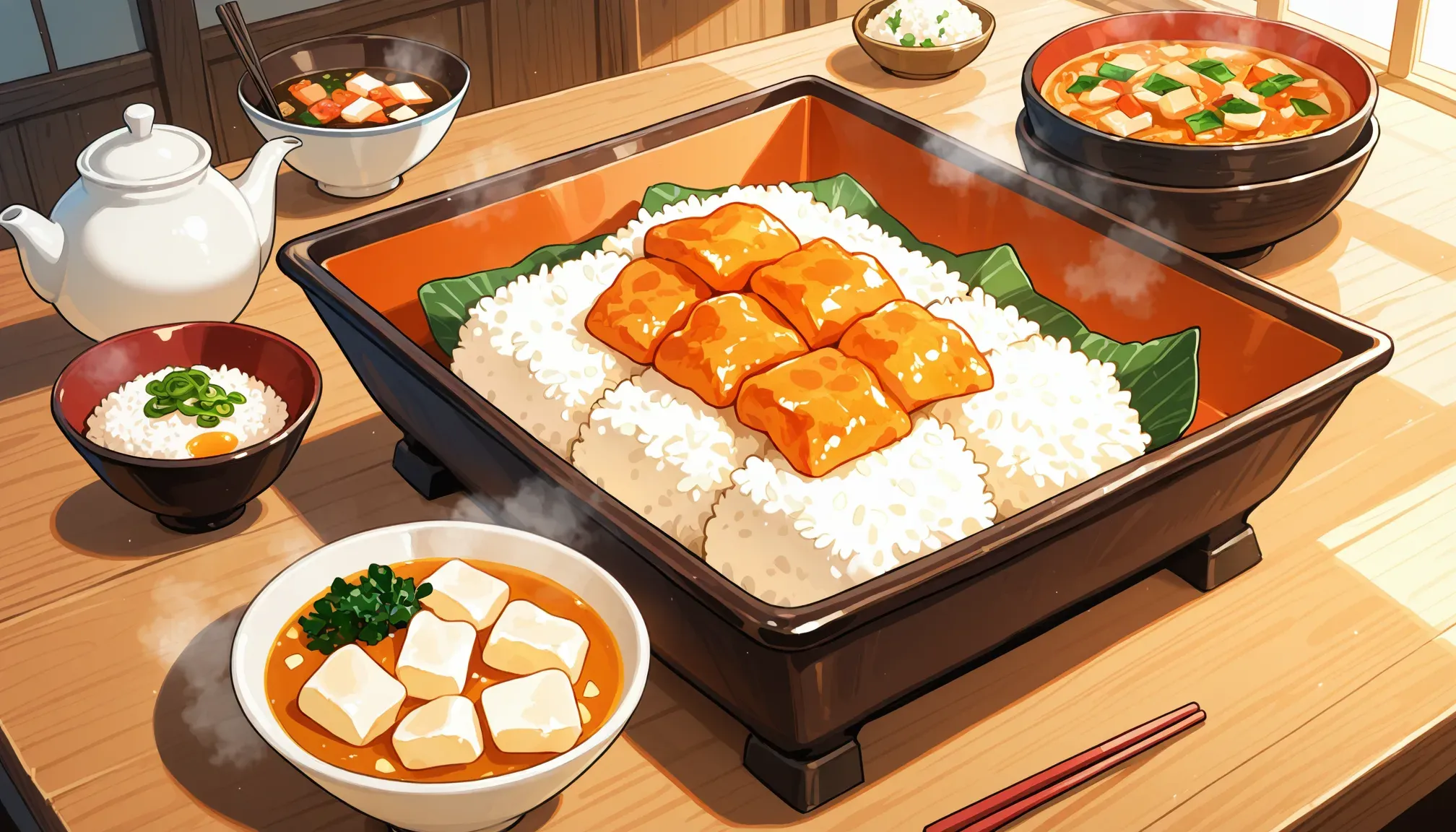
By contrast, TCM recommends fresh, light foods: leafy greens, zucchini, cucumber, seasonal fruit, well-cooked legumes, brown rice, and plenty of water or mild herbal teas. The key is to give your body food it can process without effort, so your digestive energy doesn't run out and your skin doesn't have to "pay" for the excesses.
Can stress and emotions trigger acne breakouts?
You've probably noticed it: you have a rough week, with nerves, worries, or little sleep, and suddenly a breakout appears right before an important event. Traditional Chinese Medicine explains this very clearly.
In TCM, the emotions have a regulating function throughout the body. Chronic stress and frustration cause vital energy (what TCM calls qi, pronounced "chee") to become blocked instead of circulating freely. When that energy stagnates, it turns into Heat, and that Heat rises to the face. In addition, stress upsets the balance between the "active" part of the body (Yang, associated with heat and action) and the "restorative" part (Yin, associated with rest and nourishing moisture). When Yang dominates too much, the skin flares up.
That's why many acupuncturists ask about your sleep, your mood, and your level of tension before planning a treatment: it isn't curiosity, it's because TCM considers the emotional and the physical to go hand in hand.
How does acupuncture treat acne?
Acupuncture is the best-known tool of Traditional Chinese Medicine for acne, and it works in several ways:
It regulates internal Heat and helps energy flow smoothly again.
It supports digestion, to reduce the production of internal Dampness at its source.
It modulates the inflammatory response and helps the body repair itself.
It calms the nervous system, which is especially useful for stress-related acne.
During sessions, very fine, sterile, single-use needles are inserted at points on the body selected for your specific case. The goal is never to "spear the pimple," but to bring the whole body into balance. In addition to needles, the acupuncturist may combine other techniques such as gentle cupping, moxibustion (therapeutic heat), or recommendations on diet and habits.
Does acupuncture work for acne?
Several studies suggest that acupuncture may be useful as a complement in the treatment of acne, although the evidence is still mixed and of varying quality, so the most sensible approach is to see it as support, not as a substitute for dermatology.
In practice, it's best to measure results with patience. Skin takes about four weeks to renew itself, so before eight or ten sessions it's hard to know whether there's a real change. The most useful thing is to take photos in the same lighting every two weeks and keep a note of your breakouts: that way you can see whether they're easing, whether they're less inflamed, or whether nothing has changed and it's time to rethink the approach.
Auricular therapy for acne
Auricular therapy works on points of the ear, using very fine needles or seeds that are taped on and pressed at home. For acne, the points usually chosen are the ear points related to the Lung (which TCM links to the skin), Endocrine, Shenmen for stress, and the area corresponding to the face. Its advantage is that it extends the effect between sessions, because the seeds stay in place for a few days. It's usually used alongside body acupuncture, not instead of it, and it has even fewer studies behind it.
What other habits does TCM recommend for improving your skin?
Beyond the consultation, Chinese medicine insists that skin improves above all through what you do every day:
Sleep well: nighttime rest is when the body repairs itself; sleeping too little keeps internal Heat high.
Don't touch your pimples: picking at them introduces Heat and inflammation and encourages marks.
Wash your skin gently: too much aggression (scrubbing, harsh exfoliants) irritates and makes the breakout worse.
Stay hydrated and move your body: gentle movement promotes circulation and helps clear accumulated Dampness.
Cut back on excess screen time and late-night snacking: eating late and heavy overloads digestion and, according to TCM, feeds the Heat that will come out through the skin.
Precautions: when to see a dermatologist
TCM can be a valuable complement, but there are situations in which the priority is to see a dermatologist or your doctor:
- Cystic or deep acne that leaves scars
- Sudden, very intense breakouts in adulthood
- Acne accompanied by significant hormonal symptoms (irregular periods, excess body hair, hair loss)
- Any lesion that hurts a lot, bleeds, or doesn't improve within weeks
If you're pregnant, take anticoagulants, or have a chronic illness, always tell your acupuncturist before the first session: some techniques require adjustments or special precautions. And make sure the practitioner uses only sterile, single-use needles, opened in front of you.
Frequently asked questions
Does acupuncture clear acne for good?
No treatment can guarantee a permanent result, and it would be dishonest to promise one. What is usually seen is a reduction in the frequency and intensity of breakouts as the body comes into balance, especially if you pair the treatment with healthy habits.
How many sessions does it take to notice improvement?
It depends on the person, the type of acne, and how long it has been present. In general, many people begin to notice changes after several weeks of regular treatment, and your acupuncturist will guide you on how often to come in your case.
Can I combine acupuncture with my dermatologist's treatments?
In most cases, yes, and in fact it's the best approach: conventional medicine and TCM can complement each other well. Always tell both professionals which treatments you're following.
Does acupuncture hurt?
The needles are extremely fine, much finer than the ones used for a blood draw. You'll usually feel a slight sensation of pressure, tingling, or warmth, but not significant pain.
Does a TCM diet replace a conventional healthy diet?
No. TCM's recommendations fit with the general principles of a balanced diet: more vegetables, fewer ultra-processed foods, less sugar, and less heavy fat. TCM helps you personalize those guidelines to your constitution.
Can acupuncture help with acne marks and scars?
It can support skin recovery by improving circulation and tissue repair, but deep scars usually also need specific dermatological treatment.
Conclusion: clearer skin starts from within
Seen through Traditional Chinese Medicine, acne is a sign that something needs balance: perhaps too much internal Heat, perhaps a tired digestion, or perhaps stress that can't find a way out. The good news is that these imbalances can be addressed with acupuncture, a diet adjusted to your constitution, and habits of rest and movement. That said, remember that TCM is a complement to conventional medicine: if your breakouts are intense, persistent, or leave marks, also see a health professional to get the right diagnosis and treatment. Your skin will thank you.