If you've ever wondered how to eat according to Chinese medicine, the good news is that you don't need to memorize endless lists of foods or follow a rigid regimen. The dietetics of traditional Chinese medicine (TCM) is, above all, a way of looking at food with attention: what you eat, how you cook it, when you eat it, and how your body reacts afterward. In this simple guide, we explain its basic principles in plain language, with ideas you can start applying today without overhauling your life.
Chinese medicine has considered food one of the main tools for caring for health for centuries. It isn't about counting calories or banning foods, but about finding balance: between hot and cold, between cooked and raw, between the seasons of the year and the rhythm of your own body. Let's take it step by step.
Chinese Medicine: What It Is and What It's For
Before we step into the kitchen, it helps to set the framework. Traditional Chinese medicine, often shortened to TCM, is a health care system that developed in China over many centuries and is now practiced all over the world. It isn't a single technique, but a way of understanding the body and a set of tools that grow out of that understanding.
What TCM Is: A Way of Looking at the Body
Chinese medicine doesn't describe the body as a sum of parts, but as a system in which everything is connected. It speaks of qi, the vital energy that, according to this tradition, flows through the body; of the blood that nourishes the tissues; of the balance between yin (what cools, nourishes, and supports) and yang (what warms, activates, and moves); and of the Zang-Fu organs, which don't correspond exactly to the organs of Western anatomy but group together functions. When qi flows well and yin and yang are balanced, a person feels well; when an imbalance appears, discomfort follows.
That's why diagnosis in TCM is so personal. The practitioner asks about your sleep, your digestion, your energy, or how you handle cold and heat, looks at your tongue, and takes your pulse. From all of this, they look for a pattern that is specific to you, not just the name of a symptom.
How It's Done: The Techniques of Chinese Medicine
Chinese medicine works with several tools that are combined depending on each case:
Acupuncture, which stimulates specific points on the body with very fine needles. A well-known example is Zú Sān Lǐ (ST36), the Leg Three Miles point, which tradition associates with digestion and energy.
Moxibustion, which applies heat to those same points.
Tuina massage and acupressure, which work with the hands.
Chinese herbal medicine, with plant formulas that should always be prescribed by a qualified professional.
Movement and breathing exercises, such as qigong or tai chi.
And dietetics, which is the subject of this guide and the tool anyone can use at home every day.
What Chinese Medicine Is For and What It's Good At
Chinese medicine is used mainly to care for overall balance and as a complement to conventional medicine. Many people turn to it for digestive complaints, fatigue, stress, sleep problems, or muscle and joint pain, and report feeling better. Research on some of its techniques, especially acupuncture for certain types of pain, is ongoing and the results are promising, although still limited in many areas.
What Chinese medicine does not do is replace your doctor: it doesn't take the place of a diagnosis or conventional treatment, and when symptoms are new, severe, or persistent, the first step is always a medical consultation. Understood this way, as a means of prevention and support, TCM finds its most everyday application in food, so let's continue there.
What Is Chinese Dietetics and How Is It Different From a Western Diet?
When we talk about diet in the West, we usually think about nutrients: protein, carbohydrates, fats, vitamins. Chinese dietetics starts from a complementary idea: every food has qualities that influence how the body feels after eating it. Foods aren't classified only by their composition, but by the effect they produce.
Put very briefly, Chinese medicine looks at three things in every food:
Its natural temperature: some foods tend to cool (cucumber, watermelon, yogurt, mint) and others to warm (ginger, cinnamon, lamb, garlic). This has nothing to do with whether they are cold or hot on the plate, but with the effect they have inside the body.
Its flavor: sweet, salty, bitter, sour, and pungent. Each flavor is related to different functions of the body, and the idea is not to overdo any of them.
Its capacity to nourish and to move: some foods provide substance, while others help everything circulate better.
The practical difference is clear: while a Western diet might tell you that yogurt with fruit is a healthy snack for everyone, Chinese dietetics would ask whether it agrees with you, whether it's winter or summer, and whether your digestion is strong or delicate. The same food doesn't work equally well for everyone or at every moment.
Eating According to the Season
One of the pillars of eating according to Chinese medicine is living in harmony with the climate. The body doesn't need the same things in January as in August, and your diet should reflect that.
Spring and Summer
When it's warm, the body welcomes lighter, more refreshing foods. This is the time for salads, seasonal fruit, leafy green vegetables, and quick cooking methods like stir-frying. Very greasy or heavily spiced dishes tend to feel heavy at this time of year.
Fall
Fall is a season of transition: the weather turns dry and begins to cool. Chinese dietetics recommends gradually adding warmer, juicier dishes, such as vegetable purée soups, compotes, poached pears, or mild stews, to prepare the body for winter.
Winter
In winter the body needs to conserve heat and energy. Priority goes to cooked, hot meals: broths, stews, legumes, whole grains, root vegetables. This is the time of year when too many cold or raw foods can sit poorly with many people.
The underlying idea is simple and very intuitive: eat seasonally and adapt the way you cook to the weather outside. It's no accident that you crave watermelon in summer and a steaming broth in winter; Chinese medicine simply takes that intuition and turns it into a principle of health.
Cooked vs. Raw: Which Is Better for Your Digestion?
Many healthy-eating approaches recommend eating lots of raw food. Chinese medicine adds nuance: for digestion, cooking is a help. When you cook a food, part of the work of "transforming" it is already done before it reaches the stomach, so the body spends less energy digesting it.
This doesn't mean raw food is off limits. It means it should be adjusted to each person and each moment:
If you have strong digestion and the weather is warm, a salad will probably sit well with you.
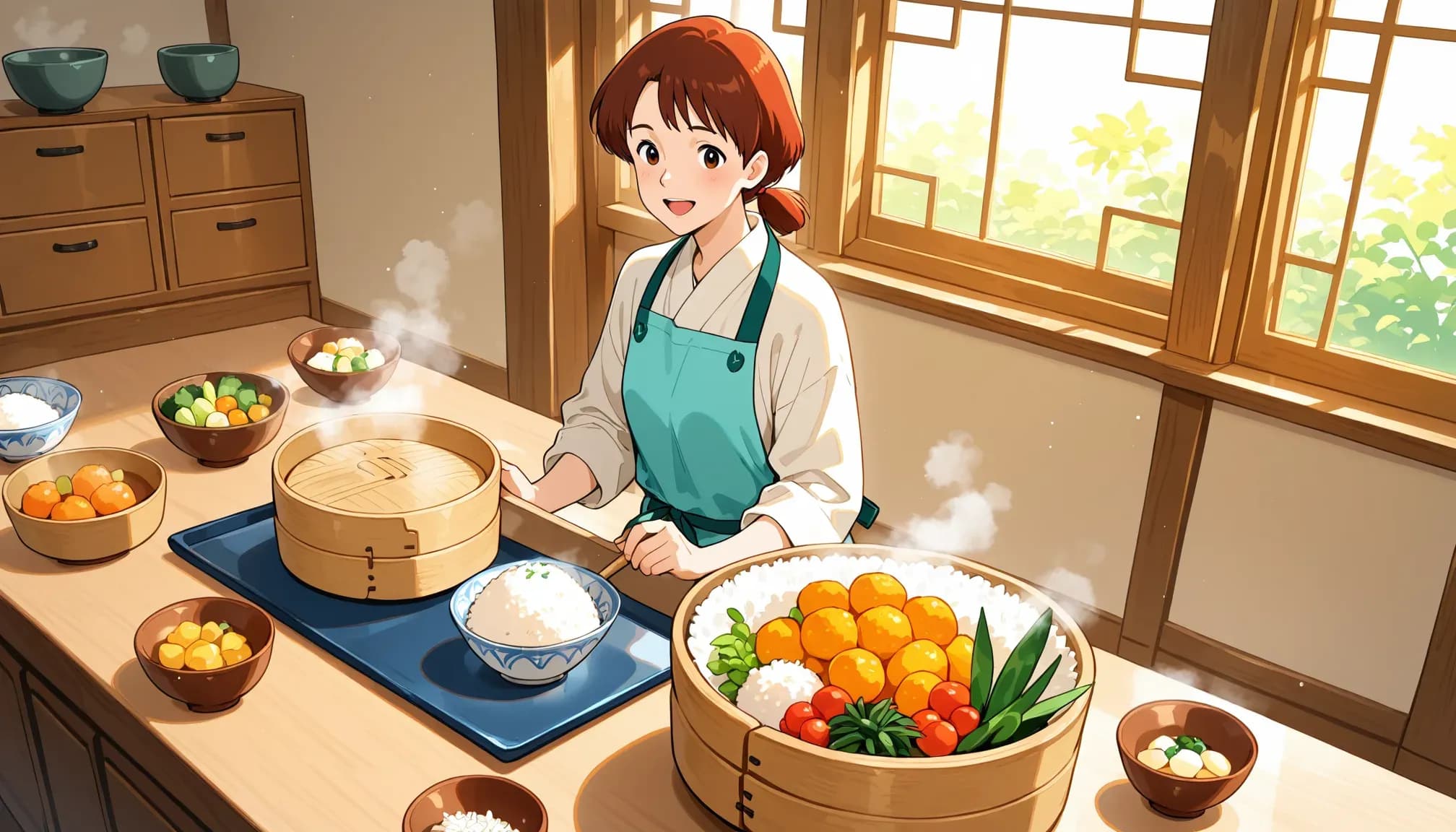
If you often notice bloating, heaviness, a cold feeling in your belly, or slow digestion, it may be better to prioritize cooked food: steamed vegetables, stir-fries, puréed soups, stews, roasted fruit, or compote.
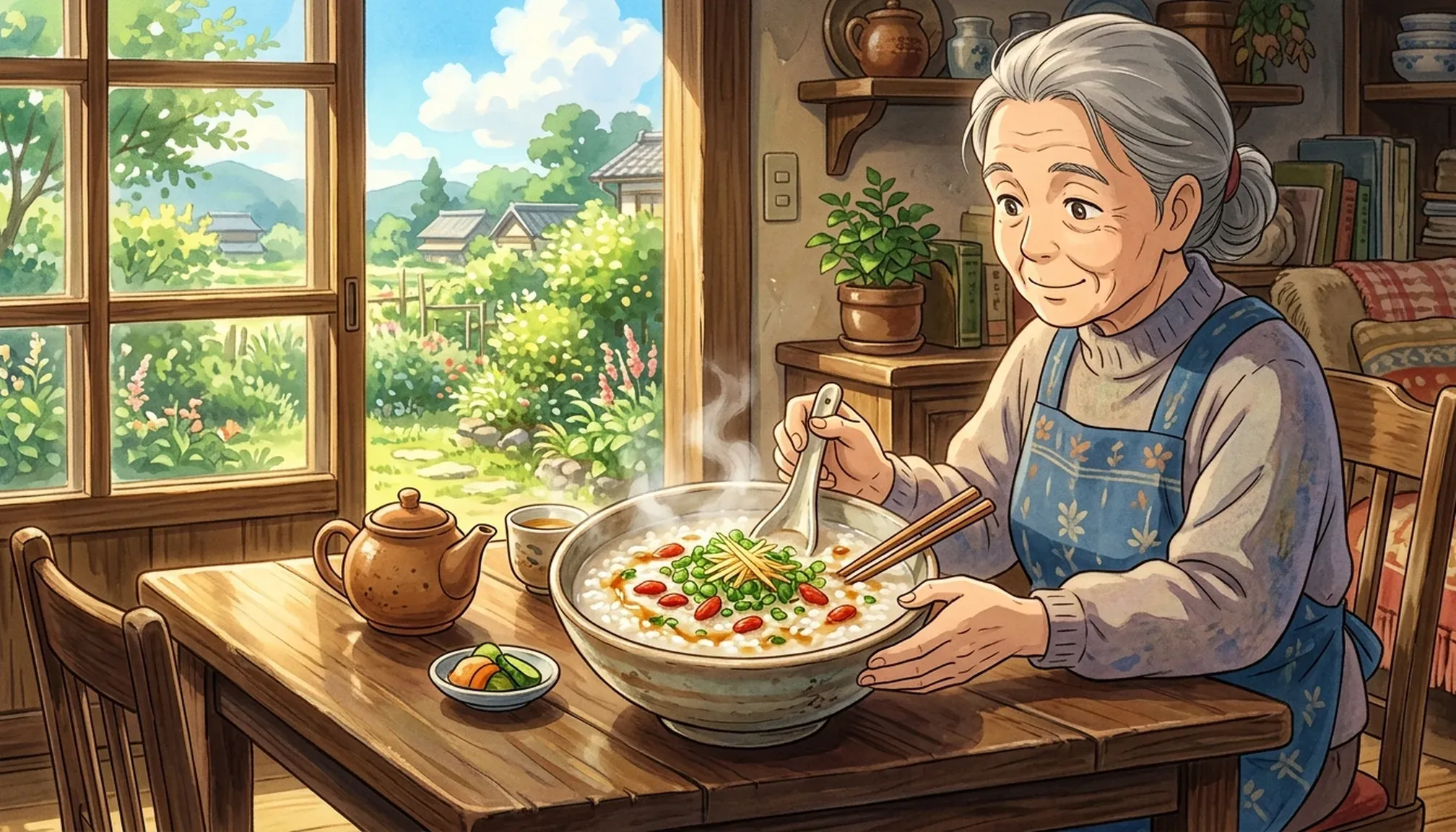
Breakfast is a good example: in the Chinese tradition, it's recommended to start the day with something warm and cooked (oatmeal porridge, rice congee, a mild broth) rather than something cold straight from the fridge.
A practical trick: if you want to eat something raw or cold, pair it with something warm, like an herbal tea, so you don't "put out the fire" of digestion.
Regular Mealtimes Matter More Than You Think
In Chinese dietetics, it's not only what you eat that counts, but also when. The digestive system works better with routine: eating at similar times each day helps the body anticipate and digest more efficiently.
Some classic guidelines that are easy to apply:
Really eat breakfast. Morning is when the body is best prepared to transform food into energy. Skipping breakfast or reducing it to a coffee with something sweet is not this tradition's favorite option.
Make midday your main meal. This is the moment of peak digestive capacity, so it's when it makes sense to eat the most complete meal of the day.
Eat a light, early dinner. At night the body is preparing to rest, not to carry out heavy digestion. Large, late dinners tend to mean poorer sleep and difficult digestion.
Avoid constant snacking. Giving the digestive system breaks between meals lets it finish one process before starting another.
You don't need to be rigid. General regularity, not perfection, is what makes the difference.
Moderate Cold, Sugar, and Excess
If there are two things Chinese medicine almost always recommends watching, they are too much cold and too much sweetness.
Fewer Very Cold Drinks and Foods
Ice cream, very cold sodas, and drinks with lots of ice, taken daily and in quantity, are considered a burden on digestion, because the body has to spend extra energy "warming them up" before processing them. The point isn't to ban them, but not to make them a daily habit, especially if your digestion is delicate or if the weather is cold.
Less Refined Sugar
The sweet flavor in its natural form (grains, fruit, sweet vegetables such as pumpkin or sweet potato) is valued in Chinese dietetics. The problem is refined sugar and industrial sweets: in excess, they are considered to promote heaviness, retention, and a feeling of mental fog. A good strategy is to gradually swap "processed sweet" for "natural sweet": ripe fruit, dates, homemade compote.
And in General: Moderation
Chinese medicine insists on the middle path: eat until you feel satisfied, not full; vary your foods; don't overdo any single flavor. A very often quoted traditional rule is to stop eating while you could still eat a little more.
Listen to Your Digestion: The Most Reliable Guide
Perhaps the most valuable piece of advice in eating according to Chinese medicine is this: your own body is the best source of information. No list of "good" and "bad" foods replaces observing how what you eat makes you feel.
Some simple signals to pay attention to:
Do you feel energized after eating, or do you get sleepy and heavy?
Do you notice bloating, gas, or acid reflux with certain foods or at certain times?
Are there meals that keep you satisfied for hours and others that leave you hungry right away?
A practical exercise is to keep a small log for a week or two: what you ate, how it was prepared, and how you felt afterward. Clear patterns almost always appear. From there, the adjustments make sense: more cooked food if raw food bloats you, lighter dinners if you sleep poorly, more regularity if you snack nonstop.
This conscious observation is, at heart, the essence of Chinese dietetics: not following outside rules blindly, but building your own balanced way of eating.
Practical Ideas to Start This Week
To wrap up the practical part, here are simple changes that sum up everything above:
Start the day with a warm, cooked breakfast a couple of times a week.
Add one hot meal a day, even in summer (a stir-fry, a puréed soup).
Eat at similar times each day and try to have dinner earlier and lighter.
Cut back on drinks with lots of ice and try herbal teas between meals.
Replace some processed sweets with fruit or homemade compote.
Eat seasonally: the market already tells you what's in order.
After each meal, ask yourself how you feel. Nothing more.
Small, sustained changes work better than a one-week revolution.
Frequently asked questions
What is Chinese medicine, in a nutshell?
It's a traditional health care system that originated in China and understands the body as a whole in balance, with concepts such as qi, yin and yang, or the Zang-Fu organs. To maintain or restore that balance, it uses acupuncture, moxibustion, massage, herbs, exercise, and food, always as a complement to conventional medicine.
What is TCM good for in everyday life?
Mainly for prevention and support. Many people use it to look after their digestion, energy, rest, or stress, and dietetics is the part that's easiest to bring home: eating seasonally, warm, and at regular times. It doesn't replace medical diagnosis or treatment, but adds to them.
Does the Chinese medicine diet work for weight loss?
It isn't a weight-loss diet in the Western sense, although many people lose weight by regulating their mealtimes, cutting back on sugar, and improving their digestion. Its main goal is balance and well-being, not calorie control. If your goal is to lose weight, the sensible approach is to combine these principles with follow-up from a doctor or dietitian.
Do I have to give up salads and raw foods?
No. Chinese medicine doesn't forbid raw food; it recommends adjusting it to your digestion and the season. In summer and with good digestion, salads fit in perfectly. In winter or if your digestion is delicate, it's better to prioritize cooked food.
Can I keep eating meat, dairy, or gluten?
Yes. Chinese dietetics doesn't exclude food groups as a rule. What it proposes is to observe how they sit with you and adjust amounts and preparation. If you suspect an intolerance or have persistent symptoms, check with your doctor before eliminating anything on your own.
How long does it take to notice the effects?
It depends on the person and the starting point. Many people notice improvements in digestion and energy within a few weeks of introducing regularity, warm meals, and less sugar. It's a gradual process, not an overnight change.
Can I follow these principles if I have a medical condition or take medication?
These general tips are compatible with most situations, but if you have a diagnosed condition, are pregnant, or take medication, always check with your doctor before making major changes to your diet. Chinese dietetics is a complement, never a substitute for medical treatment.
One Last Piece of Advice
Eating according to Chinese medicine is, in essence, a return to a more attentive and relaxed relationship with food: seasonal, well cooked when it's called for, at regular times, and listening to your own body. If you'd like to go further and adapt these principles to your specific case—your constitution, your digestion, your stage of life—the best step is to see a qualified practitioner of traditional Chinese medicine, who can guide you in a personalized and safe way, always as a complement to the care of your doctor.