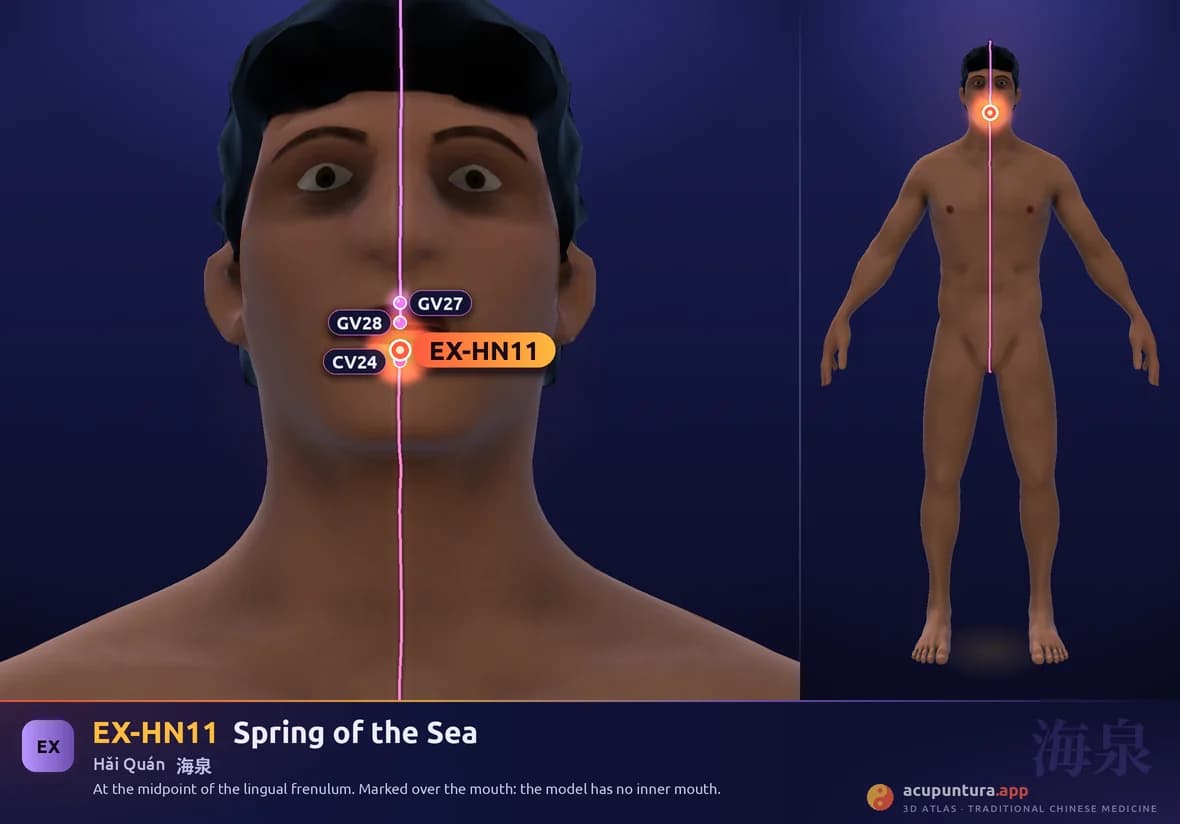
EX-HN11
Extra point · Head and Neck
Spring of the Sea
海泉Hǎi QuánAnatomical location
At the midpoint of the lingual frenulum.
Main function
Benefits the tongue, clears Heat.
Therapeutic indications
- Vomiting
- thirst
- dysarthria
- stomatitis
Name and classical tradition
Haiquan, 海泉, is the "spring of the sea": 海, sea; 泉, spring. It lies under the tongue, at the center of the frenulum, and like its neighbor above, EX-HN10, it takes its name from the water of the mouth.
The Zhenjiu Dacheng (Great Compendium of Acupuncture and Moxibustion) records it with a single indication: "海泉一穴,在舌下中央脈上是穴,治消渴", on the vessel at the center under the tongue, for the thirst disease, which was treated by bleeding with the three-edged needle. The connection between a point under the tongue and a disease of thirst and dry mouth is direct, and its neighbors follow the same logic, EX-HN12.
Needling techniqueLancet bloodletting.
DepthSuperficial
MoxibustionNot applicable.
PrecautionsHighly vascular area.
