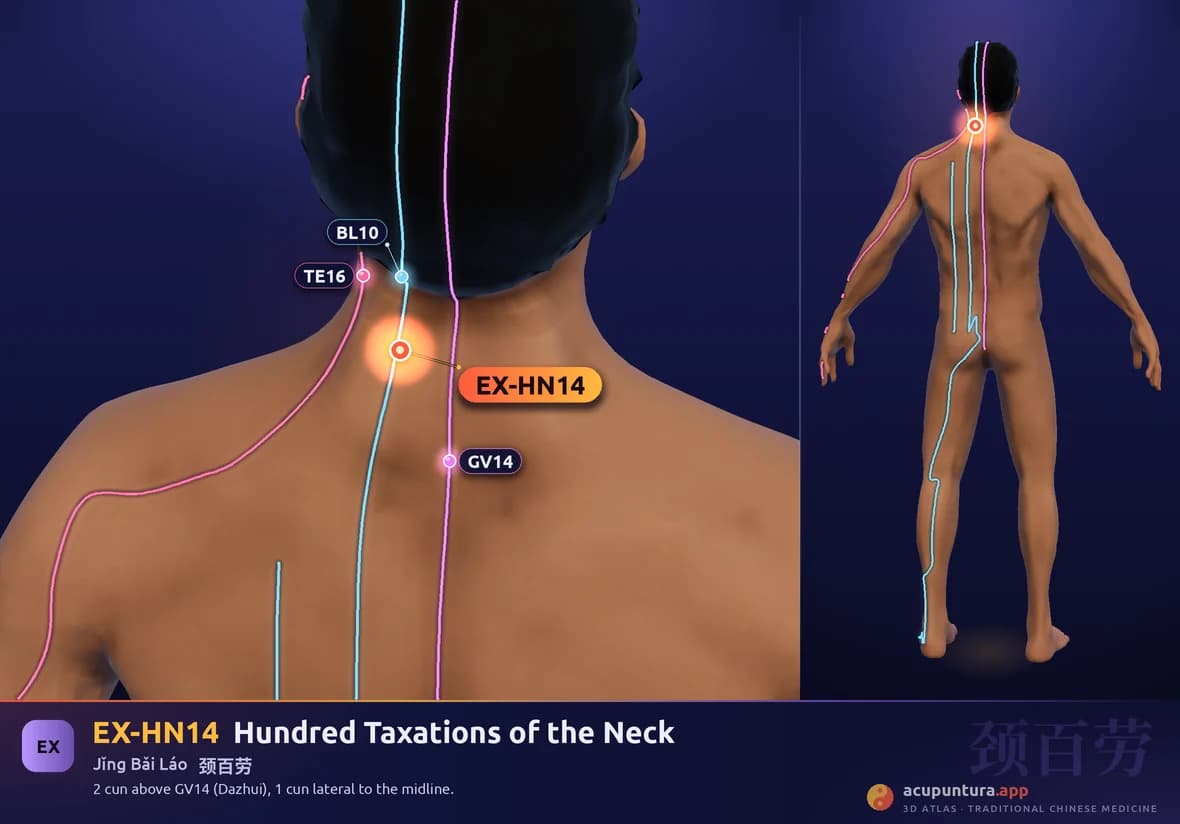
Extra point · Head and Neck
Hundred Taxations of the Neck
颈百劳Jǐng Bǎi LáoAnatomical location
2 cun above GV14 (Dazhui), 1 cun lateral to the midline.
Same point as CP30 · Bǎi Láo — Curious Points catalogMain function
Tonifies the Lung, stops cough, strengthens against exhaustion (Lao pattern).
Therapeutic indications
- Chronic cough
- asthma
- pulmonary tuberculosis
- neck stiffness
- night sweats
Name and classical tradition
Jingbailao, 颈百劳, is the one “of the hundred fatigues of the neck”: 颈 (頸), the neck; 百劳 (百勞), the hundred fatigues, exhaustion in all its forms, which in ancient medicine included tuberculosis and night sweats. The 颈 in the name serves to distinguish it from an older Bailao.
That older point is GV14, Dazhui. The Zhenjiu Dacheng (Great Compendium of Acupuncture and Moxibustion), in its list of points with two names, records “大椎(一名百勞),” Dazhui, also called Bailao, and in one of its poems recommends it for the sweats of weakness: “滿身發熱痛為虛,盜汗淋淋漸損軀,須得百勞椎骨穴.” The present-day extra point lies higher up, two cun above Dazhui and one cun from the midline, and it keeps the name and a good part of the use of the ancient one.