Extra point · Upper Limb
Four Seams
四缝Sì FèngAnatomical location
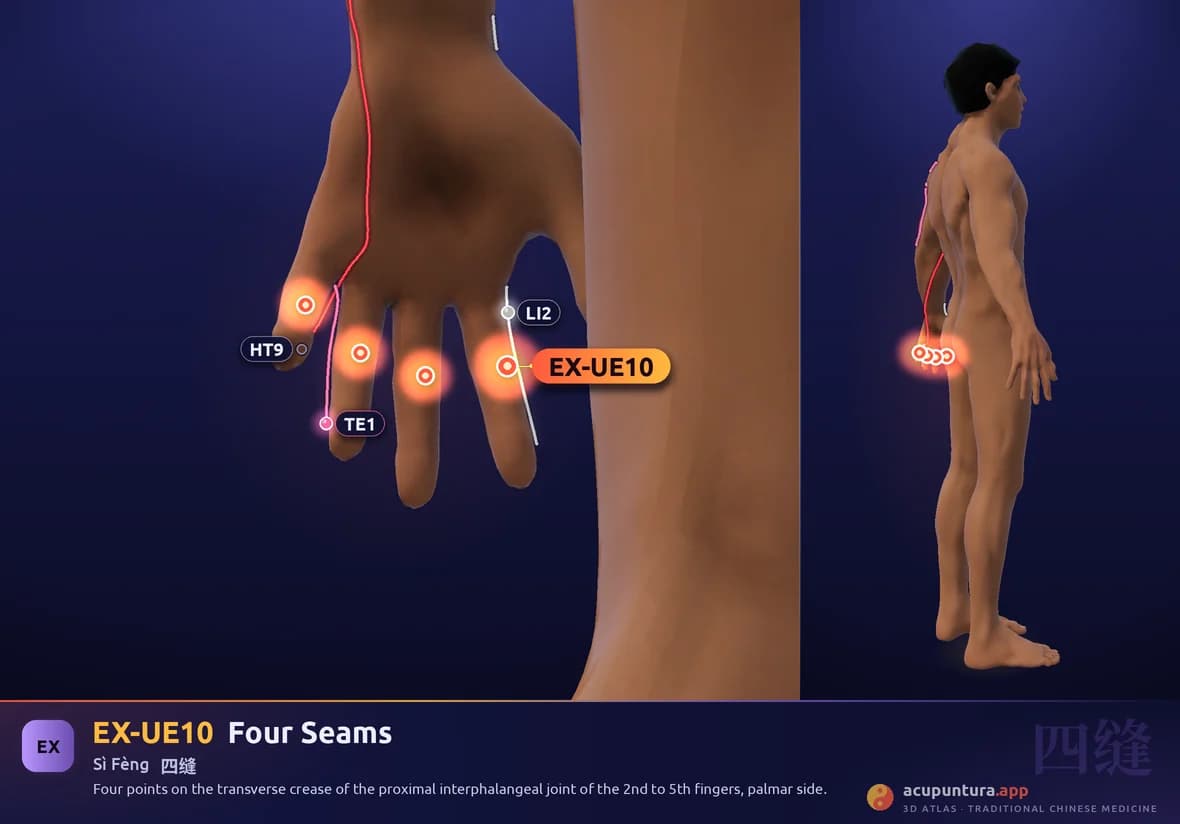
Four points on the transverse crease of the proximal interphalangeal joint of the 2nd to 5th fingers, palmar side.
Same point as CP94 · Sì Fèng — Curious Points catalogMain function
Eliminates food stagnation, strengthens the Spleen, dissolves Phlegm.
Therapeutic indications
- Childhood malnutrition
- indigestion
- cough with Phlegm in children
- intestinal parasites
Name and classical tradition
Sifeng, 四缝, means the “four seams”: 四, four; 缝 (縫), the seam, the crease. There are four points on the palmar side of the index through little fingers, on the crease of the middle joint, which looks like a seam.
The Zhenjiu Dacheng (Great Compendium of Acupuncture and Moxibustion) records them as follows: «四縫四穴,在手四指內中節是穴,三稜針出血,治小兒猢猻勞等症». They are pricked with a three-edged needle for the childhood malnutrition that the book calls “monkey wasting,” and that remains their main indication: in practice, a clear, yellowish fluid is squeezed out of them.