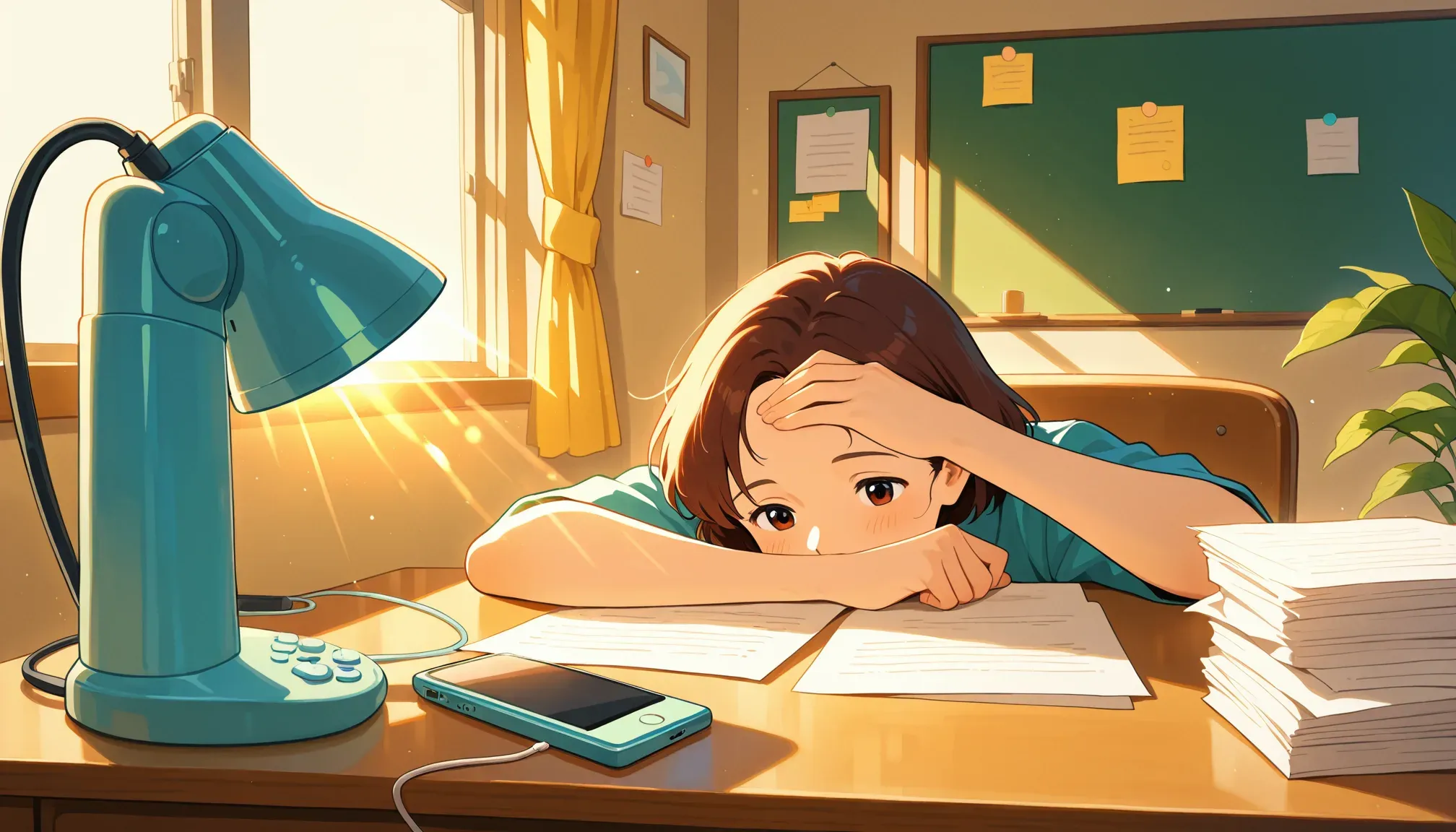
Almost everyone has come home drained after an intense day. But when that exhaustion settles in and stays—when sleep doesn't restore you, when everything related to work stirs up aversion, and even the simplest task feels enormous—we are no longer talking about ordinary tiredness. We are talking about burnout, also known as occupational burnout syndrome. In this article we explain how it differs from short-term stress, what the warning signs are, when it is important to see a mental health professional, and how Traditional Chinese Medicine and acupuncture can support recovery as a complement, never as a substitute.
Short-Term Stress vs. Burnout: Learning to Tell Them Apart
Short-term stress is a natural and, to a degree, useful response: it helps us focus, react, and perform when there is an important deadline or a demanding situation. The problem begins when that pressure stops letting up and becomes a permanent state.
Burnout is defined by three main pillars:
Extreme, persistent exhaustion: fatigue that doesn't improve with weekends or short vacations.
Detachment or cynicism toward work: tasks that used to motivate you now bring irritation, apathy, or emotional distance.
A sense of ineffectiveness: the feeling that no matter how much effort you put in, it is never enough.
The key difference lies in duration and recovery. A person under short-term stress recovers with rest. A person with burnout does not: the wear and tear has become chronic, and the body and mind begin to send out warning signals.
Warning Signs of Work-Related Exhaustion
Burnout rarely appears all at once. It usually arrives gradually, and recognizing it early is essential. Here are some of the most common signs:
- Difficulty falling asleep, or sleep that doesn't refresh you, even after many hours.
- Constant irritability, vague anxiety, or a feeling of being "at your limit."
- Frequent headaches, muscle tension in the neck and shoulders, digestive problems.
- Loss of interest not only in work, but also in personal and social plans.
- More mistakes, trouble concentrating, and difficulty making simple decisions.
- Growing use of caffeine, alcohol, or screens to "switch off," without really managing to.
If several of these signs persist for weeks, it's time to take it seriously and not write it off as "just stress." Sustained exhaustion has real consequences for physical and mental health, and acting sooner improves the outlook.
Why Seeking Professional Help Matters
When symptoms are persistent or intense, the first step is to see your primary care doctor. They can rule out physical causes (thyroid, iron, or sleep problems, for example) that are easily mistaken for exhaustion, and assess whether a referral to a mental health professional is needed.
Burnout is recognized by the World Health Organization as an occupational phenomenon linked to chronic workplace stress that has not been successfully managed. Nothing explained here—acupuncture included—replaces psychological or medical care when it is needed. Asking for help is not weakness: it is the most effective decision you can make to truly recover.
How Traditional Chinese Medicine Sees It: The Exhaustion That Empties You
Traditional Chinese Medicine has spent more than two thousand years observing how a relentless pace of life erodes health. Its view is simple: the body runs on a vital energy called qi (pronounced "chee"), and that energy, like the battery of a phone, gets used up and needs to be recharged.
When, for months, we sleep little, skip meals, carry emotional tension without releasing it, and live in a state of "constant alert," that energy reserve is drained. Chinese medicine describes how, once the day-to-day energy is spent, the body starts to draw on its own deep reserves, and that is where fatigue appears that a weekend no longer fixes. Other sensations follow: cold hands and feet, light sleep, palpitations, or a fragile digestion—the whole body functions "below its level."
Another central element of the traditional view is circulation. When we live under constant pressure, the body tenses up and the circulation of energy and blood becomes blocked, especially in the neck, shoulders, and chest. This is where the muscle tension and the feeling of tightness so typical of chronic work stress come from.
This perspective doesn't compete with Western medicine: it complements it, offering tools focused on restoring balance, rest, and circulation.
Acupuncture for Work Exhaustion: Support for Rest and Recovery
Acupuncture is an ancient practice that involves inserting very fine needles into specific areas of the body. The World Health Organization recognizes it as a traditional practice, and research on its mechanisms and applications is ongoing. In countries like Spain, it is widely used as a complement for problems related to stress, anxiety, and rest.
From an educational standpoint, acupuncture can be understood as a way of helping the body "reset" its alert system. Many people who try it for exhaustion or tension report feelings of deep relaxation during the session, better sleep quality in the days that follow, and less bodily tension. It is not a magic wand or a cure: it is a support that, combined with changes in habits and, if necessary, with psychological care, can make recovery easier.
At a first visit, the acupuncturist conducts a detailed interview—sleep, digestion, energy, emotions, habits—and puts together an individualized plan. Sessions usually last between 40 and 60 minutes, and the number you need depends on the person and on how long the exhaustion has been settled in.
Habits for Setting Boundaries and Taking Real Breaks
No treatment, traditional or not, works if the cause of the exhaustion remains untouched. The centerpiece of burnout recovery is changing your relationship with work. Some useful guidelines:
Set your hours: pick an end-of-day time and stick to it. Turn off work notifications outside those hours.
Real breaks: every 90–120 minutes, stand up, move, and breathe for five minutes. The brain doesn't perform the same eight hours in a row.
Restore your physical disconnection: get outside, do gentle exercise like walking or stretching, and keep screens out of bed.
Prioritize sleep: it is the most powerful recharging tool there is. A regular bedtime makes a difference.
Learn to say no: accepting all the work that's available is a strategy that wears you out. Negotiating workloads is a professional skill.
Reclaim what gives you energy: time with loved ones, hobbies, nature. Rest isn't doing nothing: it's doing something else.
Frequently asked questions
Does burnout go away with a vacation?
A vacation brings relief when the exhaustion is mild, but if burnout has set in, the relief usually doesn't last long once you return to the same environment. Real recovery usually requires changes in routine, boundaries at work, and, in many cases, professional support.
Can I get acupuncture if I'm in psychological treatment or taking medication?
Yes, acupuncture is compatible with psychotherapy and with medical treatments. The important thing is to tell both professionals what you are doing so that your whole care team can look after you in a coordinated way.
How many acupuncture sessions do I need for stress and exhaustion?
There is no fixed number. It depends on how intense the symptoms are, how long they have been present, and how each person responds. Usually you start with a few more frequent sessions and space them out as your rest and energy improve.
Does acupuncture hurt?
The needles are much thinner than those used for injections, and most people barely feel them or describe only a slight sensation when they are inserted. Many fall asleep during the session.
Is burnout the same as depression?
They are not the same, although they can overlap. Burnout is tied to the work context and tends to improve when that context changes; depression is a broader mental health condition. Only a professional can make the proper assessment, so it's best not to self-diagnose.
One Last Step: Stop Normalizing Exhaustion
If you recognize yourself in the signs described in this article, don't wait to "hold on a little longer." See your doctor to rule out physical causes, consider the support of a mental health professional if the distress persists, and look into complementary tools such as acupuncture, always with qualified and accredited professionals. Recovering your energy is possible, but it starts with taking seriously what your body has been trying to tell you for a long time.