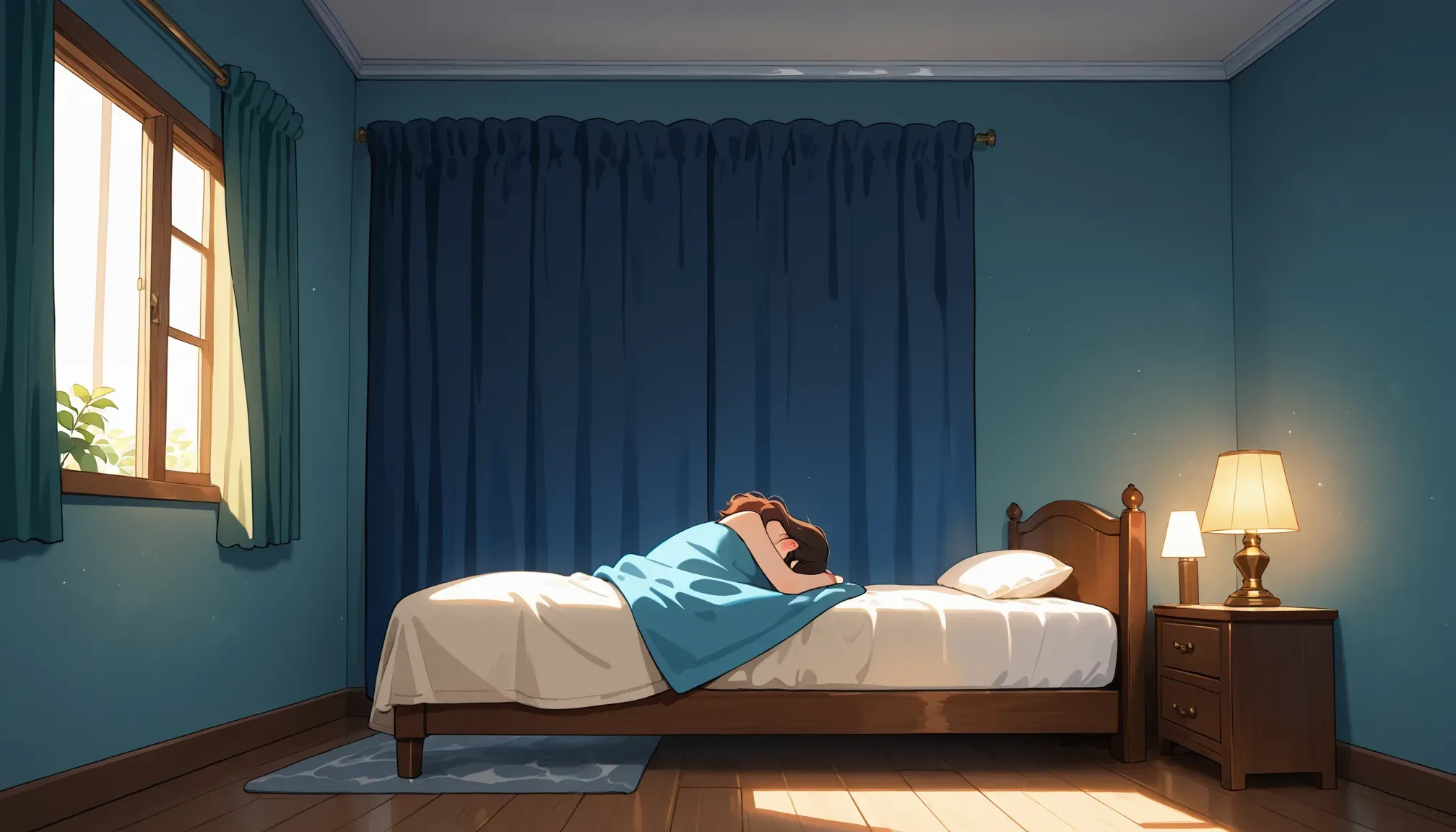
A message comes in from your friends suggesting a get-together. You should be happy, but what you feel is something else: a weight in your stomach, a mental list of possible excuses, a hope that the plan will get canceled in the end. Or maybe your situation is different: you manage to go places, but you leave every conversation replaying everything you said, convinced you said something ridiculous. If this sounds familiar, you may know social anxiety up close, one of the most common and least visible forms of emotional distress. In this article we explain what it is, how it differs from simple shyness, and how acupuncture and the tools of Traditional Chinese Medicine can support you as you work toward feeling more at ease with other people.
What is social anxiety?
Social anxiety is an intense, persistent fear of social situations: talking with strangers, eating in front of others, taking part in meetings, talking on the phone, having your picture taken, or simply passing someone on the street. It isn't the normal nervousness anyone feels before an interview; it's a disproportionate alarm response to everyday situations, and it leads a person to avoid them or to get through them while suffering a great deal.
The World Health Organization includes it among anxiety disorders, which are the most common mental health problems in the world. International studies estimate that between 5% and 12% of people will experience it significantly at some point in their lives. Even so, it remains poorly recognized, partly because many people who live with it seem to function well from the outside: they go to work, say hello, smile. The cost is on the inside.
Social anxiety is not the same as shyness
It's important to tell the two apart because they are often confused:
Shyness is a personality trait. A shy person may feel uncomfortable in some new settings, but that discomfort doesn't stop them from living: they end up talking with people, enjoy get-togethers, and don't spend weeks dwelling on what they said.
Social anxiety is an alarm response that shapes your decisions. You skip your best friend's birthday because there will be new people; you don't ask a question in a store even though you need help; you turn down a better job because it involves more contact with customers.
A simple rule of thumb: shyness is a nuisance; social anxiety is limiting. If the fear of social situations keeps you from doing things you want or need to do, it deserves attention.
How does it show up in the body?
Social anxiety isn't just "being nervous in your head." It's a full physical reaction that can appear before, during, and after the social situation:
Before: days of anguished anticipation, trouble sleeping, tension in the stomach, the urge to cancel.
During: a racing heart, sweating, facial flushing, trembling hands or voice, a blank mind, the feeling that everyone is watching you.
After: endless rumination, retrospective shame, promises of "next time I'm staying home."
Over time, this cycle reinforces itself: you avoid the situation, that relieves tension in the short term, and your brain learns that avoidance is the solution, which makes the fear bigger the next time.
Why does social anxiety appear?
As with almost everything that happens in the mind and body, there is no single cause. The evidence points to a combination of factors:
A predisposed nervous system. Some people are born with greater reactivity to social stimuli involving evaluation.
Learning experiences. Criticism, teasing, rejection, or humiliation, especially in childhood and adolescence, teach the brain that social situations are dangerous.
Perfectionism and self-criticism. Demanding an impeccable image in front of others at all times turns every interaction into an exam.
Low tolerance for uncertainty. Needing to control how others perceive you at every moment is exhausting and keeps the alarm system switched on.
Stress load and fatigue. A high baseline of stress reduces the ability to regulate emotions, and what used to be manageable becomes overwhelming.
None of these factors is your fault. They are conditions that come together, and the good news is that all of them can be worked on.
What does the usual approach involve?
The treatment with the best evidence for social anxiety is psychotherapy, especially cognitive behavioral therapy with gradual exposure: learning to identify alarm thoughts, checking that the catastrophic predictions don't come true, and rebuilding your relationship with the situations you fear, step by step. In moderate or severe cases, some people also benefit from medication prescribed by a psychiatrist.
Acupuncture doesn't replace any of these options, but it has an interesting place within an integrative approach, as we'll see next.
How can acupuncture help?
Acupuncture works on the physical terrain where social anxiety takes hold: a nervous system that is permanently on guard. From the standpoint of Western physiology, it is known that stimulation with fine needles at specific areas of the body can modulate the activity of the autonomic nervous system, promote the release of endorphins, and help the body leave alarm mode and enter calm mode.
For a person with social anxiety, this translates into something very concrete: the body slows down. Many people who come to the clinic describe that, after several sessions, social situations stop triggering the panic response, or trigger it with much less intensity. The fear may still be there, but it stops being a wall: it becomes something you can get through.
From the perspective of Traditional Chinese Medicine, social anxiety is understood in relation to how energy flows in the body. When there is inner agitation, the pulse of life shoots upward and outward: the mind races, the heart speeds up, blood rises to the face, and flushing appears. At the same time, the center of the body is left without support, hence the empty feeling in the stomach and the unsteadiness in the legs. Acupuncture aims to calm that agitation and restore firmness to the center, like loosening a string that has been pulled too tight. Two classic points sum up this idea well: Shenmen (HT7), at the wrist, to settle the mind, and Yintang, between the eyebrows, widely used to calm agitation. You don't need to understand these concepts to benefit from them; they are the map your acupuncturist uses to design the work of each session.
Other Chinese medicine techniques that can complement treatment
Depending on the case, the acupuncturist may combine acupuncture with:
Auricular therapy: stimulating areas of the ear is often used as support in states of anxiety, because it's discreet and because its effect can last between sessions.
Tuina massage: helps release the physical tension built up in the neck, shoulders, jaw, and chest, areas where social anxiety tends to be "stored" in the body.
Therapeutic heat with moxa: when a person describes inner cold, insecurity, and exhaustion, the warmth of this mugwort herb provides a feeling of support that people value highly.
Breathing and routine guidelines: simple breathing exercises, regular schedules, and small movement exercises that the patient can practice at home.
Tips for coping better while you work on your social anxiety
These ideas are simple but effective, and they work best alongside professional support:
Reduce avoidance little by little. Every small exposure is a vote in favor of your freedom. Start with low-difficulty situations and raise the level gradually.
Stop replaying your "mistakes." No one scrutinizes what you say as closely as you do. Practice closing the episode: it happened, it's fine, move on.
Take care of your physiological foundation. Sleeping, moving, limiting caffeine and alcohol, and eating regularly have a direct effect on how reactive your nervous system is.
Question perfection. Real relationships are built with awkward moments included. The most beloved people aren't the most flawless, but the most authentic.
Ask for help without waiting to hit bottom. Seeing a psychologist or coming in for acupuncture when anxiety starts to limit you is as sensible as seeing a physical therapist for a muscle knot.
Frequently asked questions
Can acupuncture cure social anxiety?
It wouldn't be honest to talk about a cure. What many people do describe is a noticeable reduction in the physical activation of anxiety, which makes it easier to face social situations and to work on the fear in therapy. It works best as part of an integrative approach rather than as a stand-alone solution.
How many sessions are needed?
It depends on the person, how long the anxiety has been established, and how much it affects you. It's common to start with weekly sessions for a few weeks and then space them out. Your acupuncturist will guide you based on how you're progressing.
What will I feel during an acupuncture session?
Most often, deep relaxation. The needles are very fine and you barely feel them going in, sometimes as a slight tingle or a pinpoint of pressure. Many people sleep during the session and leave with a heavy body and a calm mind.
Can I have acupuncture if I take medication for anxiety?
Yes. Acupuncture is compatible with psychiatric and psychological treatment, and you shouldn't stop any medication on your own. Tell your acupuncturist what you take so they can adjust the work.
How do I know if my shyness is already social anxiety?
Think about the cost: do you avoid situations you'd like to experience? Do you suffer for weeks before an event? Do you replay conversations for days? If the answer is yes and it's limiting you, it's a good time to ask for professional help, both psychological and, if you're interested, acupuncture.
You deserve to connect with others without suffering
Social anxiety turns something as human as being with other people into a high-stakes test. But that script can be rewritten. With the right tools (psychological therapy, habits that look after your nervous system, and, if you wish, acupuncture), social situations stop being threats and go back to being what they are: opportunities to connect. If you'd like to explore how Traditional Chinese Medicine can support you on that path, look for a qualified acupuncturist who will listen to your story and work in coordination with your health care team.