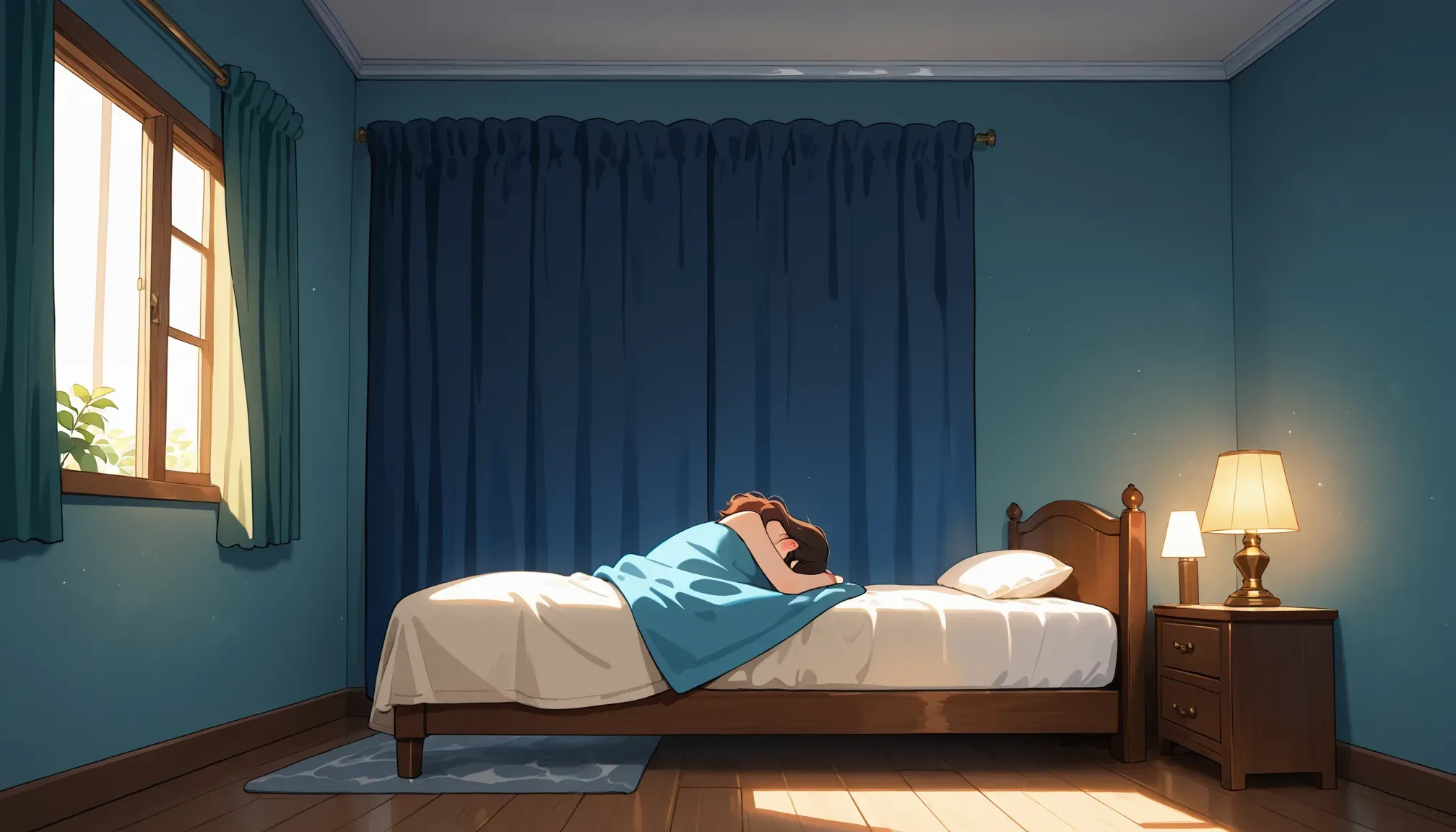
The weeks before an exam follow a familiar script: a mind that keeps circling back to everything you still haven't studied, sleep that falls apart just when you need it most, a stomach in knots on exam morning, cold hands, and that feeling that at the crucial moment "it's all going to go out of my head." Test anxiety is one of the most universal experiences there is. It affects high school and college students, civil service candidates who have spent years preparing for a single position, and people sitting for a driving test, a language exam, or a professional certification. It is so common that it is almost taken as inevitable. But it isn't: there are effective ways to deal with it. In this article we explain what happens in your body at these moments and how Traditional Chinese Medicine can help you perform with a clearer mind.
What is test anxiety?
Test anxiety is a form of situational anxiety: a heightened alert response to an evaluation that you perceive as important. A little tension is normal and even useful, because it sharpens attention and motivation. The problem appears when that alert climbs past what is useful and turns into the opposite of what you need: a blank mind, freezing up, catastrophic thoughts, and physical symptoms that get in the way.
The most common symptoms are:
Mental: repetitive thoughts ("I'm going to fail"), difficulty concentrating, a blank mind during the exam, constant comparison with others.
Physical: palpitations, sweating, cold or trembling hands, butterflies in the stomach, nausea, muscle tension, headache.
Sleep-related: trouble falling asleep, waking up during the night, dreams about the exam, a feeling of not being rested.
Behavioral: procrastination out of fear, last-minute cramming, avoidance, irritability.
Sounds familiar, doesn't it? The good news is that test anxiety responds very well to coping strategies, and acupuncture and Traditional Chinese Medicine can be a valuable ally, especially when the pattern keeps repeating: it always happens the same way, always around the same dates, always with the same outcome.
Why does this always happen to me?
Some people approach exams with enviable calm, while others freeze every time, even when they know the material. The difference is usually not how well they prepared, but how their nervous system handles pressure. These are the factors that matter most:
How you interpret the exam. If the exam feels like a threat ("if I fail, everything is over") rather than a challenge, the alert response fires much harder.
Your history. A past freeze leaves a memory: the brain learns "this is dangerous" and sounds the alarm earlier next time.
Accumulated fatigue. Weeks of studying on too little sleep leave the nervous system vulnerable: everything takes more effort and everything feels more frightening.
Perfectionism. Expectations that are too high turn every exam into a personal verdict.
The pace of your preparation. Last-minute cramming raises stress right in the days before the exam.
And here is the pattern that Traditional Chinese Medicine pays particular attention to: test anxiety is rarely just "about the exam." It usually arrives alongside a background of sustained tension (weeks of effort, irregular sleep, fast meals, growing caffeine intake) that leaves the system depleted just when it needs to be at its best.
The Traditional Chinese Medicine view: the mind that can't settle
Traditional Chinese Medicine interprets test anxiety through its age-old understanding of the mind and its imbalances. Its reading has two layers that combine at this time of year:
The agitated Heart: the mind that won't quiet down
In the Chinese tradition, the Heart is not just a pump: it is the seat of the mind and of consciousness. When the Heart is calm, the mind is clear: you can think, remember, and decide with composure. When it is agitated, the mind scatters: thoughts loop, restlessness sets in, sleep turns light, and the heart palpitates. The person who goes to bed going over everything they don't know, who wakes up with the exam on their mind, who feels their heart racing when they walk into the exam room, is the exact picture of what the tradition calls a mind that cannot settle.
On the wrist, along the course of that channel, lies Shenmen (HT7), the "Spirit Gate," one of the points most used in the tradition to settle the mind. And at the top of the head is Sishencong, four points around the vertex that the classical texts associate with mental clarity.
The tense Liver: energy that stagnates
The second layer is emotional. In traditional terminology, stress, pressure, and frustration affect the smooth flow of the body's energy, which tends to stagnate and "heat up." The result is muscle tension (neck, shoulders, jaw), irritability, frequent sighing, a knot in the stomach, and tension headaches. Many people recognize this picture during exam season: a stiff neck, a clenched jaw, a heavy head, a stomach that won't open up.
Depletion at the root
And then there is the third factor, the most overlooked: weeks of sustained effort use up your reserves. From the Chinese medicine perspective, accumulated fatigue leaves the system without the foundation that supports calm; the mind becomes more reactive, and sleep, instead of restoring you, fills with dreams about studying and nighttime awakenings. It is the classic vicious circle of exam season: less rest, more anxiety; more anxiety, worse rest.
How can acupuncture help?
Anxiety and stress are among the areas where acupuncture has been studied the most: there is scientific literature, including systematic reviews, suggesting that it may help reduce anxiety symptoms in a variety of contexts, probably through its effect on the autonomic nervous system. Applied to the world of exams, the approach has several goals:
Calming the mind. Reducing looping mental activity and encouraging states of greater clarity and serenity. Many people describe the sessions as a "hand brake" for a mind that wouldn't stop racing.
Easing physical symptoms. Neck and shoulder tension, tension headaches, palpitations, and nerve-related stomach discomfort are among the most common complaints in the treatment room, and among those that respond best.
Improving sleep during the key weeks. Sleeping well before the exam is one of the variables that most affects performance, and this is where acupuncture can be especially useful.
Working on the underlying pattern. For people who freeze every time, the practitioner also works on overall balance so that your response to pressure becomes less extreme over time.
Beyond acupuncture, your practitioner can advise you on habits (study schedules, caffeine, dinners, breaks) and teach you simple breathing techniques to use before and during the exam.
Acupuncture and acupressure for anxiety and nerves
What is worked on in the treatment room for exams is not exclusive to exam season. Acupuncture for anxiety and nerves is also used before a job interview, during a period of heavy pressure, or for that background restlessness that won't go away. That is why people often speak of "acupuncture for the mind": not because it acts only on thoughts, but because Chinese medicine understands that the mind (the shen, the spirit that dwells in the Heart) settles when the body stops being tense. In the treatment room, the practitioner chooses the points according to your pattern: anxiety with palpitations and light sleep is not the same as anxiety with irritability, a clenched jaw, and a stomach in knots.
Acupressure points to calm anxiety and nerves
Between sessions, or if you don't have access to a practitioner, acupressure lets you work some of those same points with your fingers. Press with the pad of your thumb, firmly but comfortably, for one to two minutes while you breathe slowly, exhaling longer than you inhale:
Neiguan (PC6): on the inner forearm, about three finger-widths above the wrist crease, between the two tendons. Widely used when nerves show up in the chest and stomach: palpitations, nausea, a knot before walking in.
Laogong (PC8): in the center of the palm, where the tip of your middle finger lands when you make a fist. Discreet and easy to press while sitting in the exam room.
Yintang (EX-HN3): between the eyebrows. A gentle circular pressure with your eyes closed helps many people stop the mental loop before sleep.
Taichong (LR3): on the top of the foot, in the hollow between the first and second toes. The tradition reserves it for tension that builds up as irritability and stagnant energy.
Along with Shenmen (HT7), these are the acupuncture points for calming anxiety that appear most often in traditional practice. If you are pregnant, check with a practitioner first about which points you can stimulate.
Points to calm neck tension
A large share of nervous tension settles in the nape of the neck and the shoulders. Two points are especially useful: Fengchi (GB20), in the two hollows beneath the base of the skull on either side of the neck, and Jianjing (GB21), at the highest point of the shoulder, halfway between the neck and the tip of the shoulder. Press Fengchi with your thumbs while letting the weight of your head fall backward; at Jianjing, gentle kneading is enough. The latter should not be stimulated forcefully during pregnancy.
Qigong and tai chi to calm anxiety
Qigong and tai chi are the two movement practices of Chinese medicine, and both combine slow movements, deep breathing, and attention to the body. That combination is exactly the opposite of anxiety: it forces you to slow down and step out of looping thoughts. For a student or a civil service candidate, qigong has a practical advantage: a few simple exercises, ten or fifteen minutes long, can be done standing next to your desk during study breaks. Tai chi requires learning a longer sequence and is usually practiced in a group, which adds some time to disconnect away from home.
A preparation plan that looks after your mind
Combine these strategies with your studying and you will see the difference:
Study in batches, not in binges. Spreading the material over weeks with spaced reviews is more effective and far less anxiety-provoking than a final marathon.
Treat sleep as part of the plan, not as what's left over. Sleep consolidates memory: studying all night is counterproductive, not heroic.
Watch your caffeine. Useful in the morning; a saboteur in the afternoon and at night. A practical rule: no caffeine after lunch during exam season.
Move your body. Twenty to thirty minutes of walking or moderate exercise a day lowers built-up tension and improves sleep.
Practice long breathing. Before the exam, and if you start to freeze: exhale for longer than you inhale (for example, inhale for 4 seconds, exhale for 6). It is the fastest way to turn down the nervous system's alarm.
Do practice runs. Gradual exposure to exam conditions reduces fear of the exam. Practice with real timing, in silence, in the same format.
Mind your inner dialogue. Changing "I'm going to freeze" to "I'm prepared and I'll do what I can" is not naive: it is training your response.
Frequently asked questions
Will acupuncture take away my exam nerves?
It doesn't promise to eliminate nerves, and a little tension is even useful. What it can do is bring your alert level down below the threshold of freezing: less mental looping, better sleep, less physical tension, and a more manageable response on exam day.
When should I start?
Ideally weeks ahead, not the night before. A reasonable schedule might be one session a week for the four to six weeks beforehand, with the last session a few days before the exam. Some people also come in regularly during civil service exam seasons as part of their preparation plan.
Can I come in the day before or the same day?
Yes, although the effects of a single session are more modest than those of several weeks of treatment. At the very least, a session in the days before can help you arrive calmer.
Is it compatible with everything else I'm doing?
Yes. Acupuncture is compatible with any study routine and with your usual medication (always tell your practitioner what you are taking). It complements your preparation work; it doesn't replace it.
Is acupuncture good for calming everyday nerves and anxiety?
It can help, as a complement. Many people report that the sessions help them lower physical tension, sleep better, and feel their mind less wound up, outside of exams as well. If your anxiety is intense or lasts for months, talk to your doctor or a psychologist: acupuncture supports that treatment, it doesn't replace it.
What if the freezing is very longstanding?
If you have been freezing in exams or evaluation situations for years, and there is a deeper anxiety component, also consider the support of a psychologist: exposure therapies and cognitive techniques have very good evidence in these cases. Acupuncture combines well with that work.
Exam day: a quick protocol
Arrive with time to spare. Before you go in:
Breathe: three cycles of inhaling for 4 seconds and exhaling for 6.
Release your jaw and shoulders (you're carrying tension in them without noticing).
Read the whole exam before starting and begin with what you know well: building fluency calms the system.
If you freeze: stop, write what you know about the topic in the corner of the paper, and come back to it later. The mind finds its thread again when it stops forcing.
Remember: an exam measures one specific moment, not your worth.
In summary
Test anxiety is the response of a nervous system that takes one particular moment too seriously. A little alertness helps; too much blocks exactly what you have built. The key is to look after the groundwork during your preparation (rest, a sustainable pace, controlled caffeine, movement) and to have tools for turning down the alarm when the moment arrives: breathing, practice runs, inner dialogue, and, if you find it useful, the support of Traditional Chinese Medicine. May your weeks of effort show on the page. Go get it!