You've probably heard of wood, fire, earth, metal, and water in the context of acupuncture or Eastern wellness. The Five Elements of Chinese medicine are one of the oldest and most fascinating ideas in this tradition, and also one of the ones that sparks the most curiosity among people encountering it for the first time. The good news is that you don't need years of study to grasp its essence: at heart, it's a poetic yet practical way of observing nature, the passing of the seasons, and our own bodies. In this article, we explain it in simple terms, without jargon, so you can understand what each element means and why it's still relevant today.
What Are the Five Elements of Chinese Medicine?
The Five Elements, also called the "Five Phases" or "Five Movements," are a model of thought that arose in ancient China more than two thousand years ago. Their name in Chinese, wu xing, is best translated as "five movements," and that already gives us an important clue: they aren't static things but processes and tendencies, ways in which energy moves and transforms.
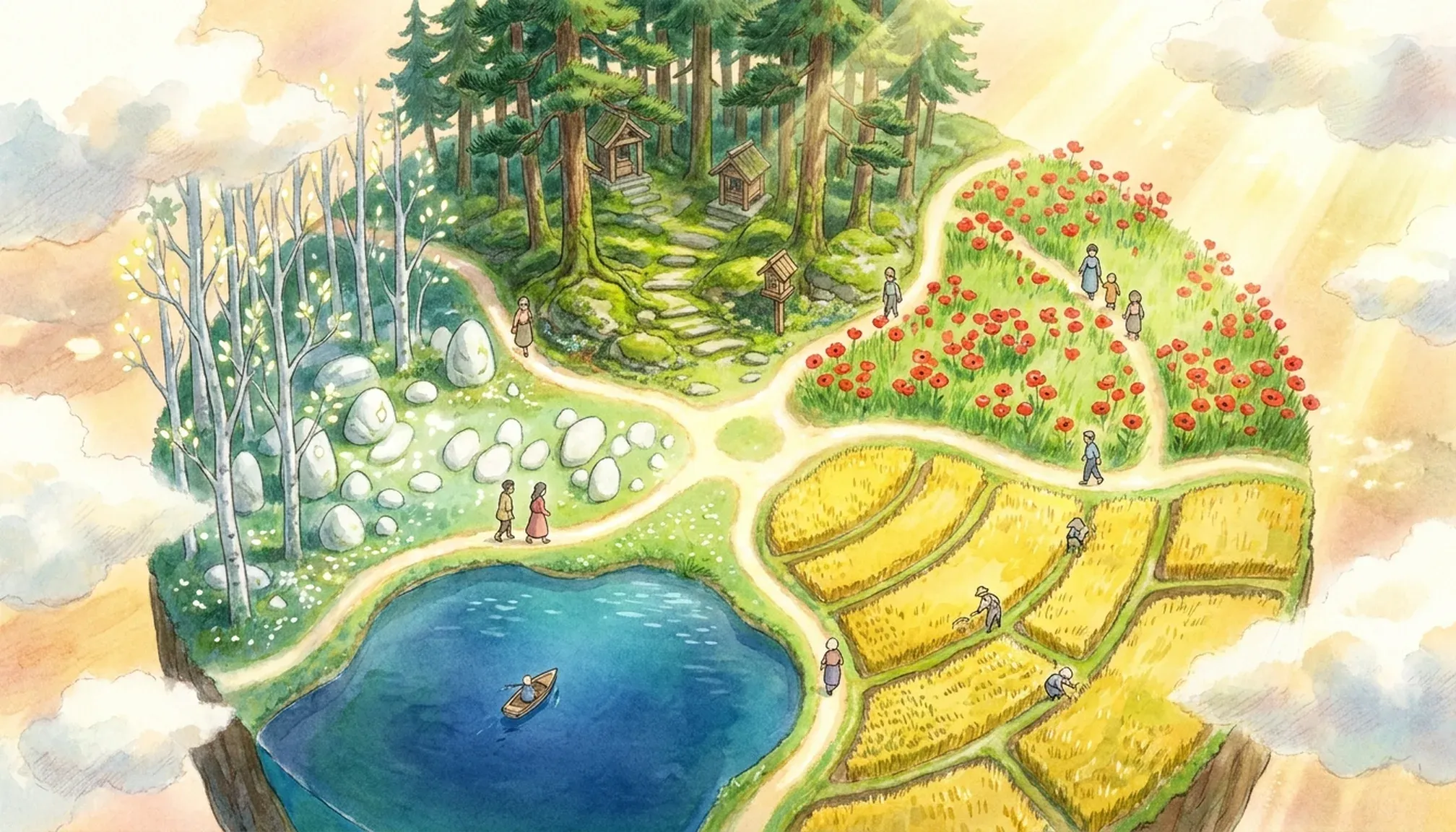
The ancient Chinese sages observed nature with great care. They saw how trees grew in spring, how the heat peaked in summer, how the earth yielded its fruits, how leaves fell in autumn, and how water stood still and cold in winter. From those observations, they created a map for understanding the cycles of life: everything is born, grows, matures, declines, and rests, only to begin again.
In Traditional Chinese Medicine (TCM), this map is also applied to the human body. The underlying idea is simple: we are part of nature, not separate from it. What happens outside, in the seasons and in our surroundings, is reflected inside us, in how we feel, how we sleep, how we digest, and how our emotions affect us. The Five Elements are, in essence, a language for talking about that balance.
Wood: The Energy of Growth and Spring
Imagine a sprout pushing its way up through the soil in spring. That upward force, flexible yet determined, is the essence of the Wood element.
Wood represents beginnings, growth, planning, and the ability to move forward. It's associated with spring, with wind, with the color green, and with the east, where the sun rises. Emotionally, it's linked to the ability to make decisions and to have a clear direction in life.
An everyday example: have you ever noticed that in spring you feel like starting new projects, tidying the house, or signing up for something different? That urge for renewal is very "Wood." So is flexibility: a healthy tree bends in the wind but doesn't break. When that flexibility fails in us, we may feel rigid, irritable, or frustrated, like a dry branch that snaps instead of bending.
Fire: The Warmth of Summer and Relationships
Fire is the element of summer, of midday, of the moment of greatest expansion and warmth in the year. If Wood is the sprout emerging, Fire is the flower in full bloom.
This element represents joy, communication, enthusiasm, and the ability to connect with others. It's associated with the color red, with the south, and with heat. Think about how social life changes in summer: more hours of daylight, more get-togethers, more laughter, more desire to be outdoors. That openness toward others is pure Fire.
In daily life, a person with a balanced "Fire" is usually someone who enjoys company, gets excited about things, and sleeps well because their heart, figuratively speaking, is at peace. When Fire falls out of balance, nervousness, nonstop talking, or insomnia can appear, or, at the opposite extreme, apathy and difficulty enjoying things. These aren't diagnoses, just a simple way of understanding that joy also needs balance: neither dimmed nor out of control.
Earth: The Center, the Harvest, and Nurturing
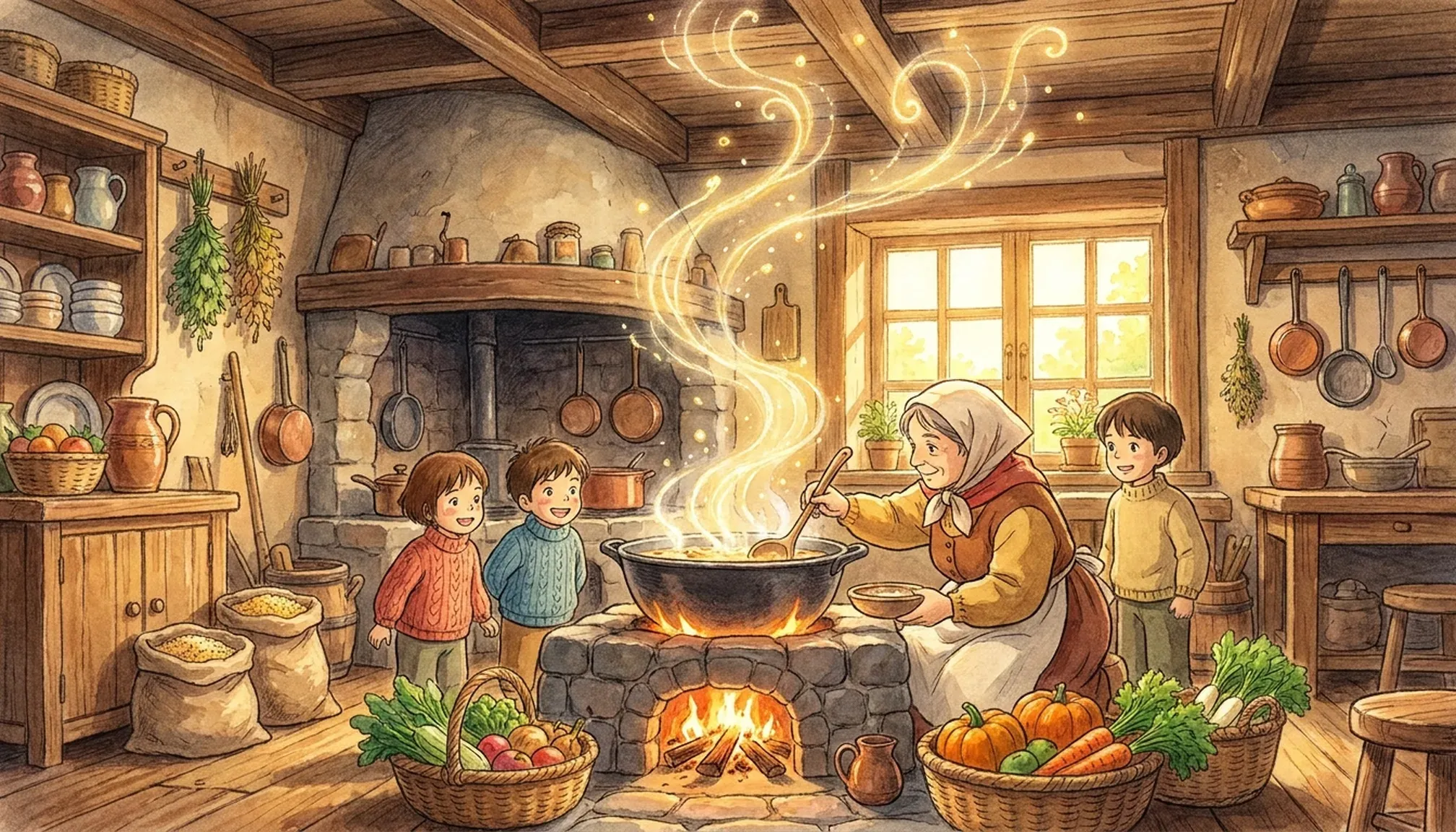
Between summer and autumn, Chinese tradition recognizes a special season: late summer, when the fruits ripen and the harvest is gathered. That is the territory of the Earth element.
Earth represents the center, stability, nourishment, and care. It's associated with the color yellow, with the natural sweet flavor of ripe foods, and with the ability to digest, both in the physical sense and in the figurative sense: we also "digest" ideas, experiences, and emotions.
A very clear everyday example is the person who is always looking out for others, who cooks for everyone, who takes care of people nonstop. That devotion is very "Earth." But Earth also speaks to us about receiving, not just giving. When someone worries excessively, ruminates on the same thoughts over and over, or forgets about themselves while tending to others, their "Earth" is asking for attention. On the physical level, Chinese tradition links this element to digestion, so it's no coincidence that constant worry tends to come with heavier digestion.
Metal: Autumn, Order, and the Art of Letting Go
When autumn arrives, the trees let go of their leaves. They don't cling to them: they let them fall because they've served their purpose. That image sums up the Metal element perfectly.
Metal represents clarity, order, boundaries, and the ability to let go of what we no longer need. It's associated with autumn, with the color white, and with the pure, crisp air of autumn mornings. Emotionally, it's linked to grief, that is, to the ability to process loss and move on.
Think of the widespread habit of tidying and cleaning the house, of getting rid of old clothes or objects we no longer use. That urge to simplify is very "Metal." A person with balanced Metal knows how to set boundaries, values quality over quantity, and can say goodbye to closed chapters without staying stuck in them. When that balance is missing, letting go can be hard: we hoard things, relationships, or sorrows that weigh us down like a backpack full of stones.
Water: Winter, Rest, and Energy Reserves
Water is the element of winter, of night, of cold, and of stillness. In nature, winter seems like a dead time, but it's actually when seeds store underground all the strength they'll need to sprout in spring.
Water represents deep energy reserves, rest, willpower, and the ability to flow. It's associated with the color dark blue or black, with the north, and with cold. Emotionally, the tradition links it to fear, understood not as something negative but as the natural alarm that helps us protect ourselves.
An everyday example: have you noticed that in winter your body asks for more sleep, hot meals, and more time at home? That's honoring the Water element, respecting the time to recharge. We live in a society that pushes us to perform at our maximum all year round, as if it were always summer, and Chinese medicine reminds us that this has a cost: whoever doesn't rest in their "winter" arrives at their "spring" without strength. Water also teaches us something valuable: it knows how to adapt, go around obstacles, and keep on its way, as a river does with the stones.
How Do the Five Elements Relate to One Another?
The Five Elements don't work separately: they form a cycle in which each one nourishes and moderates the others. There are two main relationships, both easy to understand through examples from nature.
On one hand, there is the generating cycle, in which each element nourishes the next: Wood feeds Fire, Fire leaves ashes that become Earth, Metal is extracted from Earth, Metal is related to Water (think of how dew condenses on a cold surface), and Water nourishes Wood, closing the circle.
On the other hand, there is the controlling cycle, which keeps any one element from growing unchecked: Water puts out Fire, Fire melts Metal, Metal cuts Wood, Wood with its roots holds the Earth in order, and Earth contains Water, as a riverbank contains the river.
The final idea is beautiful in its simplicity: health, in the Chinese view, is not a fixed state but a balance in motion, just like the balance between the seasons of the year.
What Is All This Good for in Practice?
You may be wondering what use such an ancient system of thought has today. The answer is that the Five Elements of Chinese medicine remain a very valuable tool of observation. For an acupuncturist, this map helps in understanding the person as a whole: not only what hurts, but how they live, how they sleep, which emotions predominate in them, or what time of year they feel worst. In practice, each channel also has one point for each element, between the fingers or toes and the elbow or knee: these are the Five Shu points, the well, the spring, the stream, the river, and the sea.
For you, as a reader, it can be an invitation to look at yourself with fresh eyes. Notice at which times of year you have the most energy, which emotions visit you most often, whether you respect your moments of rest or live in a permanent summer. Acupuncture, recognized by the World Health Organization as a traditional practice, relies on this holistic view to support well-being, always as a complement and never as a substitute for medical care. If you have persistent symptoms or ones that worry you, the first step is to talk to your doctor.
Frequently asked questions
Are the Five Elements the same as in other cultures?
Not exactly. In the West, people usually speak of the four classical elements (earth, water, air, and fire) inherited from Greek philosophy. The Chinese system is different: it includes Wood and Metal, it doesn't include air, and above all it understands the elements as movements or phases in constant transformation, not as fixed substances.
Does each person have a dominant element?
In the Chinese tradition, we all carry all five elements within us, although it's common for one or two to show up more strongly in our character or in the way we react. It isn't a rigid label or a closed personality classification, but a tendency that can change with the stages of life, the seasons, or circumstances.
Which element corresponds to each season of the year?
Spring is associated with Wood, summer with Fire, late summer with Earth, autumn with Metal, and winter with Water. This correspondence explains why Chinese medicine recommends adapting our habits (diet, rest, activity) to each time of year.
Can I find out my element without going to a consultation?
You can get a general idea by observing yourself: which season suits you best, which emotions predominate in you, whether you lean more toward action or stillness. But the full reading that a Chinese medicine professional does includes many more nuances, such as examining the pulse or the tongue, so it's best not to jump to conclusions on your own.
Do the Five Elements have a scientific basis?
The Five Elements are a traditional philosophical model, not a modern scientific theory. Its value lies in the holistic way of looking at health that it offers to the practice of acupuncture and Traditional Chinese Medicine. Research on acupuncture is ongoing, but this system should be understood for what it is: an age-old tradition that can complement, but never replace, conventional medicine.
Conclusion
The Five Elements of Chinese medicine are, at heart, a lesson in humility before nature: they remind us that everything changes, that each stage has its moment, and that balance is a movement, not a destination. If your curiosity has been piqued and you'd like to know how this wisdom applies to your own case, the best step is to see a qualified professional in acupuncture and Traditional Chinese Medicine, who can assess your situation individually and support you on your path toward greater well-being.