You reach the end of the day and your legs feel heavy, swollen, and tired, as if you were wearing lead boots. If that sounds familiar, you're not alone: it's a very common complaint among people who spend long hours on their feet, sitting, or in the heat. In this article, we'll look at why that heavy feeling in your legs shows up, what you can do in your daily routine to ease it, and how Traditional Chinese Medicine understands this discomfort and offers solutions such as acupuncture as a complement.
Why do my legs feel heavy at the end of the day?
Heavy legs are that sensation of swelling, fatigue, and tension that tends to get worse in the afternoon or after many hours in the same position. It isn't a disease in itself, but a symptom with many possible causes.
Among the most common factors are:
Many hours standing or sitting: if you spend the day in one position, blood pools in the lower legs and the veins work less efficiently.
Heat: heat dilates the blood vessels and encourages fluid to build up in the tissues, which is why the heaviness is usually more bothersome in summer.
Excess weight: a higher body weight increases the pressure on the venous circulation in the legs.
A sedentary lifestyle: lack of exercise weakens the leg muscles, which act as a second pump that pushes blood back toward the heart.
Tight clothing or high heels: some very snug garments and heeled shoes can make venous return harder.
Hormonal factors (pregnancy, menstrual changes) or simply a genetic predisposition to weaker veins can also play a role.
What Traditional Chinese Medicine says about heavy legs
Chinese medicine looks at the body in a different way. In this view, health depends on vital energy, which it calls Qi, and the body's fluids flowing freely throughout the whole body. When that movement slows down or stagnates, symptoms such as a feeling of heaviness, swelling, or fatigue appear.
From this perspective, heavy legs are understood as a sign that energy isn't rising the way it should and that fluids are accumulating in the lower part of the body. This can be related to cold or excessive heat in the environment, to weak digestion that doesn't transform food well and turns it into "dampness," and to a lack of movement, which slows down all internal circulation.
Chinese medicine also pays attention to how we take care of ourselves according to the time of year. In summer, with the heat and humidity, these complaints are more likely to appear; in winter, cold can slow circulation down. That's why the recommendations aren't the same in every season: what helps in August isn't necessarily best in January.
Practical tips to relieve heavy legs
The good news is that many of the causes of heaviness can be addressed with small changes to your routine. These are the habits any health professional would recommend, and they fit very well with the Chinese medicine approach of promoting circulation and movement.
Move throughout the day: you don't need intense exercise. Getting up for five minutes every hour, going up and down stairs, or taking a walk after a meal activates the leg's muscle pump and pushes blood upward.
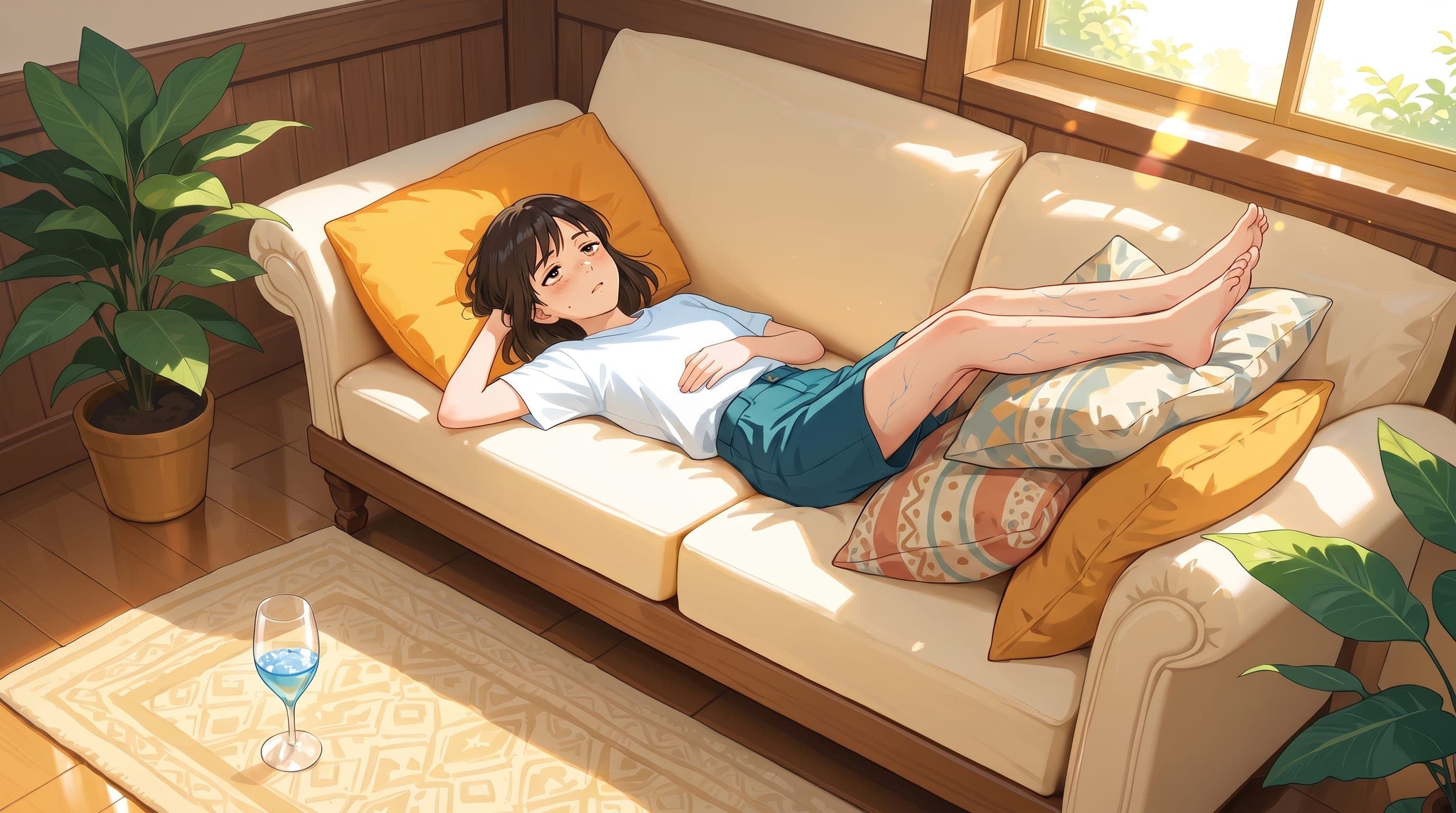
Elevate your legs when you can: lie down for about 10-15 minutes with your legs on a cushion or resting against the wall, above the level of your heart. It helps fluid drain back, and you'll notice relief right away.
Choose loose clothing: avoid clothing that's very tight at the waist, thighs, or groin, and alternate heels with comfortable flat shoes.
Try a contrast shower: finish your shower with cold water aimed at your legs, moving from the bottom up. The change in temperature stimulates circulation. In Chinese medicine, temperature contrast is highly valued for "waking up" the body.
Stay hydrated and watch your diet: drinking enough water and cutting back on excess salt helps control fluid retention. Chinese medicine also recommends limiting very cold foods and too many raw foods, because they weaken digestion and encourage the buildup of dampness.
Walk barefoot on natural surfaces: in summer, sand or grass under your feet activates the muscles and circulation.
Maintain a healthy weight: this isn't a judgment, just a fact: every pound less is less work for your veins.
None of these tips replaces a professional evaluation, but combined they can greatly improve that heavy feeling in just a few weeks.
How can acupuncture help with heavy legs?
In Traditional Chinese Medicine, acupuncture is used to stimulate the circulation of energy and fluids in the body, help energy rise toward the upper body, and relieve the feeling of heaviness. An acupuncturist will assess your situation as a whole —your lifestyle, your diet, how you sleep, whether you feel cold or hot— and will work in an individualized way.
It's important that you understand this clearly: acupuncture doesn't replace conventional medicine or cure venous disease. It's a complementary therapy that some people find useful for easing discomfort such as heaviness, swelling, or restlessness in the legs, and for improving their overall well-being.
As for the scientific evidence, we want to be honest: some studies suggest that acupuncture may help improve symptoms related to venous circulation, but the evidence is still limited and of varying quality, so it's considered a promising option as a complement, not as a primary treatment. The most reasonable approach is to consider it as part of a comprehensive plan: healthy habits, medical follow-up if needed and, if you feel like trying it, the hands of a qualified professional.
At a first visit, the acupuncturist will ask you many questions about your general health and your symptoms. Sessions usually last between 30 and 60 minutes, are generally painless or involve only minimal discomfort when the needles are inserted, and many people describe them as a relaxing experience.
Acupressure for swollen legs: points you can try at home
Among everyday habits, acupressure —pressing with your finger, without needles— on a few classic points can offer gentle relief when your legs feel swollen or your feet feel heavy:
Yinlingquan (SP9), "Yin Mound Spring": on the inner side of the leg, just below the knee, in the hollow you find by sliding your finger upward along the edge of the tibia. It's the classic TCM point for edema and fluid retention.
Sanyinjiao (SP6), "Three Yin Intersection": on the inner side of the leg, four finger-widths above the ankle, right against the edge of the tibia. Useful for the overall circulation of the leg. Avoid it if you are pregnant.
Zusanli (ST36), four finger-widths below the kneecap: supports the circulation and general energy of the leg.
Press with gentle, firm pressure for one or two minutes on each point, preferably with your legs already elevated. If the swelling is in only one leg, appears suddenly, or hurts when you walk, acupressure isn't enough: you need a medical evaluation before anything else.
Frequently asked questions
Does acupuncture work for heavy legs?
It can be a useful complement. In Chinese medicine, the work focuses on promoting the circulation of energy and reducing the feeling of heaviness and swelling. There is limited but promising evidence on acupuncture and venous symptoms, although it should never replace a medical evaluation if your discomfort is persistent.
How many acupuncture sessions do I need to notice an improvement?
It depends on the person and on how long you've had the discomfort. It's common to start with one session a week and assess the response after a few sessions. Your acupuncturist will guide you based on your particular case, because not everyone responds in the same way.
Does acupuncture hurt?
The needles are very thin, much thinner than those used for drawing blood, and most people barely feel the insertion: at most a slight, brief prick or a sensation of heaviness or warmth. Many people even relax to the point of falling asleep during the session.
Can acupuncture replace medical treatment for poor circulation?
No. Acupuncture is a complementary therapy that can help you feel better, but it doesn't replace medical diagnosis or treatment. If you suspect you have a venous problem (visible varicose veins, marked swelling, pain), see your doctor first.
What can I do at home to relieve heavy legs today?
Elevate your legs for 10-15 minutes at the end of the day, avoid very tight clothing, move a little every hour and, if you're up for it, finish your shower with cold water on your legs. These are simple steps that most people notice right away.
When to see a doctor
Occasional heavy legs related to heat or work are usually benign, but there are signs you shouldn't ignore:
- Swelling in only one leg, especially if it appears suddenly or comes with pain.
- Calf pain when walking or tenderness in the area.
- Significant varicose veins, changes in the color of the skin on your legs, or sores that are slow to heal.
- Widespread swelling that also affects other parts of the body, since there could be other causes to rule out.
- Discomfort that doesn't improve with changes in habits after a few weeks.
These signs may point to problems such as venous insufficiency that needs treatment, an infection, or even a blood clot, and they call for medical evaluation as soon as possible. When in doubt, get checked: your primary care doctor can guide you and, if appropriate, refer you to a specialist. Acupuncture and Chinese medicine fit very well as a complement, but always with the approval and knowledge of your medical team.
Take care of your legs, take care of your energy
Heavy legs are a common complaint and, in most cases, manageable with simple habits: moving more, elevating your legs, watching your diet, and respecting your body's signals. And if you want to go a step further, Traditional Chinese Medicine offers a different perspective, focused on restoring the movement of your energy and your overall well-being.
If you've been feeling that heaviness for a while and want to try a complementary approach, see a qualified professional in acupuncture and Traditional Chinese Medicine. They will listen to you, assess your case individually, and support you so that you feel light again at the end of the day.