Did you know acupuncture isn't just for adults? More and more families in Spain are turning to Traditional Chinese Medicine to help their children sleep better, digest more comfortably, or calm their nerves before an exam. If you're wondering whether acupuncture is safe for children, what a pediatric session looks like, and what families use it for, this article walks you through it all, clearly and without jargon.
What is pediatric acupuncture?
Pediatric acupuncture is the adaptation of Traditional Chinese Medicine to children. In TCM, the body is understood to work thanks to Qi, a vital energy that flows through the whole organism, and when that Qi gets "stuck" or falls out of balance, symptoms appear: insomnia, heavy digestion, irritability, or trouble concentrating.
In children there is an important difference: their Qi is more active, and their bodies respond to stimulation more quickly than adults' do. That's why pediatric acupuncture uses much gentler techniques, shorter sessions, and an approach designed to keep the child comfortable and relaxed at all times.
We want to be clear from the start: acupuncture does not replace conventional medicine or pediatric care. It is a complementary tool that many families combine with their child's usual care.
What an acupuncture session with a child is like
One of the most common questions parents have is what the first session will be like. In a pediatric acupuncture clinic, the atmosphere is very different from that of a conventional medical office.
A space designed for them
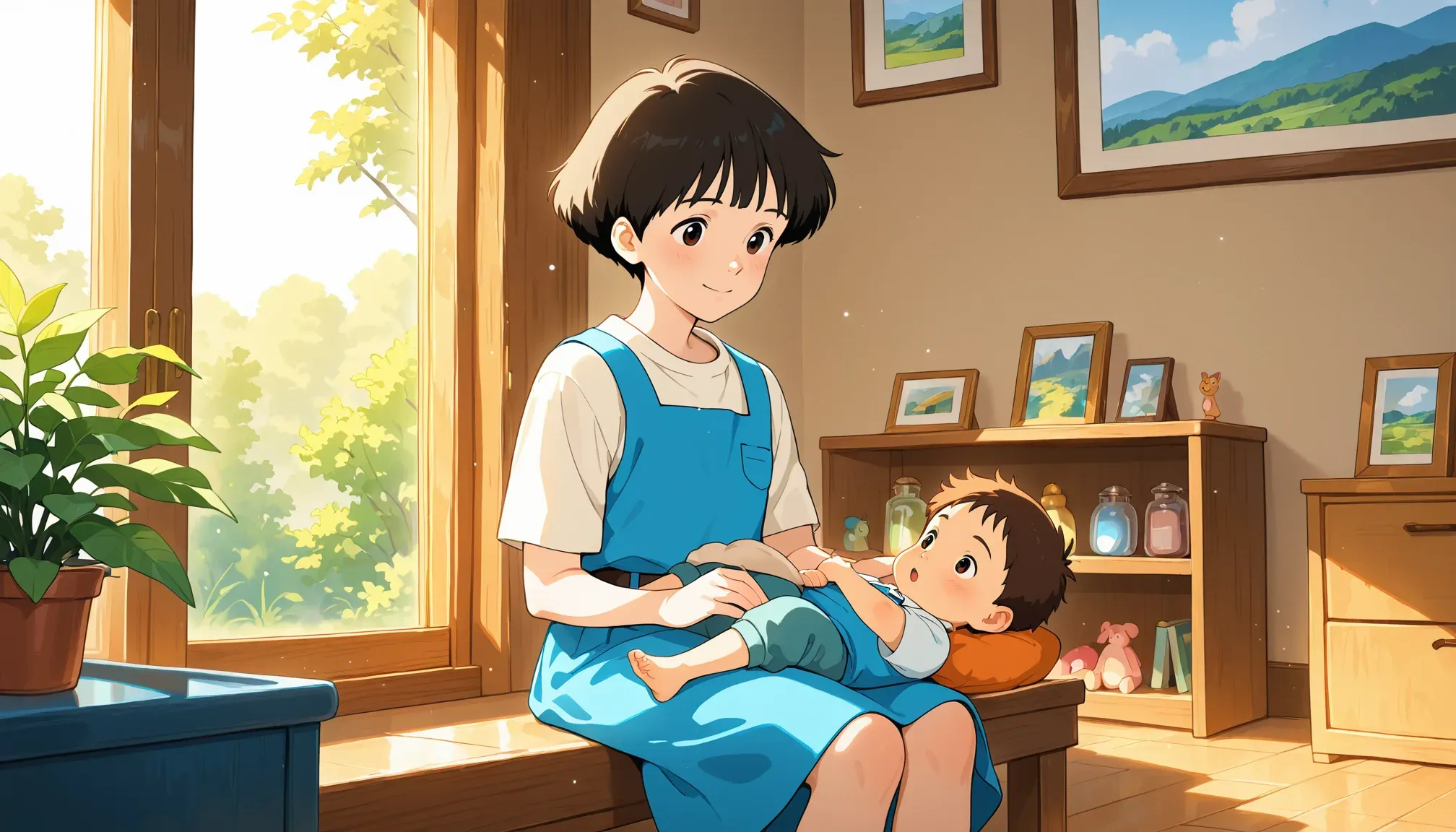
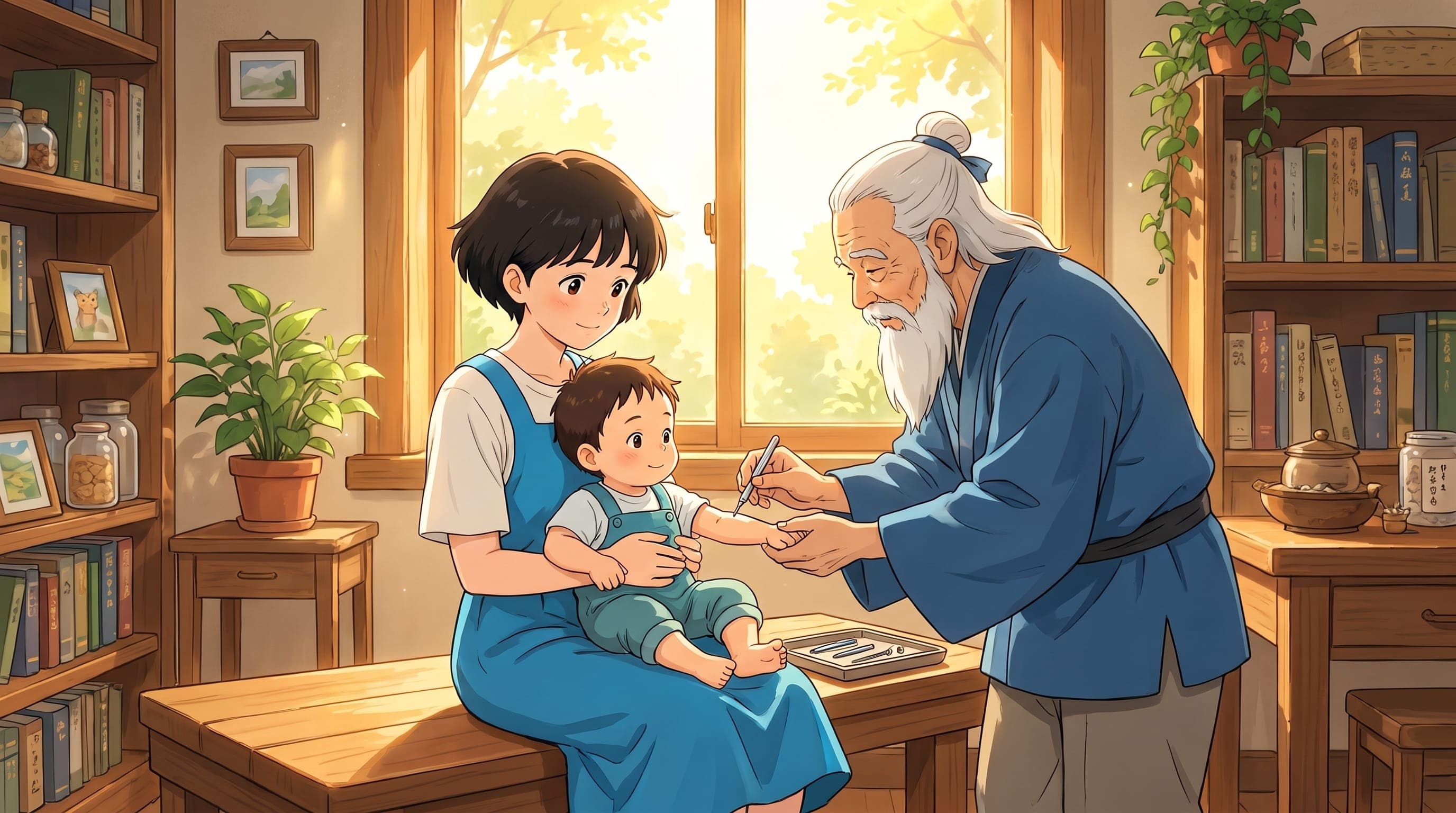
The session usually starts with a relaxed chat, often with the child sitting on a parent's lap. The practitioner talks with the child and explains what they're going to do in words the child understands, and may use stories, drawings, or games to help the little one lose any fear. The goal is for the visit to feel pleasant, never like a test.
Ultra-thin, nearly imperceptible needles
When needles are used (which isn't always the case), they are much thinner than adult needles, so fine that many children don't even feel them. They are placed for a moment and removed, so the child doesn't have to stay still for long. In fact, pediatric sessions are usually quite a bit shorter than adult ones.
Shonishin: the Japanese needle-free massage
One of the techniques most often used with the youngest children is shonishin, a Japanese-origin massage that works on the surface of the body with gentle instruments, with no need to insert needles. It consists of strokes, very light scraping, and tapping on specific areas of the back, arms, and legs. Children usually find it pleasant, much like a massage, and it is especially well suited to babies and very young children.
Games to help them relax
Good pediatric acupuncturists know that the key is the relationship. They may use balls, dolls, guided breathing like "blowing out candles," or small challenges to draw the child's attention away while they work. When the child is relaxed and having fun, the session is far more effective and the experience becomes associated with something positive.
Is acupuncture safe for children?
It's the question every responsible parent asks, and it's completely legitimate. When performed properly by a qualified professional, pediatric acupuncture is considered a safe technique.
Trained professionals: always look for someone with specific training in pediatric acupuncture and, where possible, proven experience with children.
Single-use materials: the needles are sterile and disposable, which eliminates any risk of transmitting infections.
Minimal reactions: occasionally, slight redness or mild bruising may appear at the needling site, and it clears up within a few days.
Always informed: the practitioner should know the child's history, medical treatments, and any prior illness before working with them.
As for the scientific evidence, there is research on acupuncture in pediatrics suggesting promising results in areas such as sleep, pain, and digestive discomfort, although the evidence is still limited and of varying quality. The scientific community is calling for larger, more rigorous studies before drawing definitive conclusions. That said, the safety of the technique in expert hands is well documented.
What families use pediatric acupuncture for
From the perspective of Chinese medicine, a child's body is like a small seed that needs balance to grow up healthy. Many of the reasons families seek out acupuncture for children have to do with energy imbalances, internal cold or heat, or nervousness.
The most common uses are:
Sleep problems: trouble falling asleep, frequent waking, or restless sleep. In TCM, children's sleep is understood to improve when the child's energy settles and becomes balanced.
Heavy digestion: discomfort after eating, an irregular appetite, or a tendency toward sluggish digestion. Chinese medicine considers a child's digestion "delicate" and very responsive to gentle techniques.
Nervousness and mood: irritability, bad moods, easy crying, or personality changes linked to times of change (switching schools, the birth of a sibling, exams).
Concentration and attention: some families look to acupuncture for support in helping their children feel calmer and more focused at school.
Fears and anxiety about specific situations: doctor visits, trips, moves, or separations.
Seasonal discomforts: in TCM, each season has its own influences on the body, and many parents seek a consultation to prepare their child for changes in the weather.
Many families find that acupuncture fits very smoothly into the child's routine, and that improving sleep or digestion tends to have a positive knock-on effect on mood and attention.
Acupressure for children: what you can do at home
With children, finger pressure works better as a small ritual than as a technique: a few minutes, warm hands, a calm voice, and stopping as soon as the child doesn't want to continue. These gestures, borrowed from Chinese pediatric massage, are useful for nervous children and for helping them wind down before bed:
The space between the eyebrows, at Yintang (EX-HN3). With your thumb, gently glide from the point between the eyebrows up to the hairline, alternating thumbs, about twenty times. It usually relaxes a child very quickly.
The wrist, at Shenmen (HT7). On the wrist crease, on the pinky side. Make small circles with your fingertip, half a minute on each hand, while you tell your child something.
The belly. With your whole palm, make slow clockwise circles around the navel for a couple of minutes. Useful when nerves settle in the tummy or when digestion feels heavy.
The back. Rub from top to bottom along the spine with your palm, without pressing, until the area feels warm.
With babies, all of this is done even more gently, almost like a caress. And if a child is nervous all the time, sleeps poorly for weeks, or has big changes in personality, it's best to talk to the pediatrician first.
What ages it can be used for
Pediatric acupuncture can be used from the first months of life, adapting the technique to each stage. With babies and very young children, the work is almost always shonishin massage and gentle touch, without needles. As the child grows and becomes more receptive, the practitioner may consider using very fine needles, always with the parents' consent and the child's cooperation. There is no universal "right" age: what matters is that the child is calm and that the approach suits their stage of development.
When to see a doctor
This point is essential: acupuncture is a complement, never a substitute for pediatric care. Always consult a doctor in these cases:
- Persistent or severe symptoms: if your child has had a fever, severe pain, vomiting, or diarrhea for several days, the first step is to see their pediatrician.
- Any diagnosed illness: acupuncture can support treatment, but it should never delay or replace prescribed medical treatment.
- Sudden changes in behavior, sleep, or appetite: they can be a sign of something that needs a medical exam.
- Reactions during or after a session: although they're rare, let the acupuncturist and your pediatrician know if you notice anything unusual.
A good pediatric acupuncture practitioner will always ask about medical records and will encourage you to stay in touch with your pediatrician.
Frequently asked questions
Does acupuncture help children sleep better?
Many families come precisely because of sleep problems, and Chinese medicine understands childhood insomnia as related to energy that doesn't settle at night. Some studies suggest benefits, although the evidence is still limited. The best approach is to see it as complementary support alongside good sleep hygiene.
How many acupuncture sessions does a child need?
It depends on the case and the age. Because they're children, their bodies tend to respond faster than adults' bodies, so a few sessions are often enough to notice changes. The practitioner will propose an initial plan (usually spanning several weeks) and adjust it as your child progresses.
Does pediatric acupuncture hurt?
Generally, no. The needles used with children are extremely thin, and many children don't even feel them. In addition, with the youngest children it's common to work without needles, using only shonishin massage and gentle-touch techniques.
At what age can children start acupuncture?
There is no rigid minimum age. With babies and very young children, needle-free techniques suited to their delicacy are used, and the approach is adapted as they grow. What matters is that the practitioner has specific training in pediatrics.
Does my child have to stop any medical treatment to try acupuncture?
Not at all. Acupuncture is a complement to conventional medicine, never a substitute. You should not stop or change any treatment prescribed by your child's doctor without first discussing it with them.
Care for your little one with balance
Pediatric acupuncture offers a gentle, respectful approach to supporting children in their energetic balance, whether to improve their sleep, calm their nerves, or make their digestion more comfortable. Families who try it often especially appreciate how well adapted the setting is and how quickly their little ones feel at ease.
If you're thinking about trying it, the best way to take the step is to consult a qualified professional in acupuncture and Traditional Chinese Medicine with pediatric experience. They can evaluate your child, answer all your questions, and design a plan suited to your child's age and needs, always in coordination with their usual medical care.