Menstrual pain is one of the most common complaints among women of childbearing age, and also one of the most normalized. For generations, the idea has been passed down that severe cramps, dizziness, or lower back pain every month are just part of "being a woman," and that all you can do is tough it out or take a painkiller and carry on. Yet when intense period pain gets in the way of work, school, or daily life, it isn't something you have to accept as inevitable. There are answers, both in conventional medicine and in complementary approaches such as Traditional Chinese Medicine (TCM) and acupuncture, that can help you understand where the problem comes from and get through your cycle feeling much better.
In this article, we explain why you shouldn't normalize period pain, when it's worth seeing a gynecologist, how TCM understands the menstrual cycle, and which simple habits can ease the discomfort naturally.
Is it normal for your period to hurt this much?
Mild to moderate discomfort during the first days of your period is well within the normal range. The uterus contracts to shed its inner lining, and those contractions can cause a feeling of heaviness or bearable cramping in the lower abdomen.
What shouldn't be considered normal is pain that:
Forces you to miss work or class, or to cancel plans, every month.
Isn't relieved by standard painkillers.
Comes with vomiting, fainting, severe diarrhea, or pain that radiates down the legs.
Gets worse over the years.
Also shows up outside the days you're bleeding.
When period pain becomes disabling, your body is sending a signal that deserves attention. Accepting suffering as "just the way it is" delays diagnosis and, with it, solutions.
When to see a gynecologist about period pain
Before exploring any complementary approach, the first step is always a medical evaluation. A gynecologist can rule out causes that need specific treatment, such as endometriosis, uterine fibroids, polyps, ovarian cysts, or pelvic inflammatory conditions.
You should make an appointment with your gynecologist if:
- Intense period pain appears suddenly or changes from what's usual for you.
- Your bleeding is very heavy, with large clots, or lasts more than a week.
- You feel pain during sex or when using the bathroom during your period.
- You've been trying to get pregnant for a while without success and your periods are very painful.
- Painkillers barely help.
An ultrasound and a basic exam are usually enough to start pointing toward a diagnosis. Ruling out an organic cause isn't just reassuring: it lets you address the pain with an appropriate, safe strategy. Acupuncture and TCM work as a complement to that medical care, never as a substitute.
How does Traditional Chinese Medicine understand the menstrual cycle?
Traditional Chinese Medicine sees the body as an interconnected system in which vital energy and Blood need to circulate freely and in balance. From this age-old perspective, the menstrual cycle is a very direct reflection of how that overall balance is doing.
When Qi and Blood flow without obstruction, menstruation arrives regularly, with moderate bleeding and little or no pain. When that circulation slows down or becomes blocked, cramps, clots, premenstrual tension, or an irregular cycle appear.
From a TCM point of view, many everyday factors play a role: sustained stress, which tends to "jam" the Qi; cold, which enters the body through uncovered feet, lower back, or abdomen and hinders circulation; accumulated fatigue and insufficient rest, which drain the body's reserves; and diet, especially too many cold or ultraprocessed foods in the days before your period.
That's why a TCM consultation doesn't only ask about pain: it asks about the whole cycle, digestion, sleep, body temperature, emotions, and lifestyle. The goal is to understand what is throwing the body out of balance and help it recover its natural rhythm.
How can acupuncture help with period pain?
Acupuncture is one of the main techniques of Traditional Chinese Medicine. It involves inserting very fine, sterile, single-use needles into specific points on the body in order to promote the circulation of Qi and Blood, relax the muscles, and modulate the perception of pain.
For menstrual cramps, treatment usually aims for several combined effects:
Relaxing the abdominal and lower back area, reducing the intensity of painful contractions.
Promoting circulation in the pelvic area, so that bleeding flows more easily.
Balancing the nervous system, which helps manage stress and premenstrual tension.
Supporting the regulation of the cycle over several months.
The World Health Organization recognizes acupuncture as a widely used traditional medicine practice, and research is ongoing into its role in pain management, including menstrual pain. Many women turn to acupuncture as a complement to their gynecological care and notice a gradual improvement in the intensity of their cramps, the regularity of their cycle, and their overall well-being during their period.
It's important to know that results are usually not immediate: treatment is typically planned as several sessions over one or more cycles, tailored to each person. And of course, it should always be performed by a qualified, licensed professional.
Acupressure for menstrual cramps: points you can press
Acupressure is one of the few things you can do for yourself in the middle of the pain, and for periods it has somewhat more support than for other problems: several trials, mostly with teenagers and students, report less pain from pressing Sanyinjiao during the first days of the cycle, although these are small studies. These are the most commonly used points:
Sanyinjiao (SP6), on the inner side of the leg, four finger-widths above the ankle bone, right behind the edge of the shinbone. This is the main point. Press with your thumb, firmly, for one or two minutes per leg, and repeat several times a day once the pain starts.
Diji (SP8), on the same line, higher up: one hand-width below the knee, on the inner edge of the shinbone. It's often tender during your period and is used for sharp pain.
Ciliao (BL32), on the sacrum, in the hollows on either side of the spine above the buttocks. It works best with heat, or by rubbing the area with your palms until it feels warm, especially if the pain moves to your lower back.
Taichong (LR3), on the top of the foot, between the big toe and the second toe, if the pain comes with irritability, tender breasts, and a feeling of tightness all over.
Combine the pressure with heat on your lower abdomen and slow breathing into your belly. If there's any chance you might be pregnant, don't press Sanyinjiao, which tradition advises against during pregnancy. And if the pain doesn't ease with this or with a painkiller, go back over the signs above for when to see your gynecologist.
Habits that ease period pain naturally
In addition to professional care, there are simple things you can add to your routine that fit both TCM clinical experience and common sense.
Local heat on the abdomen and lower back
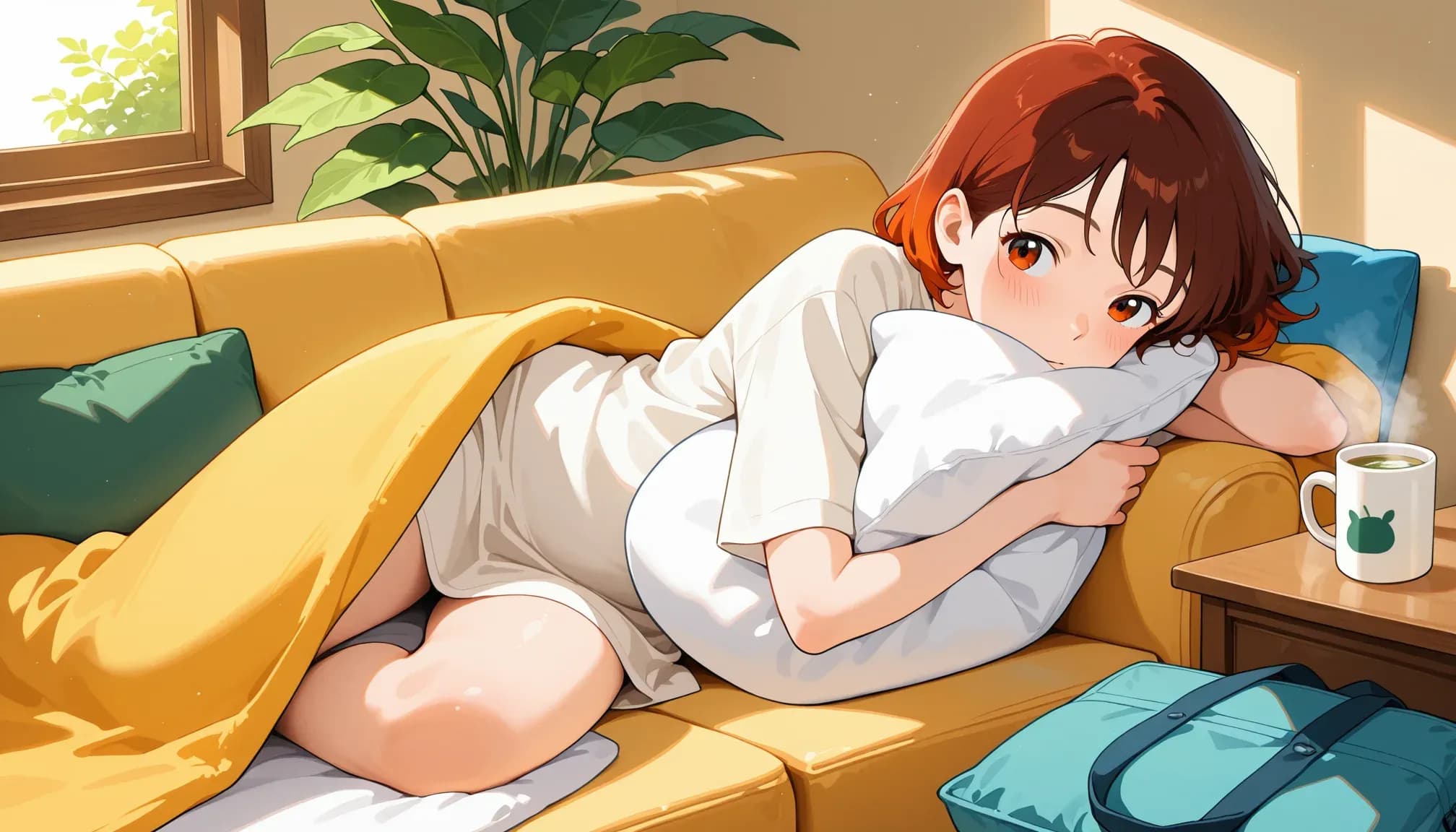
Heat relaxes the uterine muscles and promotes circulation. A hot water bottle, an electric blanket on a gentle setting, or even a warm shower over your lower back can noticeably reduce cramping. In the Chinese view, heat helps Qi and Blood flow, while cold slows them down. It's best to avoid ice cream, very cold drinks, and chilly environments during your period, and to keep your feet and waist well covered.
Rest and listening to your body
In TCM, the days of menstruation are a time of drawing inward and recovering. It's no coincidence that many women feel more tired: the body is carrying out a process that takes energy. Getting enough sleep, slowing down when you can, and avoiding very intense exercise on the heaviest bleeding days helps your cycle go more smoothly. Gentle walks, stretching, or restorative yoga are good alternatives to demanding workouts.
Eating to support your cycle
During your period and the days leading up to it, it's a good idea to favor warm, cooked, easy-to-digest meals: vegetable purees, broths, mild stews, cooked whole grains. Iron-rich foods, such as legumes, leafy green vegetables, or nuts, help make up for the blood lost. It's recommended to moderate coffee, alcohol, ultraprocessed foods, and excess sugar, which can increase inflammation and cramping. Warm herbal teas, such as chamomile or ginger, are a classic that combines warmth with digestive relief.
Managing stress
Prolonged stress is one of the biggest enemies of a calm menstrual cycle, in both Western and Chinese medicine. Breathing techniques, meditation, walks in nature, or simply some screen-free downtime help regulate the nervous system, and with it, a good share of premenstrual discomfort.
An important message: pain is not your normal
Living with intense pain every month is not a fate, nor a sign of strength. It's a signal that deserves to be heard, first with a gynecological evaluation that rules out important causes, and then with a comprehensive approach that can include changes in habits, physical therapy, emotional support, and complementary therapies such as acupuncture.
Traditional Chinese Medicine doesn't promise miracles or replace your doctor. What it offers is a whole-person view of the menstrual cycle and tools to help the body move toward greater balance, always hand in hand with qualified professionals.
Frequently asked questions
Does acupuncture hurt?
Acupuncture needles are much thinner than those used for an injection. Most people barely feel the insertion, at most a small prick or a momentary feeling of heaviness. Many describe the sessions as deeply relaxing.
How many acupuncture sessions are needed for period pain?
It depends on the person, the intensity of the pain, and how long it has been going on. It's usual to assess progress over several menstrual cycles. Your practitioner will propose a plan tailored to your case after the first consultation.
Can I get acupuncture if I'm taking hormonal birth control?
Yes, there's no incompatibility. Acupuncture can be done whether or not you use birth control. Always let your practitioner know about any medication or hormonal treatment you're taking.
Does acupuncture replace treatment from a gynecologist?
No. Acupuncture and Traditional Chinese Medicine are a complement to medical care, never a substitute. With intense period pain or any change in your cycle, your first visit should always be to a gynecologist.
Is it bad to take painkillers every month for your period?
Occasionally taking a painkiller recommended by a health professional isn't a problem in itself, but needing them every month in increasing doses is a sign that the pain deserves an evaluation. Masking the symptom without looking for its cause is not a long-term solution.
Take care of your cycle with professional support
If period pain shapes your life every month, taking the step to look for help can change everything. See your gynecologist first and, if you want to explore a complementary approach, go to a properly qualified acupuncturist or Traditional Chinese Medicine therapist, who will assess your case individually and work with you to make each cycle more manageable. Your well-being isn't a luxury: it's the starting point.