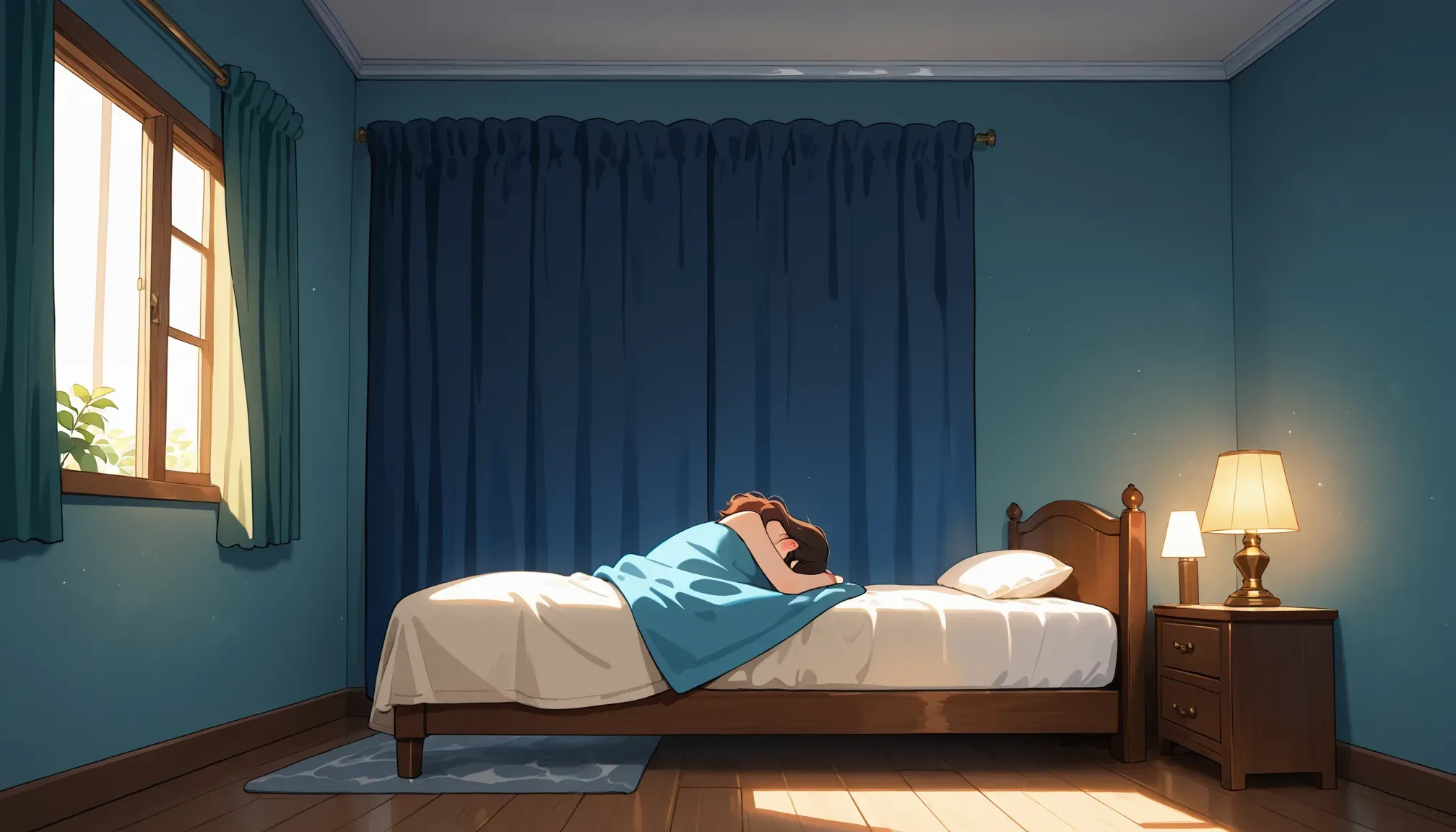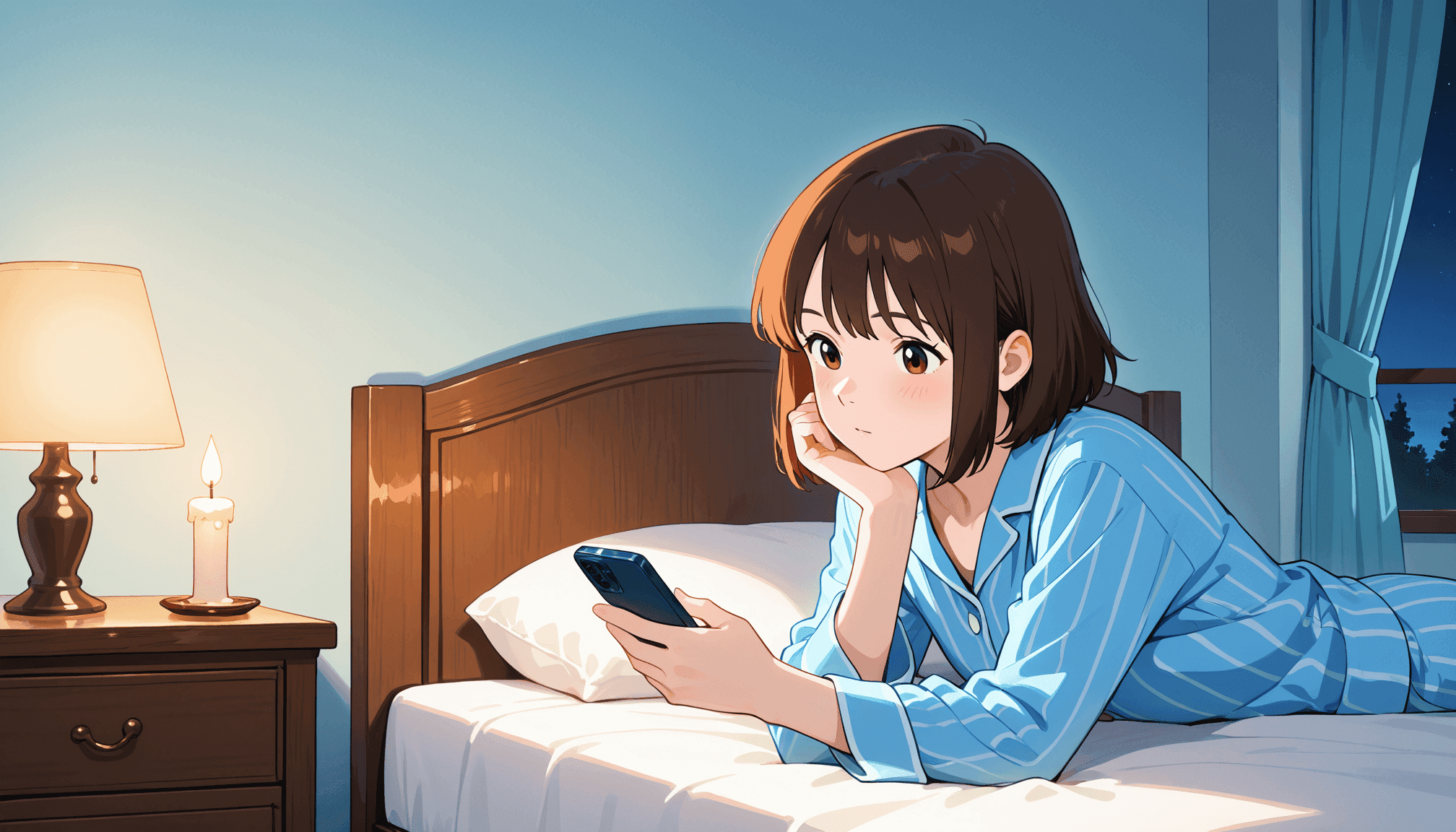
You go to bed tired, sleep well for the first few hours... and then, like clockwork, your eyes snap open. You check the time: 3 AM, again. If this sounds familiar, you're not alone. Waking up in the early hours is one of the most common sleep problems, and there's a reason so many people wake at exactly the same time.
From the perspective of Traditional Chinese Medicine (TCM), this repeated, punctual waking is no coincidence. In this ancient view of health, the body works like a great biological clock in which every organ and every emotion has its moment of peak activity during the night. When something falls out of balance, the body "calls" you at that particular hour. In this article we explain in plain language what may be going on, what Chinese medicine says about waking up at 3 AM, and how acupuncture and lifestyle habits can help you get restorative sleep again.
Why do I always wake up at the same time in the early morning?
Almost everyone wakes up at some point during the night; it's part of normal sleep. The problem begins when the waking happens every day, lasts a long time, or keeps you from falling back asleep, leaving you exhausted the next day.
From the standpoint of conventional medicine, frequent early-morning awakenings are usually linked to:
Stress and anxiety: the mind "switches off" less during the night, and worries surface just as sleep becomes lighter.
Sleep maintenance insomnia: trouble staying asleep (as opposed to sleep onset insomnia, which is being unable to fall asleep).
Alcohol, caffeine, or late, heavy meals, which fragment sleep architecture.
Sleep apnea or snoring, especially if you wake up with a dry mouth or gasping.
Hormonal changes, such as those of menopause, or the natural drop in blood sugar during the night.
Depression, which often shows up as waking very early in the morning.
And Chinese medicine offers a complementary explanation, a very popular one that many people find surprisingly accurate: the organ clock.
What is the biological clock in Chinese medicine?
Traditional Chinese Medicine divides the day into two-hour blocks and assigns each block to the peak activity of a specific organ. From 1 to 3 AM it's the Liver's turn, and from 3 to 5 AM, the Lung's. That's why chronic waking during this window is usually interpreted in TCM as a sign that one of these two systems is "overloaded."
What does that mean, exactly? Don't think of the Liver or the Lung only as physical organs, but as two functional "teams":
The Liver system governs, according to TCM, the circulation of vital energy (Qi) and Blood, and is closely tied to the emotions: especially frustration, pent-up anger, and accumulated stress. When this system becomes "stuck" or lacks nourishment, the body tends to send a warning during its hours of peak activity.
The Lung system is associated with breathing, the skin, and grief or sadness. It's common for people going through a loss or a period of melancholy to wake during the Lung window.
Taken together, the reading goes like this: waking between 1 and 3 AM is usually linked to stress and repressed emotion, while waking between 3 and 5 AM is linked to sadness, grief, or weakened breathing and vital energy.
What does Chinese medicine say about 3 AM?
For Chinese medicine, sleeping well depends on a balance between two opposite and complementary forces that govern the entire body: Yin and Yang.
Think of Yin as what cools, nourishes, and allows rest (like the sap of a plant), and of Yang as what warms, activates, and keeps you awake (like the sun). Sleep arrives when Yang withdraws and Yin rules the night. When there is Yin deficiency or excessive internal heat, that "cooling sap" isn't enough and Yang "overflows" toward the surface of the body, producing restless nights, heat at night, sweating, or the feeling of a racing mind.
The other key piece is Blood. In TCM, Blood doesn't just carry nutrients: it is the material foundation where the mind "anchors" at night. If Blood is scarce or of poor quality (because of weak digestion, a poor diet, or prolonged exhaustion), the mind has nowhere to settle and wakes up. That's why chronic sleeplessness so often goes hand in hand with weak digestion and accumulated fatigue: when we don't digest food well, we make less "nourishment" for the Blood, and sleep suffers.
In short, Chinese medicine explains waking at 3 AM as a possible combination of:
Stagnant vital energy caused by stress, rushing, or bottled-up emotion.
A lack of cooling nourishment (insufficient Yin) and internal heat.
Insufficient Blood and vital energy from poor nutrition or overexertion.
Unprocessed emotions: frustration, sadness, grief.
How can acupuncture help you sleep better?
Acupuncture involves inserting very thin needles into specific points on the body to regulate the circulation of vital energy and stimulate the body's self-regulating systems. In the case of insomnia and nighttime awakenings, the approach isn't to "sedate" you, but to correct the imbalance that keeps your body from relaxing on its own.
A properly trained acupuncturist will look at your case as a whole: how you sleep, how you eat, how you handle stress, how your digestion is doing, your daytime energy... and design a personalized treatment. The goal is that, session by session, your body regains its natural ability to fall asleep and stay asleep.
As for scientific evidence, several studies suggest that acupuncture may improve sleep quality and reduce insomnia symptoms, although the evidence is still mixed and more high-quality research is needed. What is extensive is the clinical experience: many people notice fewer sleepless nights, an easier time falling back asleep, and a general sense of calm.
What other habits does Chinese medicine recommend?
Acupuncture works best alongside simple changes to your daily routine. These tips, in line with the philosophy of TCM, often make a big difference:
Eat a light, early dinner: leave at least 2-3 hours between dinner and bedtime. A heavy digestion at night creates restlessness and "internal heat."
Cut back on caffeine and alcohol: both fragment sleep, even if alcohol seems to relax you at first.
Turn off screens before bed: bright light throws off the biological clock.
Move gently during the day: moderate exercise helps energy circulate instead of stagnating.
Air out your bedroom and keep a routine: going to bed and getting up at similar times trains the body.
Unload your mind: writing down what's running through your head in the evening releases tension before sleep.
Tackle stress at its root: techniques such as mindful breathing, meditation, or a quiet walk help you process accumulated frustration.
Is acupuncture safe? Contraindications and precautions
Acupuncture is generally a safe technique when performed by a professional with formal training. Even so, it's worth knowing a few precautions:
- It should always be done with sterile, single-use needles, opened in front of the patient.
- During pregnancy, always tell your acupuncturist, since some areas are treated with special care.
- If you take anticoagulants or have a clotting disorder, mention it before the session.
- A small bruise may appear at the insertion point; this is uncommon and usually disappears within a few days.
- The sensation of the needles is usually described as a tingling or mild heaviness, not as pain.
And remember: acupuncture and Traditional Chinese Medicine are a complement to conventional medicine, not a substitute. If your awakenings are persistent, very frequent, or accompanied by other symptoms (loud snoring, choking, deep sadness, weight loss...), talk to your doctor or health care professional to rule out causes that need specific attention.
Frequently asked questions
Is waking up at 3 AM a sign of something serious?
Not necessarily. Most often it's related to stress, poor sleep habits, or functional causes. If it's persistent or comes with other symptoms, it's wise to check with a health care professional.
Is it true that Chinese medicine links it to the Liver?
Yes. According to the TCM organ clock, the window from 1 to 3 AM corresponds to the Liver system, associated with the handling of emotions. It's interpreted as stagnant energy or lack of nourishment, not as an organic problem in itself.
How many acupuncture sessions do I need to sleep better?
It depends on the person, the cause of the sleeplessness, and how long you've been dealing with it. Some people notice improvement within a few weeks; more chronic cases usually require a longer process combined with changes in habits.
Can I get acupuncture if I'm pregnant?
Yes, but always tell your acupuncturist, since specific precautions apply to treatment during pregnancy.
Does acupuncture hurt?
Most people describe the sensation as a tingling, pressure, or mild heaviness at the point, not as pain. The needles are extremely thin.
Should I stop taking my sleep medication if I get acupuncture?
No. Never stop a medical treatment on your own. Acupuncture is complementary, and any change to your medication should be decided by your doctor.
Conclusion
Waking up at 3 AM is your body sending a message: it may be asking you to put down your stress, look after your digestion, nourish your energy better, or simply return to routines that support sleep. Traditional Chinese Medicine reads it with a logic of its own, a fascinating one — the organ clock, the balance between opposing forces, and the quality of the Blood — and acupuncture offers a gentle, personalized path back to balance.
If the problem persists, don't write it off as normal: talk to your doctor and, if you're interested, to an acupuncturist you trust. Sleeping well isn't a luxury: it's the foundation of your health.