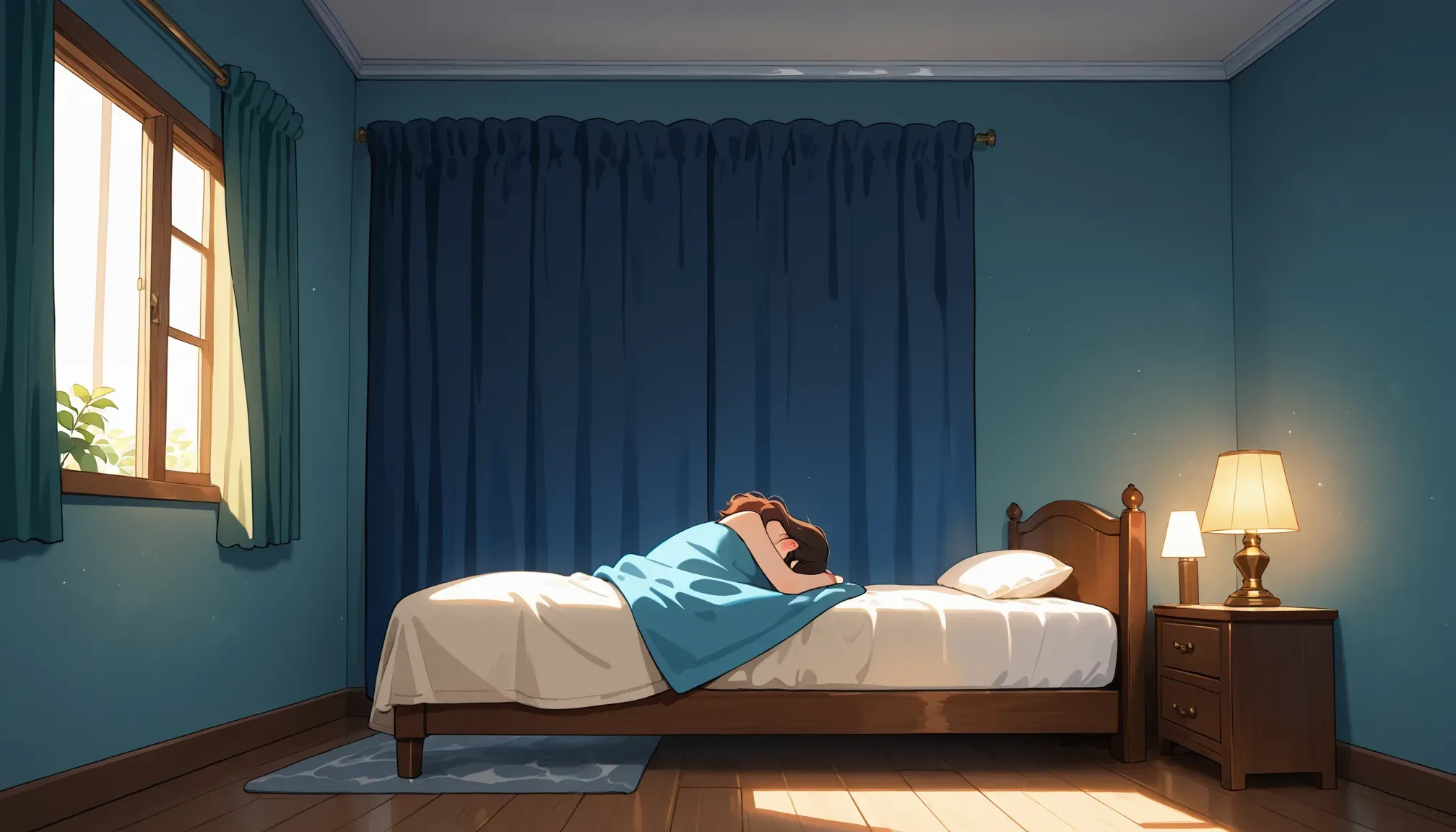
You wake up with your heart racing, still under the spell of a dream that felt real. Or maybe you don't wake up at all, but every morning you remember intense, repetitive, exhausting dreams that leave you feeling as if you haven't rested all night. Nightmares and recurring dreams are far more common than most people think, and when they become a habit, they can ruin the quality of your rest and, with it, the quality of your day. In this article we explore what sleep science and Traditional Chinese Medicine (TCM) say about them, and what you can do to get your peaceful nights back.
Why Do We Dream, and What Are Nightmares?
Dreaming is a normal and necessary part of sleep. During REM (rapid eye movement) sleep, the brain processes emotions, consolidates memories, and works through the day's information. Most dreams go unnoticed; we remember only a small fraction, mostly those that happen just before waking.
Nightmares are dreams with distressing content that wake the person up. They are common in childhood and can come back in adulthood during periods of stress, anxiety, grief, major life changes, or after traumatic experiences. The factors that promote nightmares are well known:
Stress and anxiety, the most common trigger in adults.
Fragmented or insufficient sleep, which increases the proportion of REM sleep through a rebound effect.
Alcohol and certain medications, which alter sleep architecture.
Heavy or late dinners, which make deep rest harder.
Intense content before bed: the news, suspense series, difficult conversations.
Disorders such as sleep apnea, which fragment rest and are associated with more vivid dreams.
As a general rule, occasional nightmares are not a problem. They become a reason to seek help when they are frequent, when they cause fear of going to sleep, when they affect your mood during the day, or when they come with other symptoms. In those cases, it's a good idea to talk to a mental health or sleep professional.
The TCM View: Sleep as a Mirror of the Inner World
Traditional Chinese Medicine has a very special relationship with dreams. Since its oldest classical texts, it has held that during sleep the mind and spirit withdraw inward, and that the quality of that withdrawal—its depth, its stillness, the dreams that accompany it—reflects a person's inner balance.
When that withdrawal is complete, sleep is deep, peaceful, and free of memorable dreams: morning arrives rested. When something disturbs the interior—accumulated Heat, insufficient Blood, agitated Qi—the mind cannot settle, and sleep fills with activity: abundant, vivid, repetitive, or distressing dreams.
Intense Dreams and a Racing Mind
In the tradition, a person who falls asleep but whose mind keeps "working" all night—incessant dreams, waking up feeling as if they had run a mental marathon—usually corresponds, in the language of the clinic, to a pattern of internal agitation: worries that won't switch off, thoughts looping around, undigested emotions. Many people recognize this picture instantly: "I lie down and my head just won't stop."
Distressing Dreams and Internal Heat
Nightmares with violent content, chases, scenes of chaos, or intense anguish are interpreted in Chinese medicine as an expression of internal "Heat" disturbing the mind during the night. And there is a curious detail that many people confirm: this kind of dream tends to get worse with large or late dinners, with alcohol, or during periods of heavy emotional tension—factors the tradition has associated with internal Heat for centuries.
Blood That Doesn't Nourish: Dreams When the Body Is Depleted
There is another classic profile: the person who is tired, pale, and a light sleeper, who dreams a lot but in confusing or sad dreams, or dreams that evoke loss. In the tradition, this reflects a lack of internal nourishment—"Blood fails to nourish the mind," in classical terminology—after periods of exhaustion, sustained worry, or inadequate nutrition.
How Does Traditional Chinese Medicine Approach Nightmares and Recurring Dreams?
The approach in the clinic is always individualized: two people with nightmares may receive very different treatment depending on their overall set of symptoms. The usual tools are:
Acupuncture. This is the core technique: it aims to calm the mind, lower internal agitation, and encourage deeper, more peaceful sleep. Sleep is one of the areas where acupuncture has been studied most, with reviews suggesting improvements in sleep quality across various profiles, although the quality of the studies is uneven.
Classic points for sleep. Among the most frequently cited are Shenmen (HT7), at the wrist crease, and Anmian, an extra point behind the ear whose name literally means "peaceful sleep."
Chinese herbal medicine. In certain cases, the practitioner may suggest personalized herbal formulas, tailored to your specific profile and reviewed periodically.
Dietary and scheduling advice. Light, early dinners, less alcohol and caffeine in the afternoon, regular schedules: simple advice on which the tradition fully agrees with modern sleep hygiene.
Stress management. Since nightmares are often the nighttime expression of daytime tension, learning to slow down—breathing, movement, real breaks—is part of the treatment.
Traditional Chinese Medicine for Sleep: Rest as a Whole
Although many people come to the clinic because of nightmares, Traditional Chinese Medicine rarely treats them as an isolated symptom. In its view, sleeping well depends on the shen—the mind or spirit, which according to the tradition resides in the Heart—being able to "come home" at nightfall. That is why, when we talk about Chinese medicine for sleep, we look at the whole picture: how hard it is for you to fall asleep, what time you wake up, whether you sweat at night, how your digestion is, how your mood is during the day, and what your menstrual cycle is like, if you have one.
With that information, the practitioner distinguishes patterns. A person with Heat and agitation, who wakes up startled with a dry mouth, does not receive the same approach as someone who is exhausted and pale, with light sleep and sad dreams. This broad perspective explains why the same treatment doesn't work for everyone, and also why, as overall rest improves, nightmares tend to lose their intensity.
Acupuncture for Peaceful Sleep: What Happens in a Session
An acupuncture session focused on sleep usually begins with a detailed conversation and an examination of the tongue and pulse, two classic tools of Chinese diagnosis. Then the practitioner places very fine needles at a selection of points and lets you rest lying down for twenty to thirty minutes, often in dim light. Many people report a feeling of deep calm during the session, and some even fall asleep on the table.
In addition to Shenmen (HT7) and Anmian, treatments for peaceful sleep commonly include points such as Neiguan (PC6), on the inner side of the forearm, used to calm anxiety and palpitations; Sanyinjiao (SP6), above the ankle, which the tradition uses to nourish Blood and Yin; Baihui (GV20), at the top of the head; or Taichong (LR3), on the top of the foot, when there is accumulated tension and irritability. The specific combination always depends on each person's pattern and should be decided by a qualified professional.
Gentle Acupressure Before Bed
Without needles, you can try a simple acupressure routine at home as part of your wind-down ritual. Sit comfortably, breathe slowly, and press each point with the pad of your thumb, firmly but without pain, for one to two minutes:
Yintang (EX-HN3), between the eyebrows, with a very slow circular motion.
Shenmen (HT7), at the wrist crease, on the pinky-finger side, first on one hand and then on the other.
Yongquan (KI1), on the sole of the foot, in the depression that forms when you curl your toes; ideal with warm feet, once you're already in bed.
If you are pregnant, avoid stimulating Sanyinjiao (SP6) on your own and check with your practitioner first. Acupressure is a pleasant complement, not a substitute for a medical evaluation if insomnia or nightmares persist.
What Does the Science Say?
Research on nightmares has advanced a great deal: we know that habitual nightmares are associated with stress, anxiety, insomnia, and certain drugs, and that psychological therapies—especially imagery rehearsal therapy (IRT), which consists of rewriting the ending of the nightmare and rehearsing it while awake—have good evidence of effectiveness. As for acupuncture, studies on insomnia and sleep quality show favorable results, although more high-quality research is needed. In any case, working on stress and sleep quality from several angles is a reasonable, low-risk strategy.
Frequently asked questions
Is it normal to have nightmares as an adult?
Yes, especially during stressful periods. They become a reason to seek help when they are frequent (several times a week), when they make you afraid to go to sleep, or when they clearly affect your mood and daily functioning.
What does it mean to always dream the same thing?
Recurring dreams often point to an unresolved issue: something your mind is processing—a worry, a change, a fear. In Chinese medicine they fit the pattern of internal agitation or stagnation. They don't have a single, fixed "meaning"; their value lies in what they tell you about your inner state.
Does acupuncture help with nightmares?
It can help as a complement, especially when nightmares are associated with stress, anxiety, or insomnia. The goal is not to "interpret" dreams, but to calm the system that generates them.
How many sessions are needed?
As a guideline, weekly schedules of four to eight initial sessions are usually proposed, with follow-ups depending on how you progress. Changes tend to be gradual: first less intensity, then less frequency.
What does Traditional Chinese Medicine offer for sleeping better?
It combines acupuncture, acupressure, herbal medicine prescribed by a professional, dietary and scheduling advice, and gentle practices such as qigong. What sets it apart is that it doesn't treat insomnia in isolation: it looks for the pattern behind it, whether agitation, internal Heat, or deep fatigue, and adapts the approach to each person, always as a complement to medical follow-up.
Can I use acupuncture for peaceful sleep if I take sleeping pills?
In general, yes, as a complement. Acupuncture doesn't interfere with medications, but you should never stop or reduce your medication on your own: any change must be decided by your doctor. Tell your acupuncturist what you are taking, especially if you use anticoagulants, so they can take it into account.
Habits for Nights with Fewer Nightmares
These recommendations have both scientific and traditional support:
Eat a light dinner at least two hours before bed.
Cut back on alcohol and caffeine, especially in the afternoon and evening.
Create a wind-down routine: quiet reading, dim light, screens out of the bedroom for the last hour.
Don't take your worries to bed. Write down what's pending on a piece of paper before sleeping: it's a simple and effective technique.
Exercise regularly, but avoid intense exercise right before bed.
If you wake up from a nightmare, direct your mind toward something concrete and calming (your breathing, a pleasant image) instead of reliving the dream.
Seek help if nightmares are frequent and distressing: a mental health professional can help you with very effective tools.
In Summary
Dreams are the nighttime language of a mind that keeps working while the body rests. When that language becomes distressing or exhausting, it is a sign—for science and for Traditional Chinese Medicine alike—that something needs attention: accumulated stress, insufficient rest, heavy digestion, undigested emotions. The good news is that there are ways to restore nighttime calm: solid sleep habits, psychological support when needed, and the gentle guidance of Traditional Chinese Medicine. May your nights become a refuge again, not a battlefield.