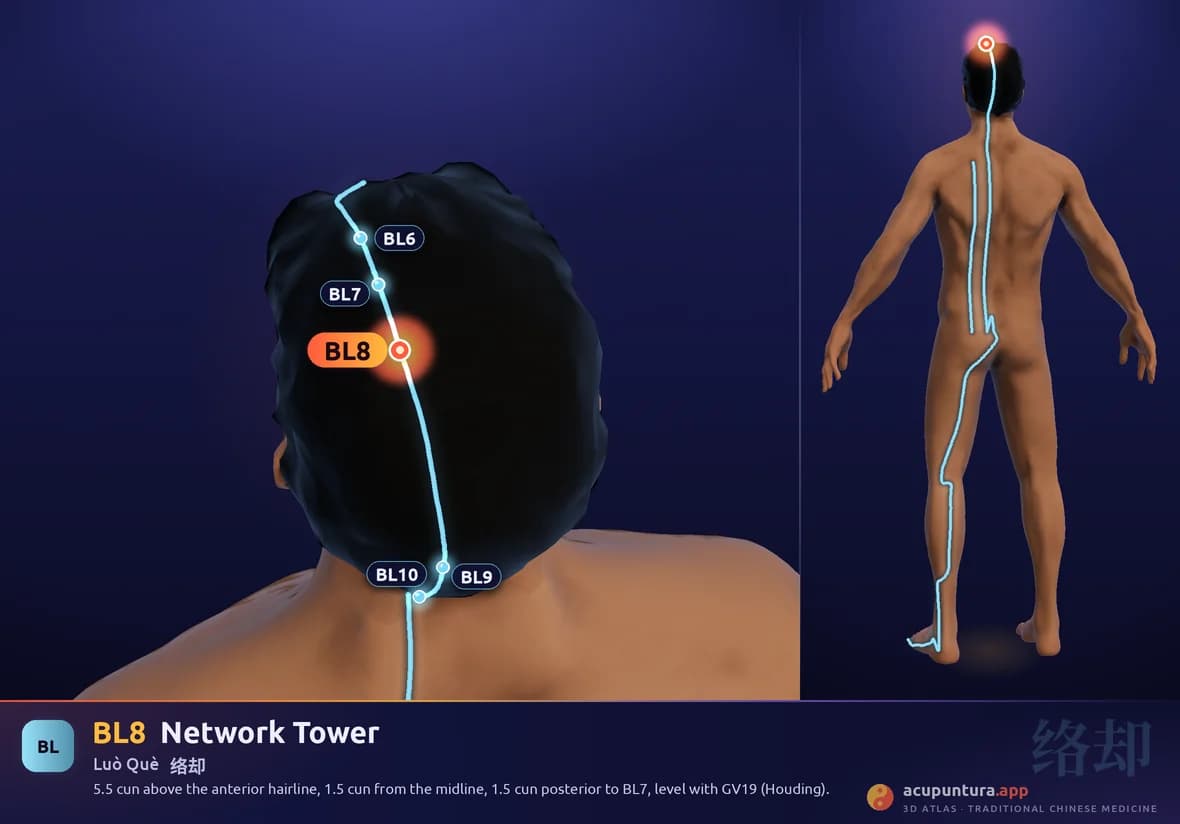
Bladder Channel
Network Tower
络却Luò QuèAnatomical location
5.5 cun above the anterior hairline, 1.5 cun from the midline, 1.5 cun posterior to BL7, level with GV19 (Houding).
Main function
Expels Wind, clears the head, calms the Shen (Spirit), benefits the eyes, relieves headache.
Therapeutic indications
- Headache
- vertigo
- dizziness
- blurred vision
- tinnitus
- deafness
- nasal congestion
- epilepsy
- convulsions
- mania
- mental agitation
- insomnia
- memory loss
- stiff neck
- Nasal obstruction
Name and classical tradition
Luoque, 络却, admits several spellings and several readings. 絡 is the network of collaterals; 卻, to retreat, to turn back. The modern gloss understands that the Bladder channel enters the network of the brain here and then returns. No classical citation supports it. The Zhenjiu Jiayi Jing (Systematic Classic of Acupuncture and Moxibustion) records it with two of its aliases: "絡卻,一名強陽,一名腦蓋,在通天後一寸三分," one cun and three fen posterior to BL7.
More interesting is its philology. Among the ancient texts, the second character alternates between 卻 and 郄, and the alternative names are of very diverse meaning: the two from the Jiayi Jing, 強陽, "strong Yang," and 腦蓋, "lid of the brain," and others that the reference works add, 絡郄 and 反行, "the one that walks backward." The last is curious, because it fits the idea of retreat in the gloss. The exact provenance of each variant has not been identified.
Other names
- 強陽Jiayi Jing
- 腦蓋Jiayi Jing