CP9
Curious point · CP catalog
Greater Yang
太阳Tài YángAnatomical location
In the temporal region, at the center of the temple, in a depression over the temporal artery, between GB1 (Tongziliao) and the sideburn border.
Same point as EX-HN5 · Tài Yáng — international nomenclatureMain function
Disperses Wind, relieves pain, benefits the eyes, regulates the nervous system.
Therapeutic indications
- Headache (hemicrania)
- eye conditions (acute conjunctivitis
- ophthalmic diseases)
- trigeminal neuralgia
- toothache
- facial paralysis
- temporomandibular arthritis
- migraine
- trismus
- chewing weakness
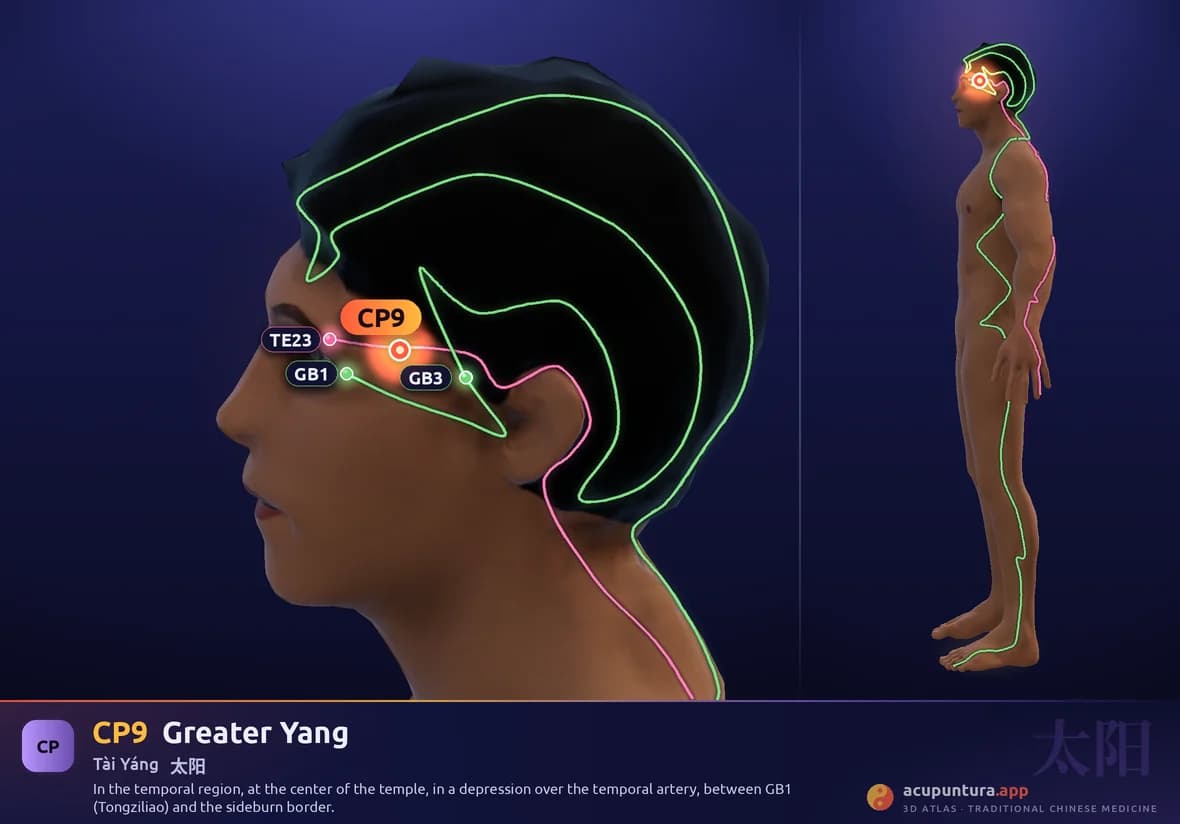
Needling techniqueOblique insertion 0.5-1 cun or long needling through the zygomatic arch to ST7 (Xiaguan).
Depth0.5-1 cun (or more with long needling, with caution).
MoxibustionApplicable (3-7 cones or 5-15 minutes).
PrecautionsAvoid capillary rupture in long needling to prevent hematomas.
