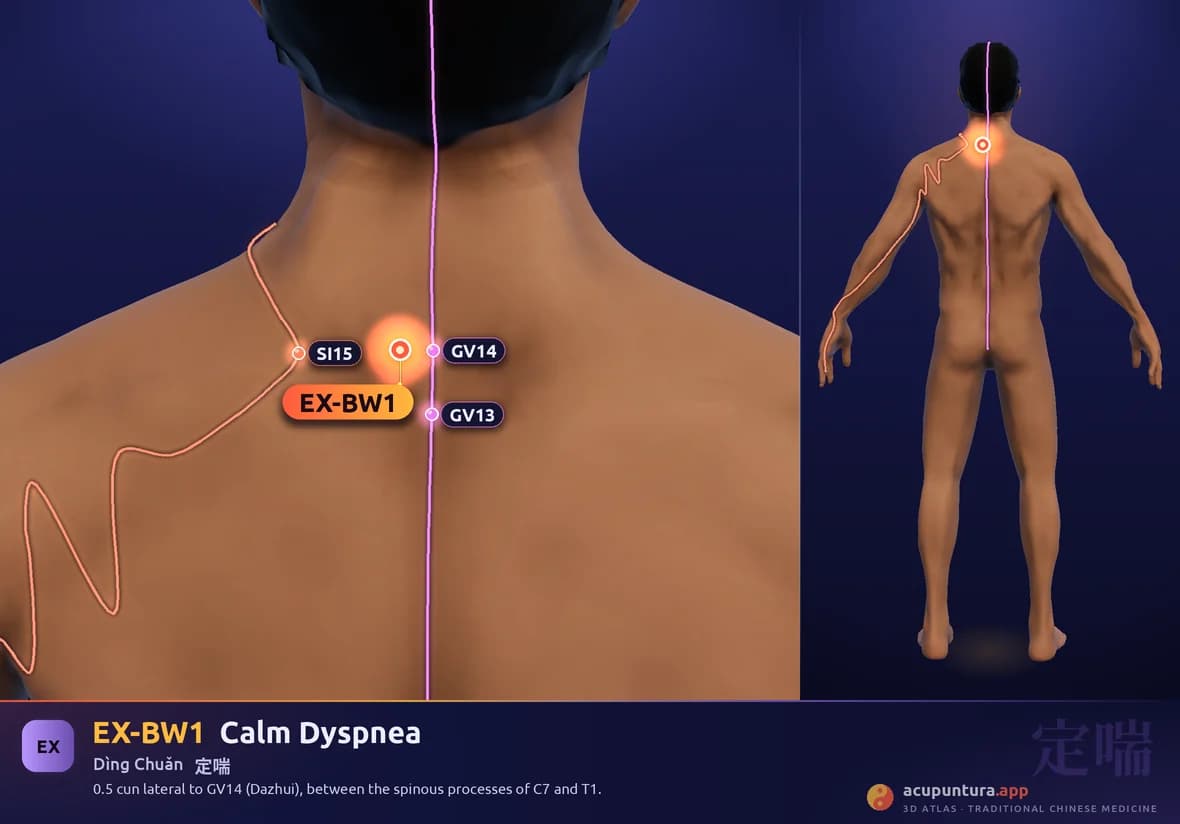
Extra point · Back
Calm Dyspnea
定喘Dìng ChuǎnAnatomical location
0.5 cun lateral to GV14 (Dazhui), between the spinous processes of C7 and T1.
Main function
Stops asthma and cough, activates the collateral of the shoulder and neck.
Therapeutic indications
- Asthma
- cough
- shoulder and neck stiffness
- hives
Name and classical tradition
Dingchuan, 定喘, means “calm the breathlessness”: 定, to stop, to steady; 喘, dyspnea, panting. It is a functional name, of the kind that says what the point is used for, and it lies half a cun on each side of GV14, Dazhui.
The expression 定喘 appears in the classical texts, but as an action, not as a point. In the Zhenjiu Dacheng (Great Compendium of Acupuncture and Moxibustion), a poem says that for bleeding and breathlessness Chize, LU5, is tonified: “吐血定喘補尺澤.” The point that bears this name is modern, from the twentieth century, and does not appear in the works we were able to check.