Extra point · Chest and Abdomen
Child's Palace
子宫Zǐ GōngAnatomical location
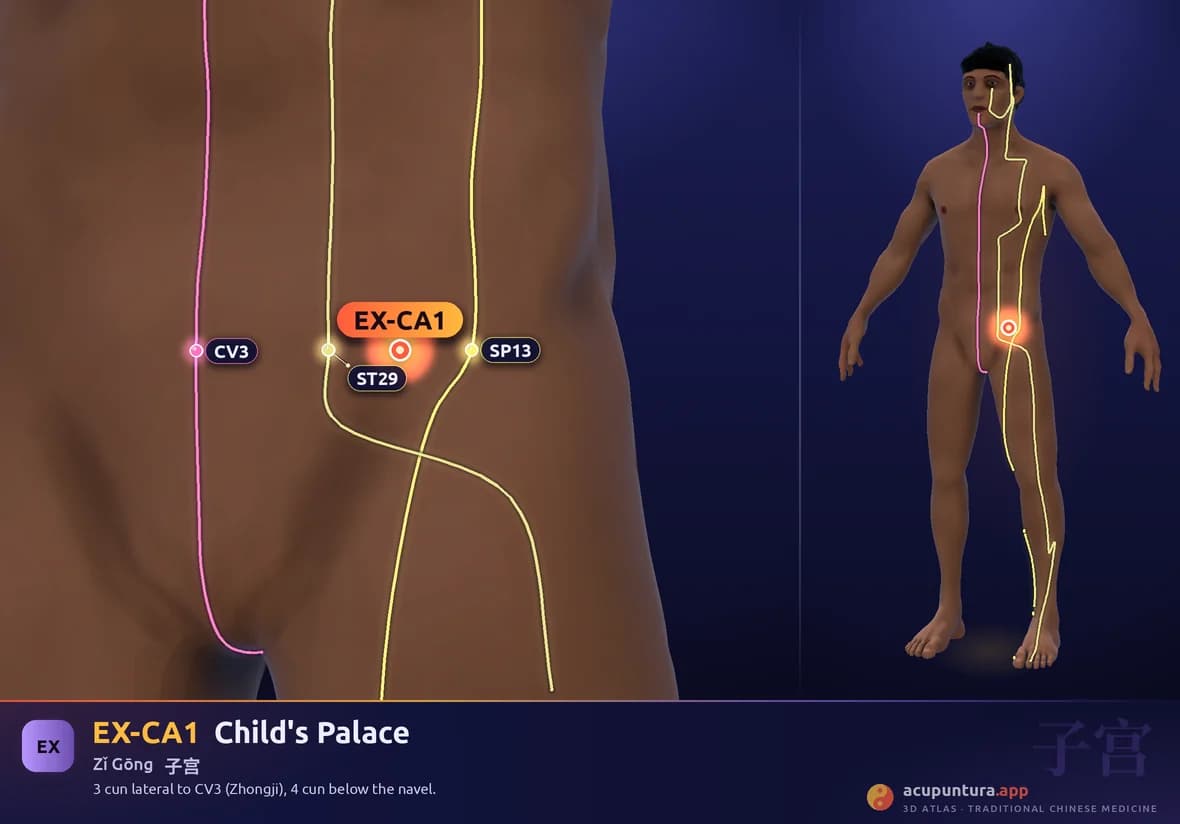
3 cun lateral to CV3 (Zhongji), 4 cun below the navel.
Same point as CP49 · Zǐ Gōng — Curious Points catalogMain function
Regulates the uterus, activates the Blood, warms the Lower Jiao.
Therapeutic indications
- Uterine prolapse
- dysmenorrhea
- infertility
- menstrual irregularities
Name and classical tradition
Zigong, 子宫, is the Chinese name for the uterus, literally the “palace of the child”: 子, the child; 宫 (宮), the palace. There are two points, three cun from CV3, Zhongji, four cun below the navel. It should not be confused with CV19, whose name is pronounced the same but written 紫宮, the Purple Palace.
The Zhenjiu Dacheng (Great Compendium of Acupuncture and Moxibustion) records it among the points outside the channels: “子宮二穴,在中極兩旁各開三寸,針二分,灸二七壯,治婦人久無子嗣” — three cun from Zhongji, for the woman who has gone a long time without conceiving. It is the same field as the lower abdomen of the Ren Mai, where CV4 and CV5 contended for the name of the cinnabar field.