Extra point · Head and Neck
Four Intelligent Spirits
四神聪Sì Shén CōngAnatomical location
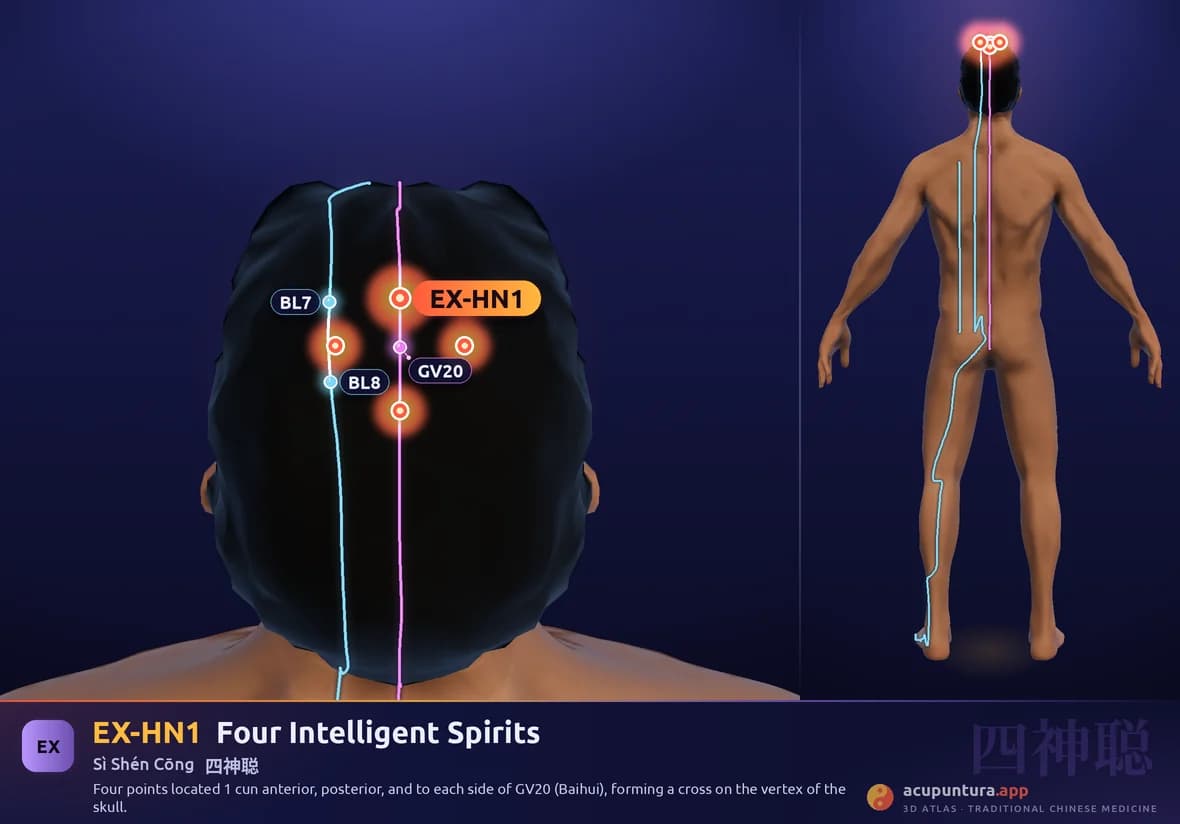
Four points located 1 cun anterior, posterior, and to each side of GV20 (Baihui), forming a cross on the vertex of the skull.
Same point as CP1 · Sì Shén Cōng — Curious Points catalogMain function
Calms the Shen, clears the mind, benefits the head and the senses, tonifies the brain.
Therapeutic indications
- Headache
- vertigo
- insomnia
- memory loss
- epilepsy
- cognitive decline
- attention deficit disorder
Name and classical tradition
Sishencong, 四神聪, means the "four of the spirit's intelligence": 四, four; 神, the spirit; 聰 (聪), sharpness of hearing and, by extension, an alert intelligence. They are four points in a cross around GV20, Baihui, one cun from it, and the name says at once how many there are and what they have been used for: the head, sleep, memory.
Tradition attributes the group to the Taiping Shenghui Fang (Taiping Imperial Grace Formulary), the great compilation of the Song period, but the acupuncture volumes of that work are not available to check against, and the name does not appear in the earlier works we have reviewed, from the Neijing (Yellow Emperor's Inner Classic) to the Qianjin Yaofang (Essential Prescriptions Worth a Thousand Gold). Its relationship with Baihui is evident: it surrounds the point known as the palace of the niwan, the seat of the spirit in the head, which is discussed on the page about the gate of life and the field of cinnabar.