EX-LE11
Extra point · Lower Limb
Solitary Yin
独阴Dú YīnAnatomical location
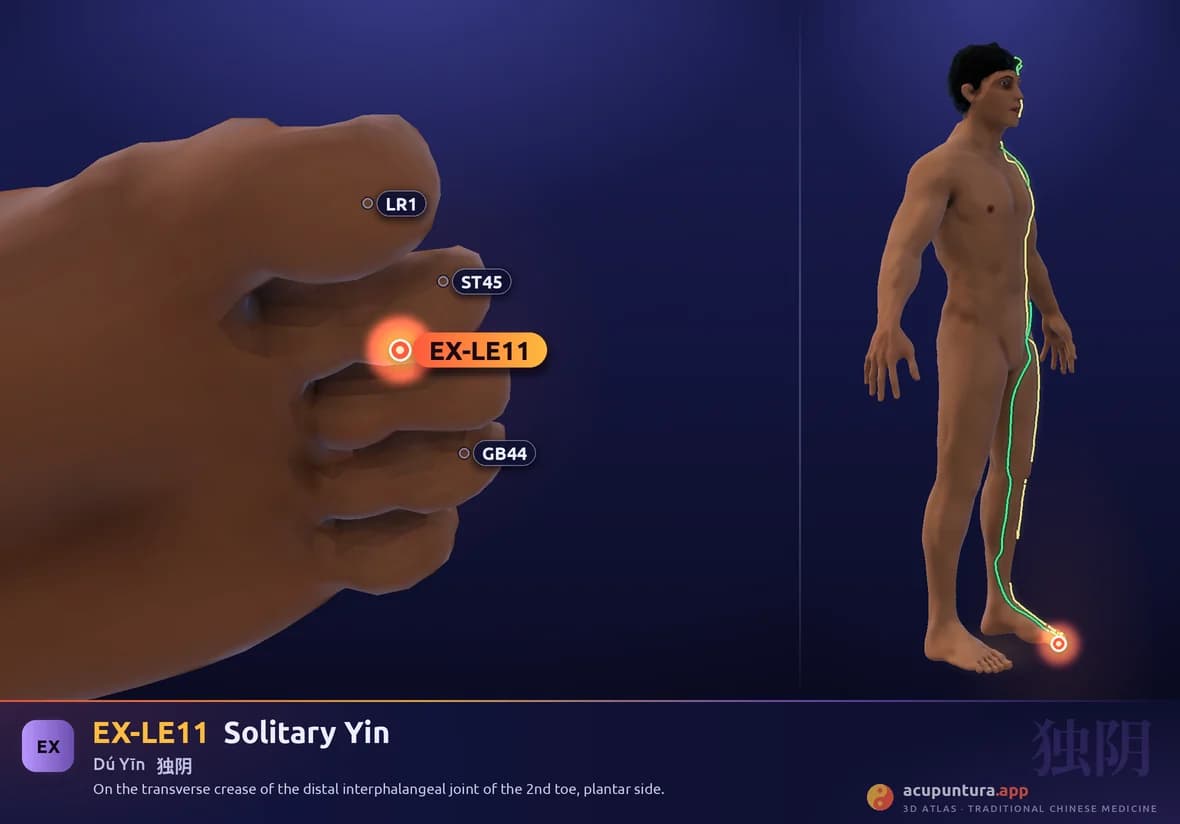
On the transverse crease of the distal interphalangeal joint of the 2nd toe, plantar side.
Main function
Regulates Qi, eases pain.
Therapeutic indications
- Dysmenorrhea
- stomach pain
- retained placenta
- vomiting
Name and classical tradition
Duyin, 独阴, is the “solitary Yin”: 独 (獨), alone, single; 阴 (陰), Yin. It is on the sole of the foot, at the crease of the second joint of the second toe, and the texts give no certain explanation for the name.
The Zhenjiu Dacheng (Great Compendium of Acupuncture and Moxibustion) records it with mainly gynecological indications: «獨陰二穴,在足第二指下,橫紋中是穴,治小腸疝氣,又治死胎,胎衣不下,灸五壯», for hernia, for expelling a dead fetus and a retained placenta, and also for nausea in women and irregular menstruation. It is the same toe where ST45, Lidui, ends, on the upper side.
Needling techniqueIndirect moxibustion; occasional shallow needling.
DepthShallow if needled
MoxibustionTechnique of choice.
PrecautionsNone in particular.
