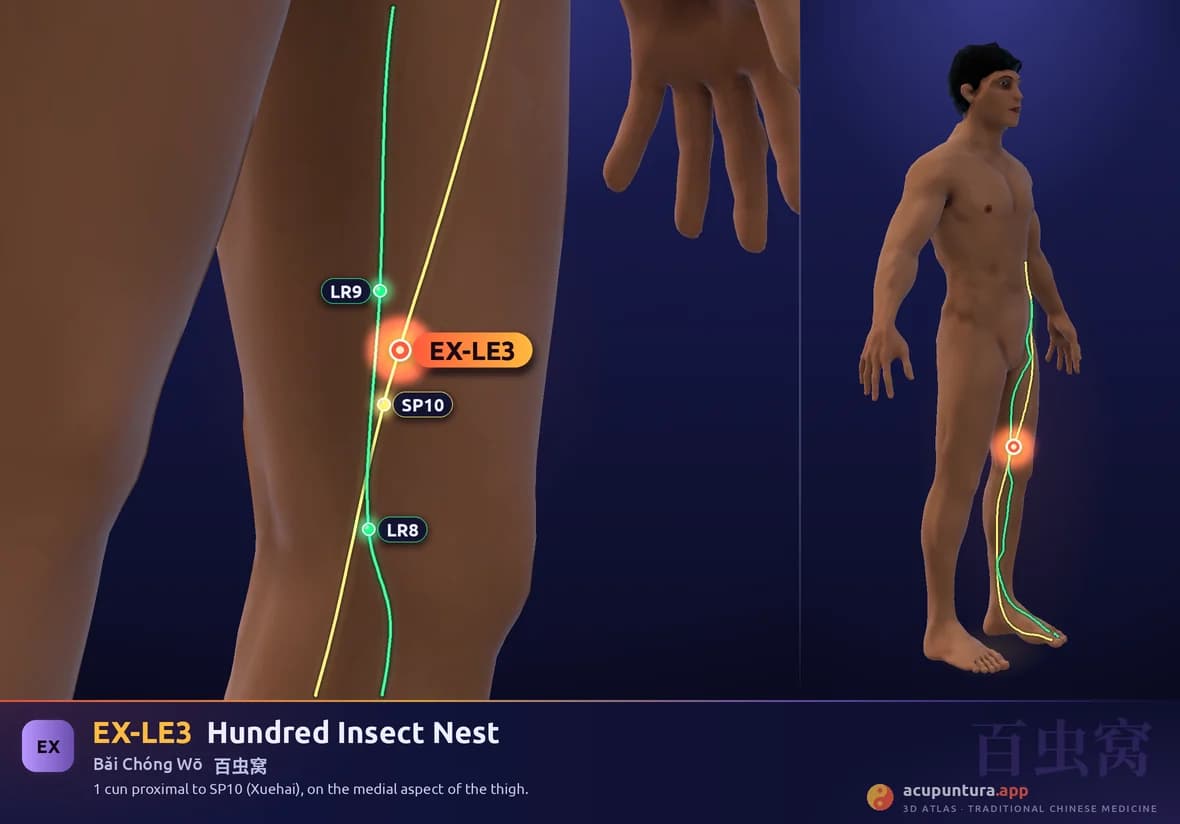
Extra point · Lower Limb
Hundred Insect Nest
百虫窝Bǎi Chóng WōAnatomical location
1 cun proximal to SP10 (Xuehai), on the medial aspect of the thigh.
Same point as 163PC · Bǎi Chóng Wō — Curious Points catalogMain function
Activates the blood, eliminates wind, expels parasites.
Therapeutic indications
- Hives
- eczema
- itchy skin
- intestinal parasites
Name and classical tradition
Baichongwo, 百虫窝, is the “nest of the hundred insects”: 百, hundred; 虫 (蟲), insects, worms; 窝 (窩), nest. The name alludes to its indications: itching skin, which was compared to insects, and parasites.
The Zhenjiu Dacheng (Great Compendium of Acupuncture and Moxibustion) gives this name to a point on the thigh, but says it is a different one: «百虫窠二穴,即血海也。在膝內廉上三寸», the nest of the hundred insects is Xuehai, SP10, three cun above the knee, and it indicates it for sores on the lower body. In its list of aliases it repeats: «血海(一名百蟲窠)». The current extra point has been separated from Xuehai and is located one cun higher, but it keeps the name and the field of skin diseases.