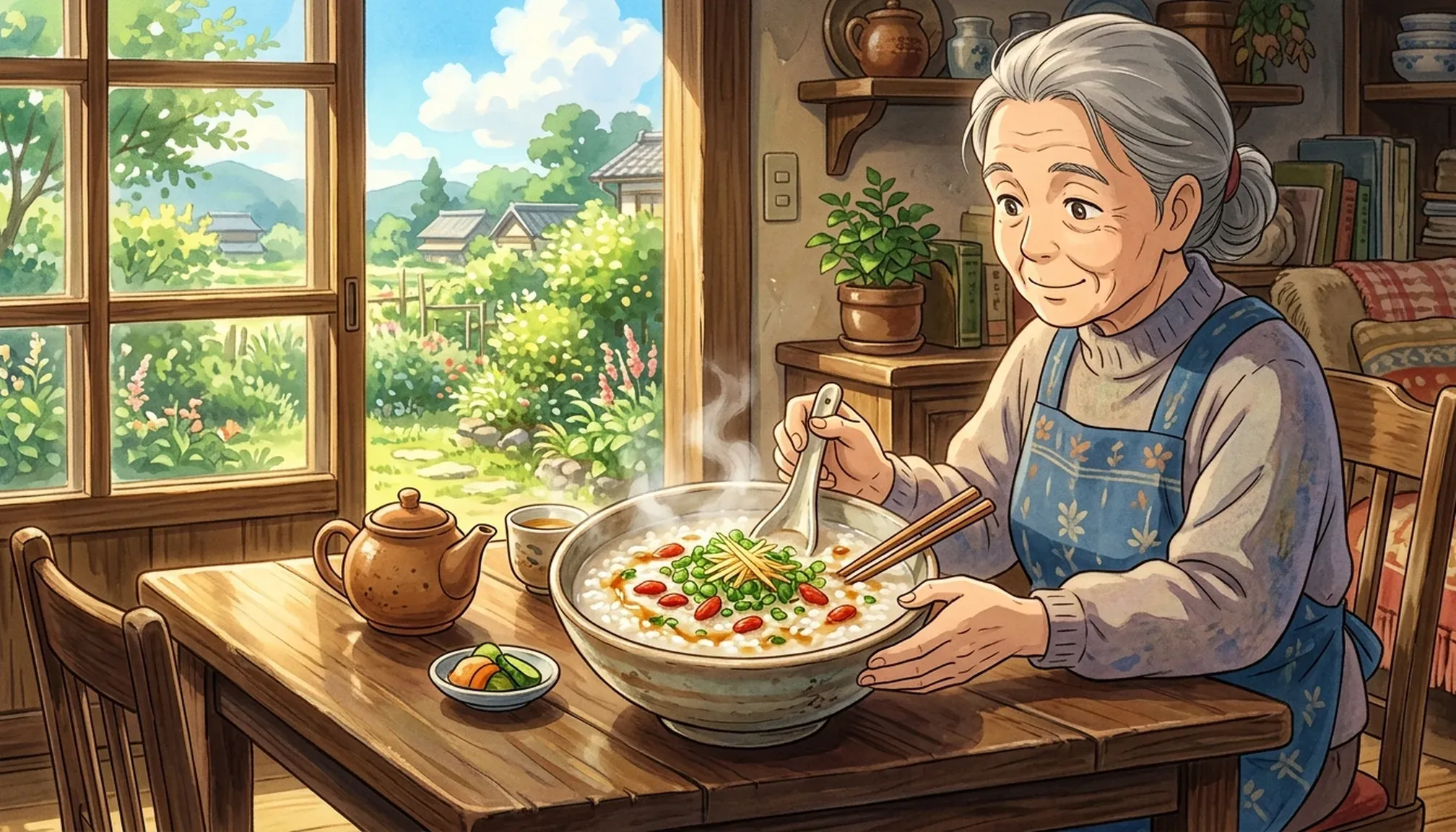
Does your belly swell up after eating, even when you haven't eaten much? Do meals sit heavy, or do you deal with gas a lot? Bloating and sluggish digestion are among the most common complaints in any practice, and Traditional Chinese Medicine (TCM) has paid close attention to how we digest for centuries. In this article we explain, in plain language, how Chinese medicine understands the digestive process, which everyday habits may be behind your discomfort, and how acupuncture can become a natural support for your digestive well-being.
Why is digestion so important in Chinese medicine?
In Western culture we tend to think of digestion as something purely mechanical: you eat, the stomach goes to work, and that's it. Traditional Chinese Medicine takes a much broader view. In TCM, digestion is the process by which the body transforms food into the energy and nutrients we need to function every day. It is, quite literally, the source of our vitality.
That's why, when digestion isn't working well, it isn't just discomforts like gas or heaviness that show up: you may also notice fatigue, a feeling of mental fog, sleepiness after eating, or even changes in mood. From this perspective, taking care of your digestion means taking care of your health as a whole.
Chinese medicine uses a very illustrative metaphor: imagine your stomach is a pot over a fire. To cook food well, it needs enough heat and energy. If you pile in too much food, or very cold, raw food straight from the fridge, the pot has to work much harder to transform it. If you also eat in a rush, stressed, or while doing other things, the process gets even more complicated. The result is that feeling of fullness, bloating and heaviness so many people know well.
Bloating after eating: common causes from the Chinese perspective
Beyond possible medical problems that should be ruled out with a healthcare professional, Chinese medicine points to a number of everyday habits that overload digestion:
Eating in a hurry or without chewing well. Chewing is the first stage of digestion. If we swallow food almost whole, the stomach ends up doing a job that wasn't meant for it.
Eating in front of a screen or while working. When your attention is elsewhere, the body doesn't prepare properly to digest. Digestion works best in a calm state.
Too many cold, raw foods. Salads, ice-cold drinks, or yogurt straight from the fridge demand more energy from the digestive system, especially in people who already tend to feel cold or tired.
Very large or heavy meals at night. In the afternoon and evening the body's energy slows down, and digestive capacity slows with it.
Stress and worry. Going over and over things while you eat, or eating in the middle of an argument, is one of the combinations most often linked to gas and bloating.
Eating at irregular times. Skipping meals, constant snacking, or having dinner at midnight throws off the body's natural rhythms.
Do you recognize yourself in any of these habits? The encouraging part is that all of them can be changed, and small changes can make a difference within a few weeks.
Gas and heaviness: a sign that something is out of balance
From the Chinese perspective, gas and heaviness are not an isolated failure of the stomach, but a sign that the body's energy isn't flowing smoothly through the digestive area, or that there isn't enough "heat" to transform food properly.
Think of it this way: when a meal isn't transformed well, it stays "half-processed." That leads to fermentation, heaviness, abdominal noises, and clothes that suddenly feel tight by the end of the day. It's also common for these symptoms to get worse during times of more stress or fatigue, because the body divides its energy and digestion falls to the background.
It's important to stress that if your symptoms are persistent, very intense, or come with weight loss, bleeding, fever, or significant changes in your bowel movements, you must see a doctor to rule out any problem that needs specific care. Acupuncture and Chinese medicine are understood as a complement, never as a substitute for medical care.
Habits that support lighter digestion (according to TCM)
The good news is that many of Chinese medicine's recommendations for digestion are simple, inexpensive, and can be put into practice starting today. Here are the most common ones:
1. Favor cooked foods over raw ones
Gentle cooking methods (quick stir-fries, steaming, roasting, soups and stews) make digestion easier because the food arrives already "partially transformed." The idea isn't to eliminate salads, but to strike a balance: in winter, or if you tend to digest slowly, increase the share of warm, cooked food.
2. Eat slowly and chew more than you think you need to
Set aside a minimum amount of time for your meal, sit down, put the phone away, and chew each bite until it's well broken down. It's probably the cheapest change with the biggest impact on abdominal bloating.
3. Keep regular mealtimes
The body appreciates routine. Eating at similar times each day helps the digestive system get ready in advance. Try to make your main meal at midday, when digestive capacity is at its best, and keep dinner lighter and earlier.
4. Warm drinks, in moderation
Having large glasses of very cold water with meals dilutes the digestive "fire." Water at room temperature or warm is better, along with gentle herbal teas after eating if you like.
5. Manage stress at mealtime
Taking three deep breaths before you start eating may seem silly, but it helps the body shift from "alert mode" to "digestion mode." Avoid eating while arguing, working, or reading upsetting news.
6. Move gently after eating
A relaxed ten-minute walk after a meal supports the circulation of energy and helps make digestion lighter. What the Chinese tradition doesn't recommend is lying down on the couch right after you finish.
How can acupuncture help with bloating and gas?
Acupuncture is one of the main tools of Traditional Chinese Medicine. It involves inserting very fine needles at specific points on the body, with the aim of restoring balance and supporting the circulation of energy.
For digestive complaints, the goal of treatment is usually twofold:
Support the body's digestive capacity, that is, help the transformation of food become more efficient and reduce that feeling of fullness and heaviness.
Promote movement and circulation in the abdominal area, which may help relieve bloating and trapped gas.
Acupuncture also has a highly valued effect on the nervous system: many people leave the session feeling deeply calm. Since stress is a major enemy of digestion, this relaxing effect is in itself an important form of support.
It's worth remembering that the WHO recognizes acupuncture as a widely used traditional practice, and that research is ongoing into its effects in different areas of health. What clinical experience often shows is that, combined with the habit changes we've covered, many people notice a gradual improvement in their digestive well-being. As always, results vary from person to person and cannot be guaranteed.
Acupuncture points for gas and better digestion
The points most commonly used for abdominal bloating and gas are:
Zhongwan (CV12), on the midline of the abdomen, between the sternum and the navel: the key point for abdominal distension and sluggish digestion.
Tianshu (ST25), on both sides of the navel: widely used for gas and intestinal bloating.
Zusanli (ST36), below the knee: supports digestion in general.
We cover them in more detail, with step-by-step technique for doing them at home, in our article on acupressure for gas. In the clinic, in addition to needling these points, some practitioners turn to auricular therapy for gas, stimulating areas of the ear related to the digestive system, using seeds or tiny needles.
What is an acupuncture visit for digestive problems like?
If you've never been to a Chinese medicine practice, here is what usually happens:
Initial interview. The practitioner will ask about your symptoms, but also about your sleep, your energy, your eating habits, and your mood. Everything is connected.
Observation. It's common to look at the tongue and take the pulse at both wrists, two assessment methods unique to this tradition.
Treatment. Very fine needles are placed (many people barely feel them) and left in for about twenty to thirty minutes while you rest lying down.
Recommendations. You'll usually leave with eating and lifestyle guidelines adapted to your case, because in Chinese medicine, treatment and lifestyle go hand in hand.
The number of sessions depends on the person and on how long the problem has been present. Progress is usually noticed over the course of several sessions, not overnight.
Frequently asked questions
Is it normal for my belly to swell after every meal?
Occasional belly swelling after a large meal is common. But if it happens every day, with almost any meal, or comes with pain, changes in bowel movements, or weight loss, you should see a doctor to rule out intolerances or other problems. Once the important things have been ruled out, Chinese medicine and habit changes can be a good complement.
Does acupuncture hurt?
Acupuncture needles are much thinner than those used for injections. Most people feel only a small initial prick, or even nothing at all, followed by a sensation of heaviness or gentle warmth in the area. Many people fall asleep during the session.
Do I have to stop eating salads and fruit?
No. Chinese medicine doesn't forbid foods; it proposes balance. If you digest slowly or have frequent bloating, it may help to increase the proportion of cooked, warm food, especially in winter, and to eat fruit apart from large meals. A qualified professional can guide you based on your case.
How many acupuncture sessions do I need to notice improvement?
It depends on the person, how long the problem has been going on, and the habits that go along with it. In general, an initial course of several sessions is planned and progress is then assessed. Habit changes at home often speed up the process considerably.
Can I get acupuncture if I'm seeing a doctor for my digestive problems?
Yes, in fact it's what we recommend. Acupuncture is a complement, not a substitute for conventional medicine. Always tell both your doctor and your acupuncturist about the treatments you're following, so that both are working in the same direction.
Take care of your digestion, take care of your energy
Bloating, gas and sluggish digestion don't have to be your daily companions. Small changes in the way you eat—more cooked food, more calm, more routine—can make a big difference, and acupuncture can be a valuable support along the way. If you've been dealing with digestive discomfort for a while and want to approach it from a comprehensive, personalized perspective, we encourage you to see a qualified practitioner of acupuncture and Traditional Chinese Medicine, who can assess your case individually and guide you with a plan tailored to you.