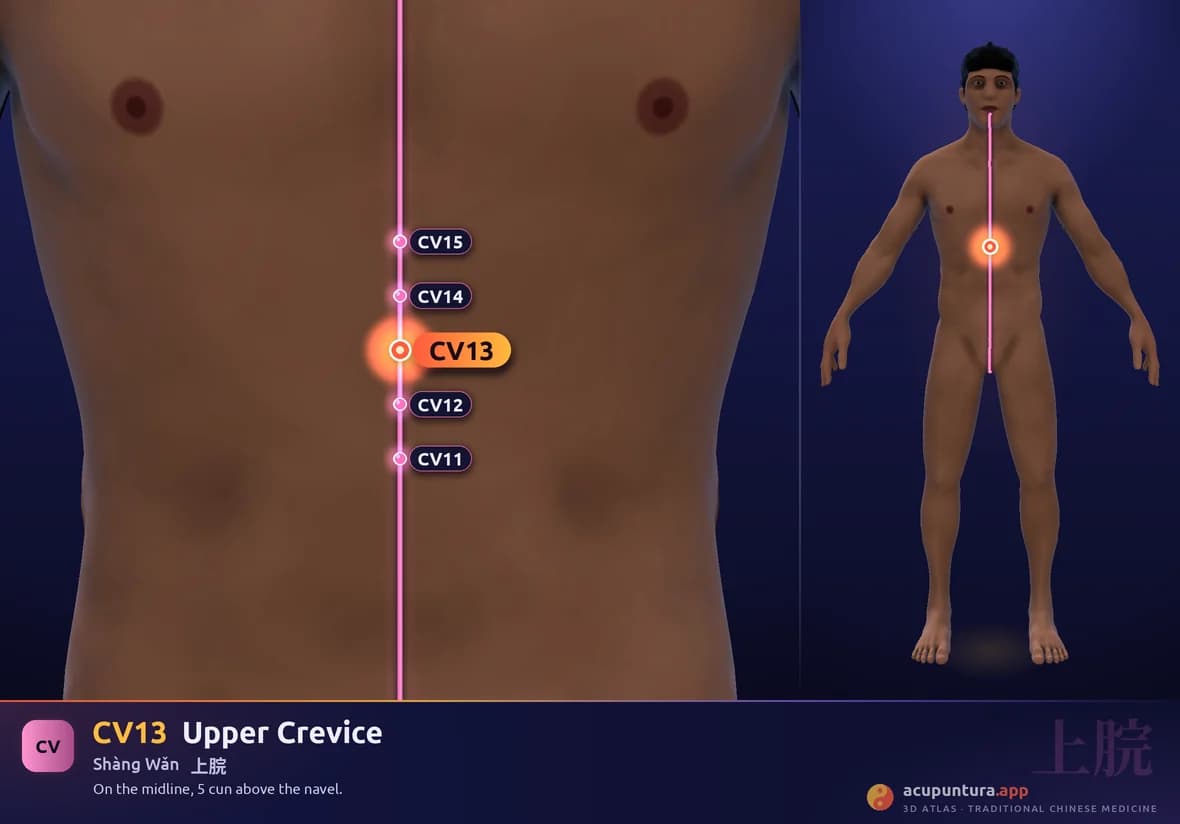
Ren Mai (Conception Vessel) Channel
Upper Crevice
上脘Shàng WǎnAnatomical location
On the midline, 5 cun above the navel.
Main function
Regulates the Stomach, calms the Heart, eliminates stagnation.
Therapeutic indications
- Epigastric pain
- nausea
- vomiting
- anxiety
- stomach pain
- hiccups
- heartburn
- palpitations
- insomnia
- epilepsy
- gastroesophageal reflux
Name and classical tradition
Shangwan, 上脘, is the "Upper Cavity." 上 means above; 脘 is the cavity of the stomach. It closes off the top of the triad it forms with CV12 and CV10, and the modern gloss speaks of the fluids that descend from the chest and gather here before continuing downward.
The first work to record it is the Zhenjiu Jiayi Jing (Systematic Classic of Acupuncture and Moxibustion), and Wang Shuhe's Maijing (Pulse Classic) uses the variant 上管. The reference works attribute to it the alternative names 胃管, 胃脘, and 上紀. The last of these coincides with one of the aliases of Zhongwan, which shows how fluid the names are in this region of the abdomen.