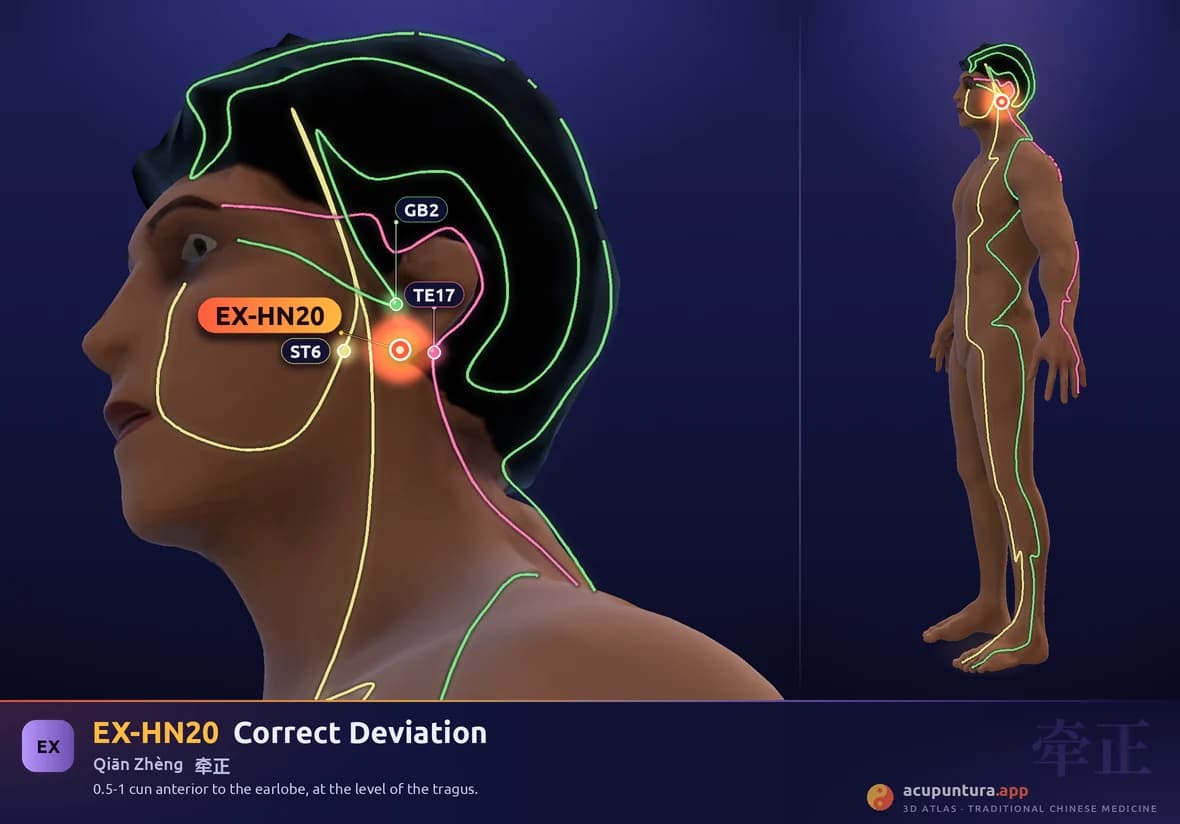
EX-HN20
Extra point · Head and Neck
Correct Deviation
牵正Qiān ZhèngAnatomical location
0.5-1 cun anterior to the earlobe, at the level of the tragus.
Main function
Disperses Wind, activates the facial collateral.
Therapeutic indications
- Peripheral facial paralysis
- stomatitis
- mouth ulcers
Name and classical tradition
Qianzheng, 牵正, is “the one that pulls to straighten”: 牵 (牽), to pull on something; 正, straight. The name describes its use in facial paralysis, when the mouth is pulled to one side and the point must bring it back into place. It is also the name of a classical formula for that condition, 牽正散.
As a point, it belongs to modern acupuncture: it does not appear in the classical works we were able to check. It lies in front of the earlobe, on the cheek, in an area crossed by ST6, Jiache, and ST7, Xiaguan, the traditional points of the jaw.
Needling techniqueOblique or perpendicular insertion.
Depth0.5-1 cun
MoxibustionUncommon.
PrecautionsNone in particular.
