Gallbladder Channel
Floating White
浮白Fú BáiAnatomical location
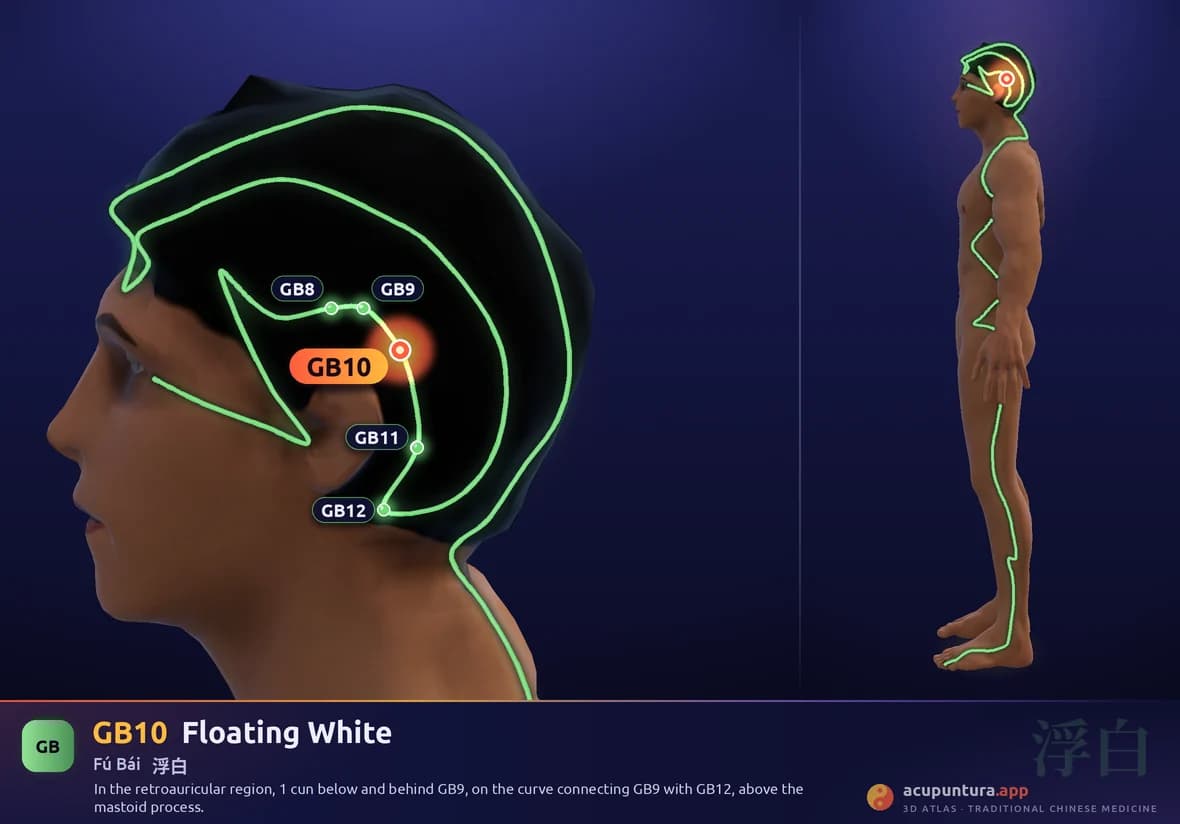
In the retroauricular region, 1 cun below and behind GB9, on the curve connecting GB9 with GB12, above the mastoid process.
Main function
Expels Wind-Heat, benefits the ears and throat.
- Crossing Point with the Bladder
Therapeutic indications
- Headache
- tinnitus
- sore throat
- facial paresis
- Deafness
- Goiter
- Shoulder and arm pain
- Tonsillitis
Name and classical tradition
Fubai, 浮白, is one of the names that has caused the most debate. Read character by character, 浮 is "to float" and 白 is "white," the color the Five Phases associate with Metal. A modern gloss, of the Qi-as-vapor kind, interprets it as a warm, damp cloud that floats. It is the most repeated reading in popular accounts and the least documented.
There is another, more curious one, philological in nature. In classical literature, 白 can be a cup of wine, and the expression 浮大白 means to toast with a brimming cup. According to this reading, the name would allude to the dizziness of someone who has drunk a large cup, a state related to the symptoms the point treats. The expression exists in Chinese literature generally, but no medical text links this reading to the point, so it is a hypothesis, however attractive.
The firm datum is the location recorded in the Zhenjiu Jiayi Jing (Systematic Classic of Acupuncture and Moxibustion): «在耳后,入发际一寸», behind the ear, one cun inside the hairline.