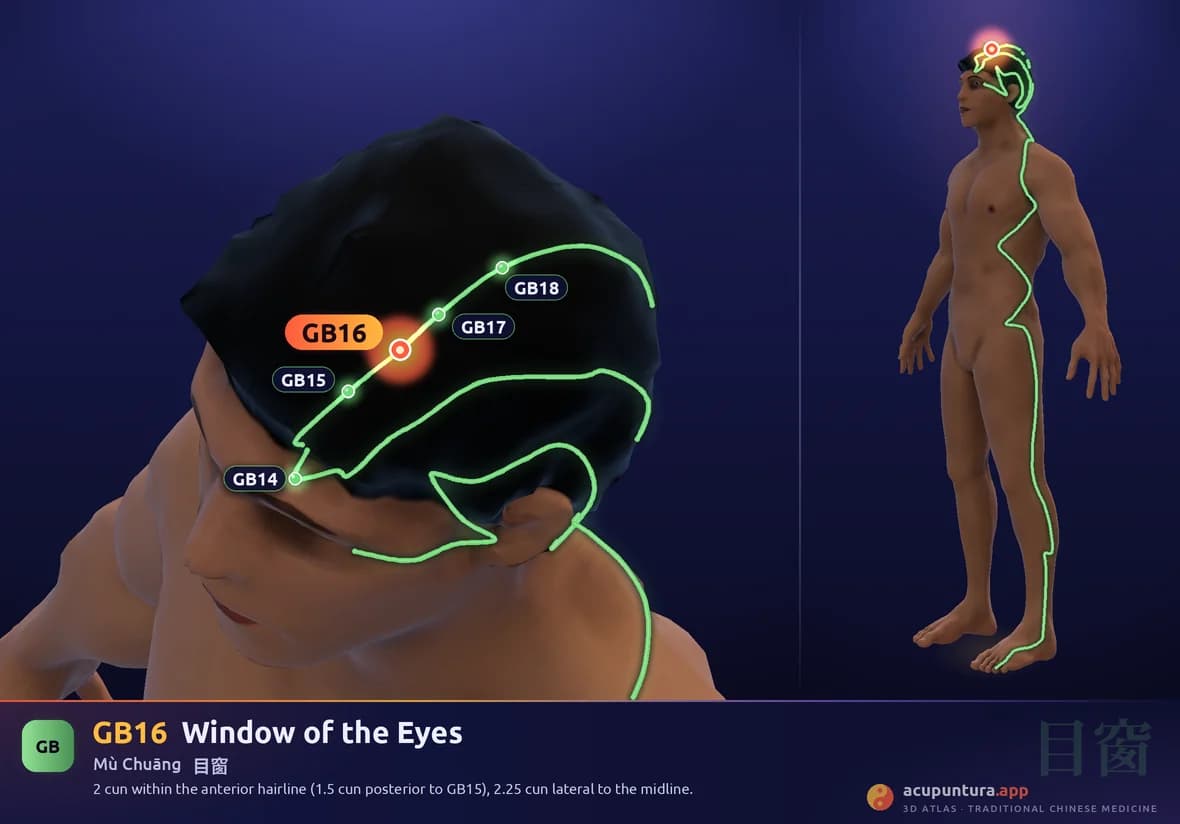
Gallbladder Channel
Window of the Eyes
目窗Mù ChuāngAnatomical location
2 cun within the anterior hairline (1.5 cun posterior to GB15), 2.25 cun lateral to the midline.
Main function
Benefits the eyes, expels Wind.
Therapeutic indications
- Headache
- eye pain
- vertigo
- eye congestion
- blurred vision
- facial edema
Name and classical tradition
Muchuang, 目窗, is the "Eye Window": 目, eye, and 窗, window. The point lies on the scalp, in line with the pupil, and its name describes both its position and its use in eye disorders. The image is similar to that of its neighbor, GB15, which also looks toward the eyes from the top of the head.
Its alternate name has come down in three forms: 至营, 至荣, and 至宫. The final characters differ, and it is likely that two of them are copying errors from a single original, something common in manuscript transmission. Which form is correct can only be settled by a critical edition. Secondary sources trace it to the Zhenjiu Jiayi Jing (Systematic Classic of Acupuncture and Moxibustion).
Other names
- 至營Jiayi Jing