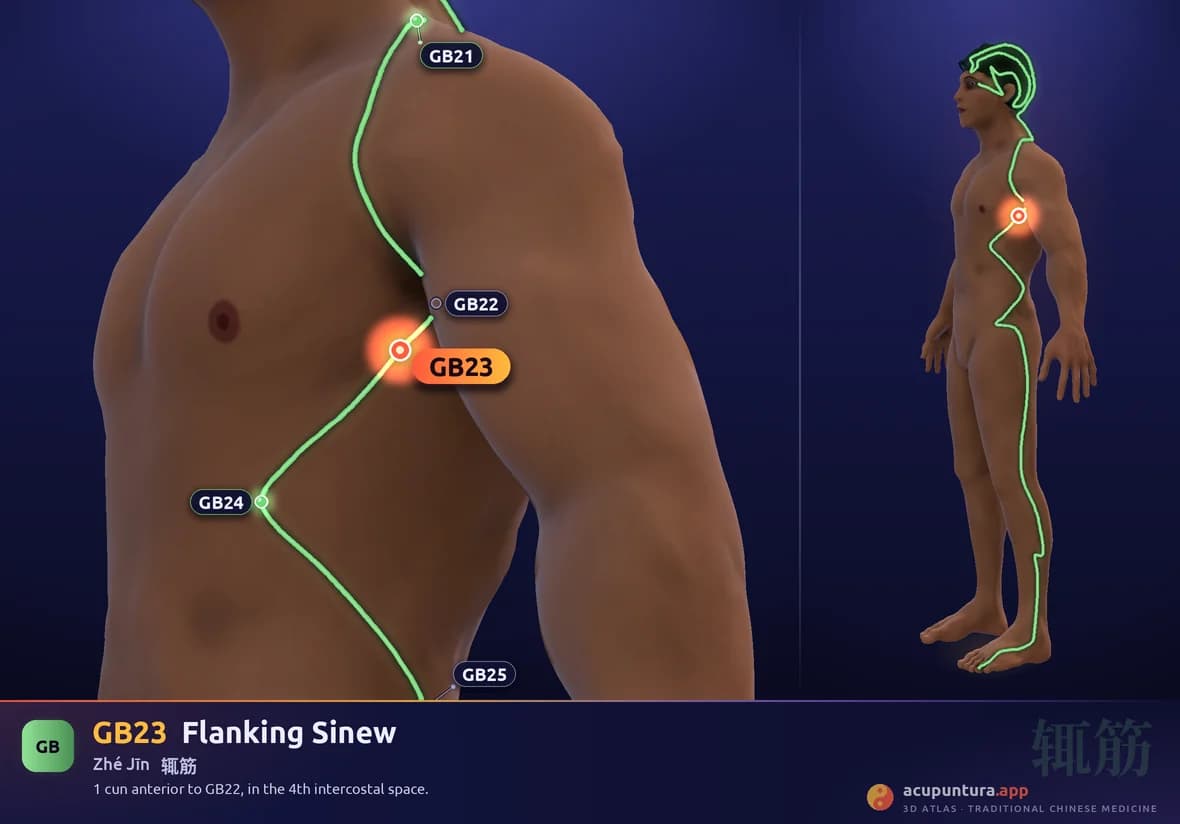
Gallbladder Channel
Flanking Sinew
辄筋Zhé JīnAnatomical location
1 cun anterior to GB22, in the 4th intercostal space.
Main function
Regulates Liver Qi, relieves chest pain.
Therapeutic indications
- Chest pain
- cough
- rib pain
- costal pain
- asthma
- vomiting
- acid reflux
- chest fullness
Name and classical tradition
Zhejin, 辄筋, takes its name from the carpentry of chariots. 辄 designated, on ancient chariots, the side boards that protected against the mud thrown up by the wheels; 筋 means sinews and muscles, the tissue that Five Phases (Five Elements) theory associates with the Liver and Gallbladder, that is, with Wood. The point lies on the lateral border of the thorax, between the muscles covering the ribs, and the comparison with those boards shielding the side of the chariot is the reading the reference works offer.
The term 辄 in this technical sense is documented in the classical character dictionaries, so the basis of the etymology is solid, although no ancient commentator vouches for its application to the point. Secondary sources trace the point to the Zhenjiu Jiayi Jing (Systematic Classic of Acupuncture and Moxibustion). Its immediate neighbor, GB24, is the Mu point of the Gallbladder.