Gallbladder Channel
Wind Market
风市Fēng ShìAnatomical location
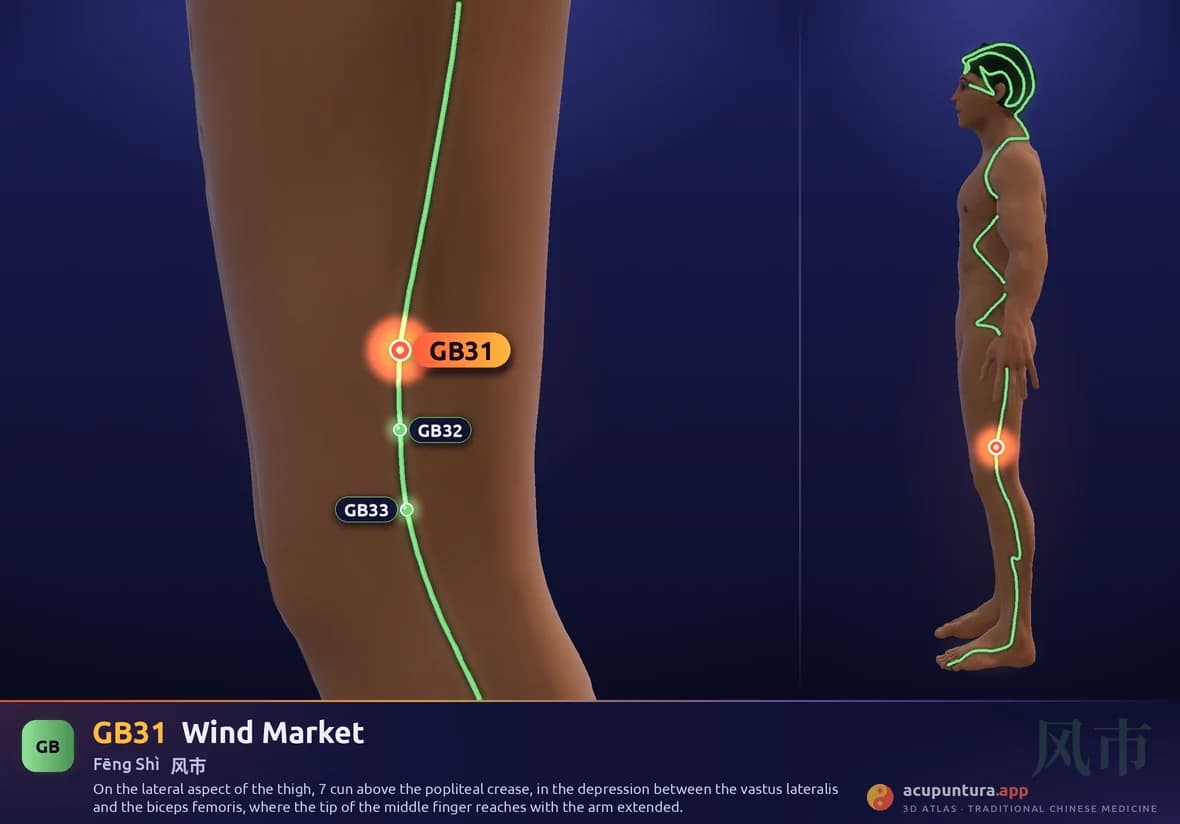
On the lateral aspect of the thigh, 7 cun above the popliteal crease, in the depression between the vastus lateralis and the biceps femoris, where the tip of the middle finger reaches with the arm extended.
Main function
Expels Wind-Dampness and relieves pain.
Therapeutic indications
- Leg pain
- sciatica
- hives
- pruritus
- leg pain and weakness
- paralysis of the lower limb
- low back pain
- beriberi
Name and classical tradition
Fengshi, 风市, is the “wind market.” 风 is wind, the pathogenic factor; 市, the market, the place where things gather and are exchanged. The name is not anatomical but clinical: it marks the point where the Wind that affects the lower limbs concentrates, and the tradition has consistently associated it with paralysis, numbness, and hemiplegia (半身不遂).
Its textual origin could not be determined from the sources consulted. Several link it to the treatment of Wind in the line of Sun Simiao’s Beiji Qianjin Yaofang (Essential Formulas for Emergencies Worth a Thousand Gold) from the Tang period, but none gives the citation or confirms which work names it first. It is better to leave it at that than to assign it a doubtful origin.