Gallbladder Channel
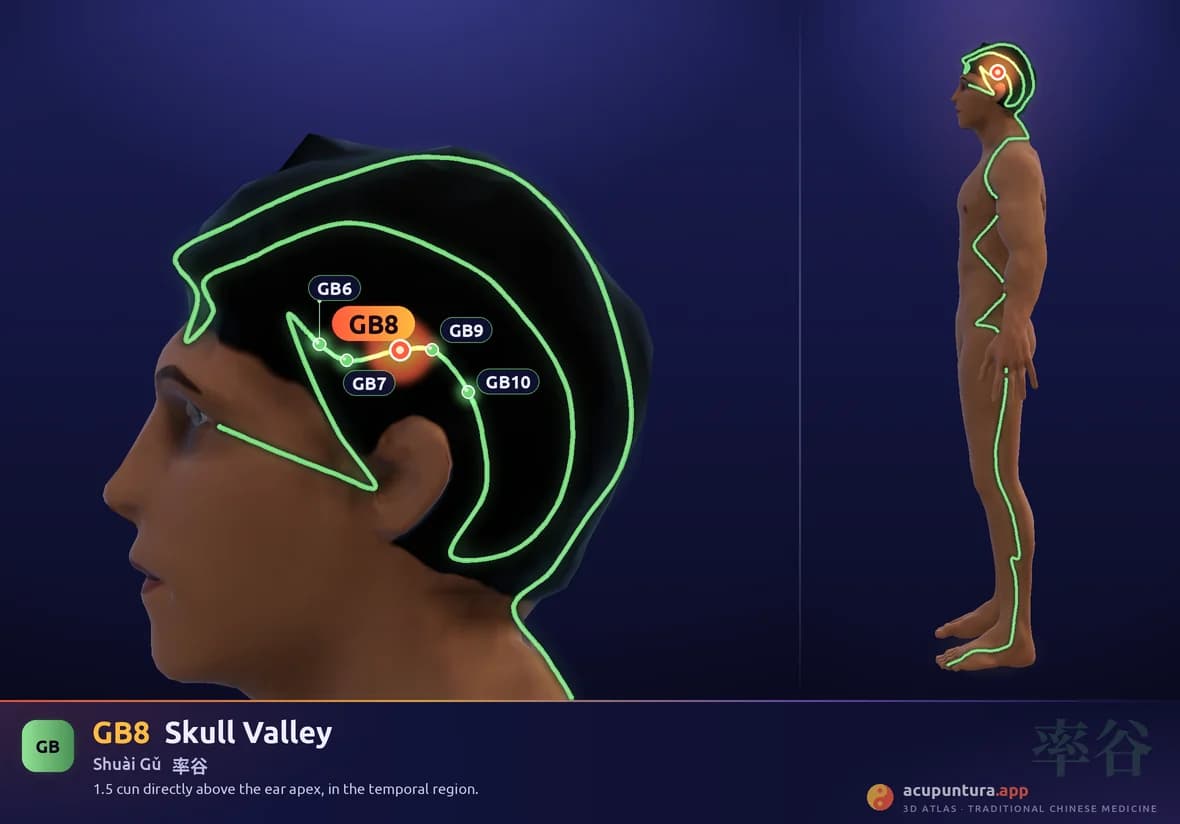
Skull Valley
率谷Shuài GǔAnatomical location
1.5 cun directly above the ear apex, in the temporal region.
Main function
Expels Wind, relieves headache, calms vertigo.
- Crossing Point with the Bladder
Therapeutic indications
- Migraine
- vertigo
- tinnitus
- Vomiting
- Hangover
- Eye pain
- Infantile convulsions
- Tension headache
Name and classical tradition
Shuaigu, 率谷, combines 率, "to lead," "to go at the head," and 谷, "valley," the word the nomenclature uses for depressions between bony or muscular prominences. The reading the reference works propose is ingenious: of all the points on the body with 谷 in the name, this is the highest, the one that heads the other valleys. It is located above the apex of the ear, within the hair.
The alternative names are more interesting here than usual, because they come with an attributed work. The Yinhai Jingwei writes it 率骨, changing valley to bone. The Waitai Miyao by Wang Tao, from the Tang period, calls it 蟀谷, with the character for cricket: this has been explained by the shape or movement of the area when chewing, which recalls a crouching cricket. A third name, 耳尖, "ear tip," locates it without metaphor. Several independent sources agree on these attributions, although the original passages have not been verified.