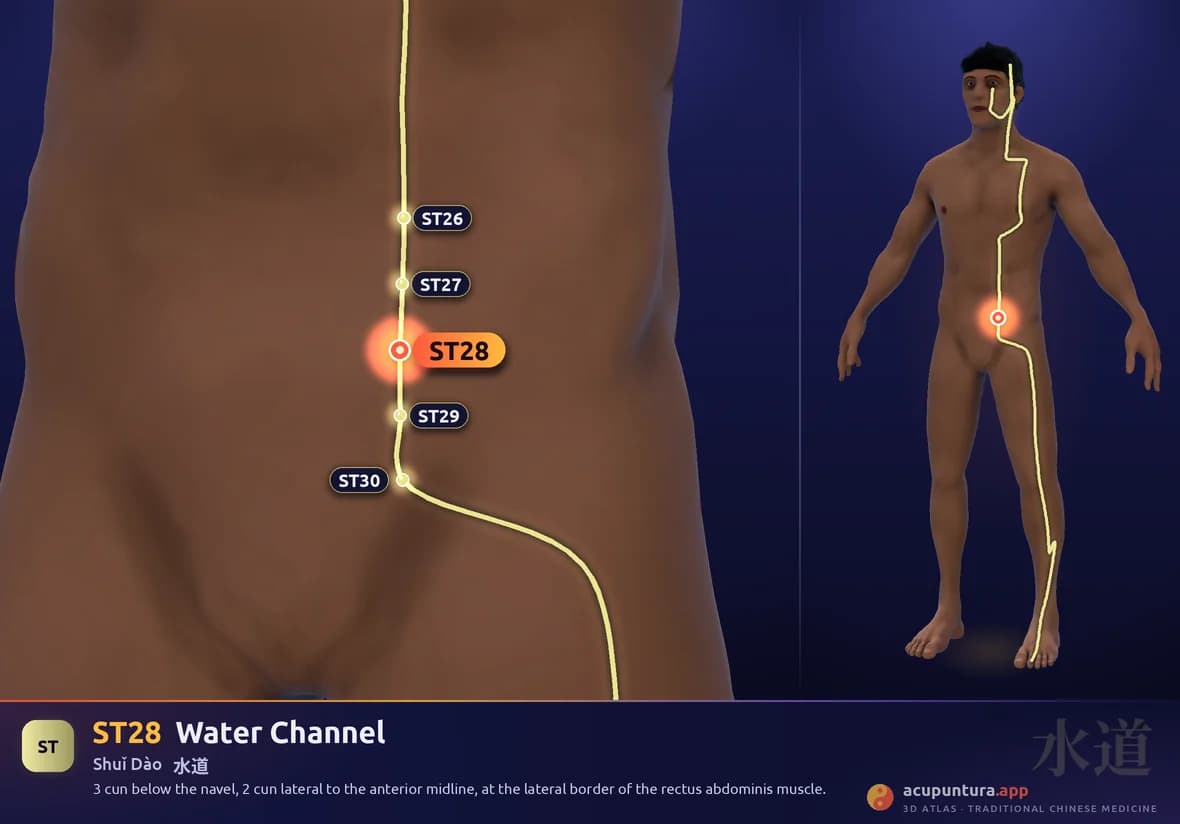
Stomach Channel
Water Channel
水道Shuǐ DàoUse caution during pregnancy
Lower abdomen, acts on the waters of the Lower Jiao; avoid.
Anatomical location
3 cun below the navel, 2 cun lateral to the anterior midline, at the lateral border of the rectus abdominis muscle.
Main function
Regulates the Bladder, promotes urination, eliminates Dampness, relieves abdominal pain.
Therapeutic indications
- Urinary retention
- dysuria
- edema
- abdominal pain
- dysmenorrhea
- infertility
- hypogastric pain
- hernia
Name and classical tradition
Shuidao (水道) is the “water passage.” 水 is water, the body fluids; 道 is a road or conduit. The name is functional and direct: the point regulates the passage of fluids, and among its classical indications are urinary retention and edema. It needs no further explanation, and no source looks for one.
The first work to record it is the Zhenjiu Jiayi Jing (Systematic Classic of Acupuncture and Moxibustion). The reference works attribute no alias to it, and no ancient commentator took it up. Its lower neighbor, ST29, serves precisely as the reference in the Jiayi Jing for locating it one cun below.