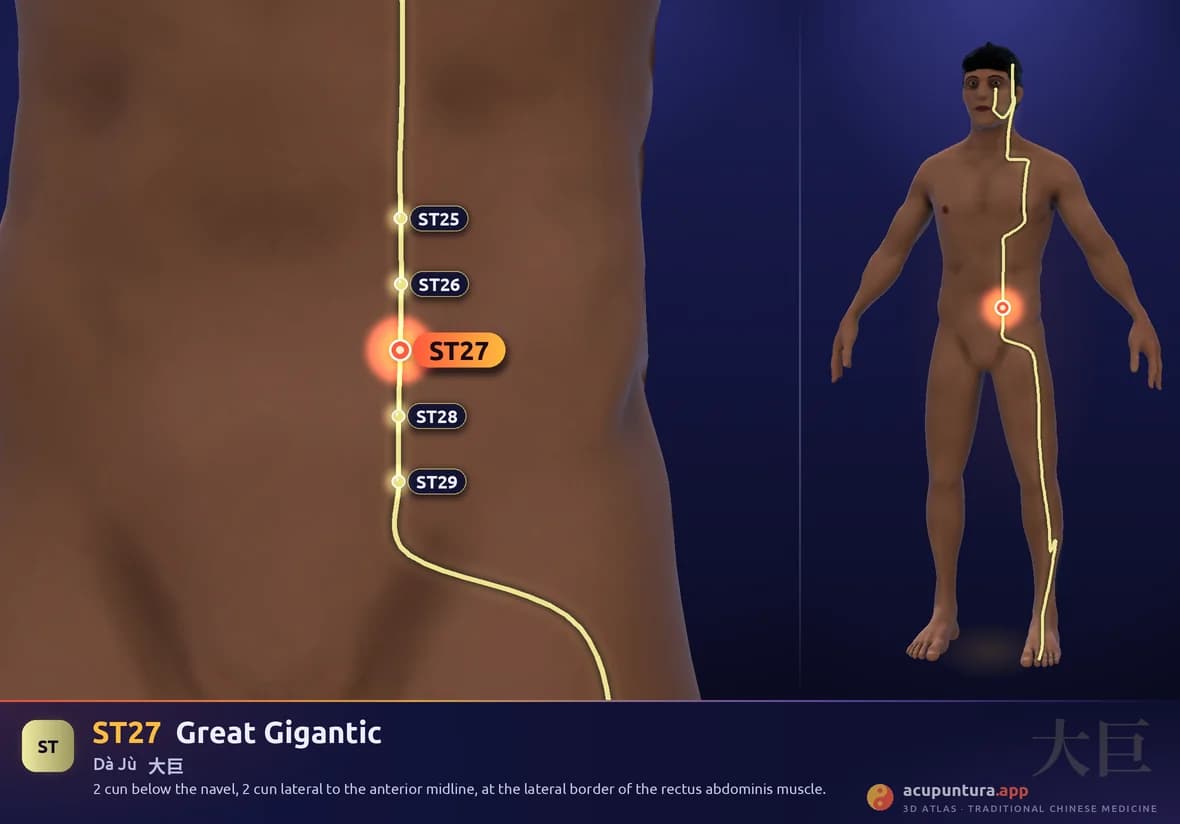
Stomach Channel
Great Gigantic
大巨Dà JùUse caution during pregnancy
Lower abdomen; avoid as the uterus grows.
Anatomical location
2 cun below the navel, 2 cun lateral to the anterior midline, at the lateral border of the rectus abdominis muscle.
Main function
Regulates the Intestines, promotes urination, relieves abdominal pain, harmonizes the Lower Jiao.
Therapeutic indications
- Abdominal pain
- hernia
- urinary retention
- dysuria
- dysmenorrhea
- abdominal distension
- premature ejaculation
- impotence
- insomnia
Name and classical tradition
Daju (大巨) combines two characters that mean the same thing, “big,” and reinforce each other: the “very big.” The usual reading ties it to the breadth of the lower abdomen, where the point is located. No ancient commentary explains it better.
The most quotable reference is a mnemonic verse from the Zhenjiu Daquan (Complete Compendium of Acupuncture and Moxibustion) by Xu Feng, from the Ming dynasty: “樞下一寸外陵是,陵下二寸名大巨.” One cun below Tianshu is Wailing; two cun below Wailing, Daju. Other sources give a different distance between the two points, and the exact figure should be checked against the Zhenjiu Jiayi Jing (Systematic Classic of Acupuncture and Moxibustion), the first work to record the point. In any case, the verse is a good example of how distances between points were memorized: ST25, ST26, and Daju are chained together in two lines.
Other names
- 腋門Jiayi Jing