Traditional Chinese Medicine channel
Stomach Channel
足阳明胃经Earth07:00 - 09:0045 pointsST1 → ST45
Description
The Stomach channel governs the reception and breakdown of food, as well as the transformation of fluids. It is known as the "sea of nourishment" and is fundamental to the production of Qi and Blood. Imbalances can show up as digestive problems, excessive thirst, mouth problems, bloating, and fatigue. It is essential for the sense of taste and for the ability to "digest" both food and life's experiences, influencing our capacity to take in new ideas and situations.
Main functions
- Governs the reception
- Ripening
- And transformation of food and fluids
- Regulates the transport of nutrients
- Strengthens the muscles and limbs
- Controls the lips and opens into the mouth
- Regulates the Qi of the Middle Jiao
Pathway
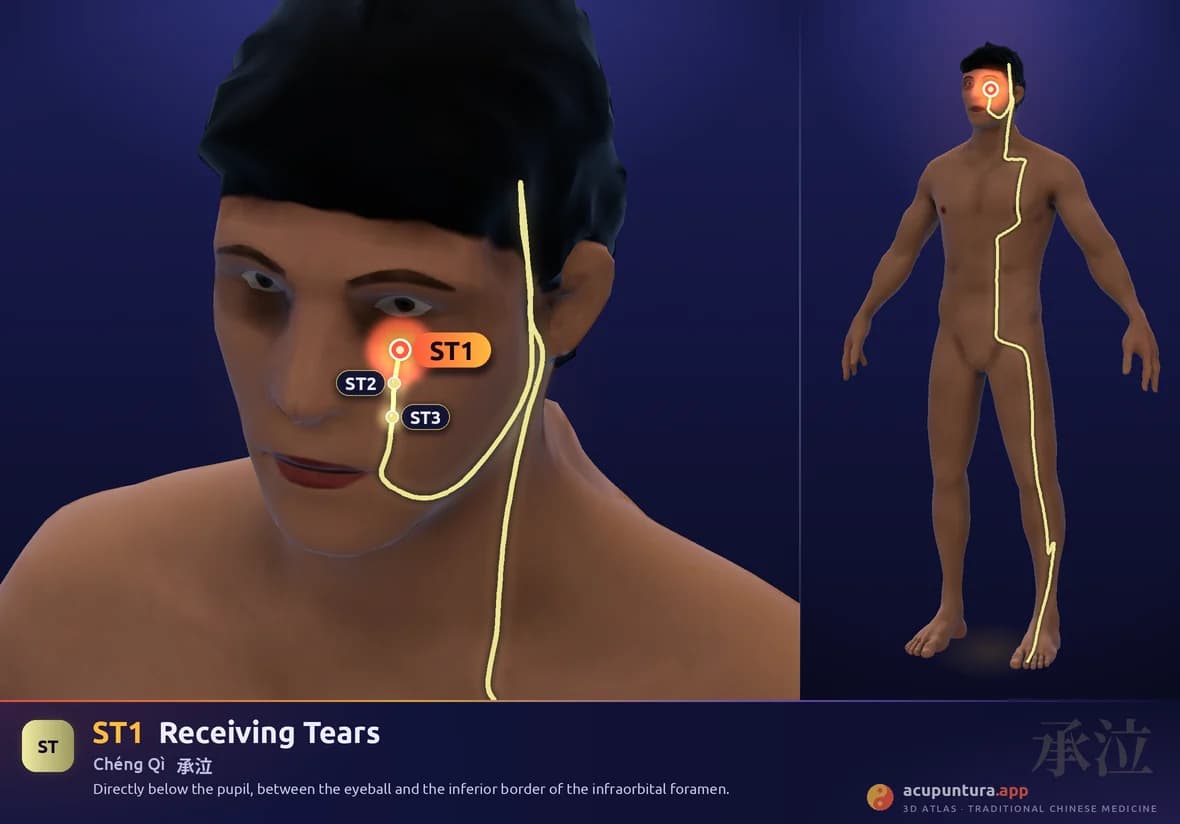
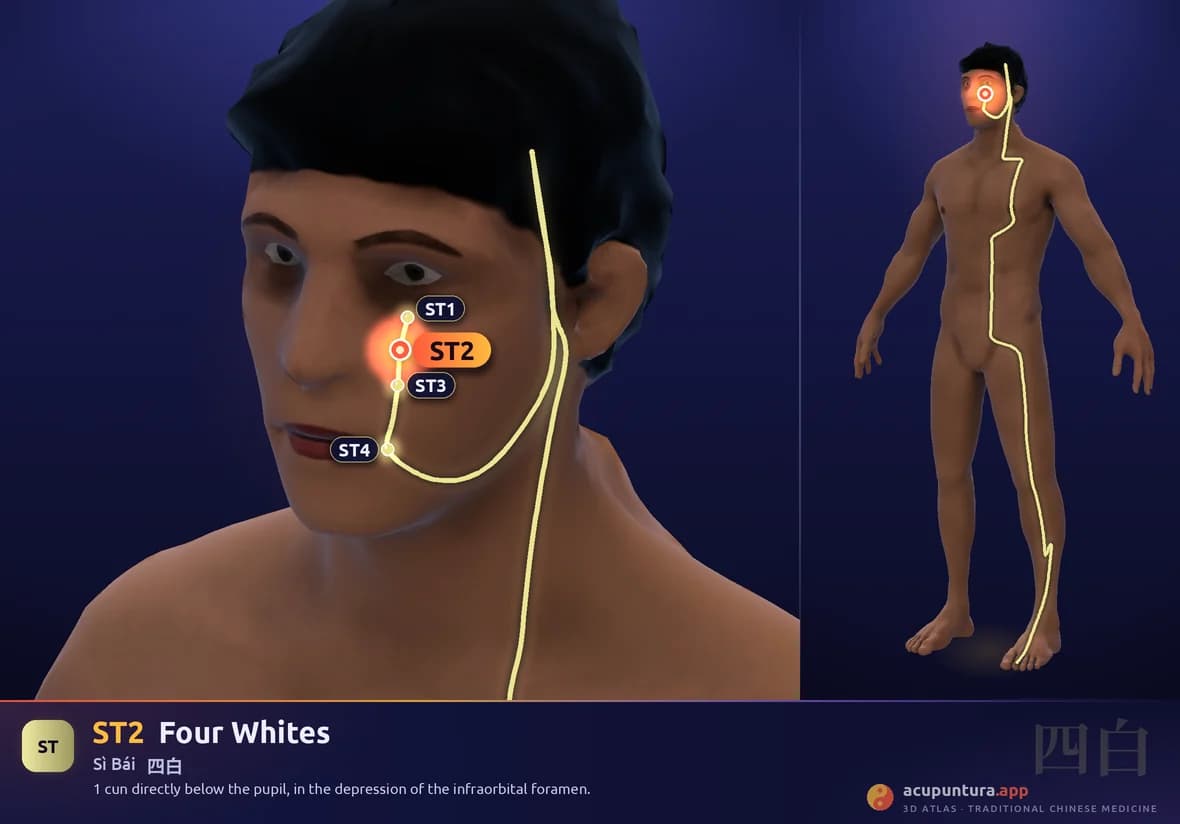
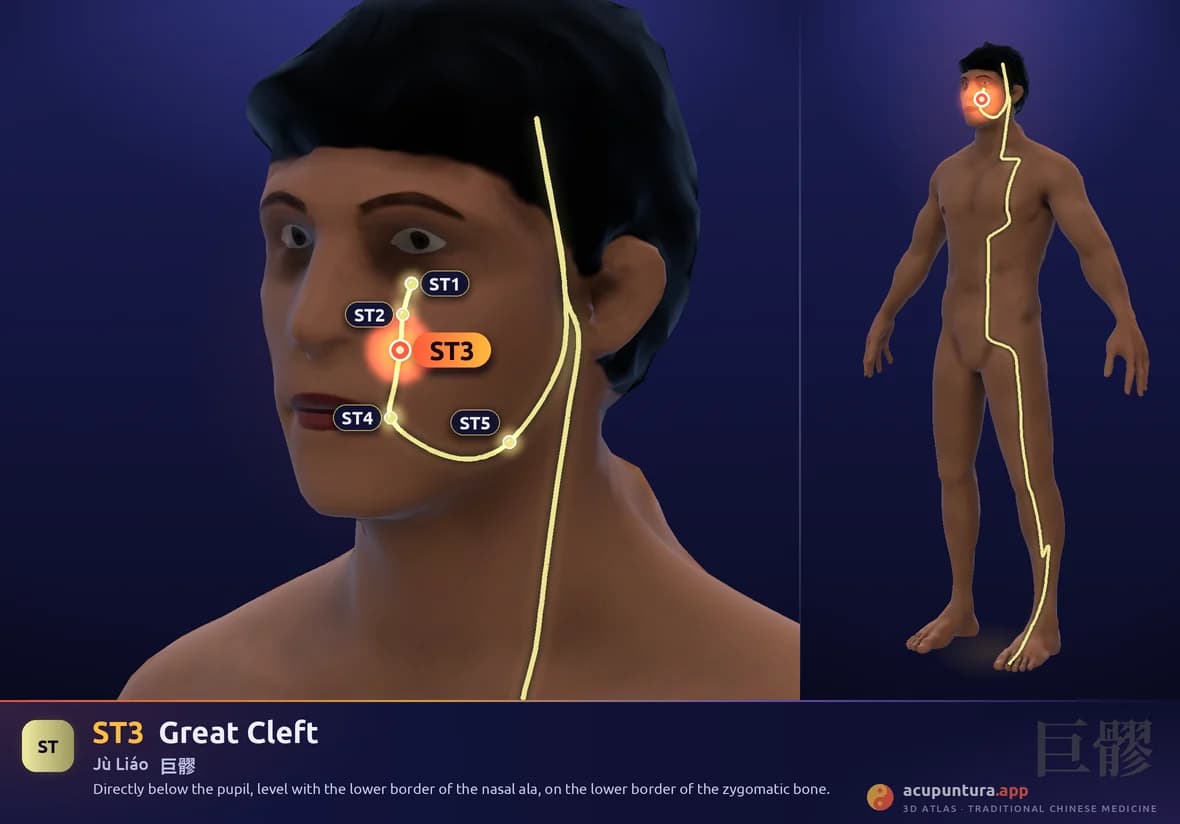
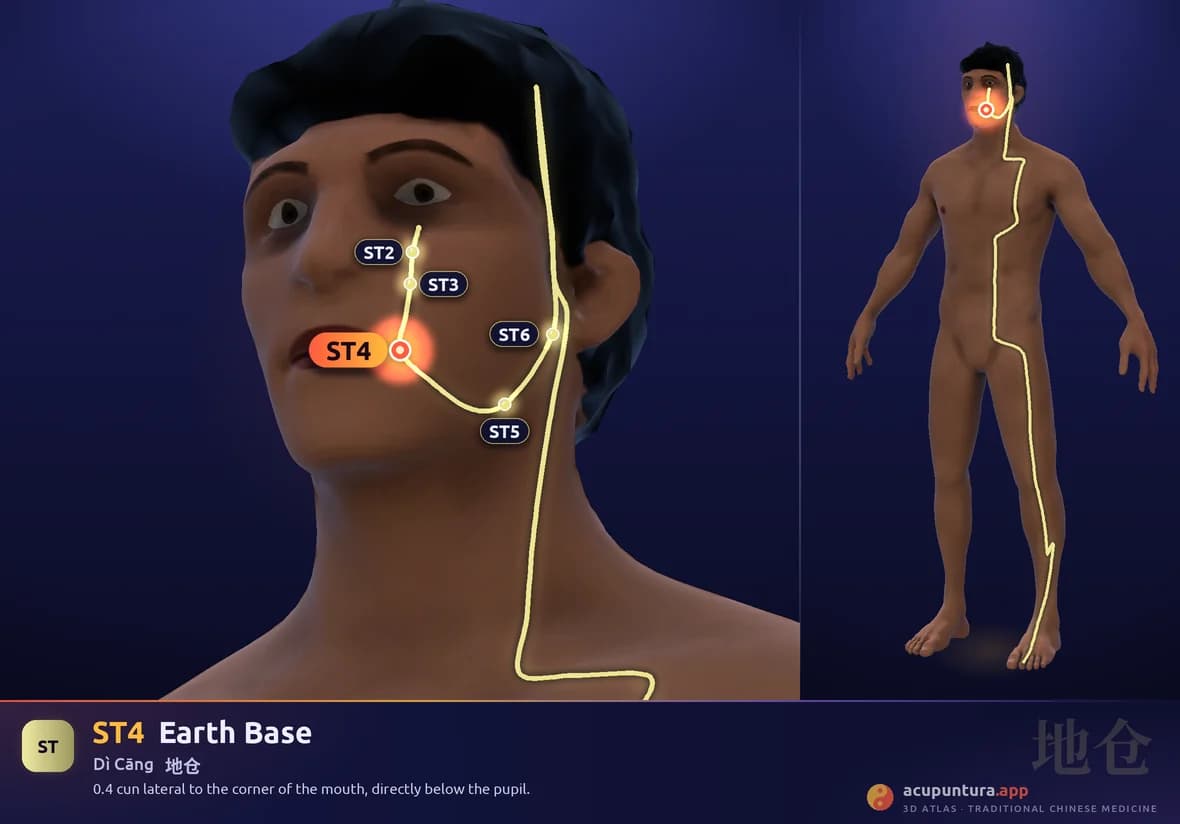
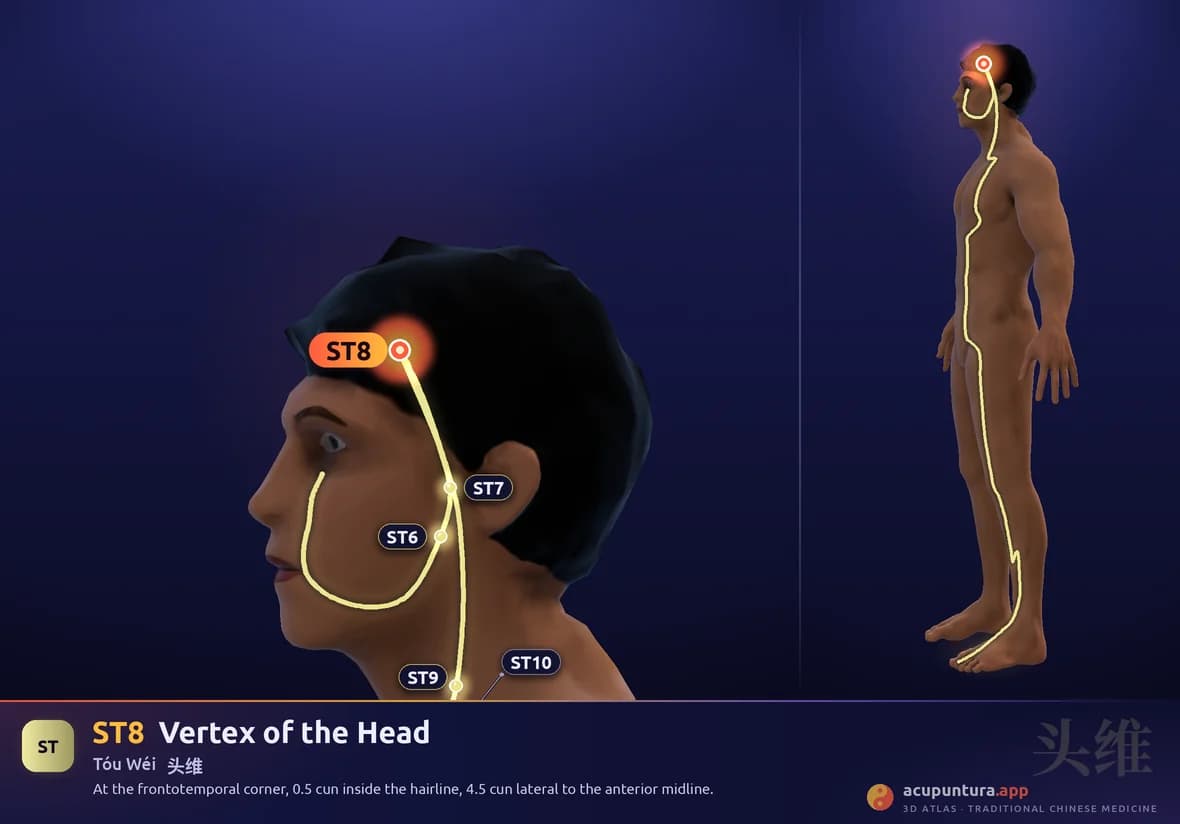
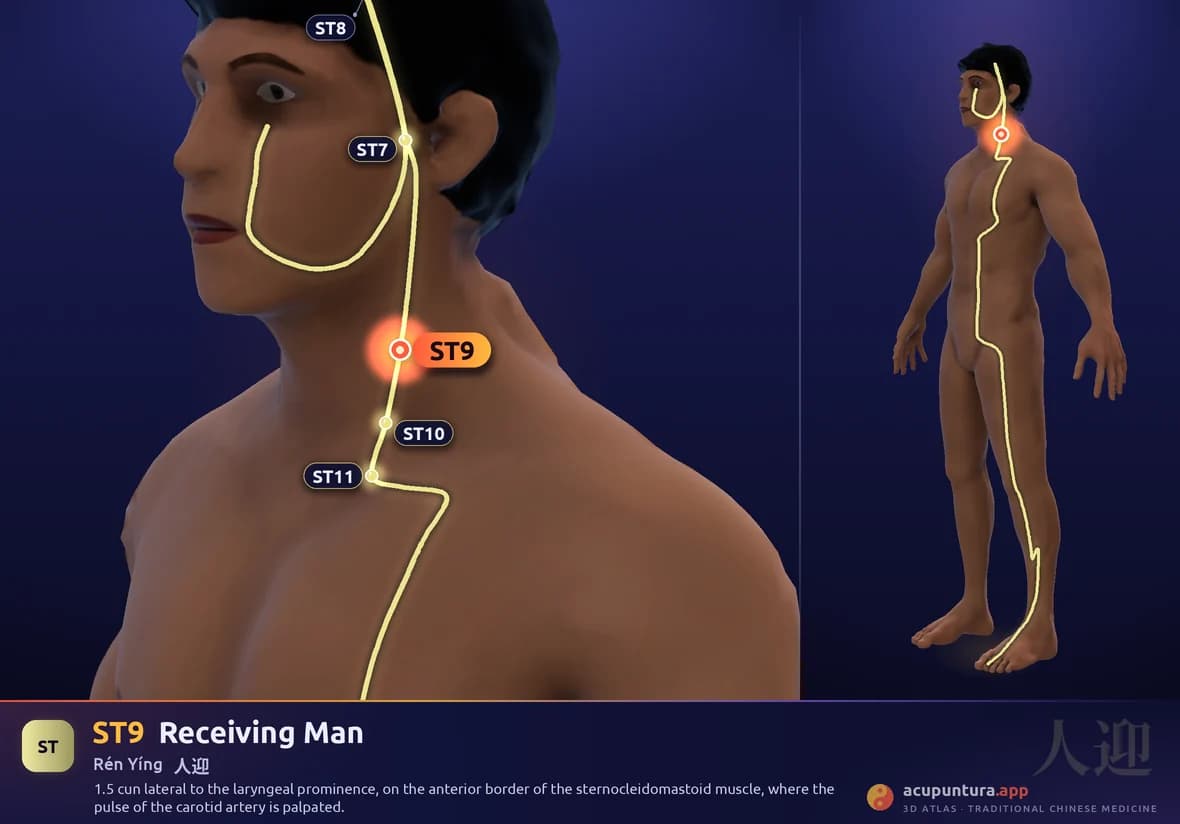
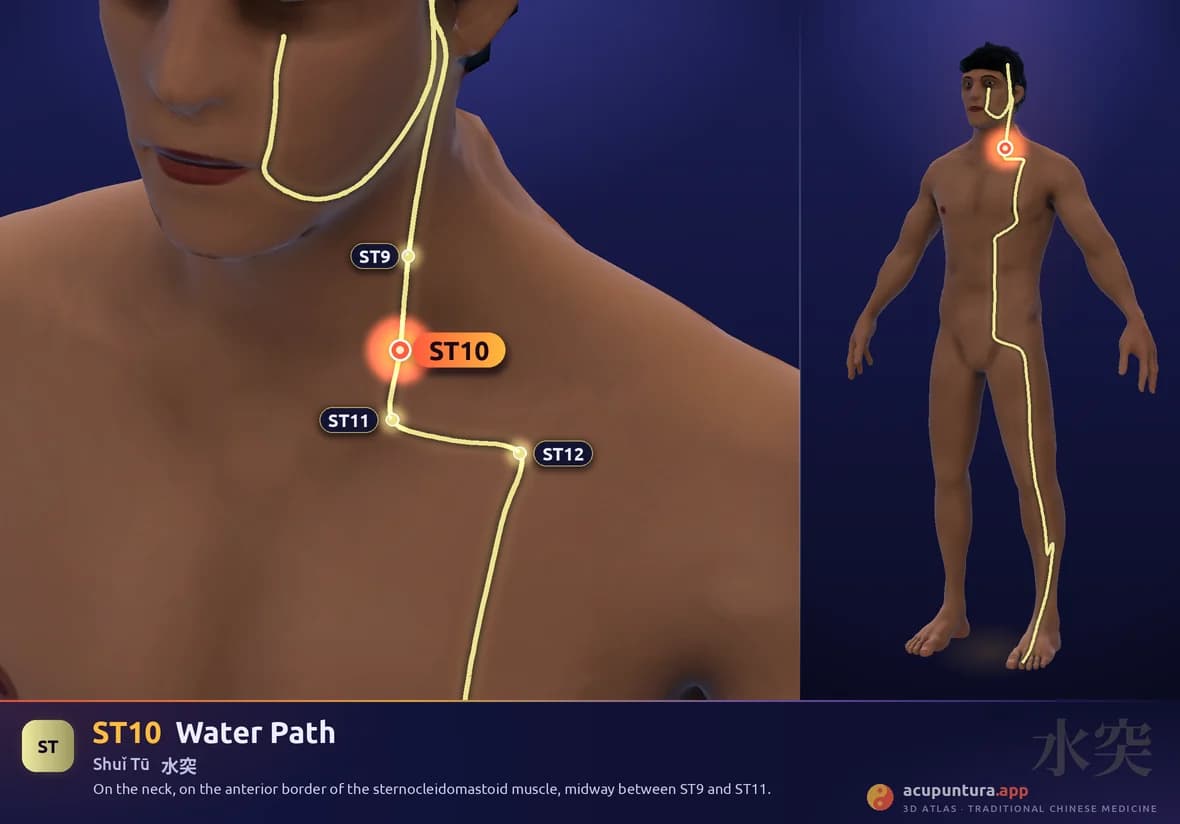
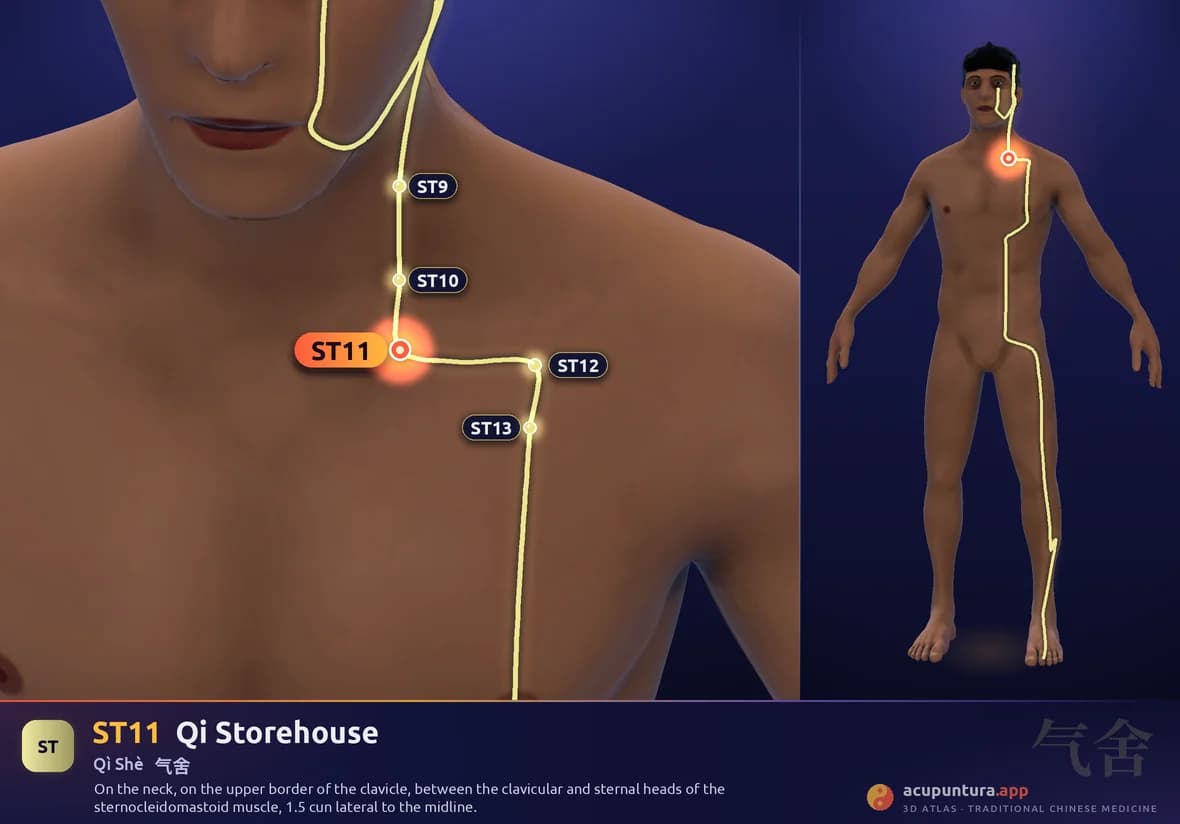
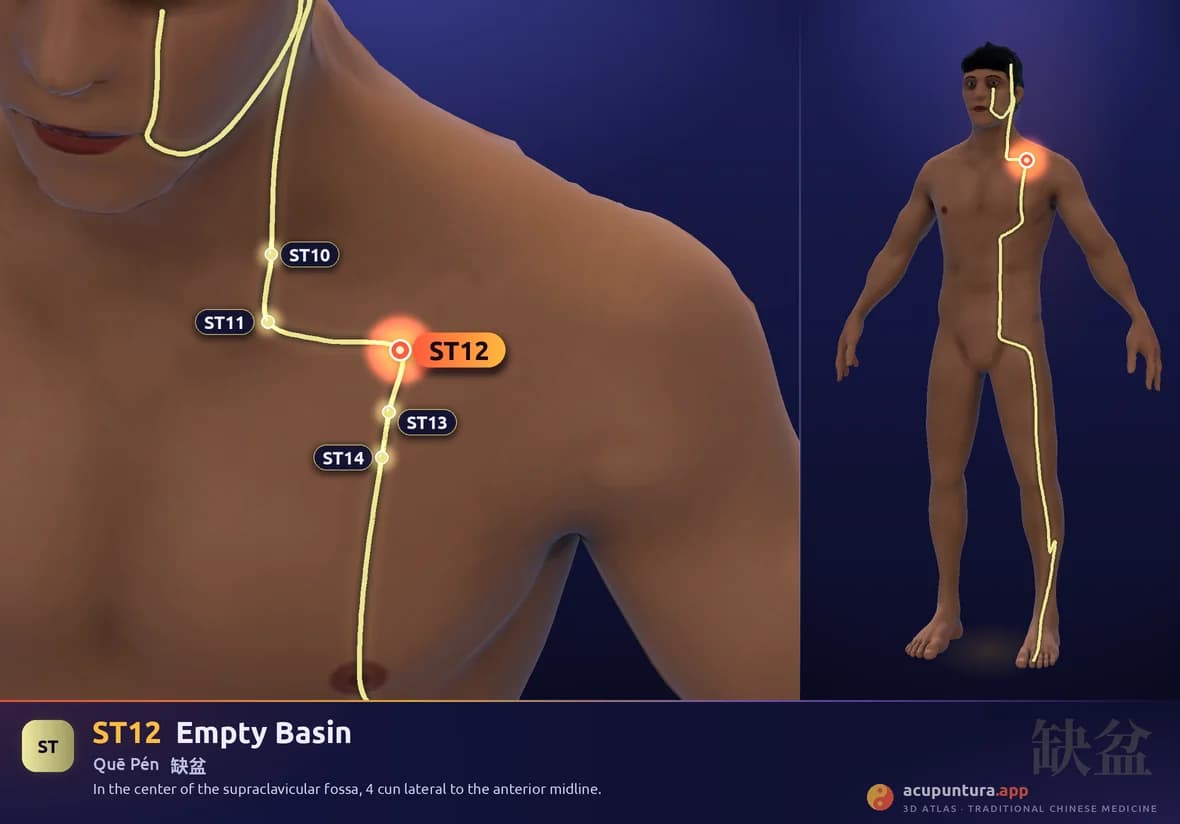
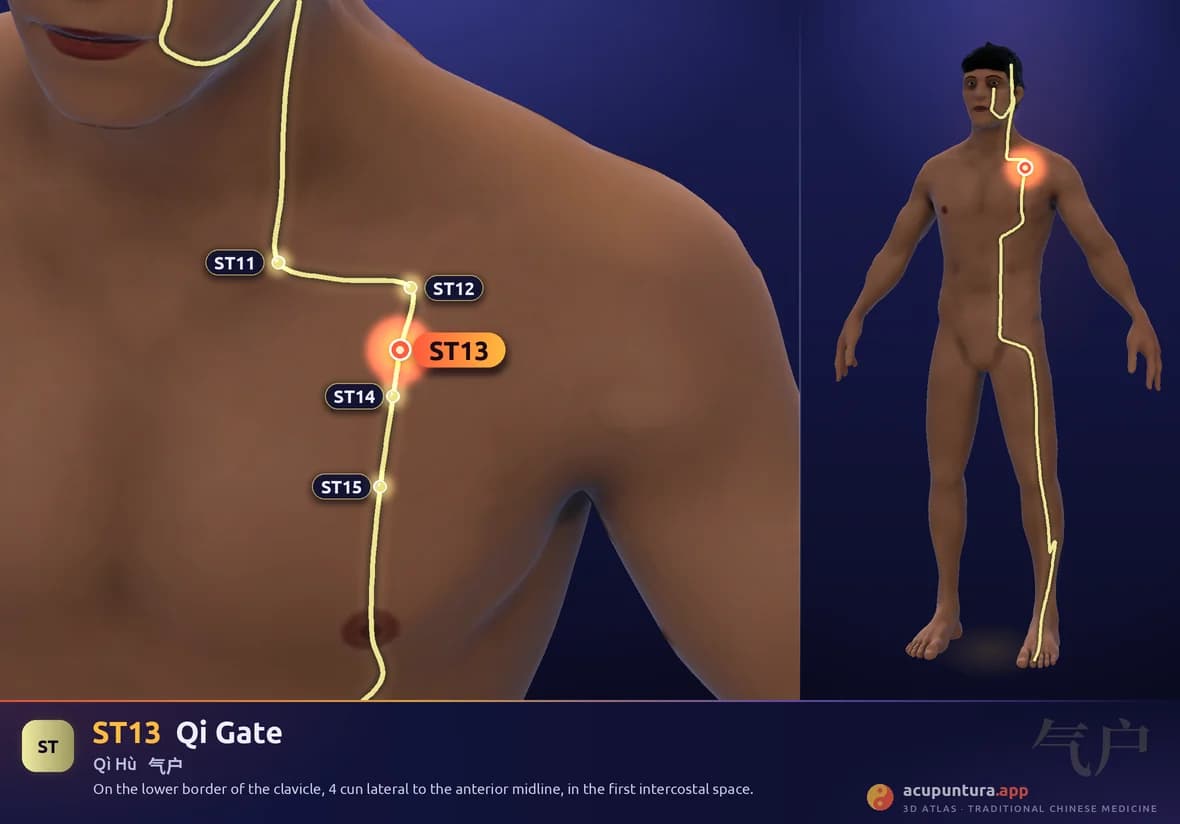
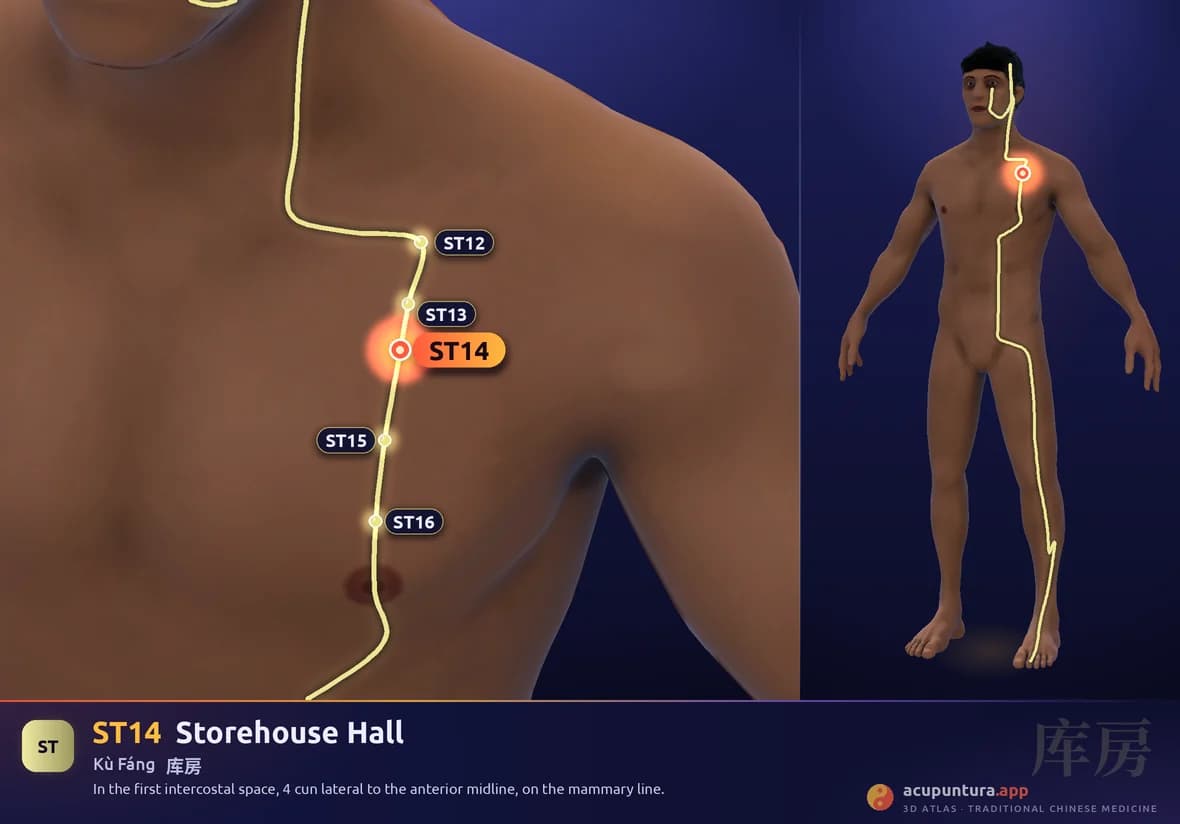
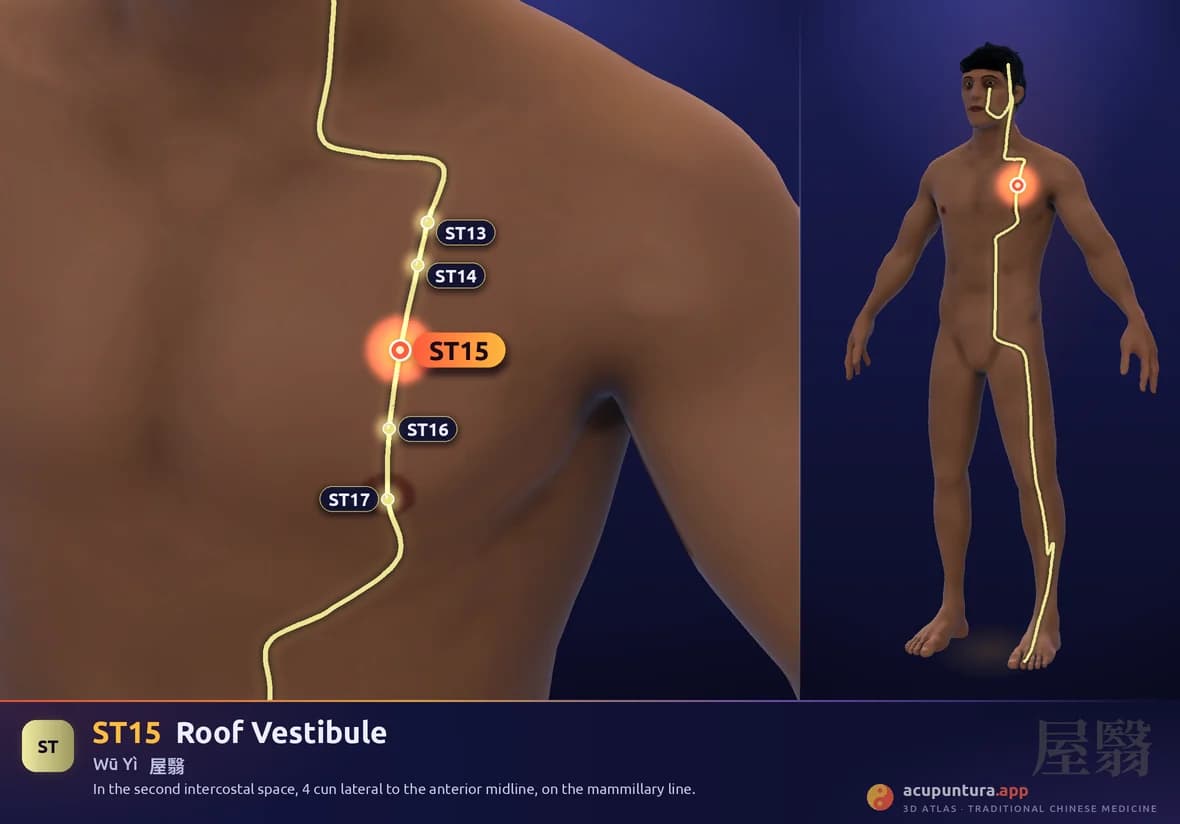
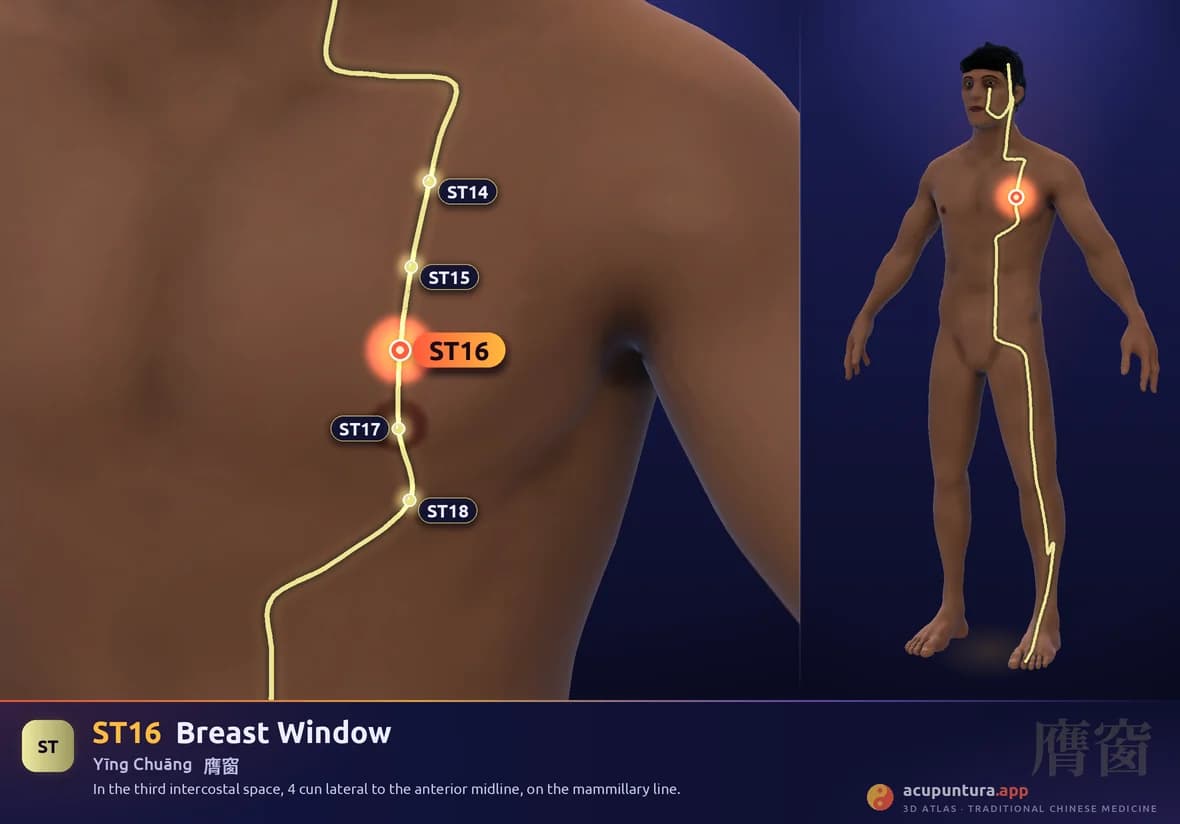
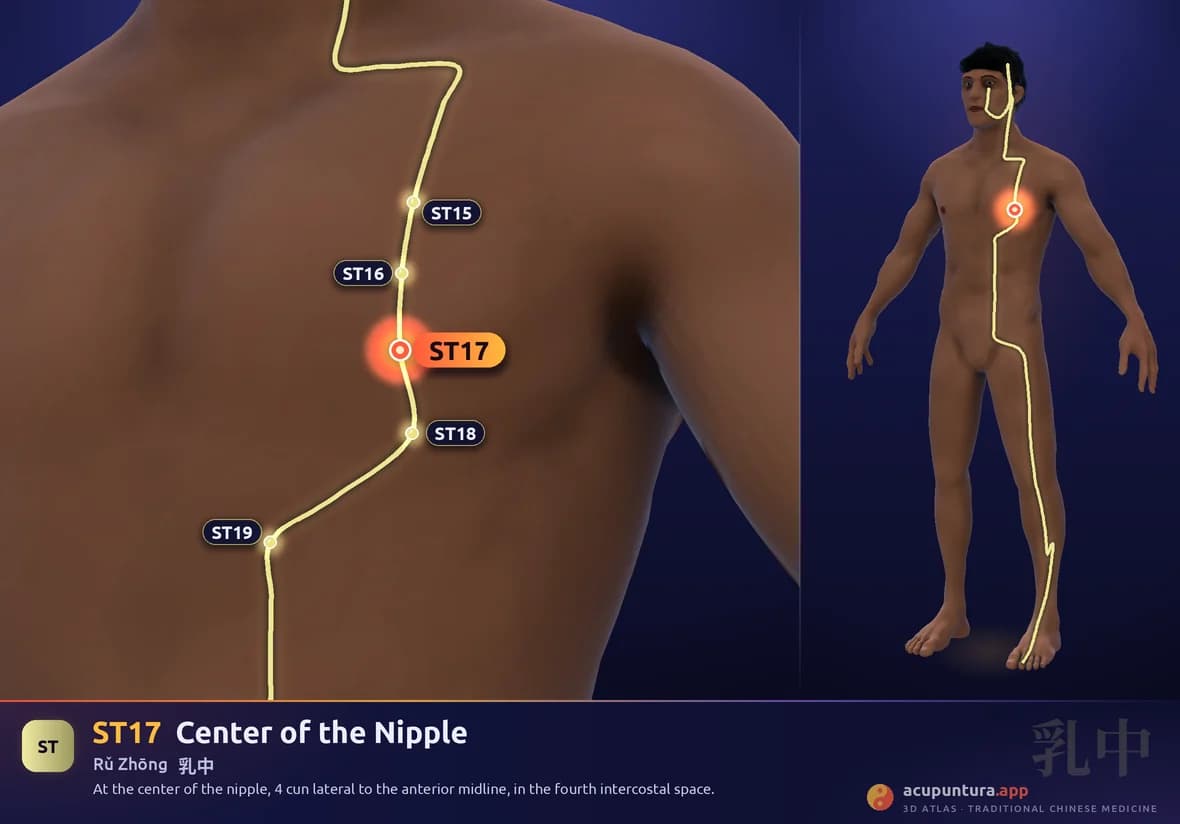
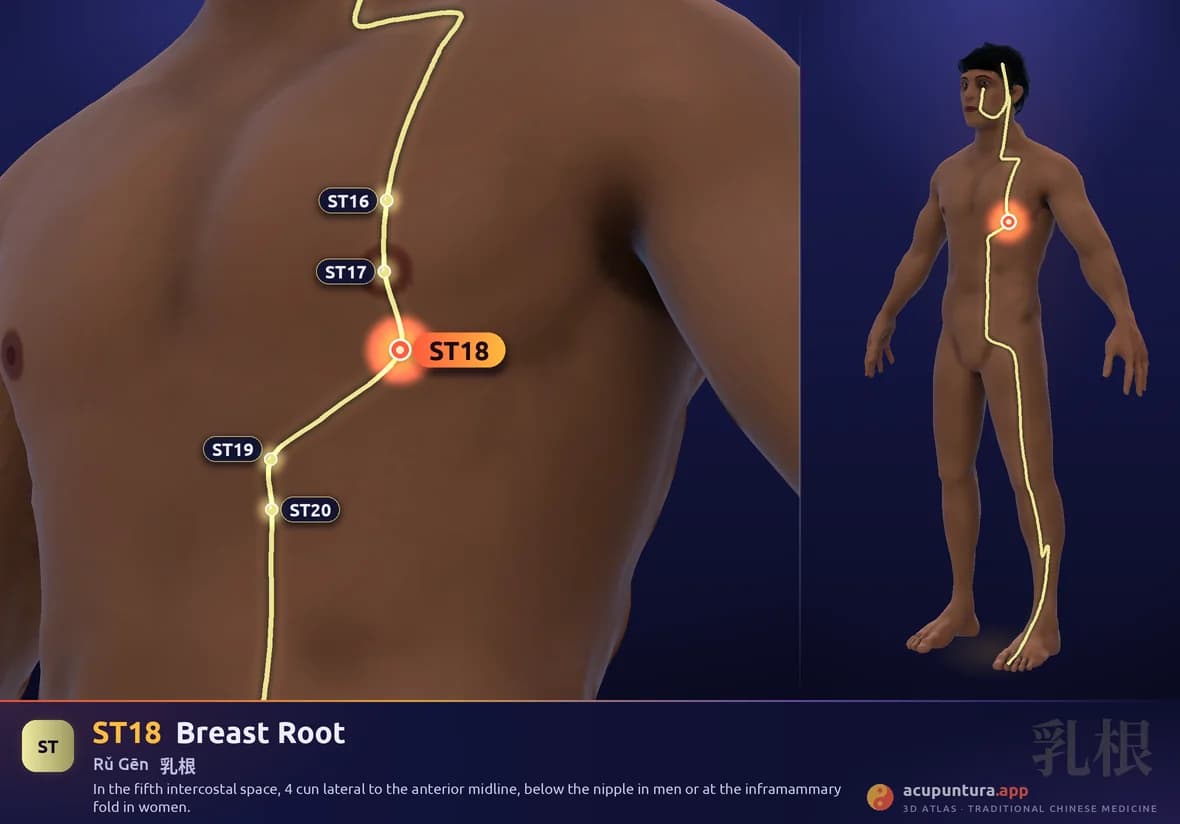
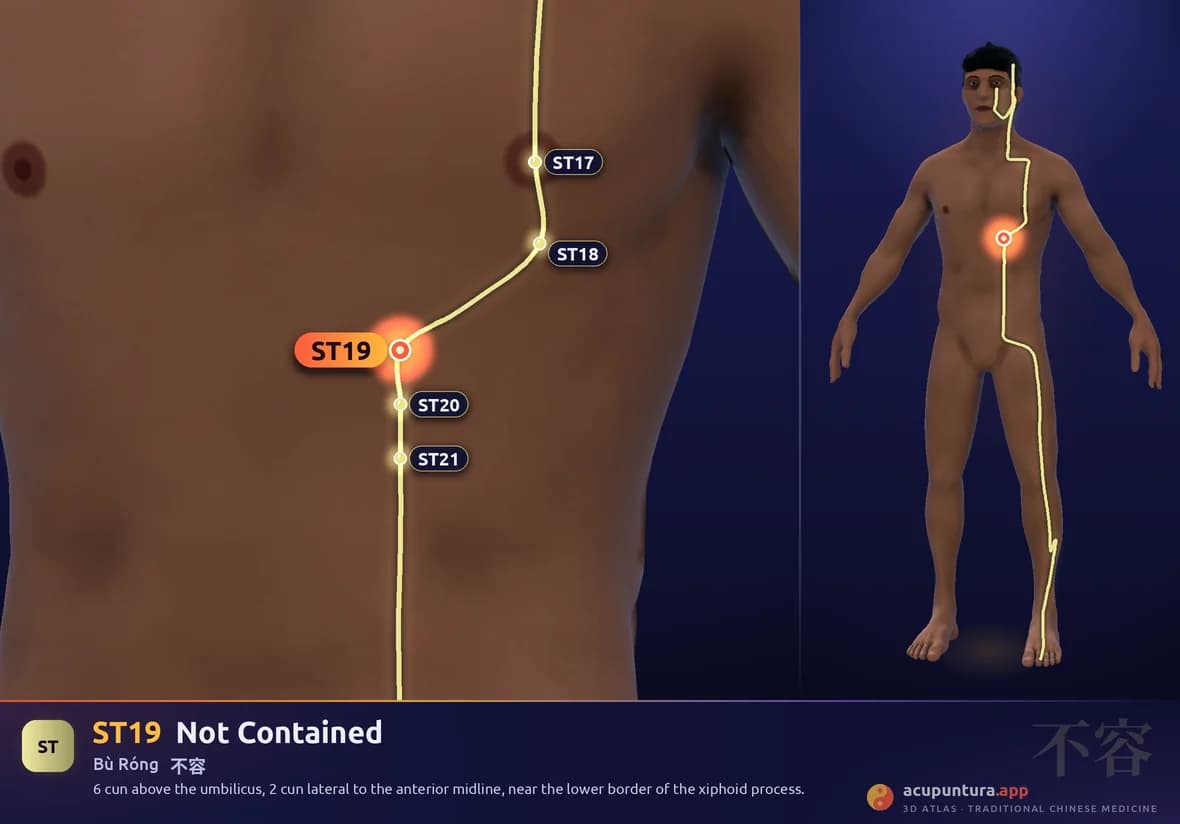
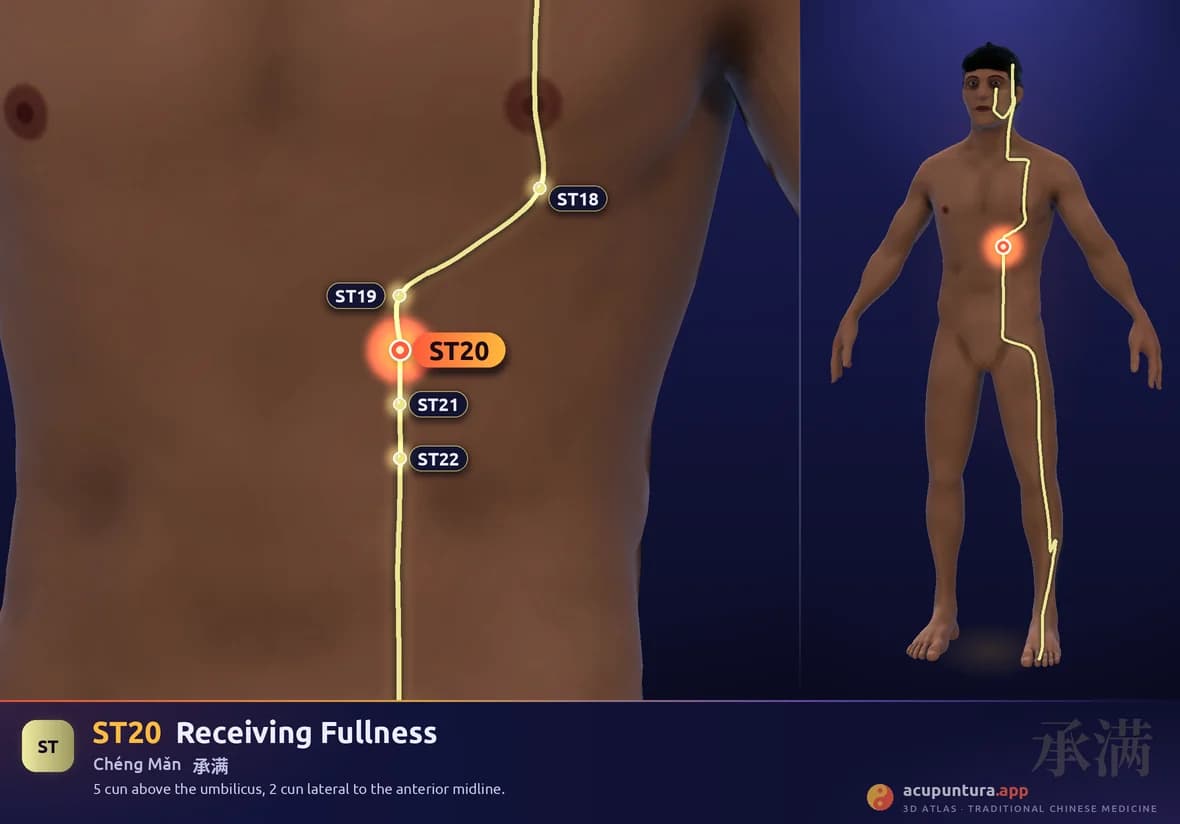
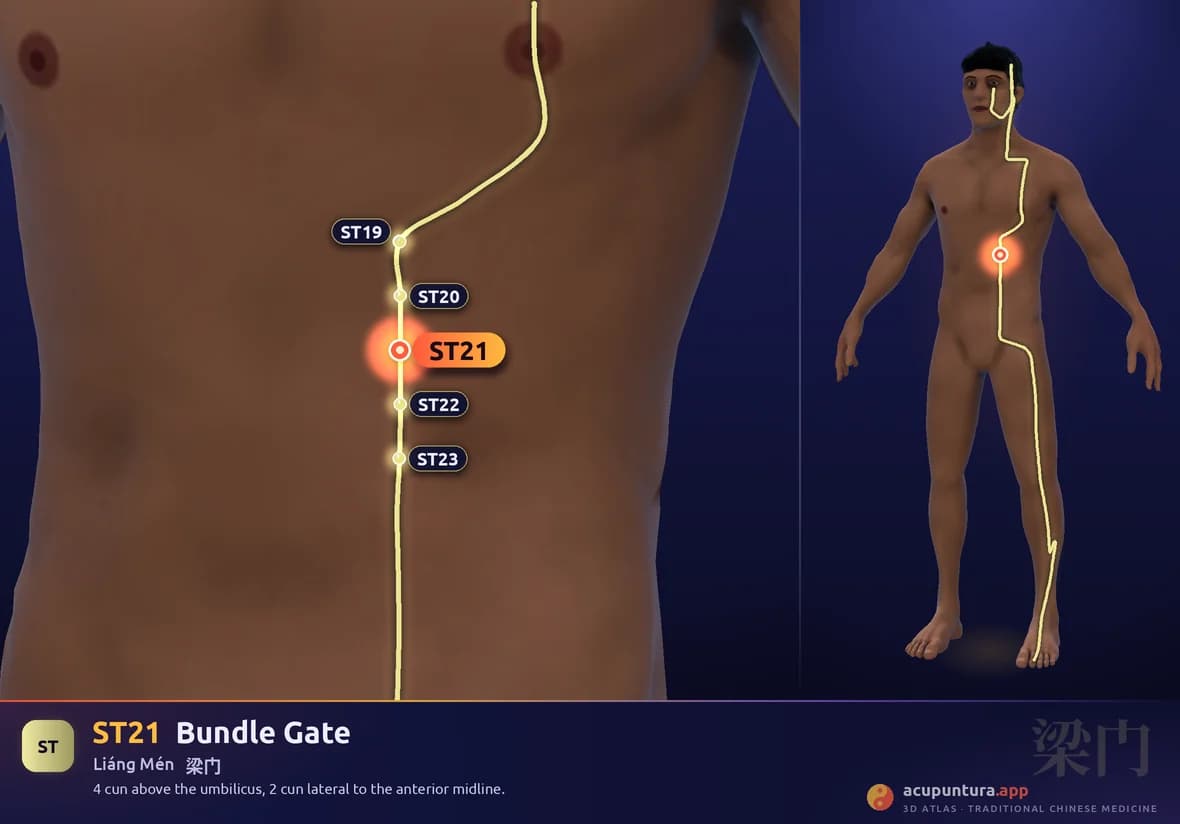
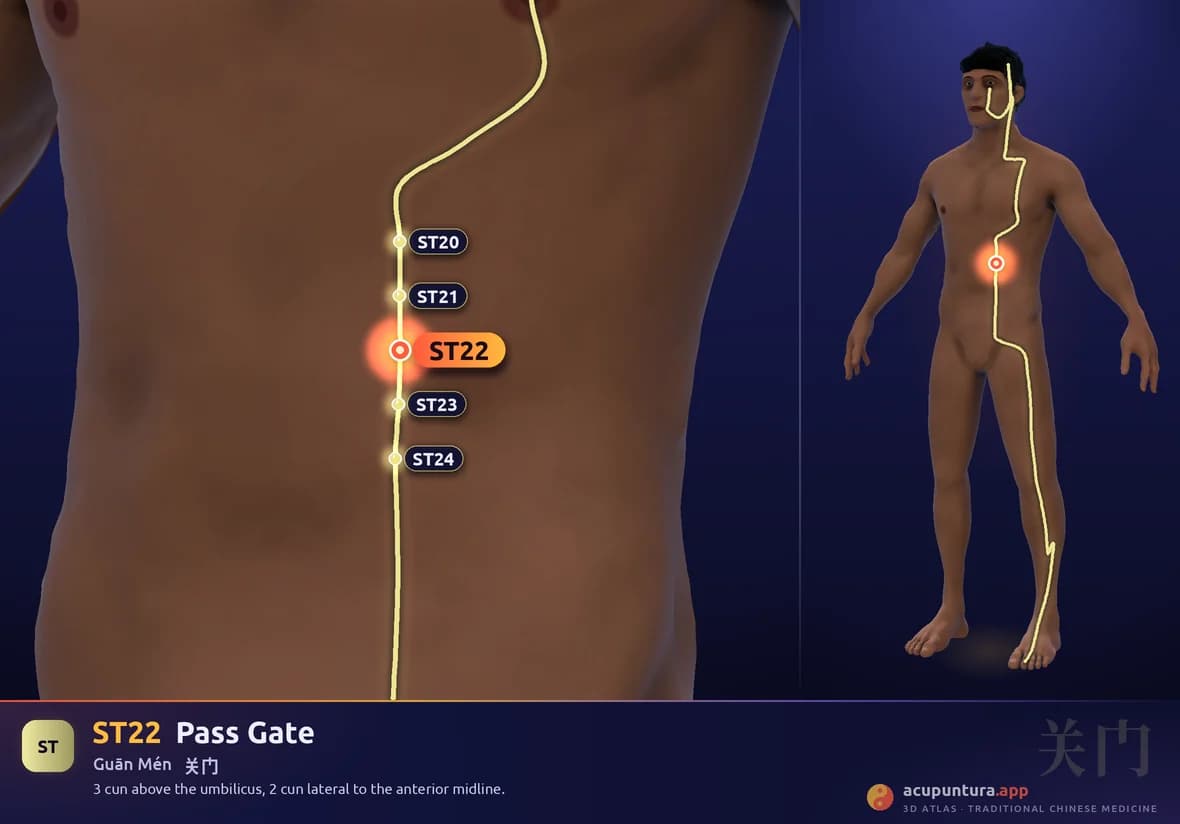
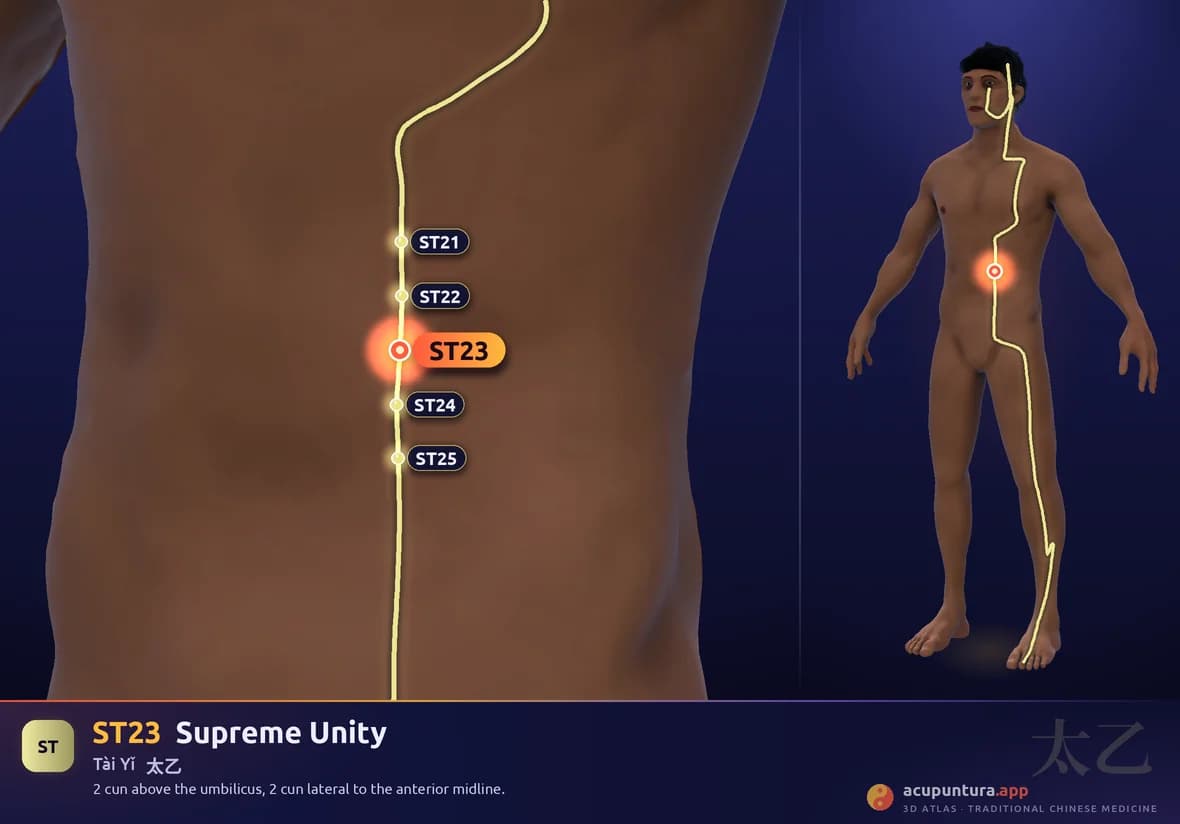
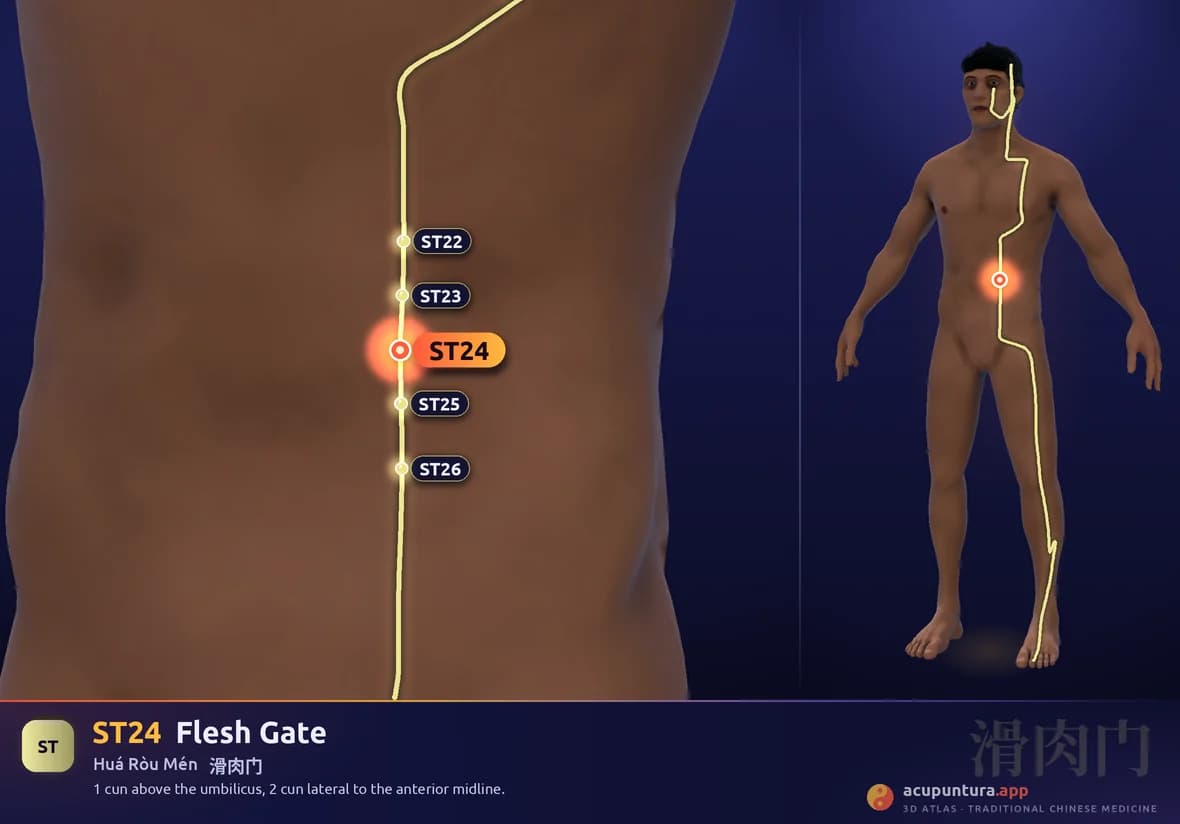
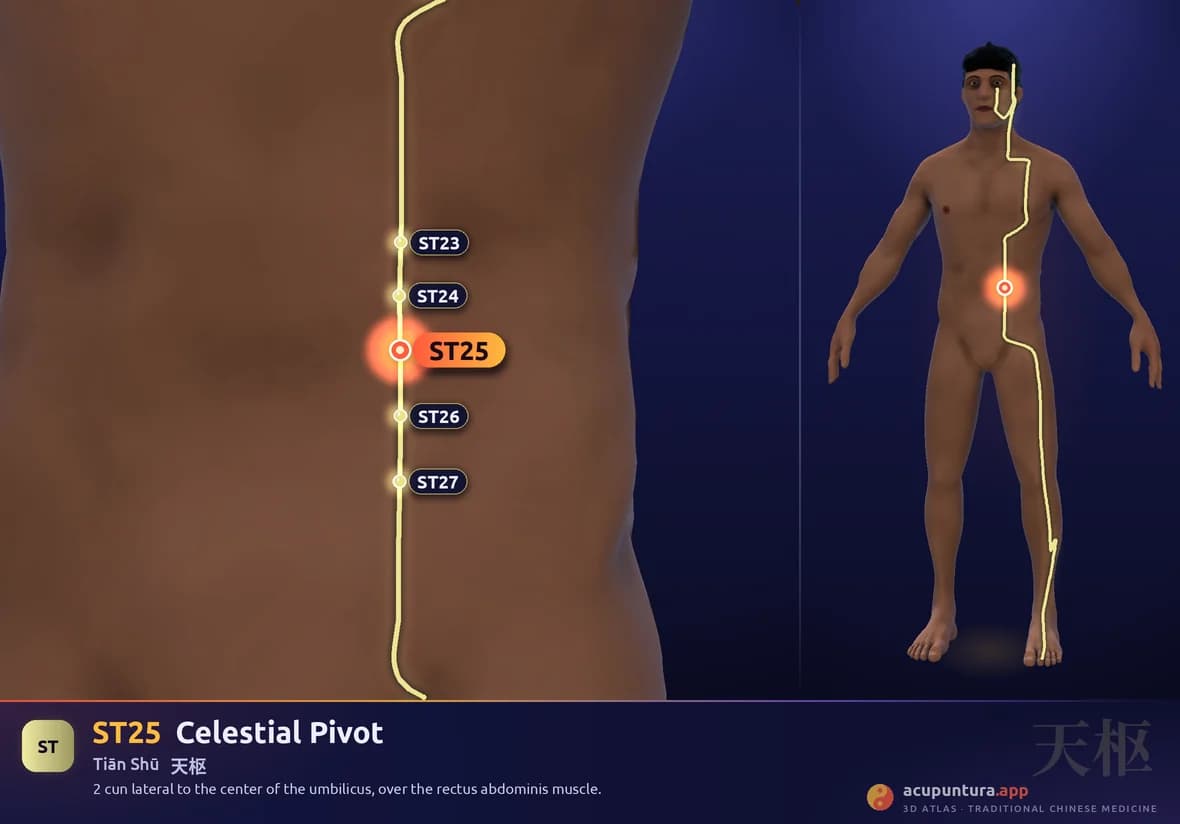
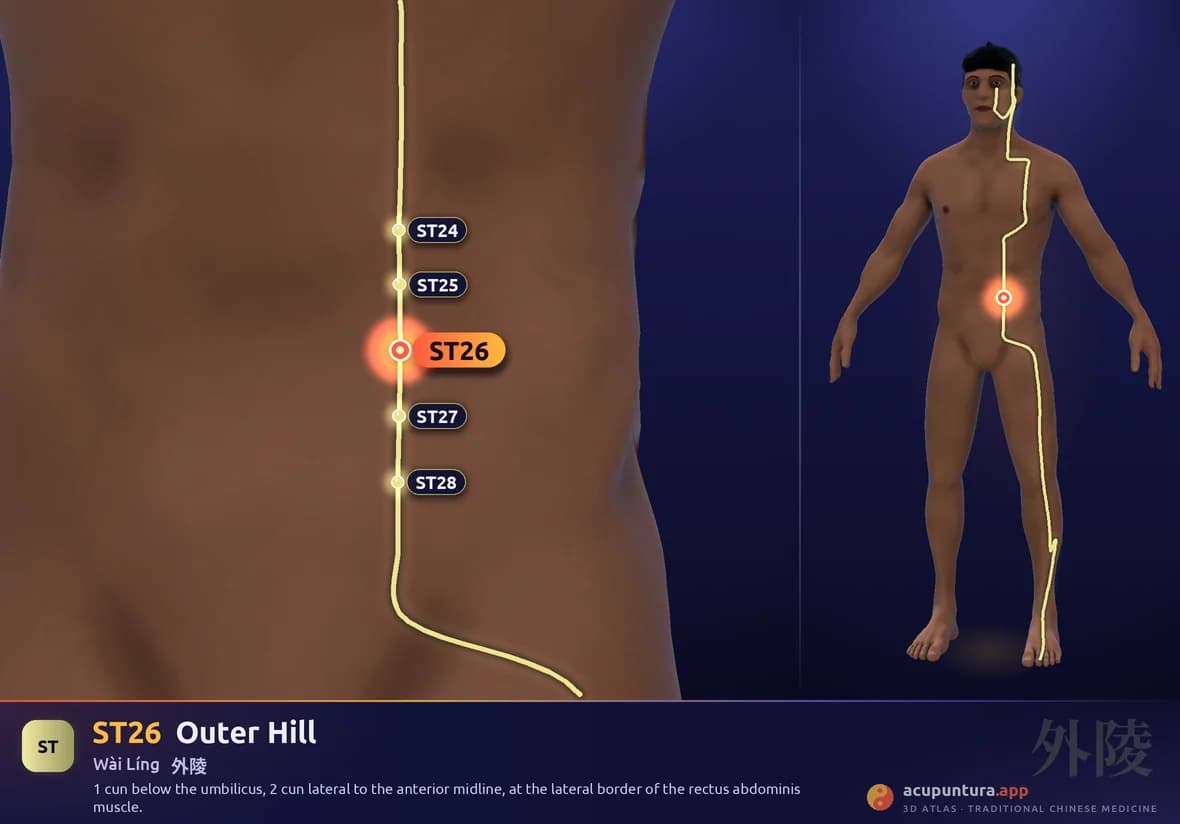
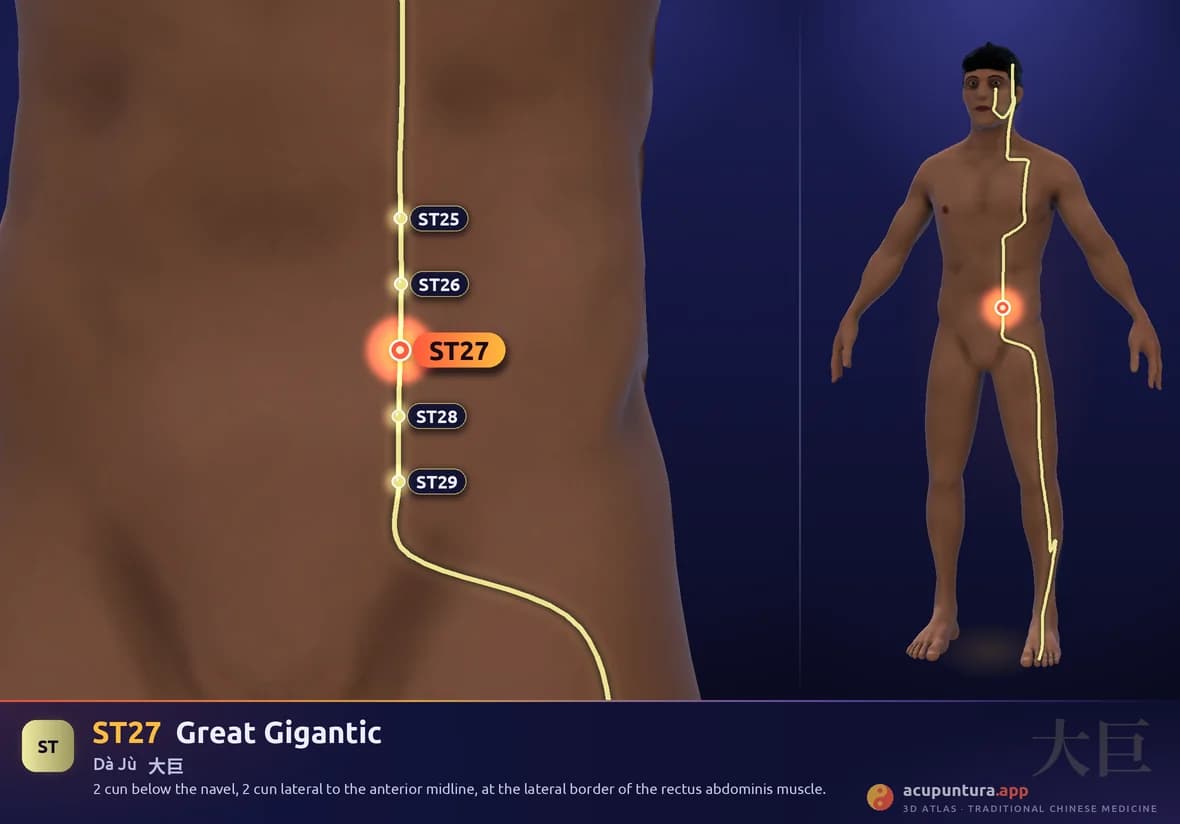
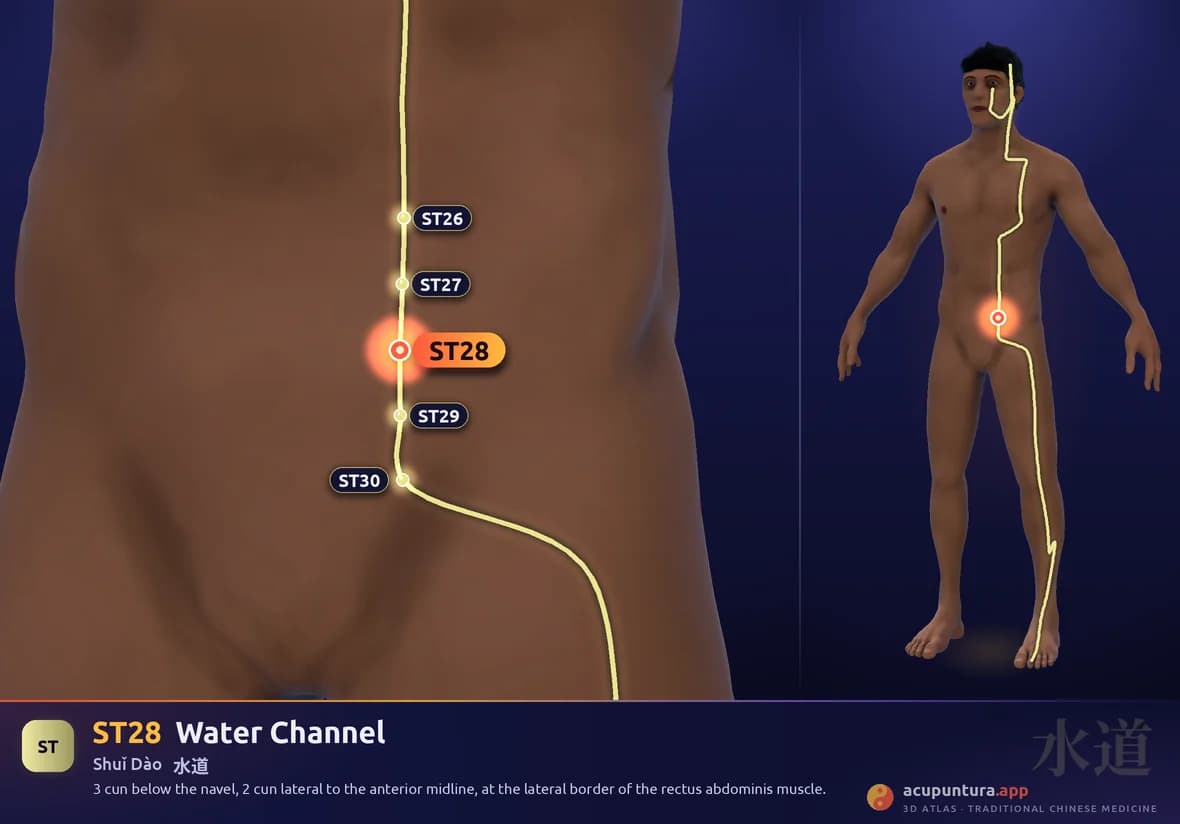
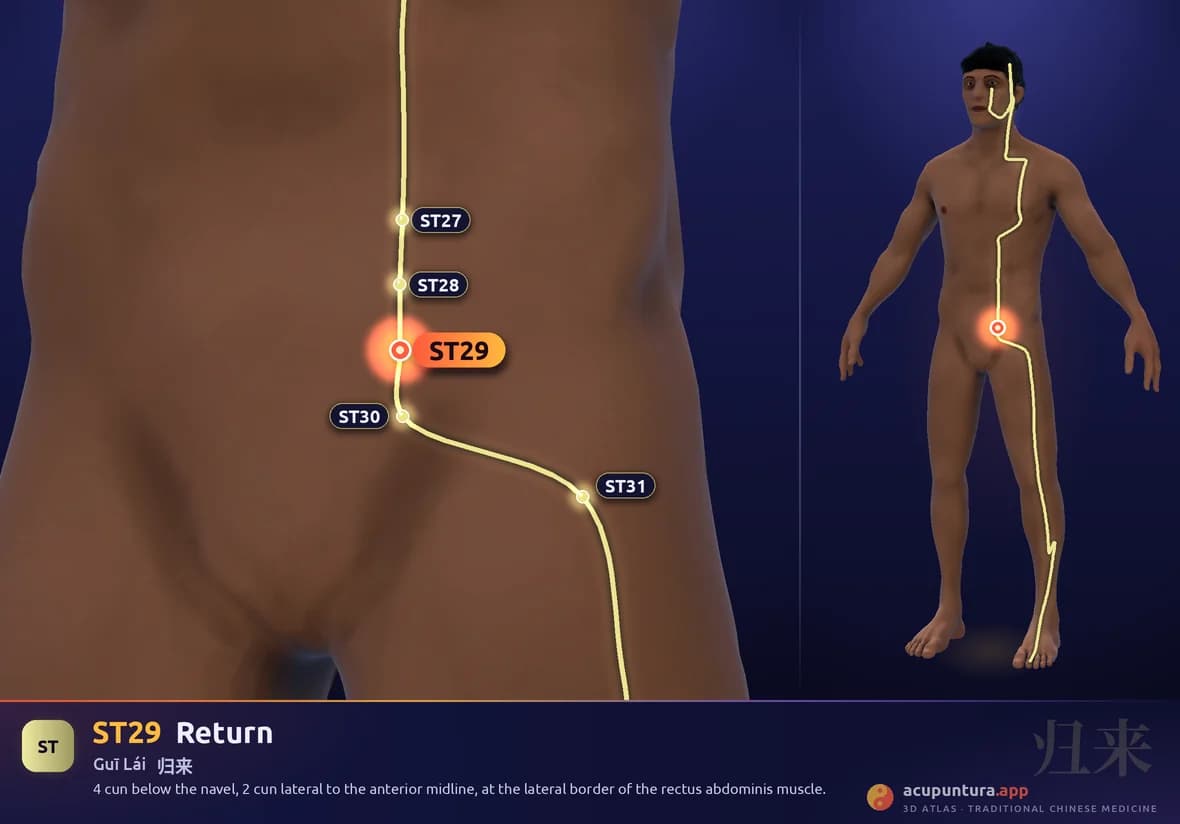
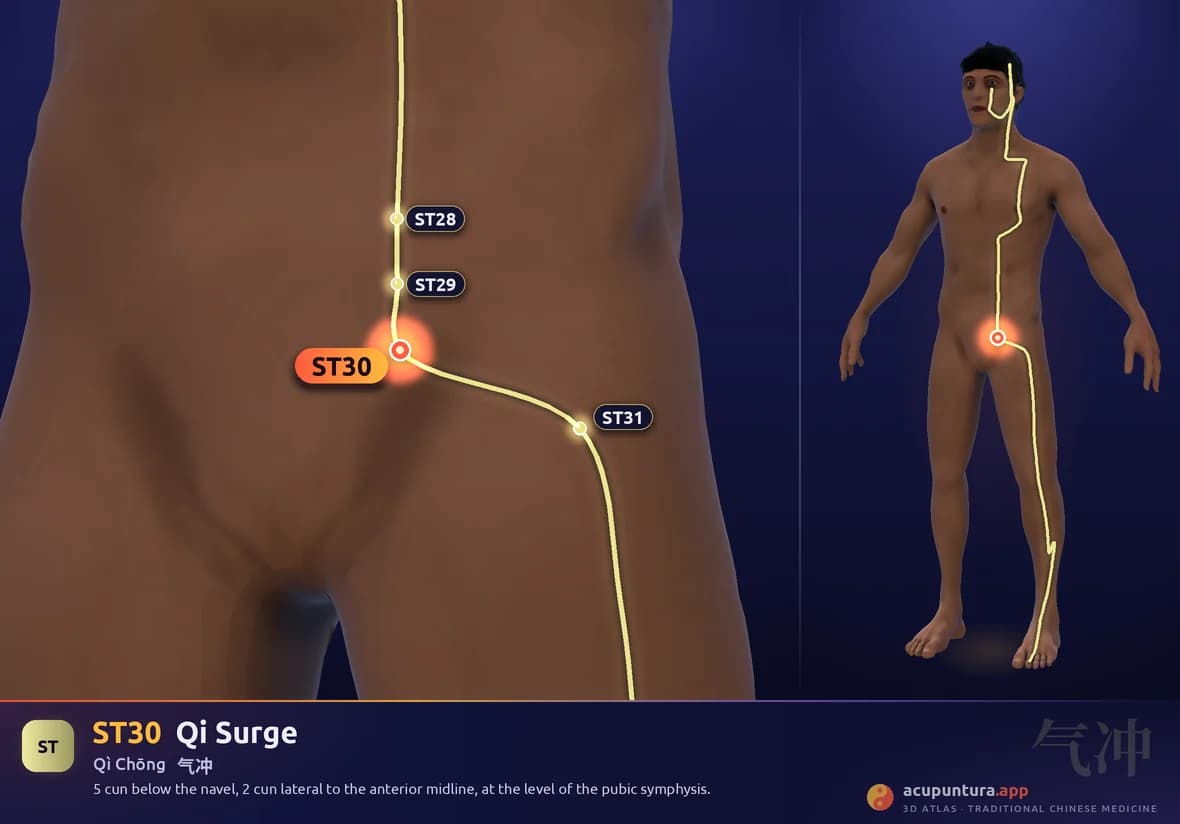
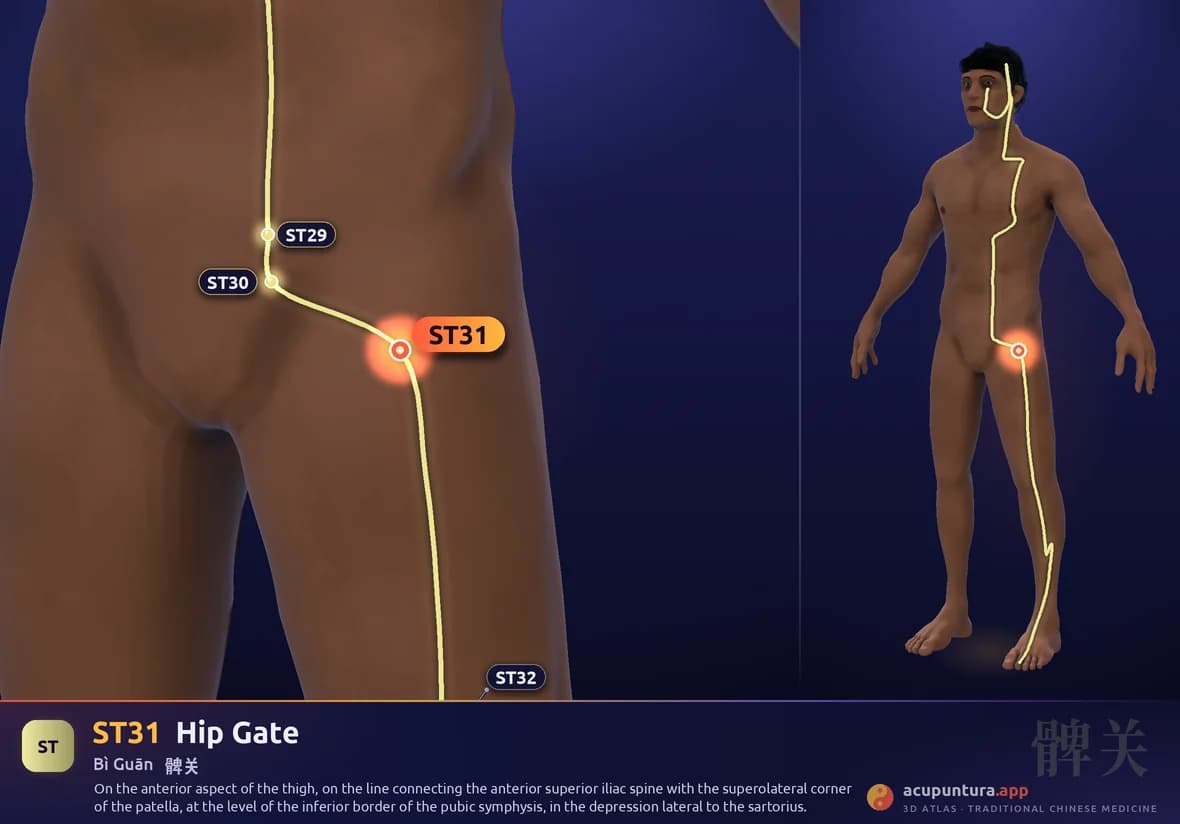
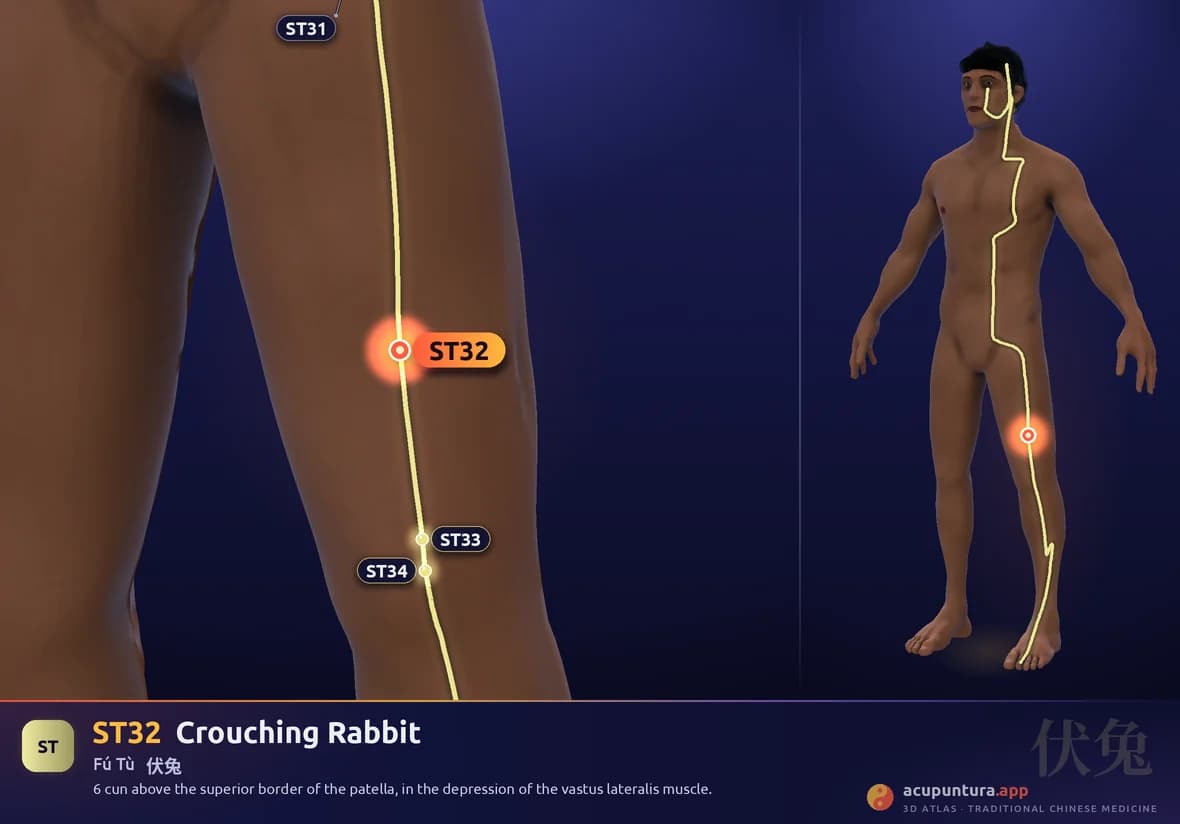
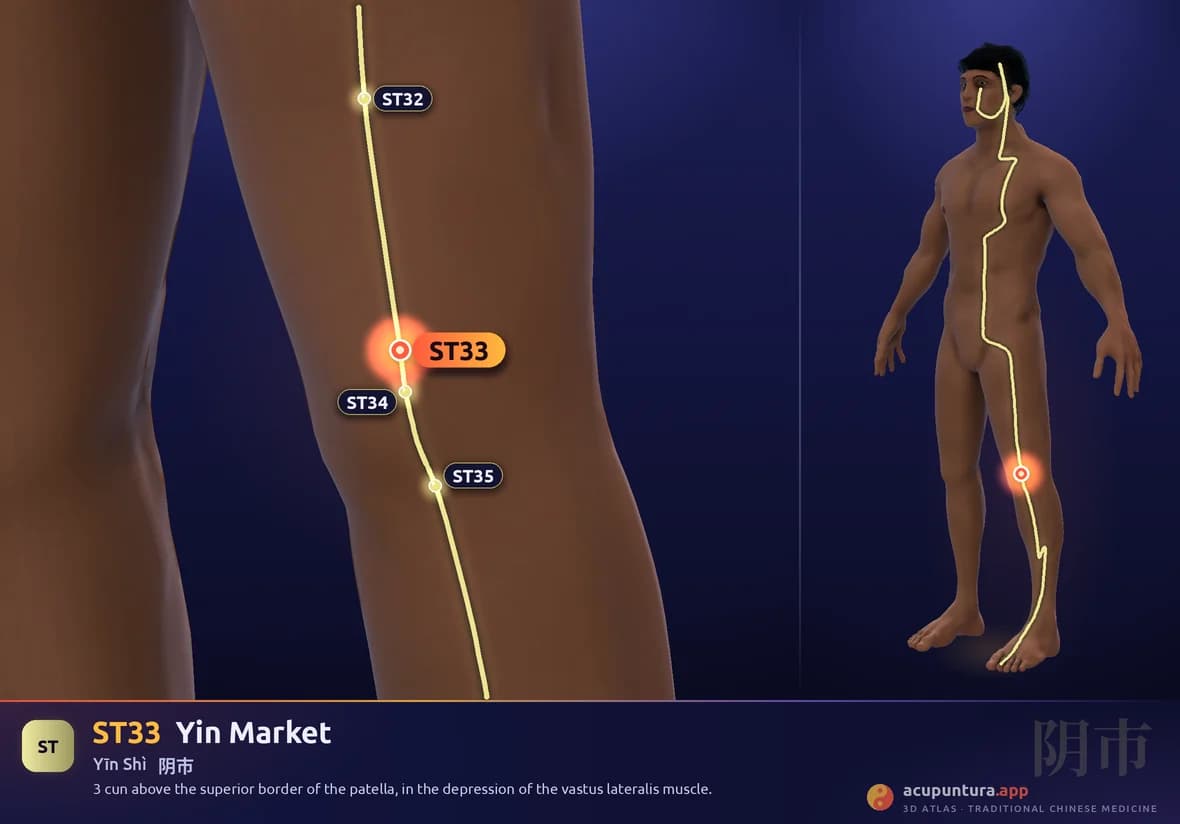
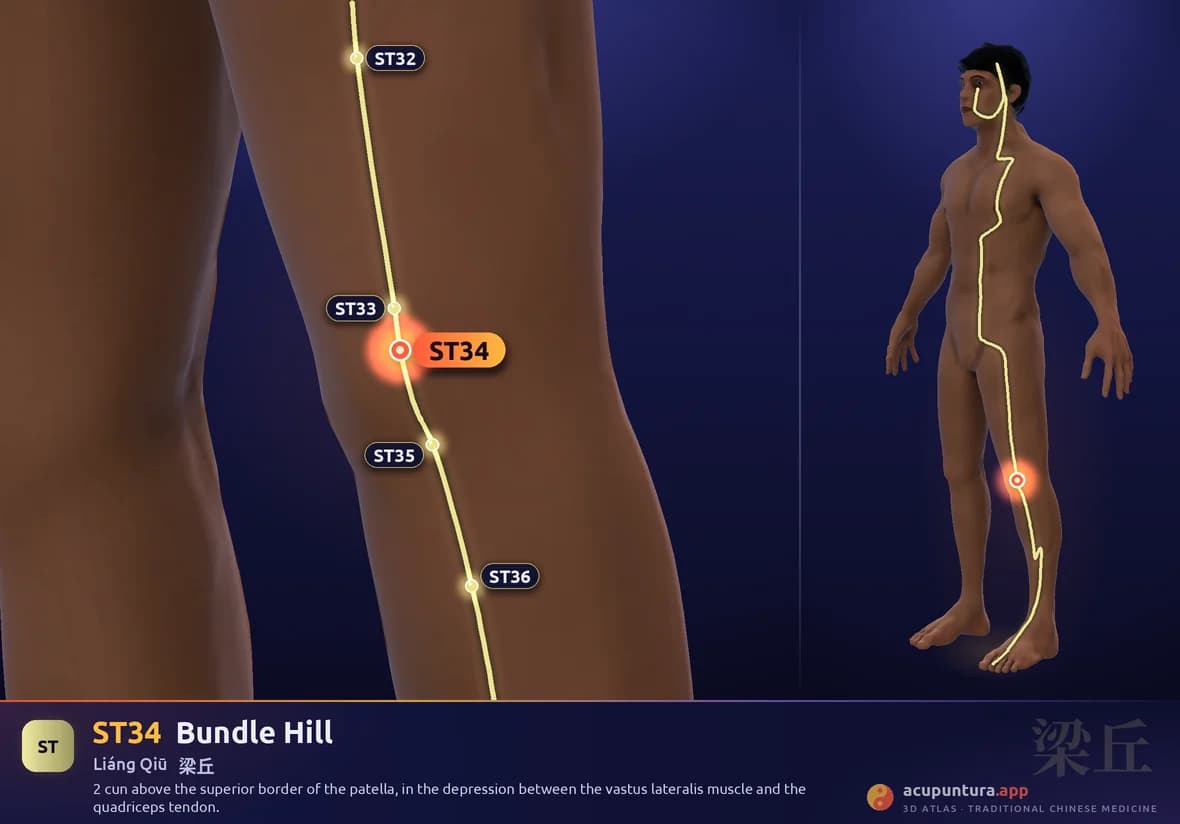
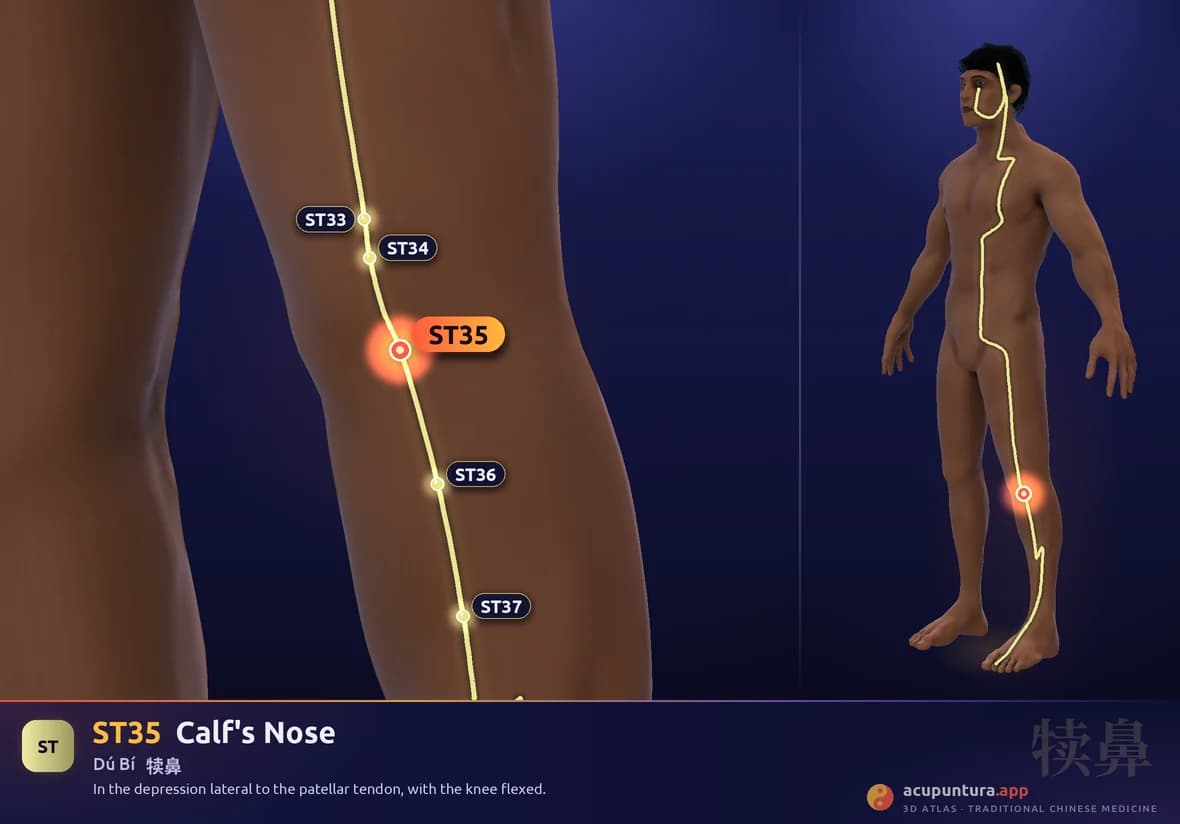
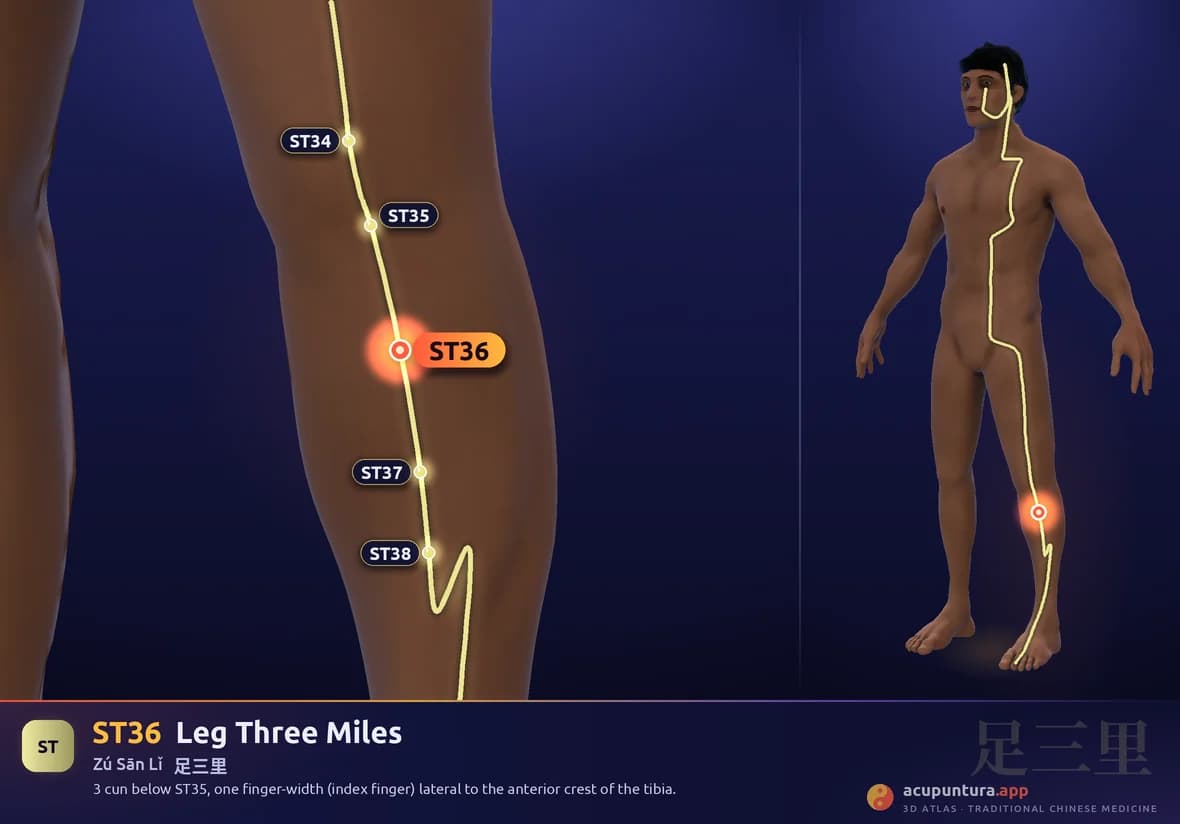
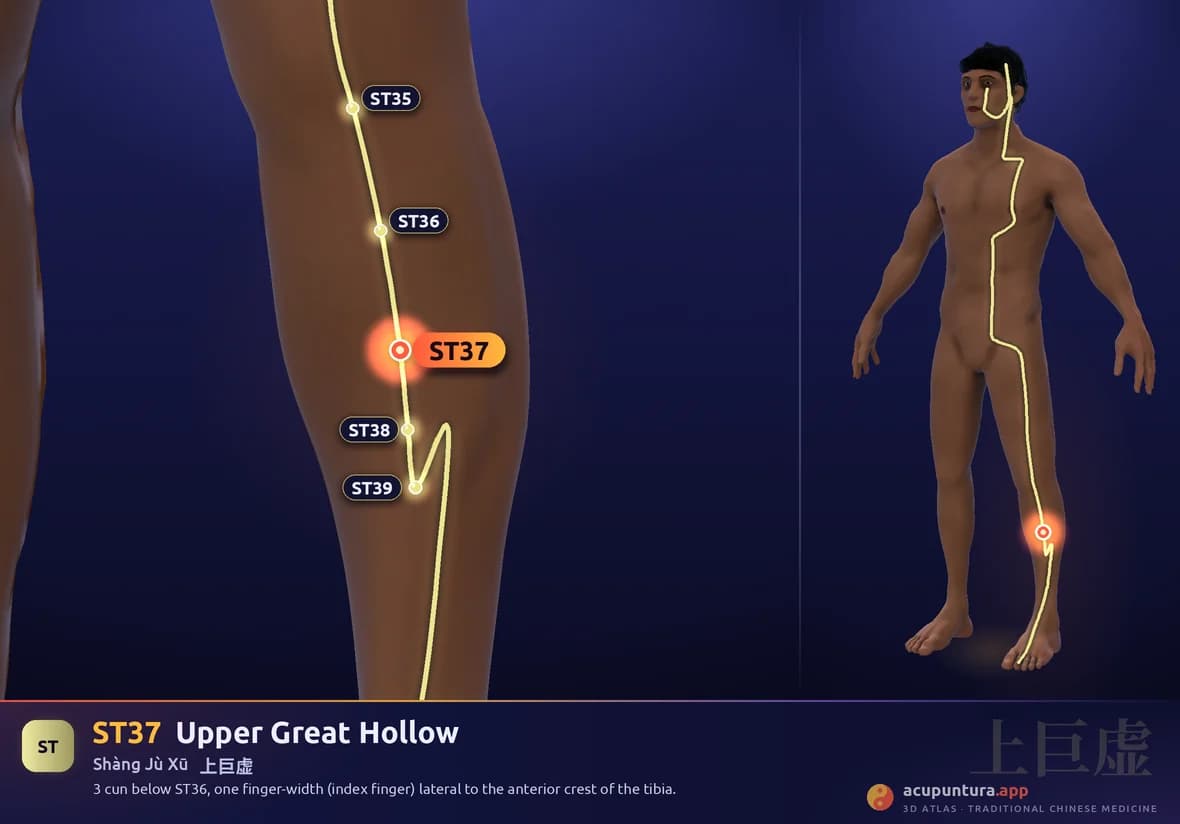
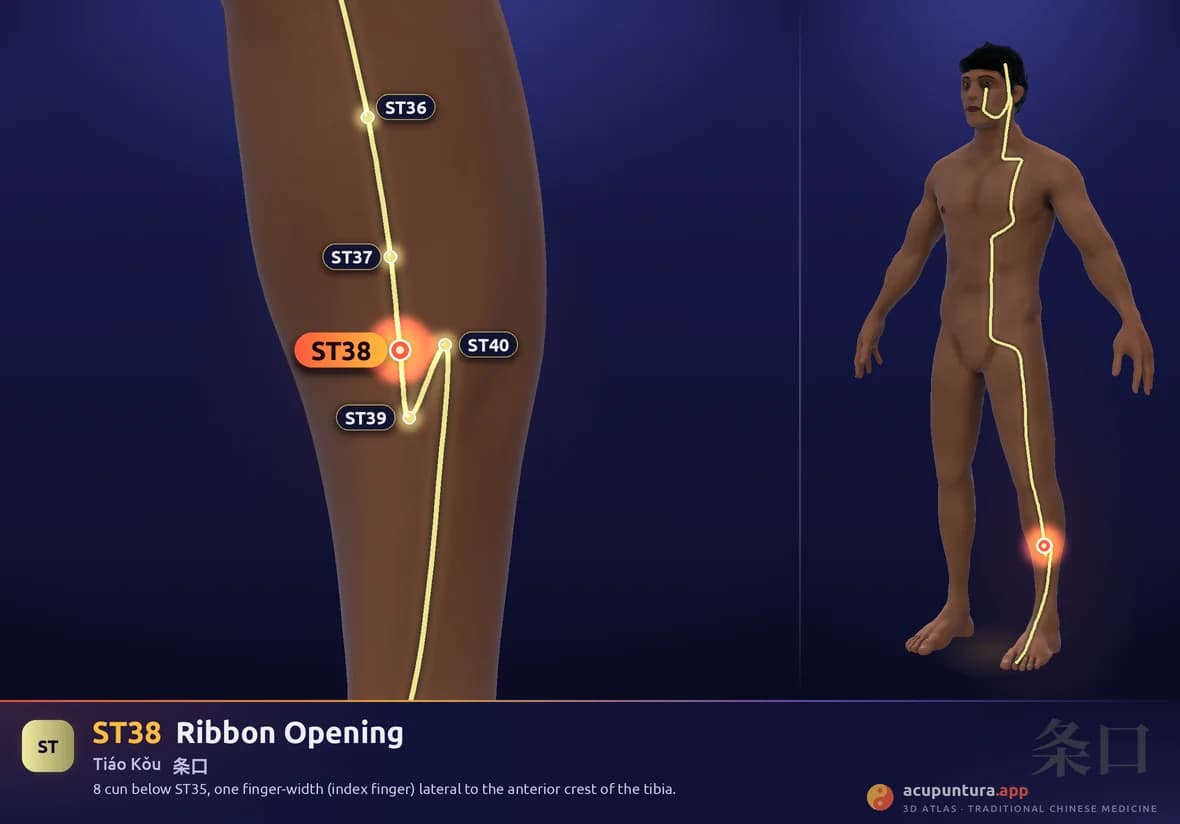
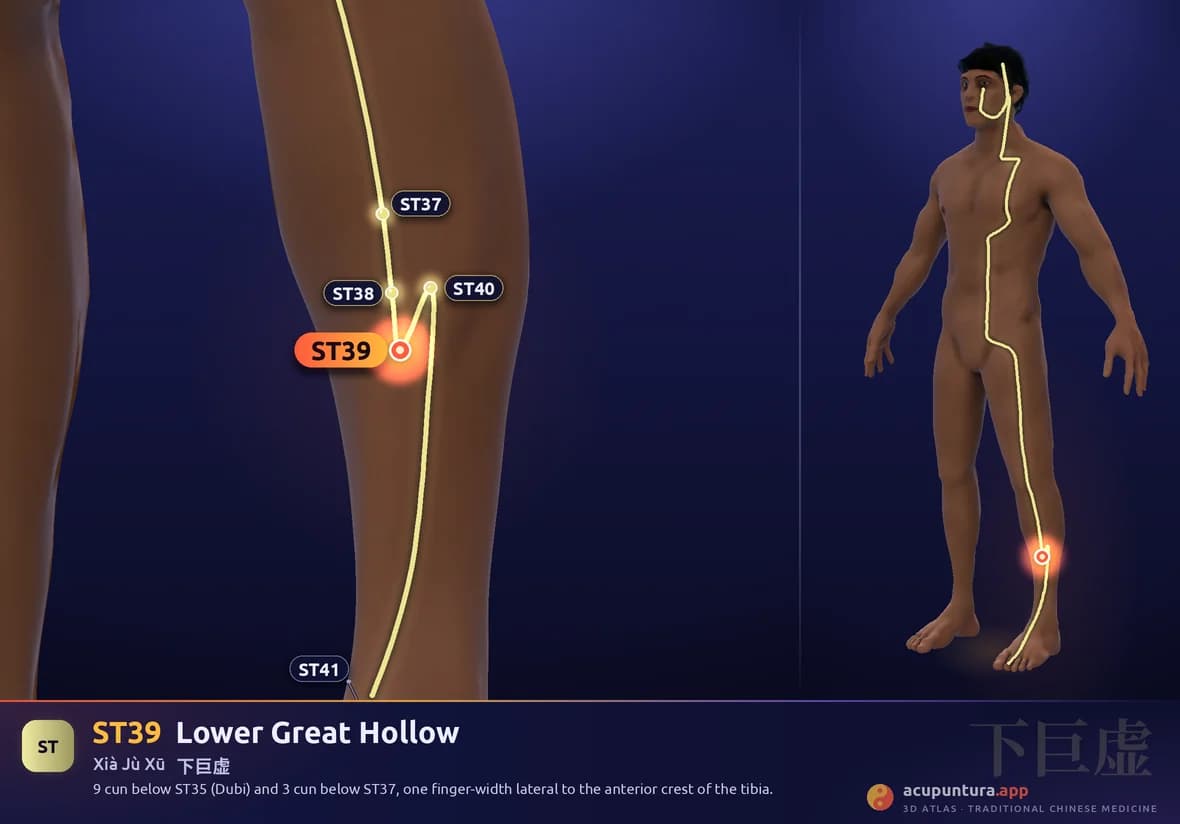
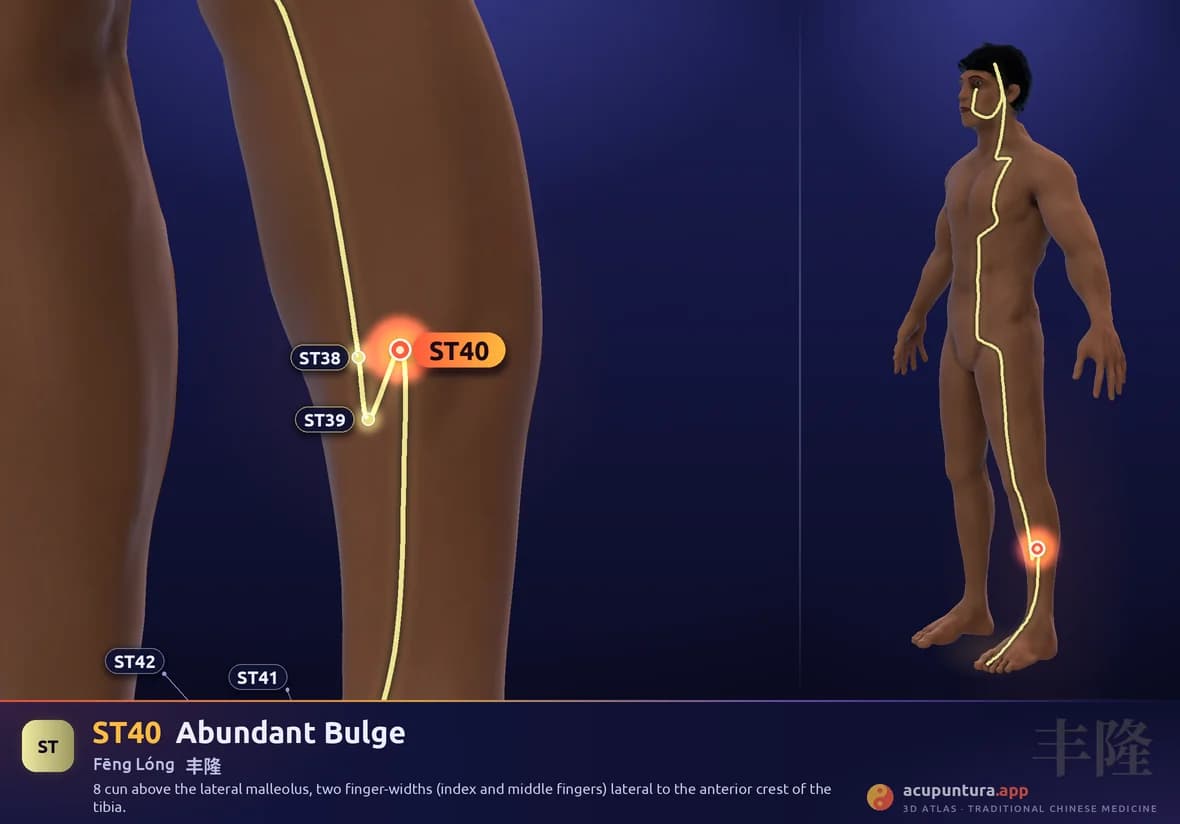
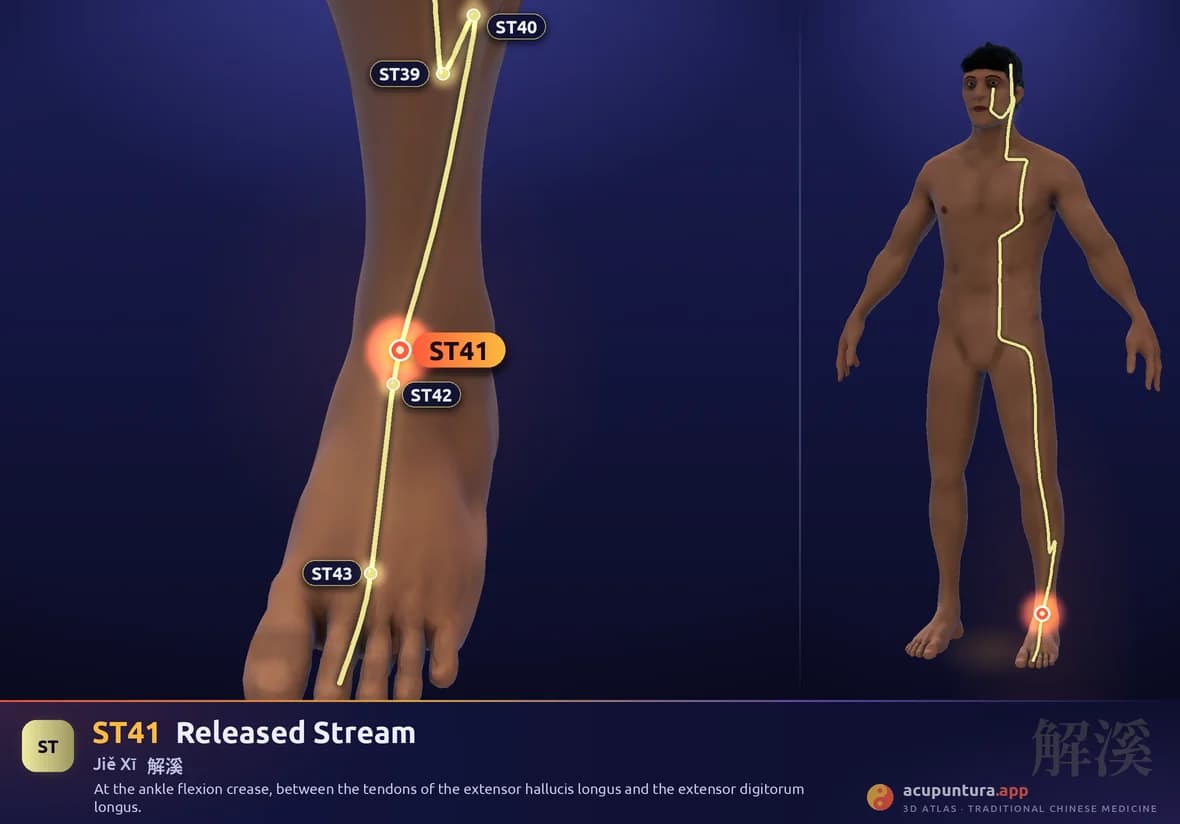
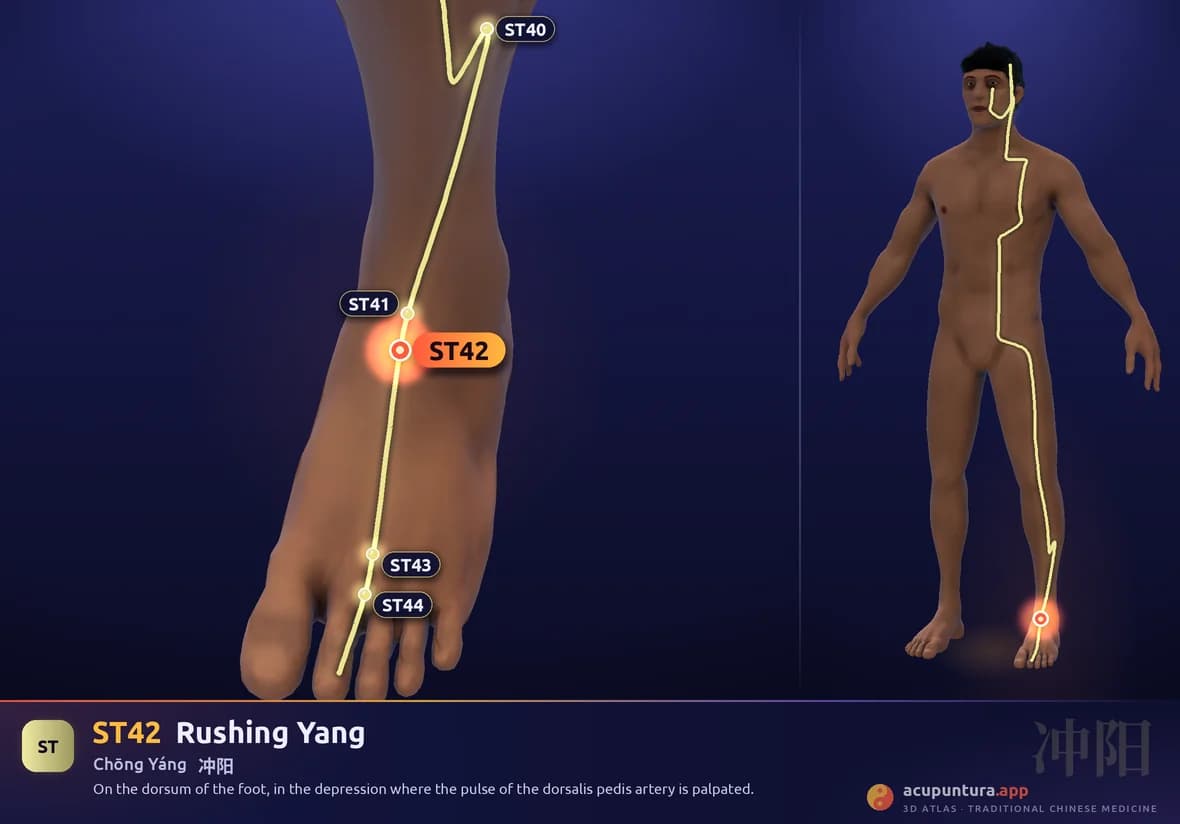
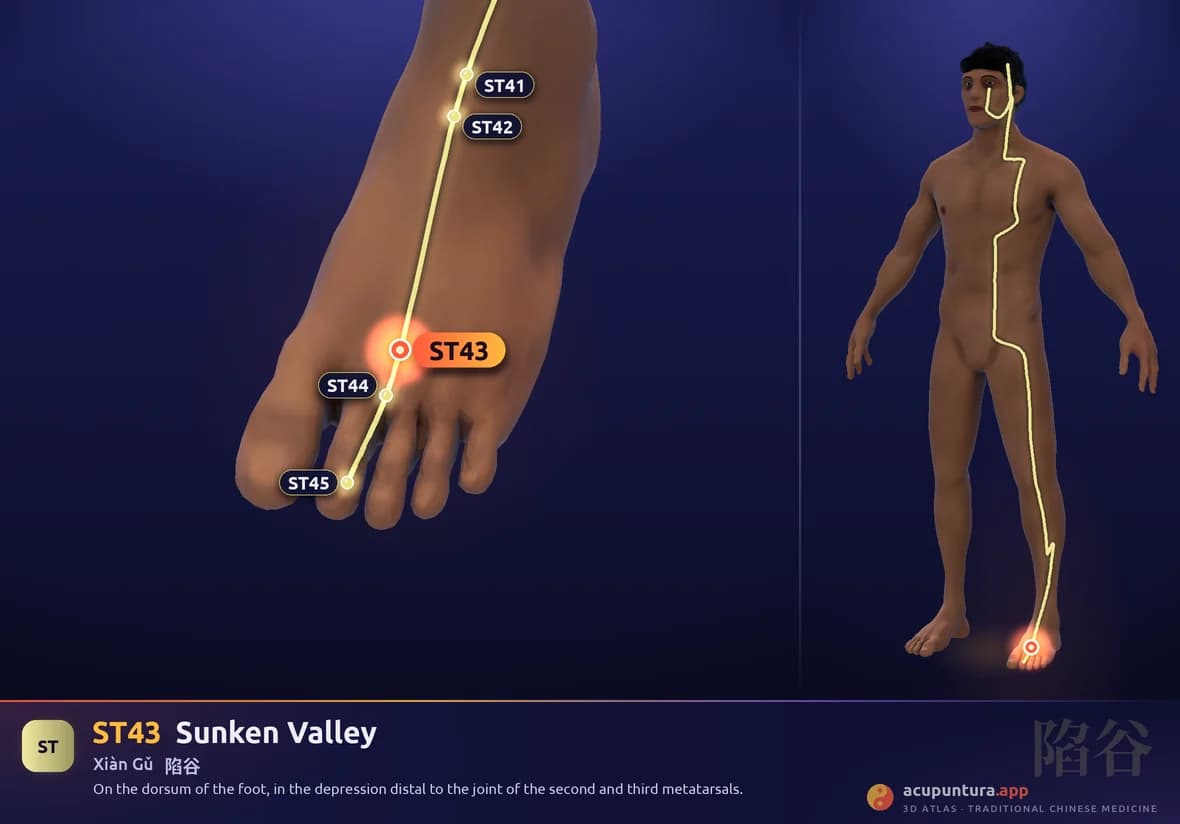
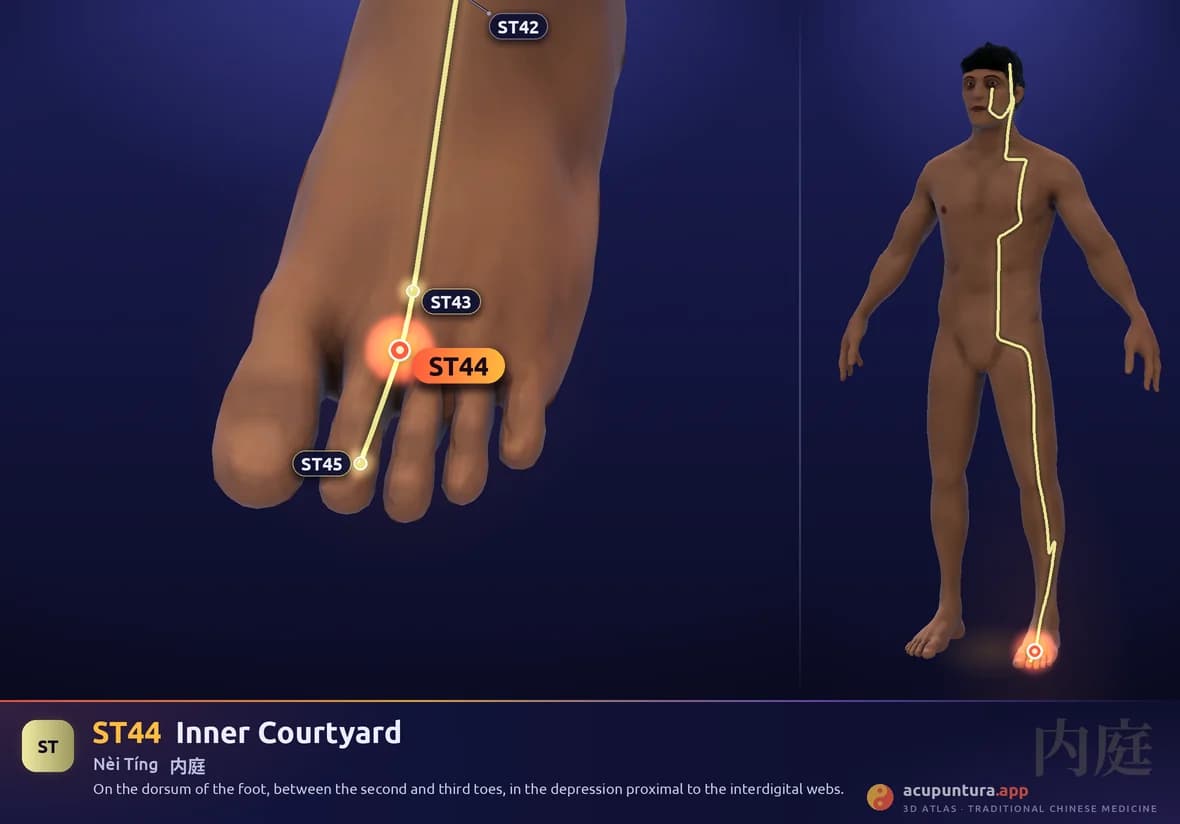
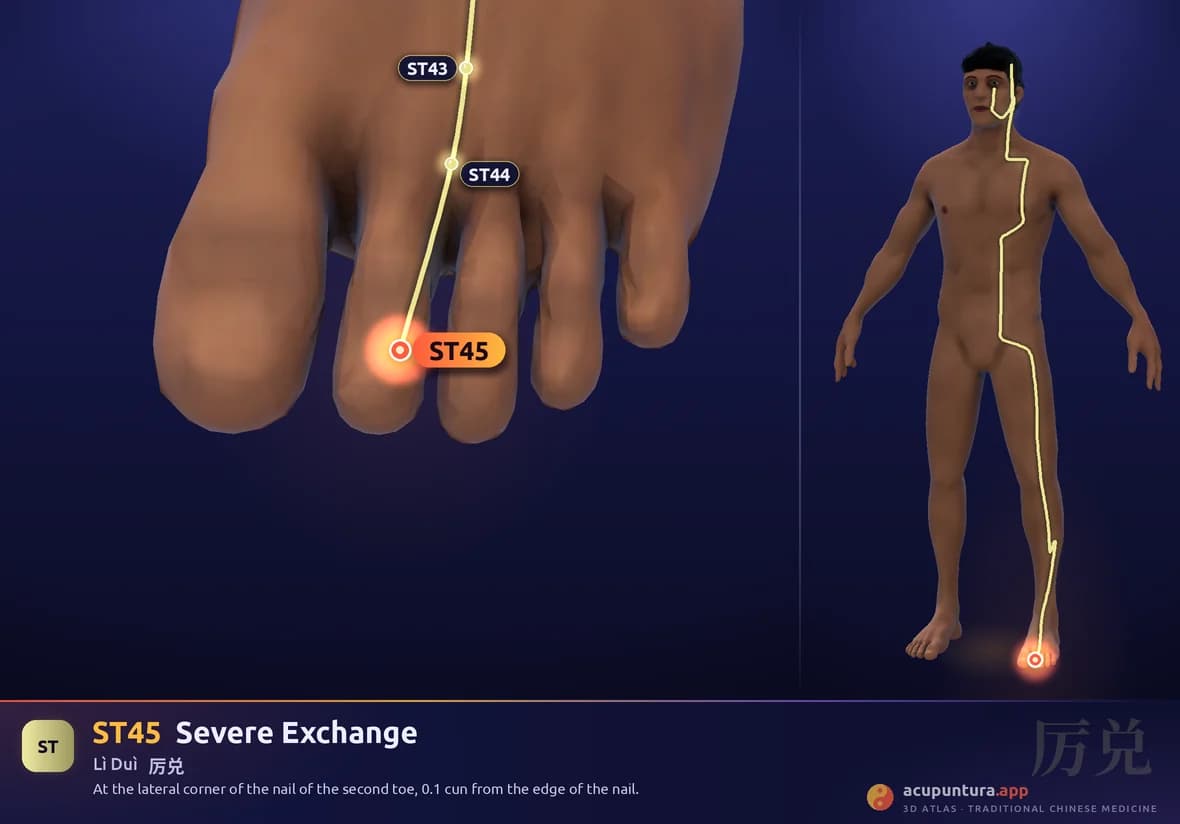
It begins below the eye (ST1), descends across the face, follows the neck, chest, abdomen, the anterior thigh and the leg, and ends at the lateral nail angle of the second toe (ST45).
The channel in the Lingshu
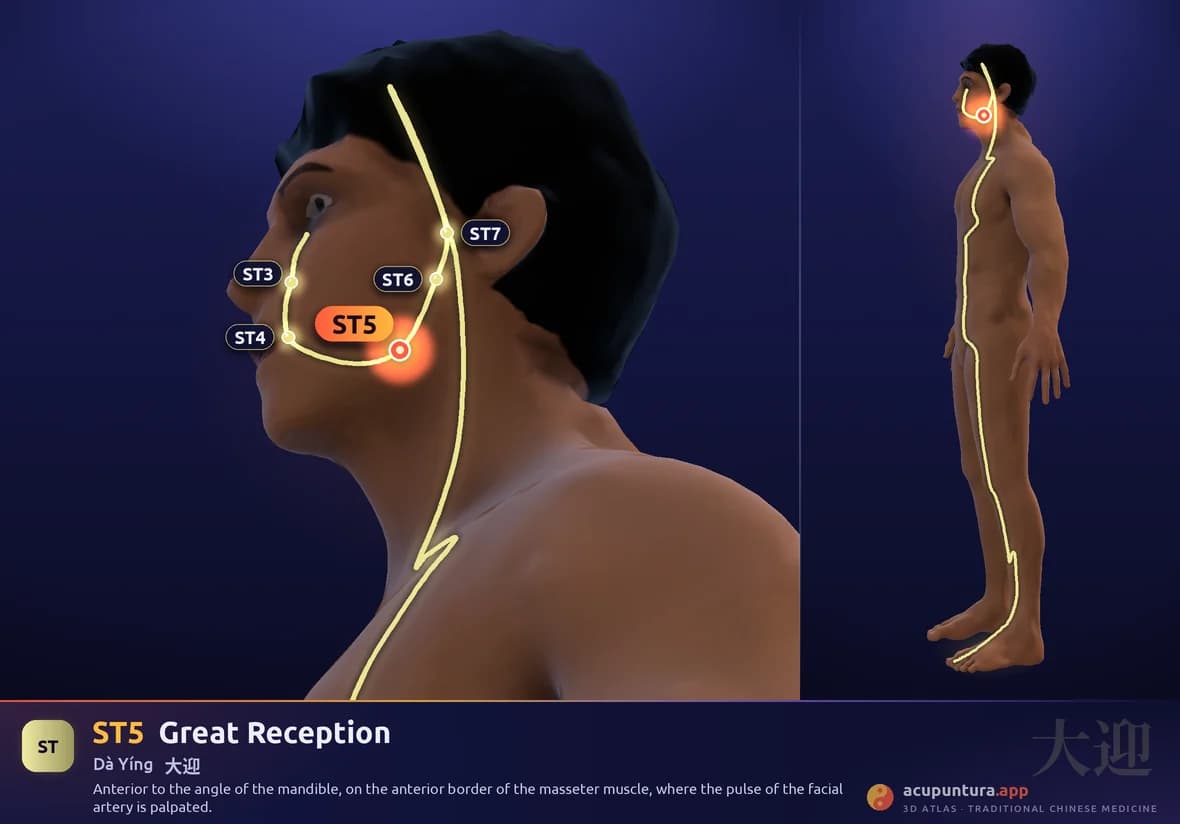
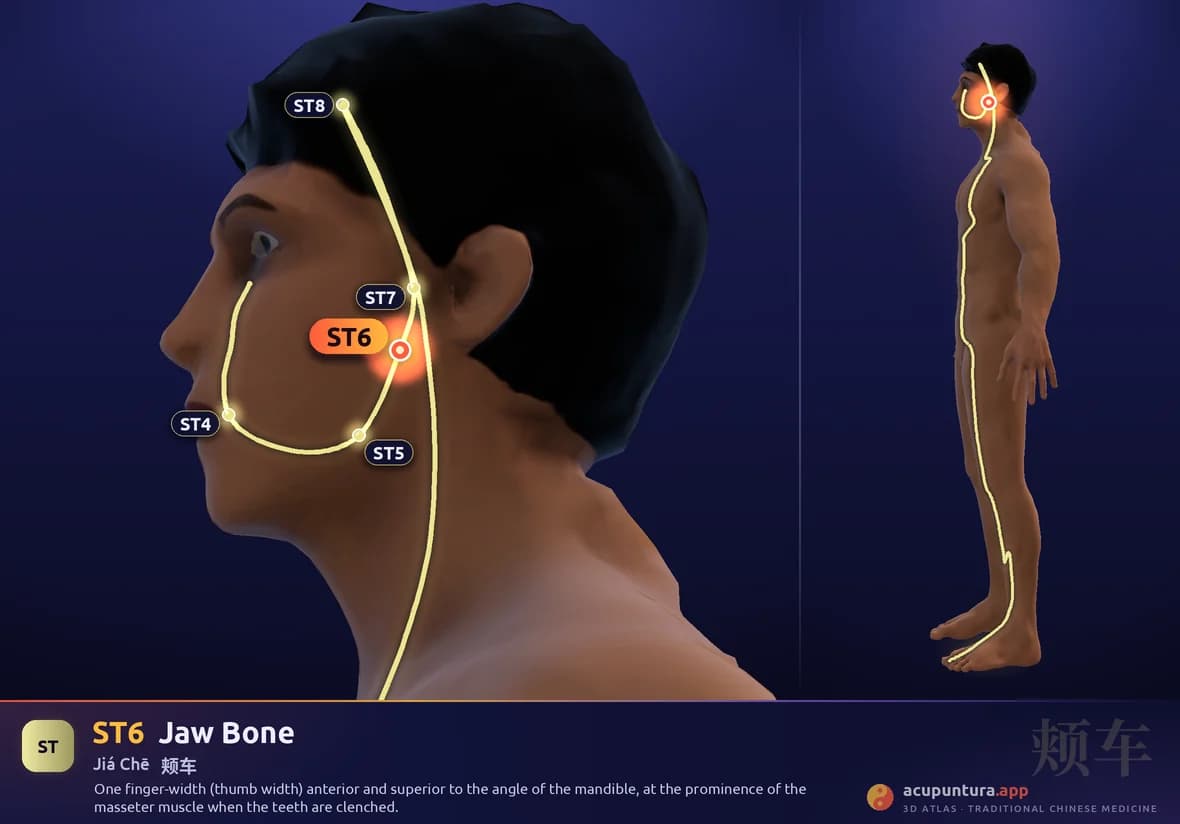
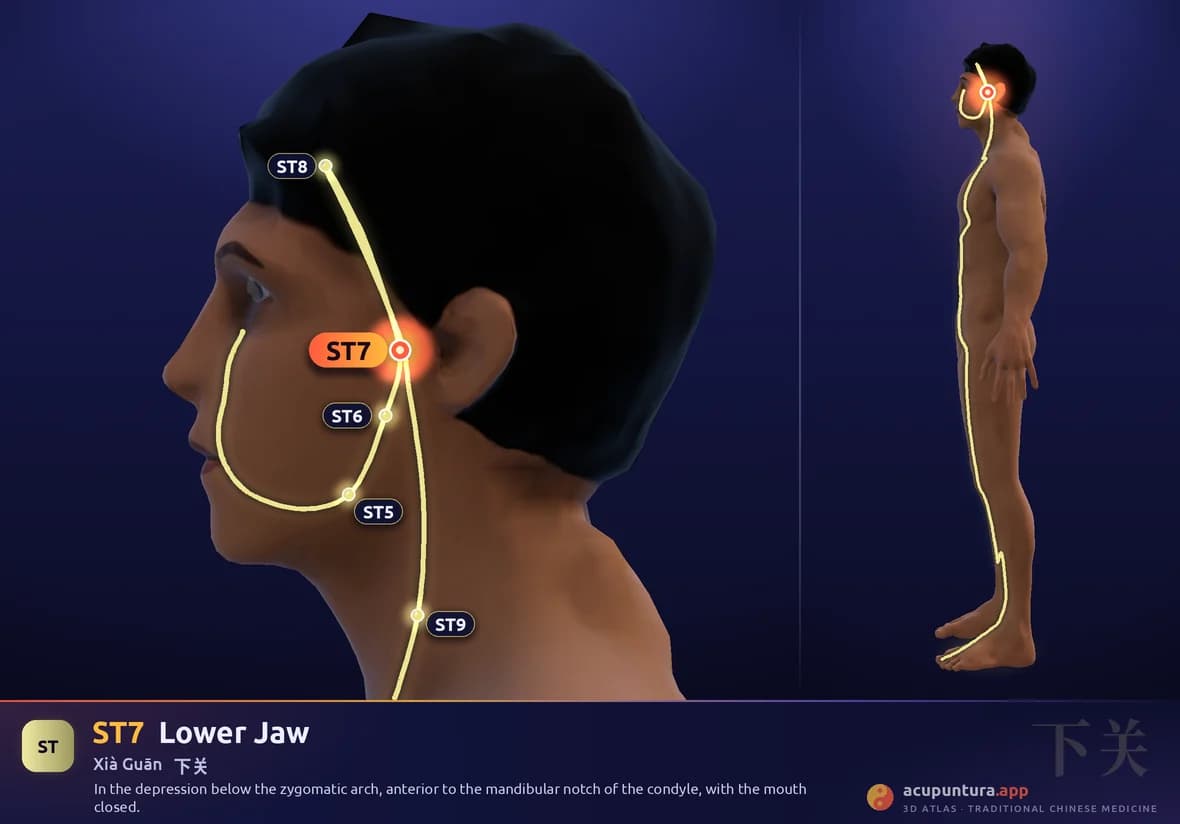
The Stomach channel is the longest in the Lingshu (Spiritual Pivot) description and the only Yang channel that runs along the front of the body. «胃足陽明之脈,起於鼻»: it begins at the nose, rises to meet the Taiyang beside the eye, descends along the outside of the nose, enters the upper teeth, circles the lips and crosses beneath them, at Chengjiang, CV24. From there the text names places that are today its points: «出大迎,循頰車,上耳前,過客主人», it passes through ST5 and ST6, rises in front of the ear, crosses Kezhuren, the ancient name of GB3, and reaches the forehead.
It runs through the trunk in two layers. One branch descends the neck from ST9, enters the supraclavicular fossa, passes through the diaphragm, and belongs to the Stomach; the direct line descends past the nipple and beside the navel to «氣街», ST30. In the leg it descends along the outside of the tibia to the dorsum of the foot and enters between the toes, «入中指內間»; today the last point, ST45, is on the second toe. One branch separates below the knee toward the middle toe and another goes to the big toe, where it connects with the Spleen.
Its «是動» (“this moves”) disorders are among the most vivid in the chapter: chills, yawning, a dark face, aversion to people and to fire, being startled at the sound of wood, the desire to shut oneself in, and, in severe cases, climbing to a high place to sing and throwing off one's clothes to run («甚則欲上高而歌,棄衣而走»). The chapter gives it dominion over Blood (是主血所生病者). Its branch is «足陽明之別,名曰豐隆», Fenglong, ST40, eight cun from the ankle.