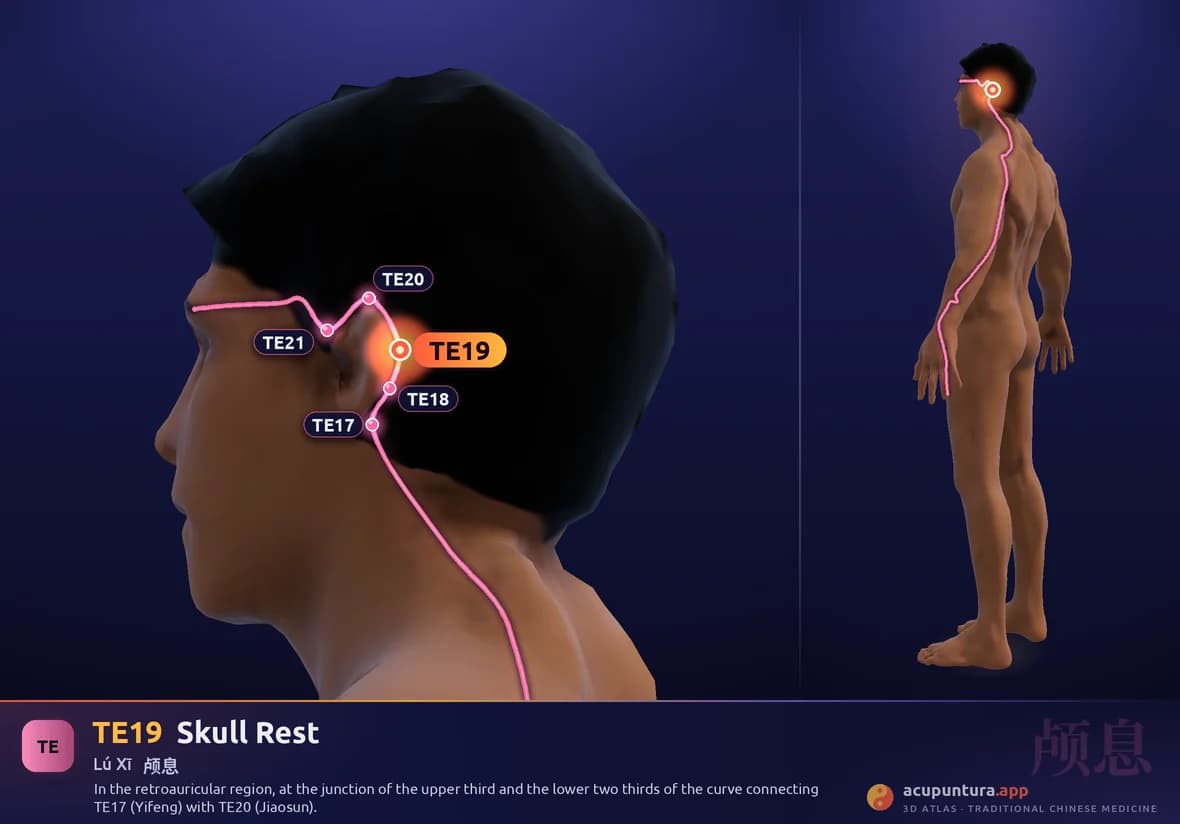
Triple Energizer Channel
Skull Rest
颅息Lú XīAnatomical location
In the retroauricular region, at the junction of the upper third and the lower two thirds of the curve connecting TE17 (Yifeng) with TE20 (Jiaosun).
Main function
Calms Wind, benefits the ears, relieves headache.
Therapeutic indications
- Headache
- migraine
- ear pain
- tinnitus
- temporal pain
- facial spasms
- deafness
- cephalalgia
- infantile convulsions
- vomiting
Name and classical tradition
Luxi, 颅息, is the “rest of the skull.” 颅 (顱) is the skull; 息 means to rest or to stop. The modern gloss explains that the channel's Qi comes to rest and cools here, on the upper part of the head. The point is behind the ear, at the junction of the ear and the head.
The Zhenjiu Jiayi Jing (Systematic Classic of Acupuncture and Moxibustion), the first work to record it, describes it with unsettling precision: “顱息,在耳後間青絡脈,足少陽脈氣所發,刺入一分,出血多則殺人”. Luxi lies over the bluish vein behind the ear; it is a place where the Qi of the foot Shaoyang emerges; it is needled one fen deep, and if it bleeds heavily, it kills. In the book of prohibitions it repeats the warning: “顱息刺不可多出血”, when needling Luxi, do not let much blood out.
Some compendia attribute to a Qing-era moxibustion work, the Cai Ai Bian, a version of the same sentence that reads “足少陰”, the foot Shaoyin, which would link the point to the Kidney channel. Set against the Jiayi Jing text, which reads “足少陽”, the most likely explanation is a copying error between two characters that differ in only one component.