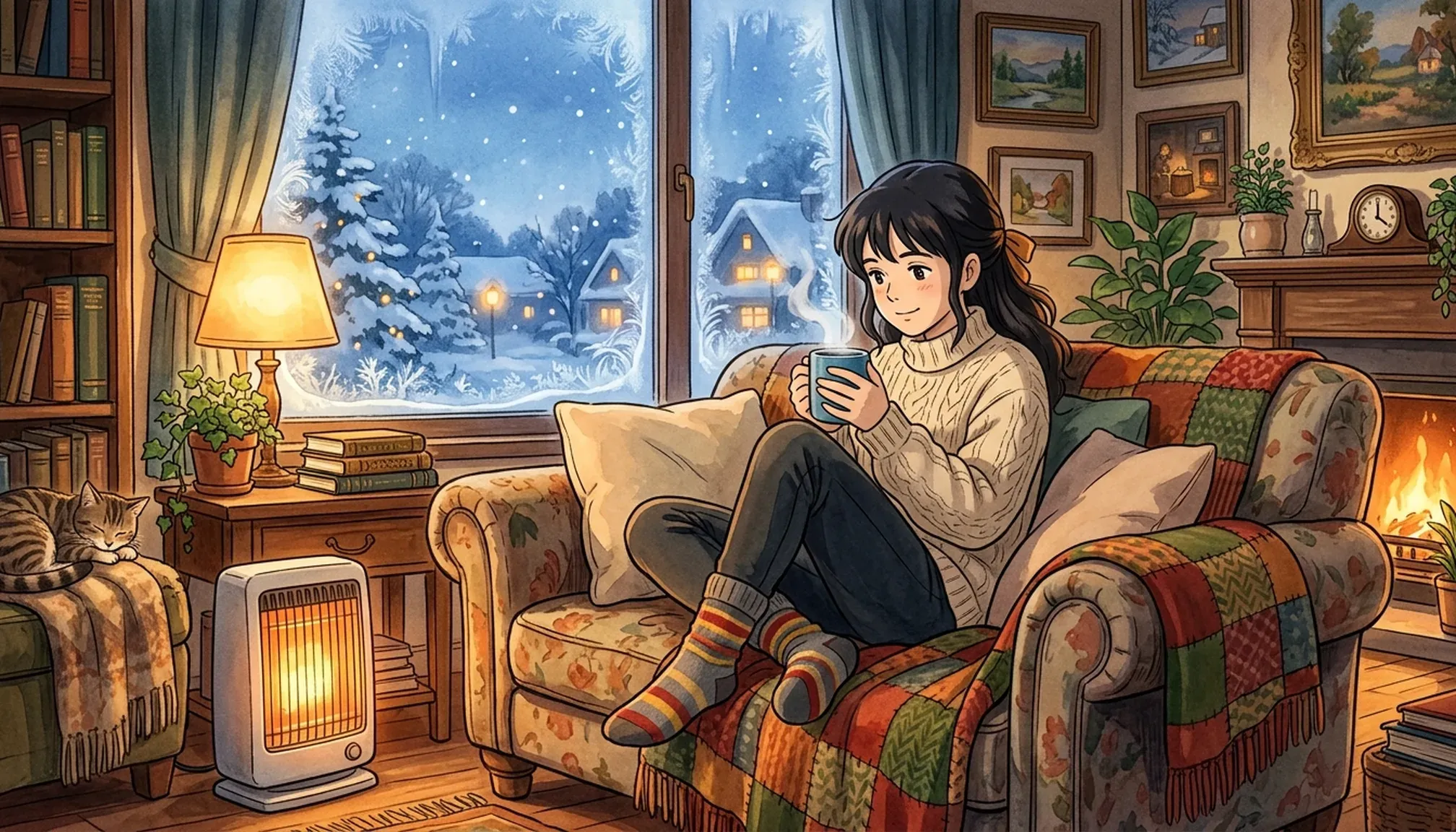
It's April, the sun is out, and your hands are still freezing. You get into bed in the middle of summer wearing socks because your feet feel like two ice cubes. Having cold hands and feet all year round is more common than you might think, and although in many cases it doesn't point to anything serious, it is a signal from your body that deserves attention. In this article we explain the possible causes, when it's worth seeing a doctor, how traditional Chinese medicine understands this phenomenon, and which simple habits can help you bring warmth back to your extremities.
Why are my hands and feet cold?
The extremities are the parts of the body farthest from the heart, and warmth reaches them through the blood. When circulation isn't working at its best, or when the body decides to prioritize the internal organs, the hands and feet are the first to cool down. This is a natural mechanism: in cold surroundings, the blood vessels in the skin constrict to keep heat in the center of the body. The problem appears when that feeling of cold in the extremities lasts all year, even in warm environments.
Common causes of a cold feeling in the extremities
Several factors, often combined, can be behind habitually cold hands and feet:
Slow or insufficient circulation. A sedentary lifestyle, sitting for many hours, or staying still for long periods makes blood flow less freely to the extremities.
Low blood pressure. People with low blood pressure tend to notice more cold in their hands and feet, along with occasional dizziness or a feeling of weakness.
Stress and nervousness. Stress triggers mechanisms that divert blood toward the large muscles and vital organs, leaving the extremities cold. Many people notice ice-cold hands right before an exam or an important meeting.
Not eating enough, or eating very cold foods. Restrictive diets, prolonged fasting, or overdoing cold drinks and foods can contribute to the body producing less heat.
Hormonal factors. Hypothyroidism, for example, slows down metabolism and can cause a constant feeling of cold. The hormonal changes of menopause also play a role.
Anemia or iron deficiency. With fewer red blood cells, the transport of oxygen and warmth suffers, and the extremities feel it.
Raynaud's phenomenon. A condition in which the fingers and toes turn white or purplish in response to cold or stress, caused by an exaggerated constriction of the small blood vessels.
Smoking. Nicotine constricts blood vessels and makes it harder for blood to reach the periphery.
When to see a doctor
In most cases, having cold extremities is a matter of constitution or habits. However, there are situations where you shouldn't let it slide. See your doctor if:
- The cold in your hands and feet appears suddenly or clearly gets worse over time.
- Your fingers change color (white, bluish, or purple), or you develop sores or wounds that are slow to heal.
- The cold comes with intense fatigue, hair loss, dry skin, unexplained weight gain, or palpitations.
- You notice numbness, persistent tingling, or loss of sensation.
- Only one hand or one foot gets cold while the other stays at a normal temperature.
A simple blood test can rule out anemia, thyroid problems, or other causes that need medical treatment. Traditional Chinese medicine and acupuncture are a useful complement for general well-being, but they never replace medical diagnosis and treatment when it is needed.
How does traditional Chinese medicine understand cold hands and feet?
Traditional Chinese medicine (TCM) has spent more than two thousand years observing the human body from a perspective different from the Western one. For TCM, health depends on vital energy and blood circulating smoothly and in balance throughout the body, and on the body keeping an adequate balance between heat and cold.
From this point of view, chronically cold hands and feet are usually read as a sign that the body is not generating or distributing heat well. This can happen because the energy responsible for "warming" the body is weakened, or because the circulation of energy and blood toward the periphery meets obstacles along the way, often related to stress, accumulated fatigue, or a diet that doesn't provide enough internal warmth.
The concept of internal heat
In the traditional Chinese view, the body works like a small home with its own inner fire. When that fire is steady, warmth reaches the fingers and toes. When it dies down or gets blocked, the center of the body may feel more or less fine, but the periphery stays cold. That's why, for TCM, putting on gloves is not enough: the goal is to kindle that warmth and distribute it from within.
What Chinese medicine says about cold feet: the main causes
When the cold is concentrated mostly in the feet, Chinese medicine usually distinguishes several patterns, which the practitioner tells apart by asking questions and observing the tongue and pulse:
Kidney Yang Deficiency. Yang is the warm, active side of the body, and the tradition places its root in the Kidney. When it weakens, the cold starts in the feet and knees and is usually accompanied by tiredness, a dull ache in the lower back, frequent urination, and a tendency to always seek out warmth.
Weak Spleen. The Spleen transforms food into energy. If it works poorly, the body produces less heat: heavy digestion, loose stools, and cold hands and feet appear, often in people who eat a lot of raw or cold food.
Blood Deficiency. Besides nourishing, Blood carries warmth. When it is scarce, the feet get cold, and you may also have dizziness when standing up, pallor, or light periods. This pattern is seen very often in women.
Liver Qi Stagnation. Here the warmth is present but doesn't arrive: emotional tension blocks circulation, and the extremities stay cold while the trunk is warm. It is typical for the cold to get worse with stress and improve with relaxation.
Knowing which of these patterns predominates guides the treatment, which is why two people with the same icy feet may receive different approaches.
What acupuncture can do
Acupuncture, one of the main techniques of TCM, involves inserting very fine needles into specific points on the body in order to support the balance and circulation of energy and Blood. The World Health Organization recognizes acupuncture as a traditional practice used around the world, and research is ongoing into its effects across various areas of well-being.
In the case of cold extremities, the acupuncturist first assesses each person's overall situation—their energy, sleep, digestion, and stress level—and designs an individualized treatment. Many people who come in for other reasons mention, as a common effect, that they start to notice their hands and feet getting warmer. That said, results vary from one person to another, and acupuncture should always be understood as a complement, never as a substitute for medical care.
Moxibustion: heat applied therapeutically
Alongside acupuncture, a technique called moxibustion, or simply "moxa," is often used in traditional Chinese medicine clinics. It makes use of the heat given off by burning a medicinal plant, mugwort, over specific areas of the body. The heat of moxa is gentle, deep, and very pleasant, and its traditional aim is to bring warmth to where the body needs it and to support circulation.
For people with cold hands and feet, moxa is one of the most appreciated techniques in the clinic, precisely because it works directly with heat. It should always be applied by a qualified professional, who knows where, for how long, and at what intensity to use it safely.
Habits to fight cold hands and feet
In addition to professional care, there is a lot you can do in your daily life. Traditional Chinese medicine places great importance on everyday habits, and these tips are easy to put into practice:
1. Move regularly
Movement is the most direct way to activate circulation. You don't need intense exercise: walking at a good pace every day, climbing stairs, dancing, or doing gentle stretches already makes a difference. If you work sitting down, get up every hour, move your fingers, rotate your ankles, and make small circles with your wrists. Five minutes of movement warms you up more than a blanket.
2. Choose warm foods
From the TCM perspective, foods also bring temperature to the body. If you tend to feel cold, it's best to prioritize cooked, warm dishes: soups, broths, stews, pureed vegetable soups, herbal teas. Cut back on very cold drinks, ice cream, and too many raw salads, especially in winter. Spices such as ginger, cinnamon, or clove, taken in teas or in stews, have a traditional reputation for adding warmth. And having something warm for breakfast helps "switch on" the body in the morning.
3. Keep your lower back well covered
One of the oldest and most practical pieces of advice in the Chinese tradition is to keep the lower back and kidney area protected from the cold. For TCM, this area has a special relationship with the body's internal warmth. Tucking in long shirts, avoiding drafts on your back, and not leaving your lower back exposed in winter are simple habits that many people notice right away.
4. Hot foot baths
A classic in many cultures: soaking your feet in hot water for fifteen or twenty minutes before bed relaxes you, improves circulation in the legs, and helps you fall asleep. If cold feet wake you up at night, this habit can become your best ally.
5. Manage stress
As we have seen, stress diverts blood and cools the extremities. Breathing techniques, meditation, yoga, or simply taking an unhurried walk help the body come out of alert mode so that warmth can be distributed normally again.
6. Avoid tobacco and moderate your coffee
Tobacco constricts the blood vessels, and too much caffeine can have a similar effect in sensitive people. If your hands are habitually cold, cutting back on both can make more of a difference than you'd imagine.
Acupressure for cold feet: at home or at the gym
Acupressure consists of stimulating with your fingers the same points that acupuncture uses, without needles. It doesn't replace a professional consultation, but it is a simple practice that many people add to their routine to feel their feet getting warmer. Press each point firmly but comfortably with your thumb, in small circles, for one to two minutes per side:
Yongquan (KI1), on the sole of the foot, in the depression that forms in the front third when you curl your toes. It is the best-known point for cold feet, and you can rub it with the palm of your hand until you feel warmth.
Taixi (KI3), on the inner side of the ankle, in the hollow between the malleolus and the Achilles tendon. The tradition uses it to nourish the Kidney.
Zusanli (ST36), four finger-widths below the kneecap and one finger-width outward from the shinbone, widely used to tonify Qi.
Taichong (LR3), on the top of the foot, between the first and second toes, useful when the cold shows up with stress.
Avoid pressing on damaged skin, varicose veins, or inflamed areas. If you are pregnant, check with a professional first, because some points on the leg, such as Sanyinjiao (SP6), are not recommended during pregnancy.
Acupressure for cold feet at the gym: tips for women
It's a common complaint among women who work out: the feet stay icy during the warm-up or get cold during stretching and in quiet classes like yoga or Pilates. In Chinese medicine this fits with the female tendency toward Blood Deficiency, especially around menstruation. A couple of minutes of pressure on Yongquan (KI1) and Taixi (KI3) before you begin, sitting on the bench, help wake up circulation. After exercise, it's a good idea to change your socks soon if they're damp, not to sit still in wet clothes, and to have something warm to drink instead of an ice-cold beverage.
Frequently asked questions
Is it normal to always have cold hands and feet?
It is very common, and in many cases it reflects personal constitution, low blood pressure, or a sedentary lifestyle, without hiding any health problem. Even so, if the cold is intense, recent, or accompanied by other symptoms, it's best to see a doctor to rule out causes such as anemia or thyroid disorders.
Does acupuncture help with cold extremities?
Acupuncture works precisely on the circulation of energy and Blood, which is why it has traditionally been used to improve this feeling of cold. Many people notice improvement, although the response is individual and acupuncture is understood as a complement to health care, not a substitute for the doctor.
What is moxibustion and what does it feel like?
Moxibustion is a traditional Chinese medicine technique that applies the heat from burning mugwort over specific areas of the body. The sensation is one of gentle, deep, relaxing warmth. It should always be performed by a trained professional to ensure safety.
Which foods help you stay warm?
In general, warm, cooked dishes: broths, stews, pureed soups, and herbal teas. Spices such as ginger and cinnamon have a traditional reputation for adding warmth. It's best to cut back on very cold drinks and too many raw foods, especially during the cold months.
Is cold in the hands and feet related to the thyroid?
It can be. Hypothyroidism slows down metabolism, and one of its common signs is a constant feeling of cold, including in the extremities. If you also notice tiredness, dry skin, or weight gain, make an appointment with your doctor for a blood test.
What does Chinese medicine say about cold feet?
It links them mostly to Kidney Yang Deficiency, to a Spleen that produces little warmth, to Blood Deficiency, or to Qi stagnation caused by stress. Each pattern comes with different symptoms, and the practitioner tells them apart in order to choose points, moxa, and dietary advice tailored to each person.
Which acupressure point is used for cold feet?
The best known is Yongquan (KI1), on the sole of the foot, which can be rubbed or pressed for a couple of minutes before bed or before working out. It is usually combined with Taixi (KI3), next to the ankle, and with Zusanli (ST36), below the knee. It is a simple complement, not a treatment: if the cold persists, see a professional.
Get your warmth back with professional help
Living with cold hands and feet all year round is not something you just have to accept. Small changes in your habits—moving more, eating warm foods, keeping your lower back covered—can greatly improve your day-to-day life. And if you want to go a step further, acupuncture and moxibustion, applied by a qualified traditional Chinese medicine professional, offer personalized support to help your body regain its balance and natural warmth. Remember: if symptoms are persistent or intense, see your doctor first. Your well-being deserves the best care.