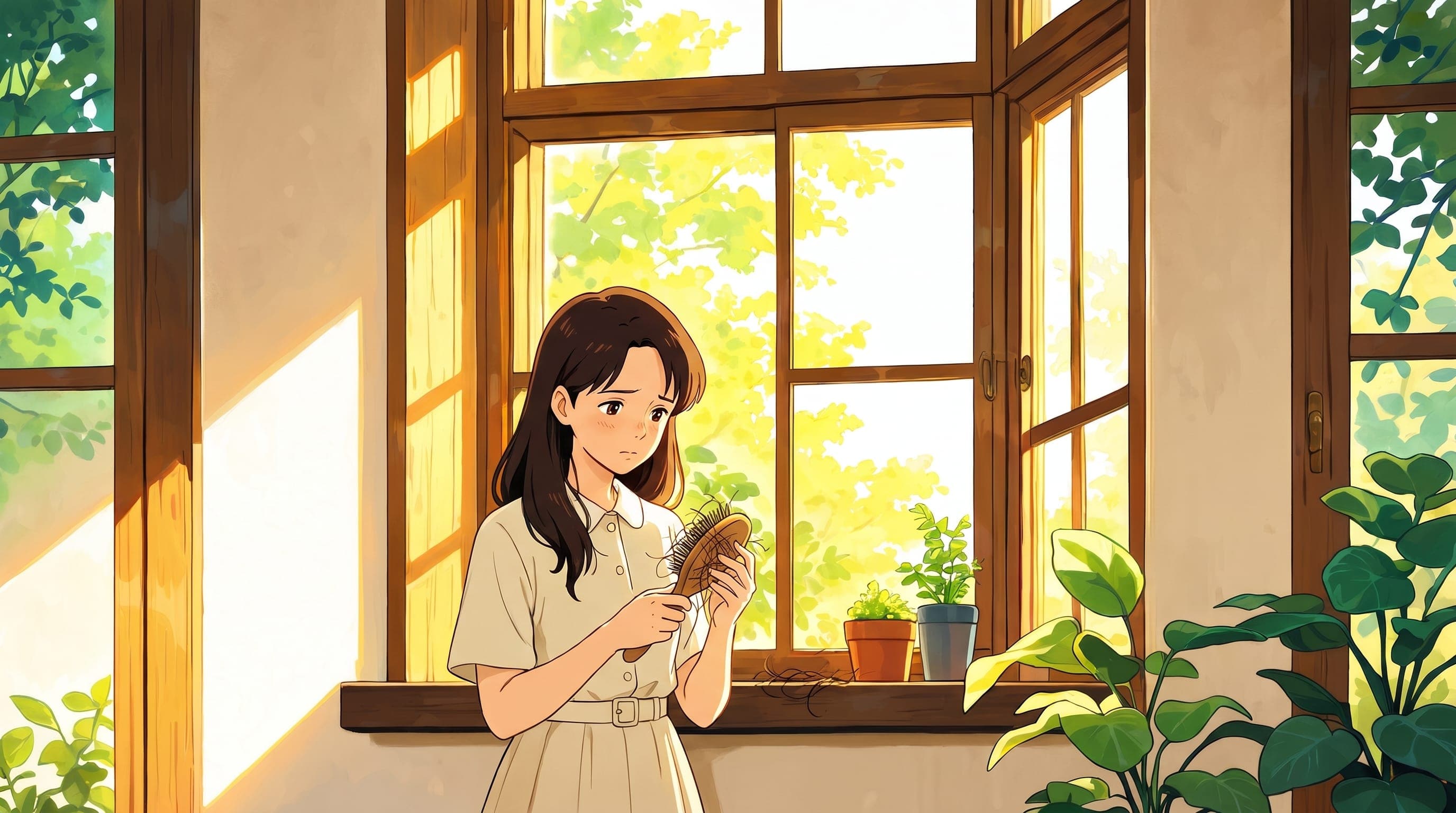
Finding more hair than usual in your brush or in the shower is one of those quiet worries that almost all of us share at some point in life. If it's happening to you, you've probably wondered whether it's normal, what is causing it, and what you can do to slow it down. Hair loss has many possible causes, and Traditional Chinese Medicine (TCM) offers a complementary perspective that helps you understand the problem from another angle. In this article, we explain in plain language, without jargon, what TCM says about hair loss and how acupuncture and other tools from this discipline can be part of a comprehensive approach.
Why Is My Hair Falling Out? The Most Common Causes
Before looking at the Chinese medicine perspective, it's worth remembering that hair loss is a frequent reason for consultation in conventional medicine. Some common causes are:
Intense or prolonged stress: anxiety, grief, major life changes, or episodes of physical stress (surgery, illness, sudden weight loss) can cause temporary hair shedding that shows up weeks after the trigger.
Hormonal changes: pregnancy, the postpartum period, menopause, or thyroid problems can affect the hair cycle.
Nutritional deficiencies: a lack of iron, protein, zinc, B vitamins, or vitamin D is associated with weakened hair and hair loss.
Genetic factors: hereditary hair loss is the most common cause, especially in men, although it also affects women.
Autoimmune or dermatological conditions: some conditions cause the immune system to attack the hair follicles or damage the scalp.
Medical treatments: chemotherapy and other drugs can cause temporary hair loss.
If you notice sudden hair loss, loss in patches, loss accompanied by other symptoms, or very heavy shedding, it's important to see a health professional to rule out causes that require specific medical treatment.
What Does Traditional Chinese Medicine Say About Hair Loss?
TCM starts from a very simple idea: hair is a visible sign of how the body is doing on the inside. In Chinese medicine, hair is nourished by two fundamental "reserves," which the tradition explains through two concepts you may well have heard of:
Blood: in TCM, Blood is not just what circulates through the veins. It is also the substance that nourishes, moistens, and gives luster to the skin and hair. When Blood is "undernourished" — because of weak digestion, poor diet, heavy bleeding, or accumulated fatigue — hair becomes dry and brittle and tends to fall out.
Vital energy (what Chinese calls "jing"): it's like an energetic inheritance we are born with and that is used up over the course of life. Natural aging, sustained excesses, and chronic wear and tear reduce this reserve, and one of its outward signs is thinning and loss of hair.
In addition, TCM considers that the Liver (understood as a functional system, not just the anatomical organ) regulates circulation and emotional balance. When we get "tangled up" emotionally — stress, pent-up anger, frustration — that circulation stagnates and the hair stops receiving enough nourishment. That is why, in Chinese medicine, hair loss after a period of heavy tension has a coherent explanation: Qi and Blood don't flow smoothly up to the scalp.
Can Stress and Poor Circulation Affect My Hair?
Yes, and both conventional and Chinese medicine agree on this point, although they explain it with different vocabulary. In everyday life, TCM identifies several factors that "drain" the body and contribute to hair loss:
Chronic fatigue and poor sleep: insufficient rest keeps the body from repairing and regenerating; in TCM terms, it keeps the Blood from renewing itself and nourishing the hair.
Weak digestion: if the digestive system is struggling, food isn't transformed well into nourishing substance, and hair is one of the first "luxury parts" to show it.
Accumulated internal Heat: when the body overheats from the inside — from stress, spicy food, alcohol, itching, or irritation — TCM links this to a dry scalp and dandruff, conditions that accompany hair loss in many people.
Accumulated Dampness: in TCM, "Dampness" describes a feeling of heaviness, swelling, and body fat. A person with a tendency toward Dampness may have an oily scalp, dandruff, and congested follicles.
How Does Acupuncture Work to Slow Hair Loss?
Acupuncture consists of inserting very fine needles into specific points on the body, always using sterile, single-use materials. Its goal is to rebalance the circulation of Qi and Blood, and in the case of hair loss the reasoning is as follows:
Improve circulation to the scalp: help more blood and oxygen reach the hair follicles.
Regulate the nervous system: an important part of acupuncture's effect comes from reducing stress activation, which matters a great deal when hair loss is related to tension or anxiety.
Strengthen digestion and rest: work holistically on the habits that, according to TCM, "feed" the hair from within.
As for the scientific evidence, research on acupuncture for alopecia is still limited and mixed: several studies suggest promising results, especially as a complement to other treatments, but the quality of the evidence doesn't allow definitive conclusions. That's why the reasonable approach is to present it as a complementary support, never as a substitute for medical diagnosis and treatment.
Besides acupuncture, other TCM tools that are commonly used in combination include:
Auricular therapy: stimulation of areas of the ear with seeds or needles, a gentle and comfortable technique.
Scalp massage: gentle movements that improve local circulation.
Dietary recommendations: according to TCM, seasonal, cooked, well-tolerated foods support strong digestion and better nourishment of the hair.
Lifestyle habits: guidelines on rest, stress management, and gentle exercise adapted to each person.
How Many Acupuncture Sessions Do You Need, and When Will You See Results?
Honesty is key here: hair grows slowly. A hair follicle takes months to produce a visible new hair, so any serious approach — medical or Chinese medicine — requires consistency and time. In typical acupuncture practice:
Sessions are usually weekly or every other week at the start.
The first changes you notice are usually indirect: better rest, less tension, more energy, better digestion.
As for the hair itself, the most realistic improvements are assessed after three to six months, looking at reduced shedding, the appearance of new hair, or better quality of the remaining hair.
Keep in mind that results depend a great deal on the cause of the hair loss: in temporary cases related to stress or the postpartum period, the chances of improvement are higher; in hereditary or autoimmune alopecia, acupuncture can help complement treatment, but with more moderate expectations.
Acupuncture Points for Hair Loss
The acupuncturist chooses points according to each case, but some are commonly used both in androgenetic alopecia (the hereditary type, most common in men and also present in women) and in alopecia areata (patchy, autoimmune in origin), always as support and never as the sole treatment for the latter:
Baihui (GV20), "Hundred Meetings": at the very top of the head. The key point for stimulating circulation across the entire scalp.
Fengchi (GB20), at the nape of the neck: encourages Blood and Qi to reach the head.
Shenting (GV24), on the midline, at the hairline: used together with Baihui to work on the frontal area.
Taixi (KI3), at the ankle: associated with the Kidney, which in TCM is linked to "jing," the energetic reserve on which, among other things, the strength of the hair depends.
In alopecia areata, in addition to these general points, it is common for the practitioner to also work locally, with very fine needles around the hairless areas, always in coordination with the dermatologist.
Benefits of Combining Conventional Medicine and Chinese Medicine
Hair loss isn't a problem with a single cause, and it rarely has a single solution. The smartest approach is to combine the best of both worlds:
The doctor or dermatologist can rule out hormonal causes, deficiencies, or diseases, and offer treatments with proven support when they exist.
Chinese medicine provides a holistic approach to stress, rest, diet, and circulation, factors that influence hair health in many people.
When both approaches work in coordination, the patient has a more complete plan with better prospects for improvement.
Precautions and Contraindications of Acupuncture
Acupuncture performed by qualified professionals has a good safety profile, but it's worth knowing a few precautions:
- Pregnancy: some areas of the body are avoided during pregnancy; always say so if you are pregnant or breastfeeding.
- Anticoagulants: if you take blood-thinning medication, let your practitioner know before the session.
- Skin diseases or infections in the treatment area.
- Sterile, single-use materials: always insist on disposable needles opened in front of you.
If you have any doubts, talk to your doctor first, especially if your hair loss is heavy, appears in patches, or comes with other symptoms.
Frequently asked questions
Does acupuncture work for all types of hair loss?
Not necessarily. Results depend on the cause. In temporary hair loss related to stress, fatigue, or hormonal changes, it can be a good complement; in hereditary or autoimmune alopecia, its role is more of a supportive one.
Does acupuncture on the scalp hurt?
The needles are very fine, and most people describe only a mild sensation of pressure or tingling. In sensitive areas like the scalp, the practitioner adjusts the technique to keep it comfortable.
How long do I have to wait to see results in my hair?
Because hair grows slowly, changes are usually assessed after three to six months of consistent treatment. Before that, the benefits are typically noticed in rest, energy, and tension.
Can I have acupuncture if I take medication for alopecia?
In general, yes, and it's a common combination. Always tell your acupuncturist about the treatments you are following, and coordinate both approaches with your doctor.
Are there any side effects?
The most common are small bruises or localized tenderness where the needles were placed, which disappear within a few days. Serious reactions are exceptional when treatment is performed by professionals using sterile materials.
Can Chinese medicine replace the dermatologist?
No. TCM is a complement that works on the body as a whole, but a medical diagnosis is essential to identify the exact cause of the hair loss and rule out problems that require specific treatment.
Conclusion
Hair loss is a message from the body that deserves attention, not alarm. Traditional Chinese Medicine interprets it as a sign that Blood, vital energy, or circulation need care, and it offers tools such as acupuncture, diet, and rest to work on the problem from the inside out. The wisest course is not to choose between conventional medicine and Chinese medicine, but to integrate both: a good medical diagnosis, together with a holistic approach to stress, diet, and lifestyle. And remember: if your hair loss is heavy, sudden, or persistent, consult a health professional before starting any treatment.