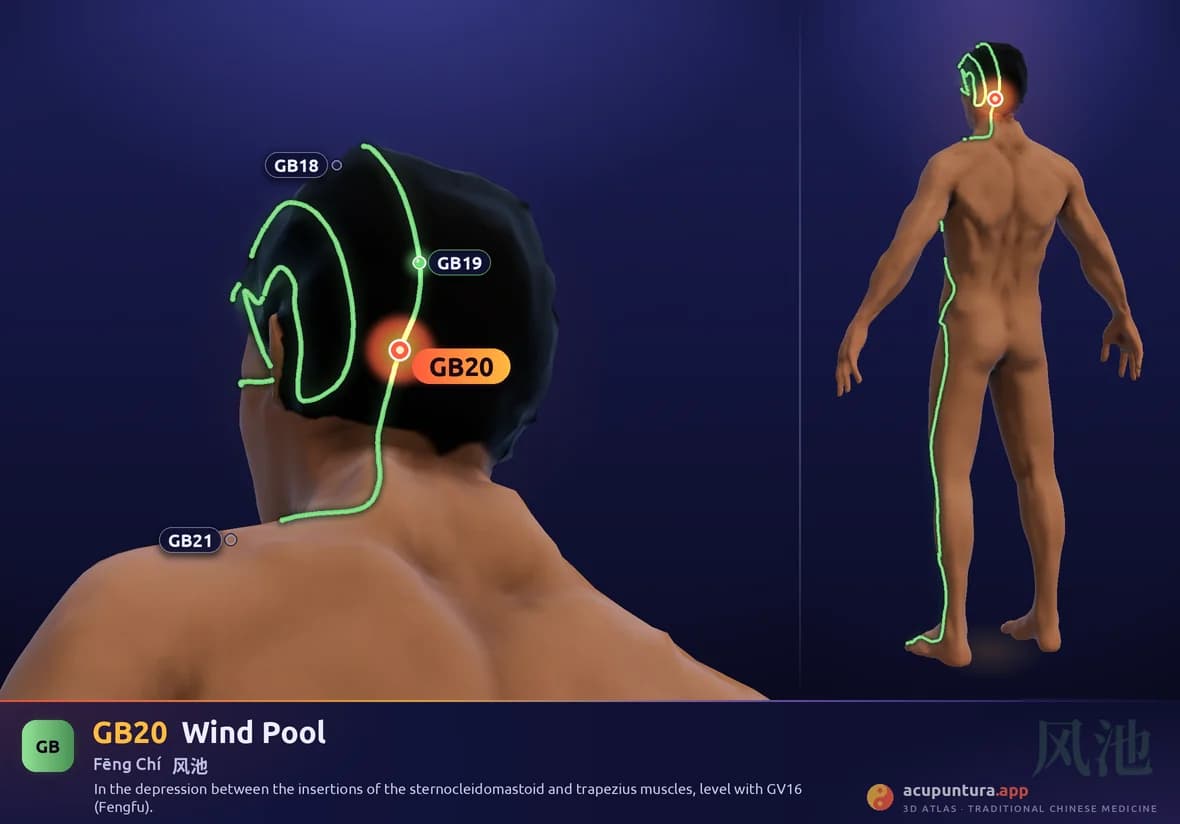
Gallbladder Channel
Wind Pool
风池Fēng ChíAnatomical location
In the depression between the insertions of the sternocleidomastoid and trapezius muscles, level with GV16 (Fengfu).
Main function
Eliminates wind, benefits the head and eyes.
- Crossing point with the Yang Wei Mai
Therapeutic indications
- Headache
- stiff neck
- hypertension
- occipital headache
- migraine
- vertigo
- dizziness
- common cold
- red eyes
- blurred vision
- tinnitus
- deafness
- rhinitis
- insomnia
- stroke
- epilepsy
- shoulder pain
- Parkinson's disease (tremor due to Internal Wind)
- trigeminal neuralgia
- tension headache
- Ménière's disease
- allergic rhinitis
Name and classical tradition
Fengchi, 风池, the "Wind Pool," is probably the best-known point of the channel outside professional circles. 风 is wind, understood as an external pathogenic factor (风邪); 池 is a pool, a depression that holds water. The point lies in the hollow beneath the occipital bone, between the muscles of the nape, and the tradition regarded that spot as one of the places where Wind enters and accumulates. The name describes both the shape of the place and its clinical function.
Several independent sources place its first mention in the Lingshu (Spiritual Pivot), in the Re Bing (热病) chapter, devoted to febrile diseases. The attribution fits the use the tradition has made of it from very early on: external Wind, fever, and disorders of the head and eyes. Even so, the specific passage has not been checked word for word.
The reference works record an alternate name that stresses that use: 热府, the "Heat Storehouse." It is a crossing point of the Foot Shaoyang with the Yang Wei Mai. Along with GV16, Fengfu, and BL12, Fengmen, it shares the character for Wind, a series of names that marks the nape and upper back as the entry gate for this pathogenic factor.