Bladder Channel
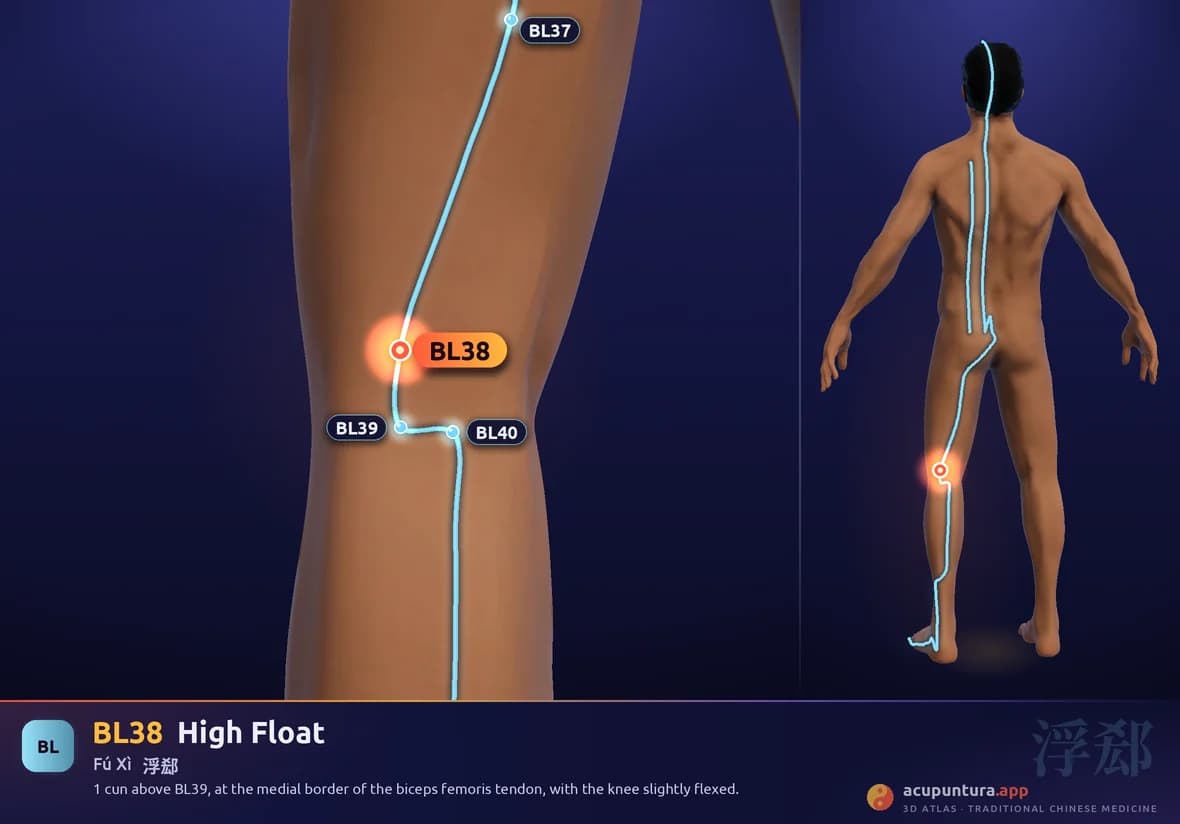
High Float
浮郄Fú XìAnatomical location
1 cun above BL39, at the medial border of the biceps femoris tendon, with the knee slightly flexed.
Main function
Regulates Qi, relieves pain, benefits the bladder and the urinary system.
Therapeutic indications
- Leg pain
- muscle spasms
- dysuria
- low back pain
- Contracture of the popliteal fossa
- Numbness of the thigh
- Constipation
- Bladder pain
Name and classical tradition
Fuxi, 浮郄, is the “upper cleft.” 浮 means to float, to be on the surface or high up; 郄 is the cleft, the hollow, which here is the popliteal fossa, behind the knee. The point is in the upper and outer part of that fossa, and the name places it at its upper border. It is a direct reading, with little complication.
The Zhenjiu Jiayi Jing (Systematic Classic of Acupuncture and Moxibustion) locates it «在委陽上一寸», one cun above BL39, Weiyang. The Yizong Jinjian (Golden Mirror of the Medical Tradition), the official Qing court treatise of the 18th century, gives an alternative location in relation to BL37 and Weiyang. No alternative names are known for it.