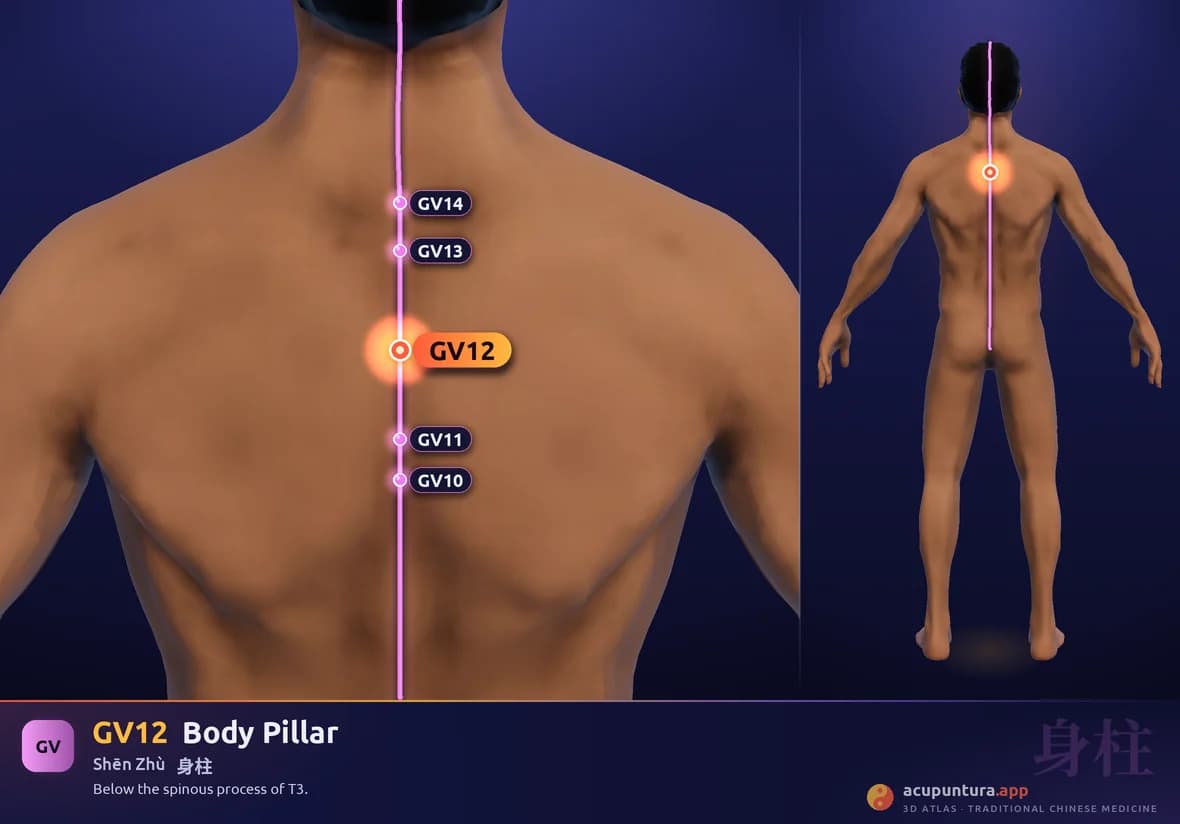
Du Mai (Governing Vessel) Channel
Body Pillar
身柱Shēn ZhùAnatomical location
Below the spinous process of T3.
Main function
Strengthens the Lungs, relieves cough, calms the Shen.
Therapeutic indications
- Cough
- asthma
- back pain
- epilepsy
- insomnia
- Stiffness of the back
- Boils
- Infantile convulsions
- Fever
Name and classical tradition
Shenzhu, 身柱, is the “pillar of the body.” 身 is the body; 柱 is the pillar, the column that supports. The point lies below the third thoracic vertebra, and the usual reading describes it as the pillar that joins the head and neck above to the back and lumbar region below: the support of the entire body. The image of the pillar recurs at the nape with BL10, Tianzhu, the “pillar of heaven.”
It is traced to the Zhenjiu Jiayi Jing (Systematic Classic of Acupuncture and Moxibustion) with no located quotation, and it has no known aliases. As a separate note, and already outside the classical Chinese tradition, Shenzhu is a point widely used in pediatric moxibustion in the Japanese tradition.