Traditional Chinese Medicine channel
Du Mai (Governing Vessel) Channel
督脉Not associatedNot tied to a specific time28 pointsGV1 → GV28
Description
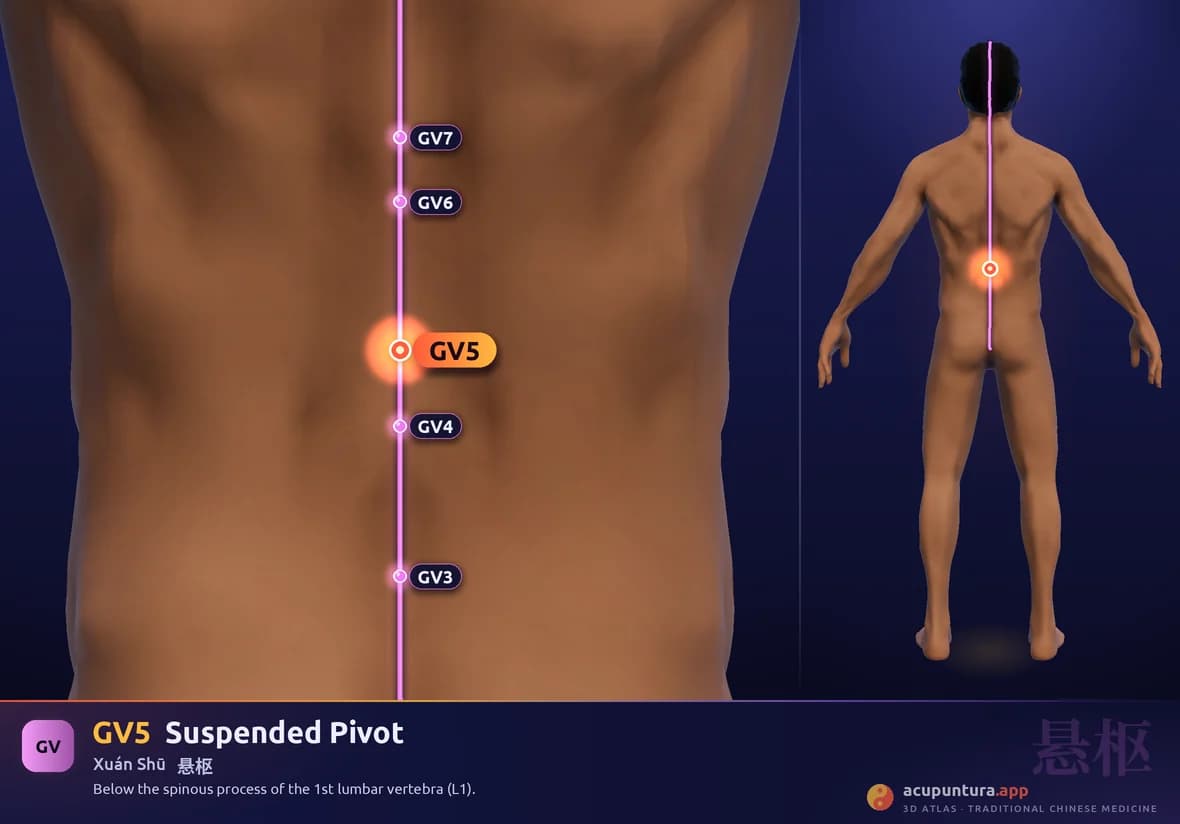
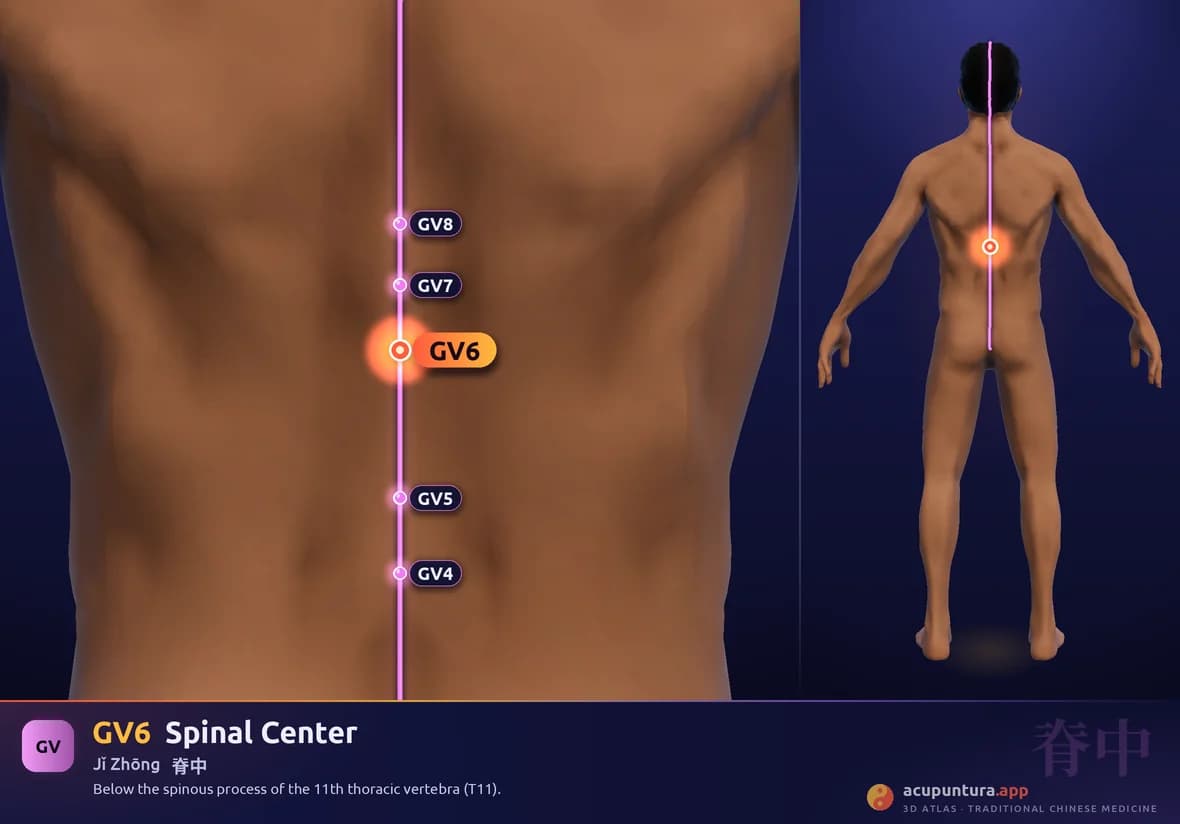
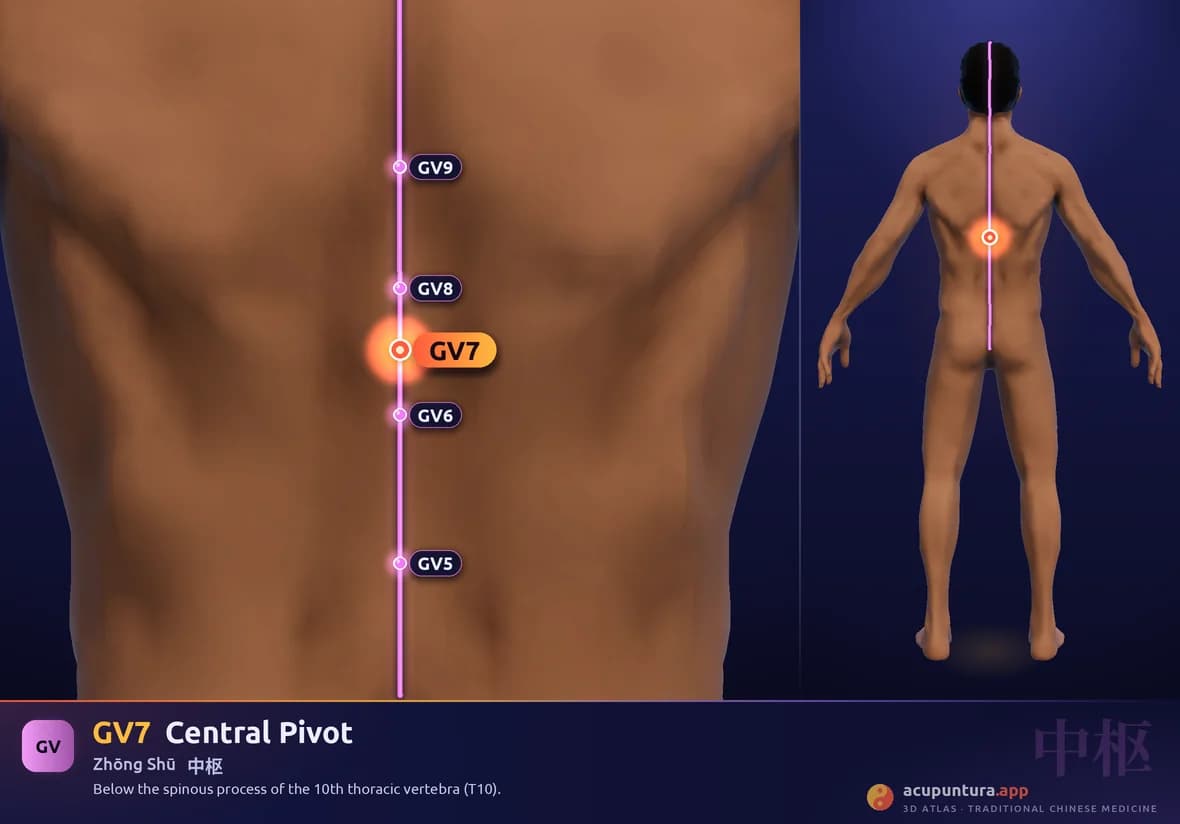
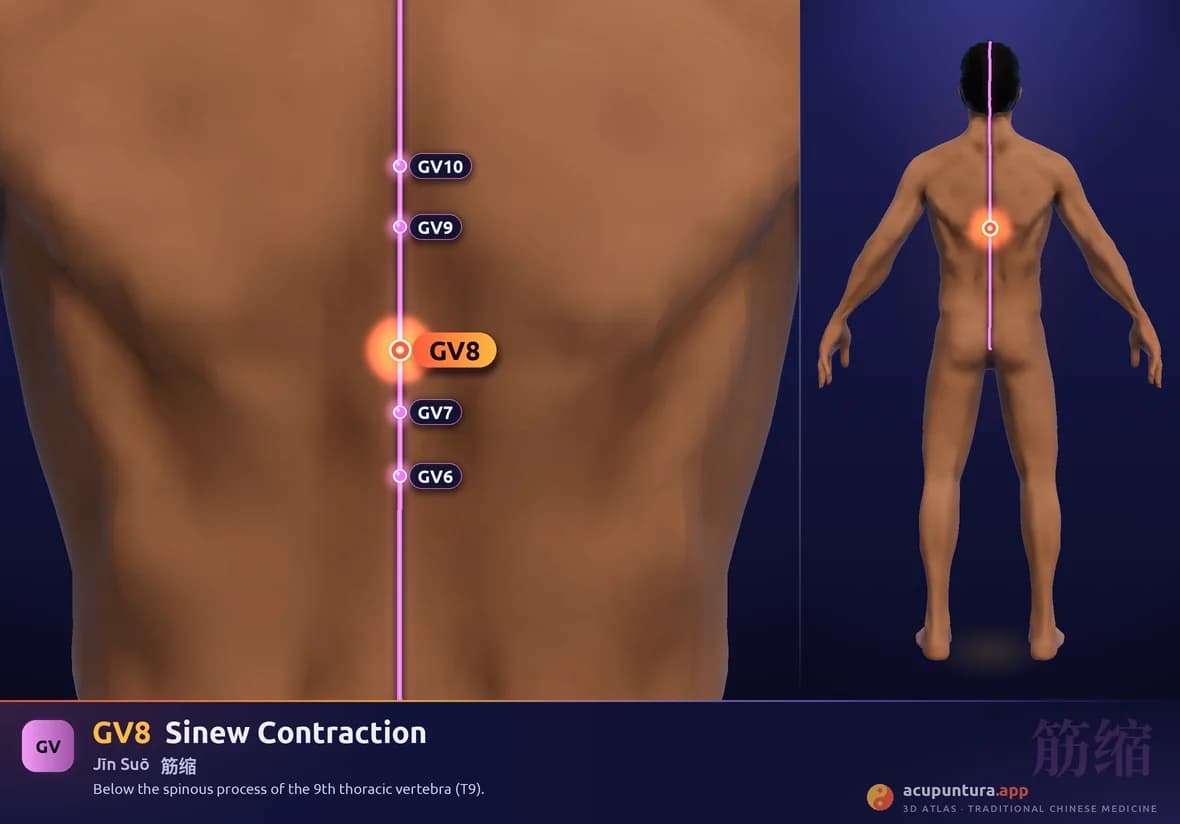
The Du Mai, or Governing Vessel, is one of the eight Extraordinary Vessels and governs all the Yang of the body. Known as the “Sea of Yang Channels,” it runs along the posterior midline of the body, from the perineum to the head. It regulates Yang energy, strengthens the spine, and nourishes the central nervous system. Imbalances can show up as back pain, stiffness, neurological problems, chronic fatigue, and lack of vitality. It is essential for willpower, mental clarity, and our connection with our spiritual essence.
Main functions
- Governs the Yang channels
- Strengthens the spine
- Nourishes the brain and marrow
Pathway
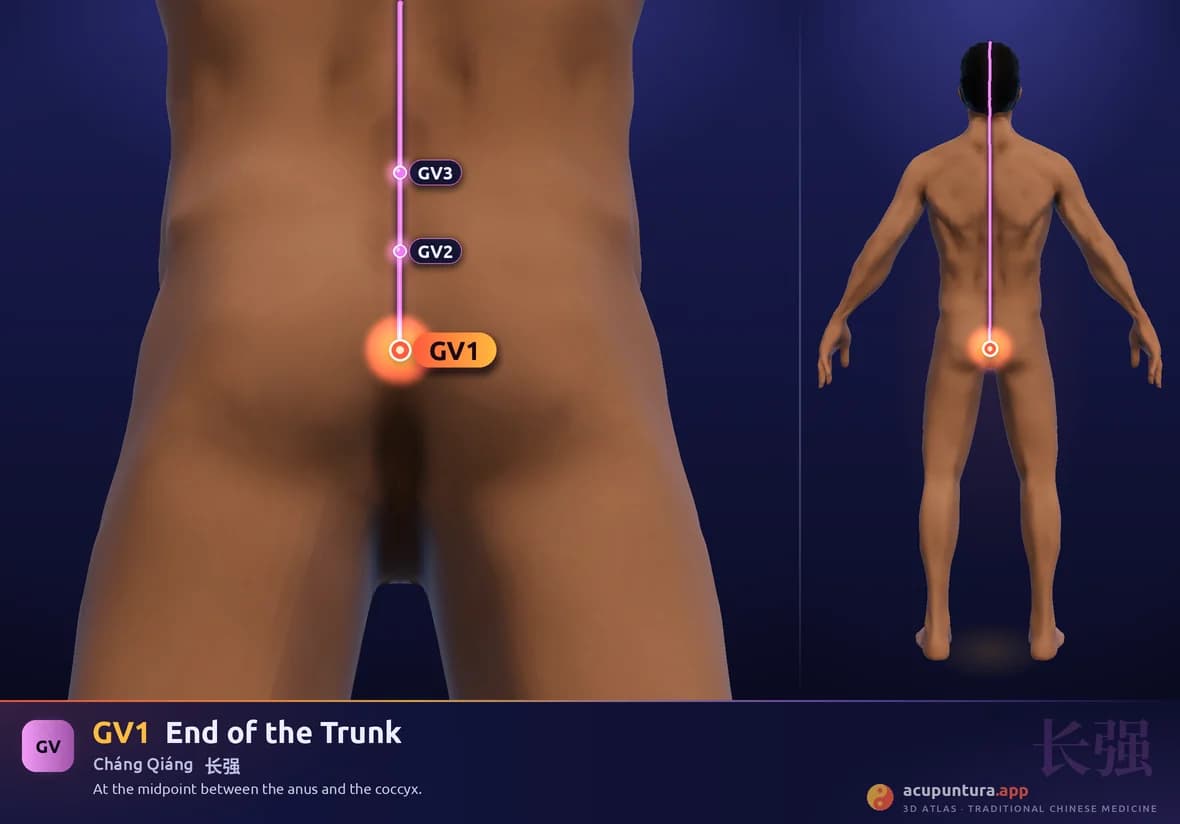
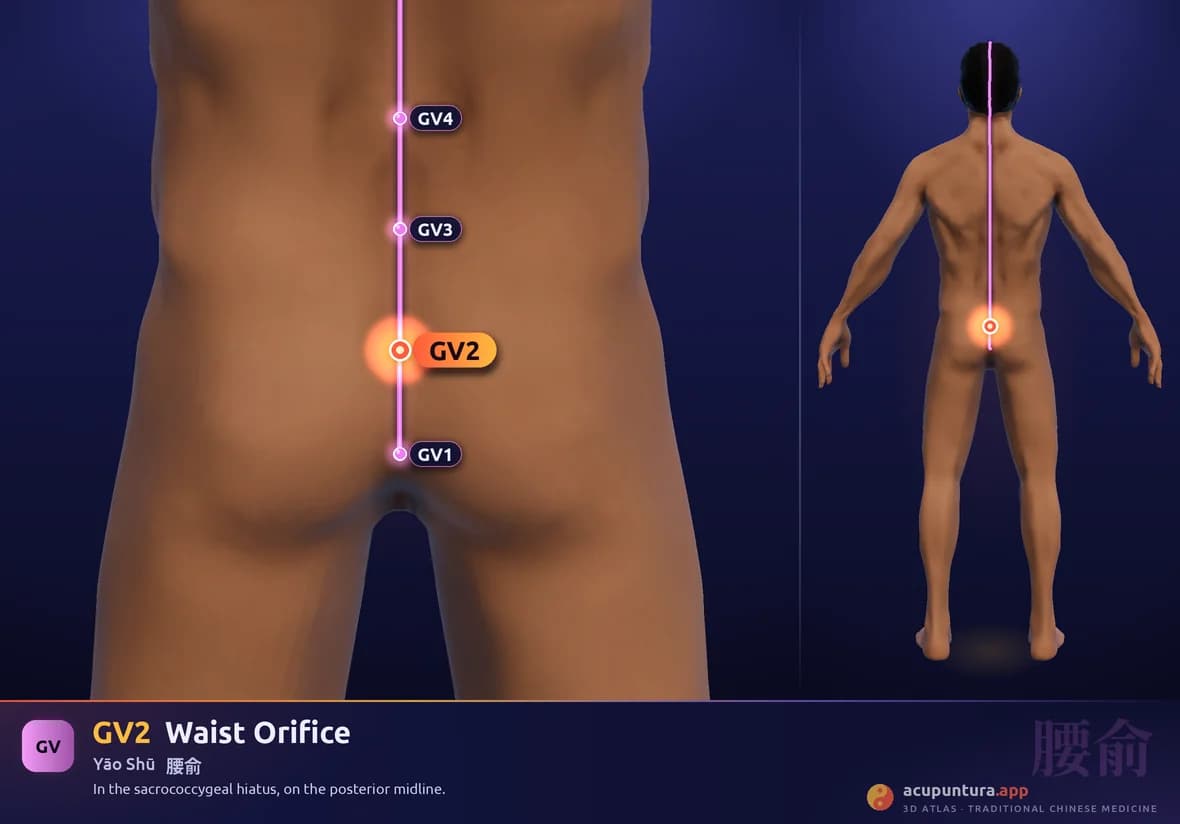
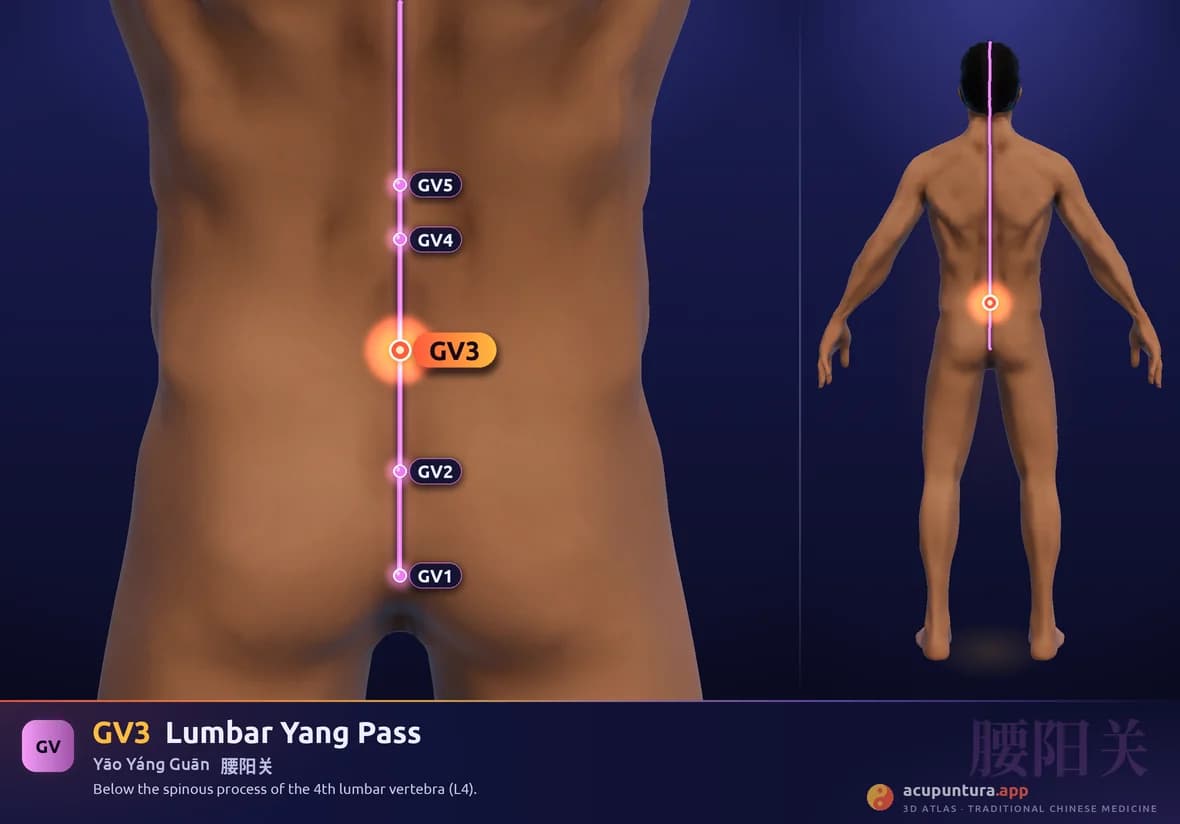
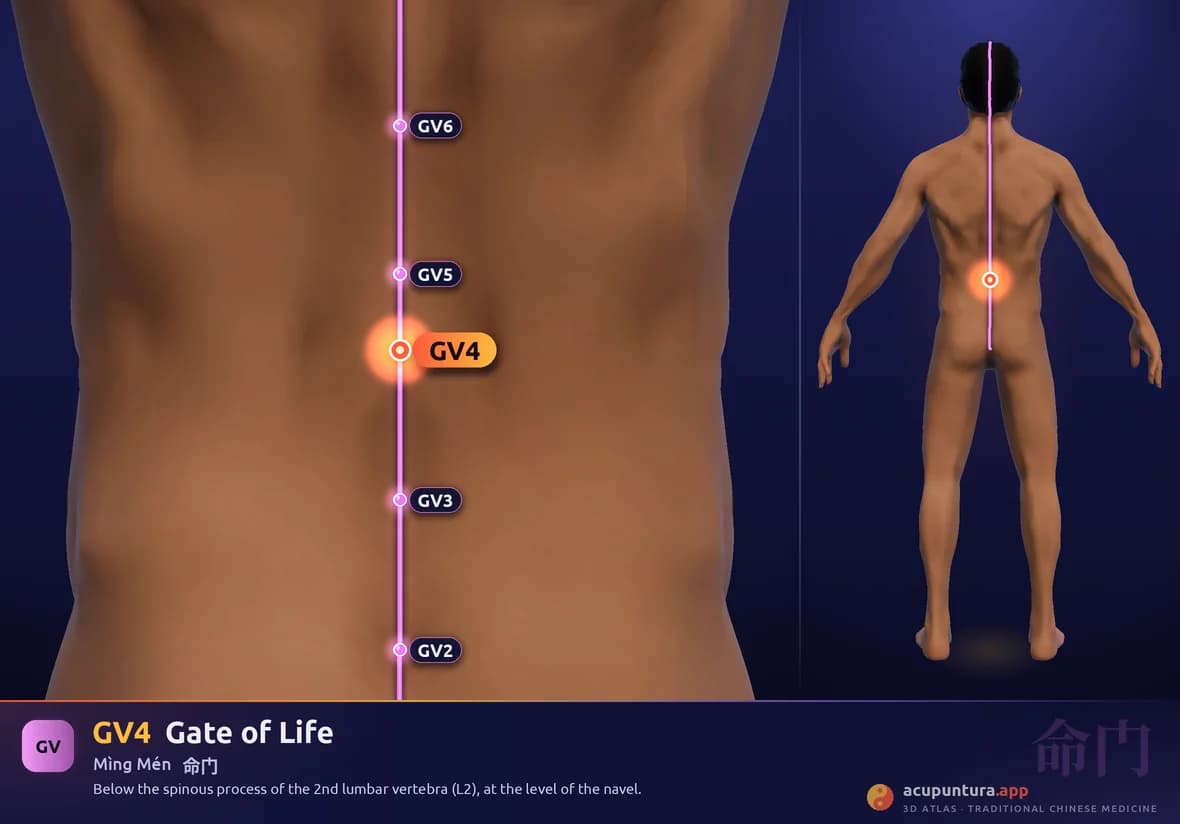
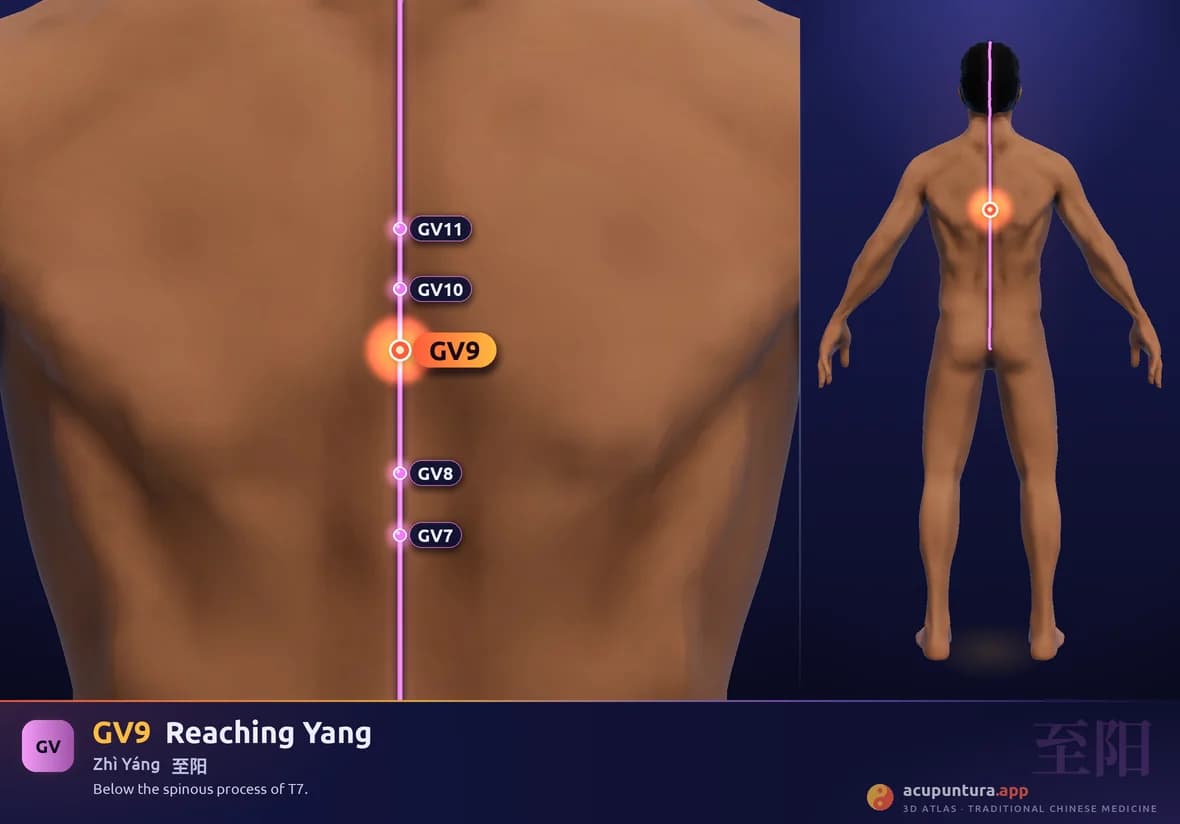
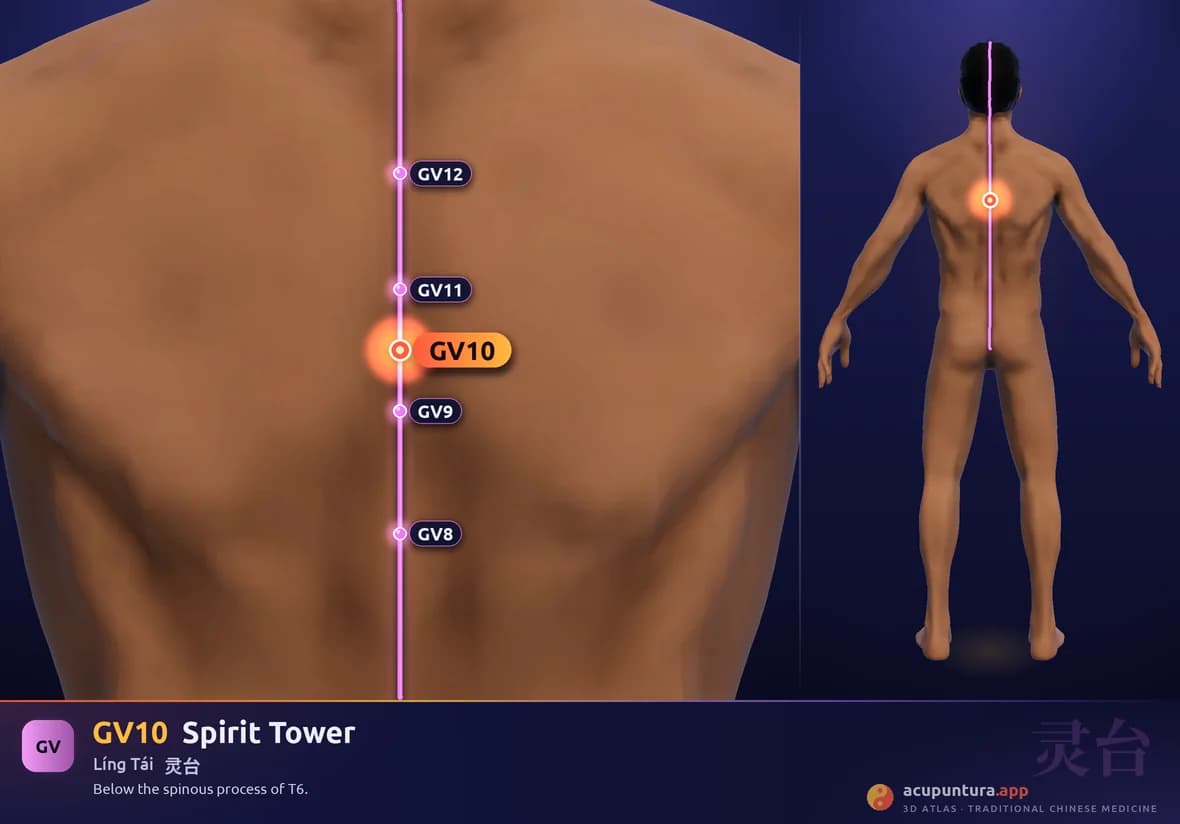
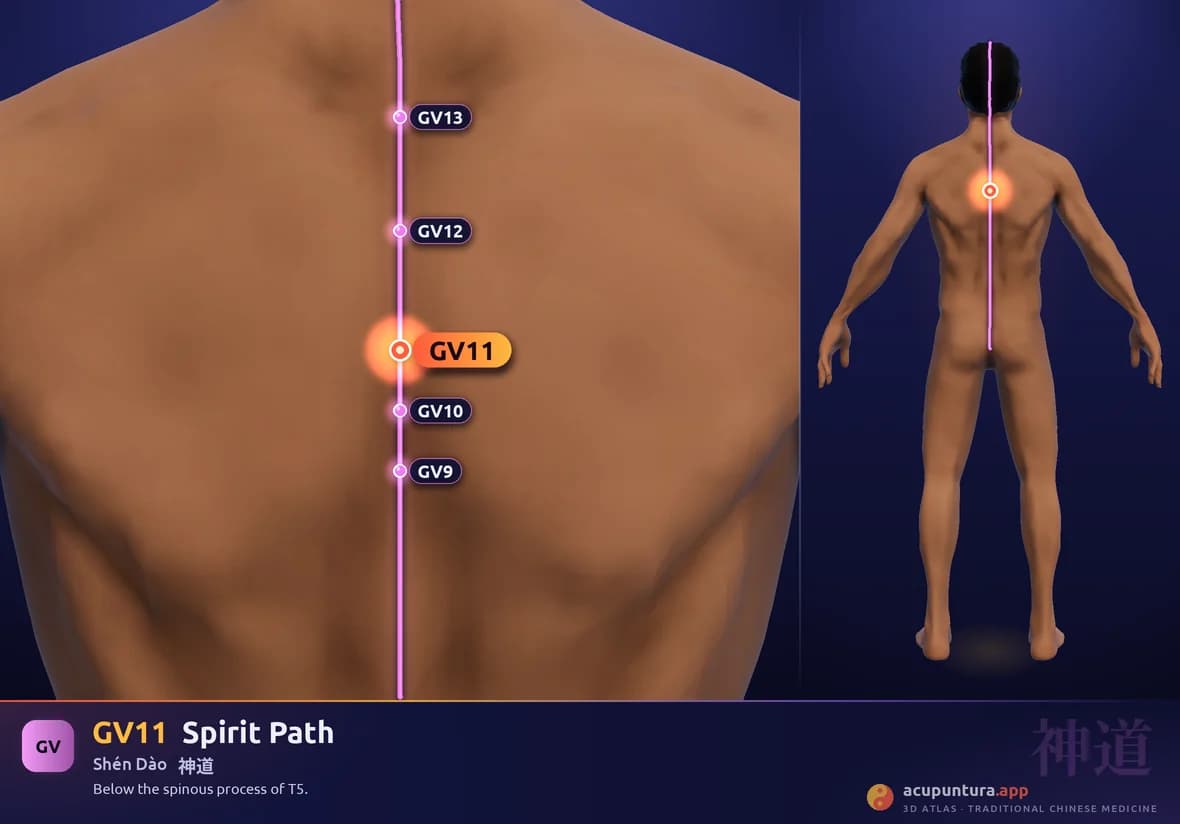
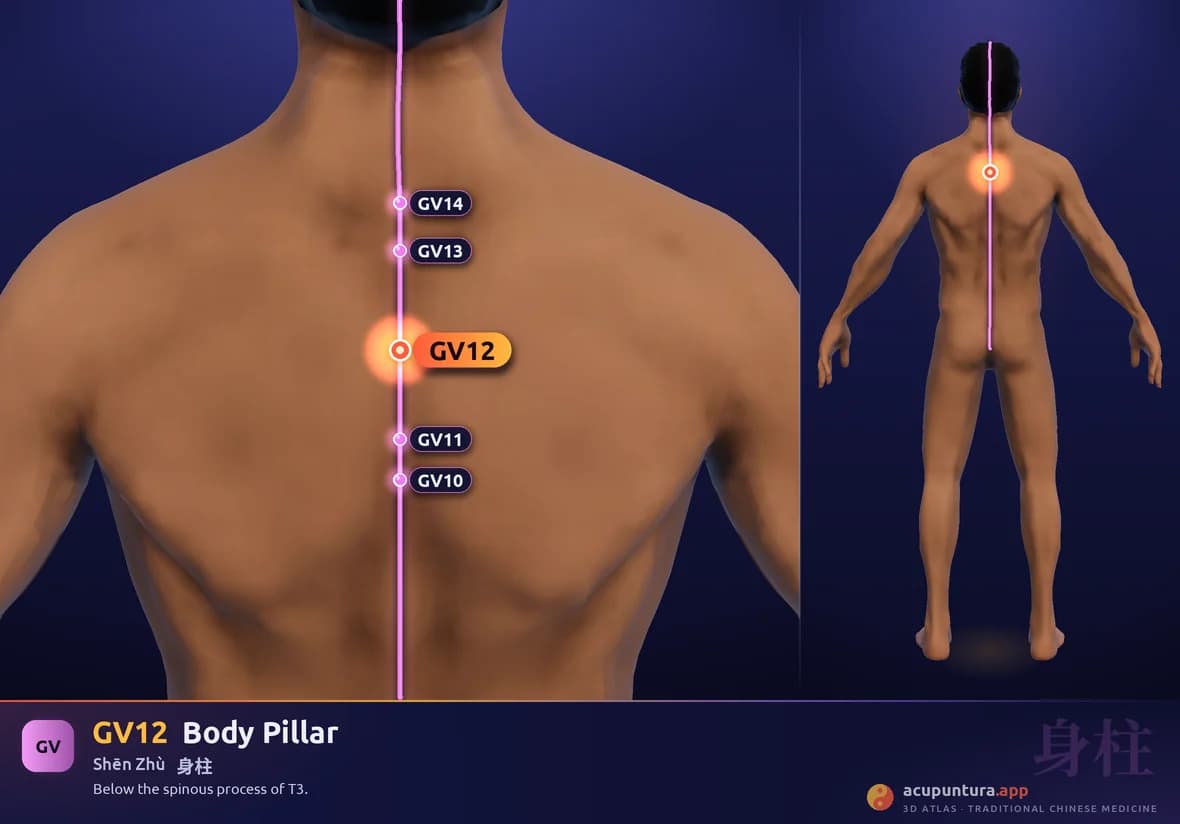
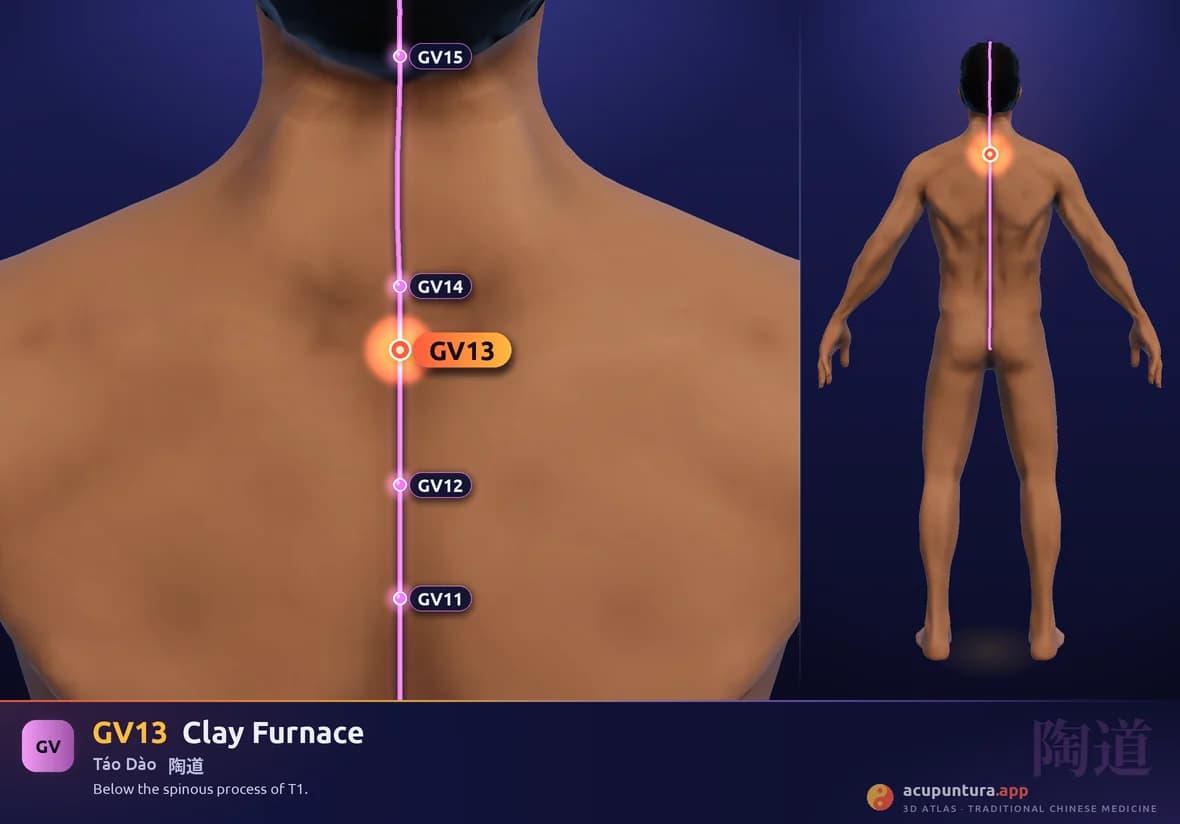
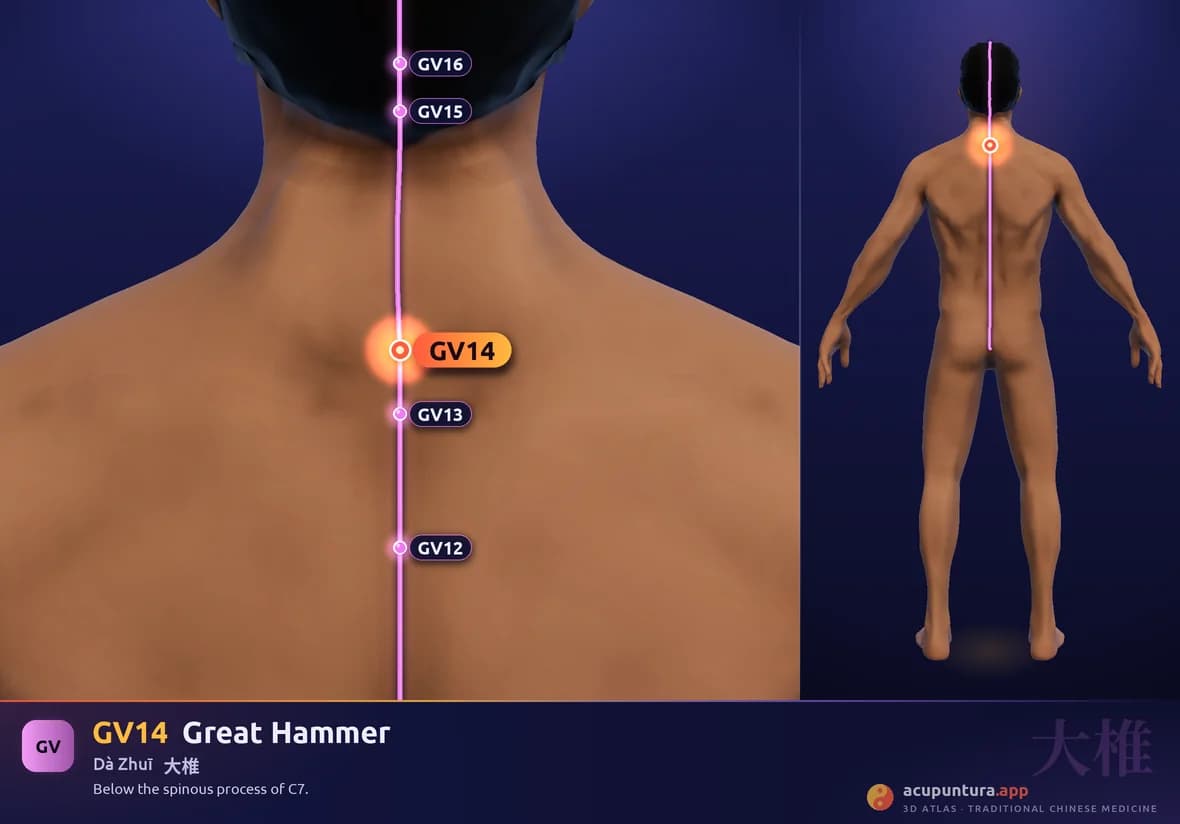
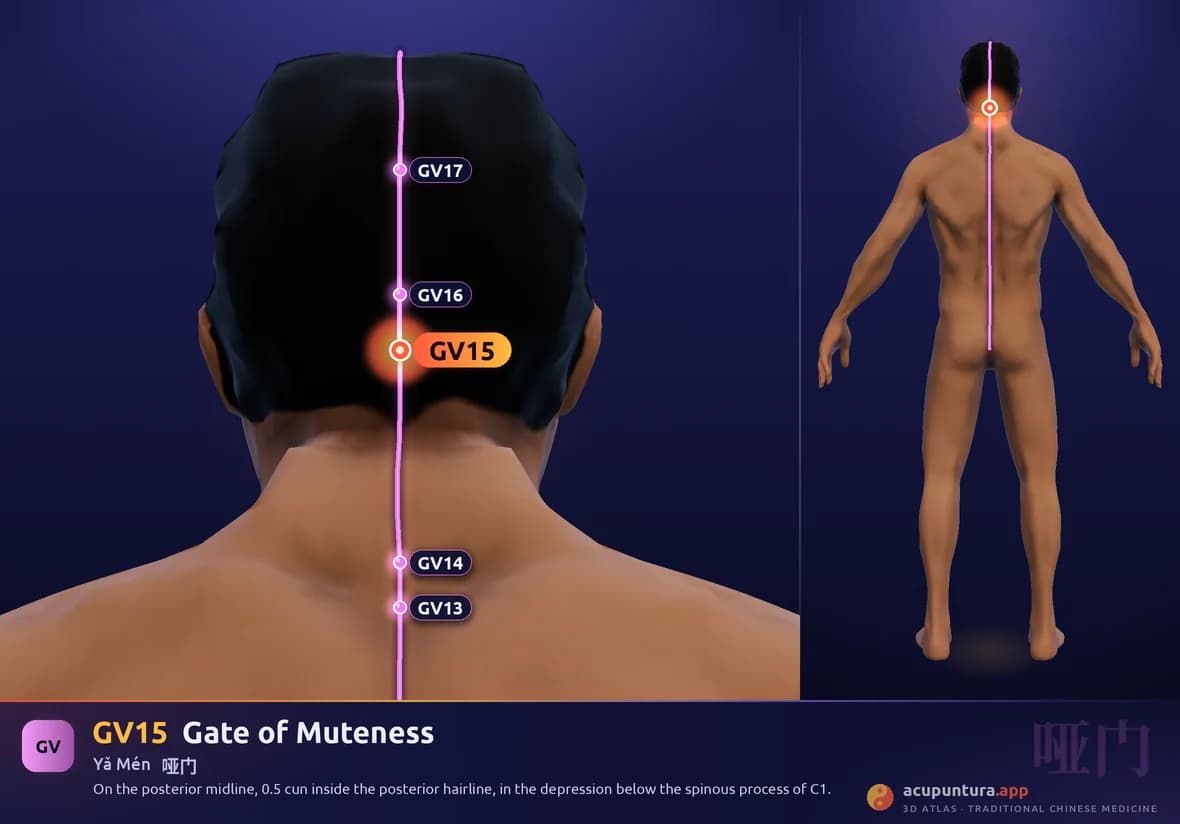
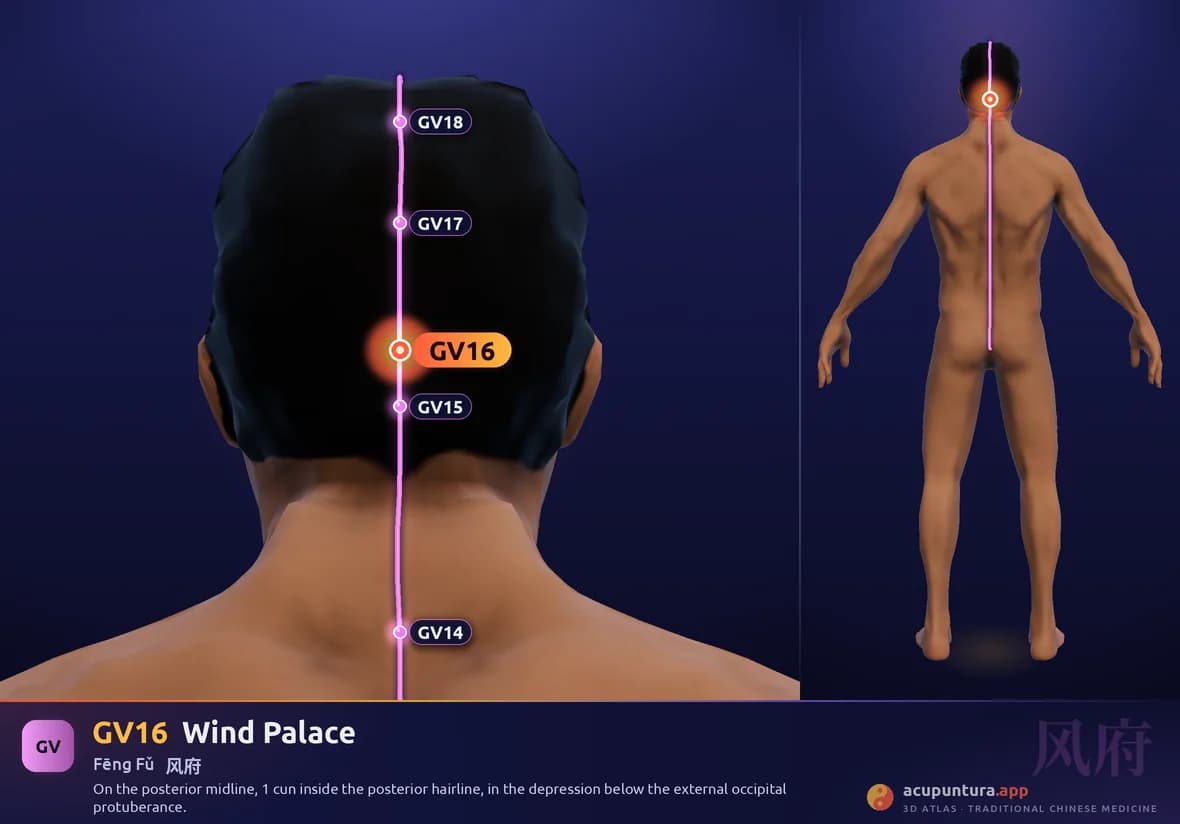
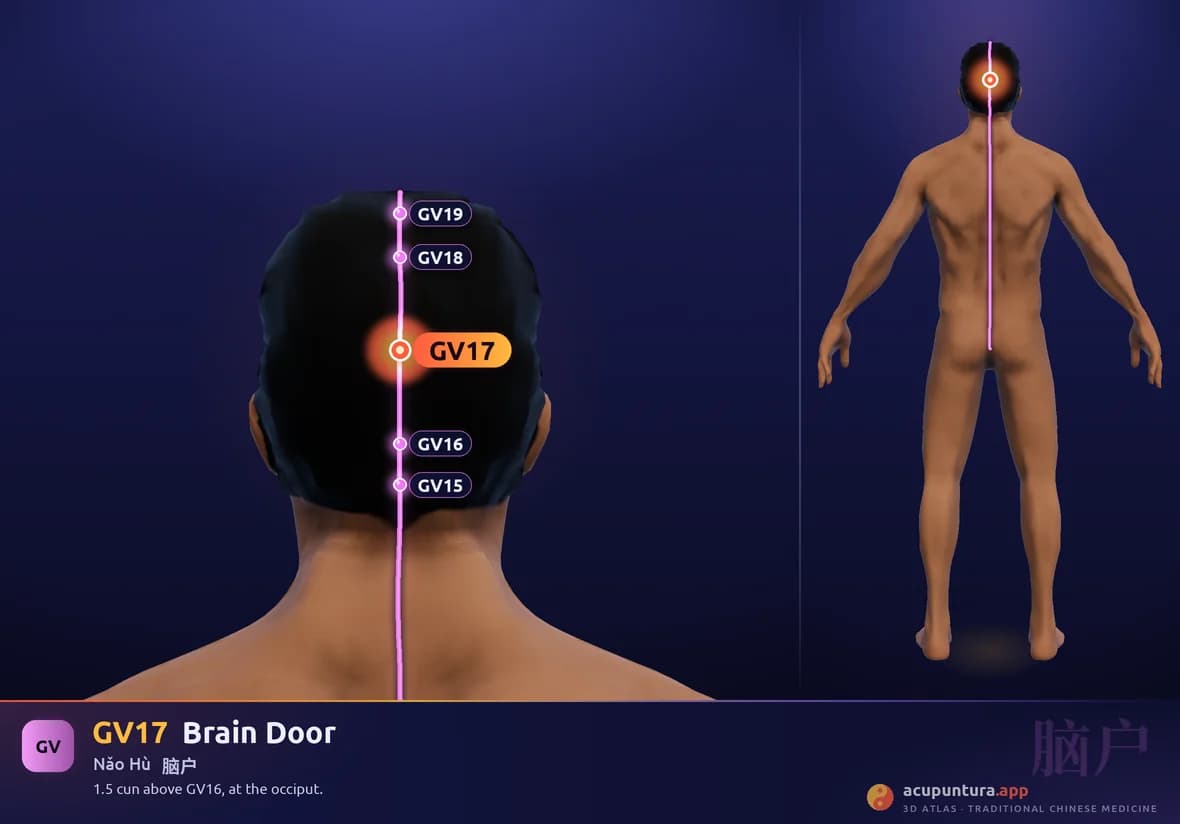
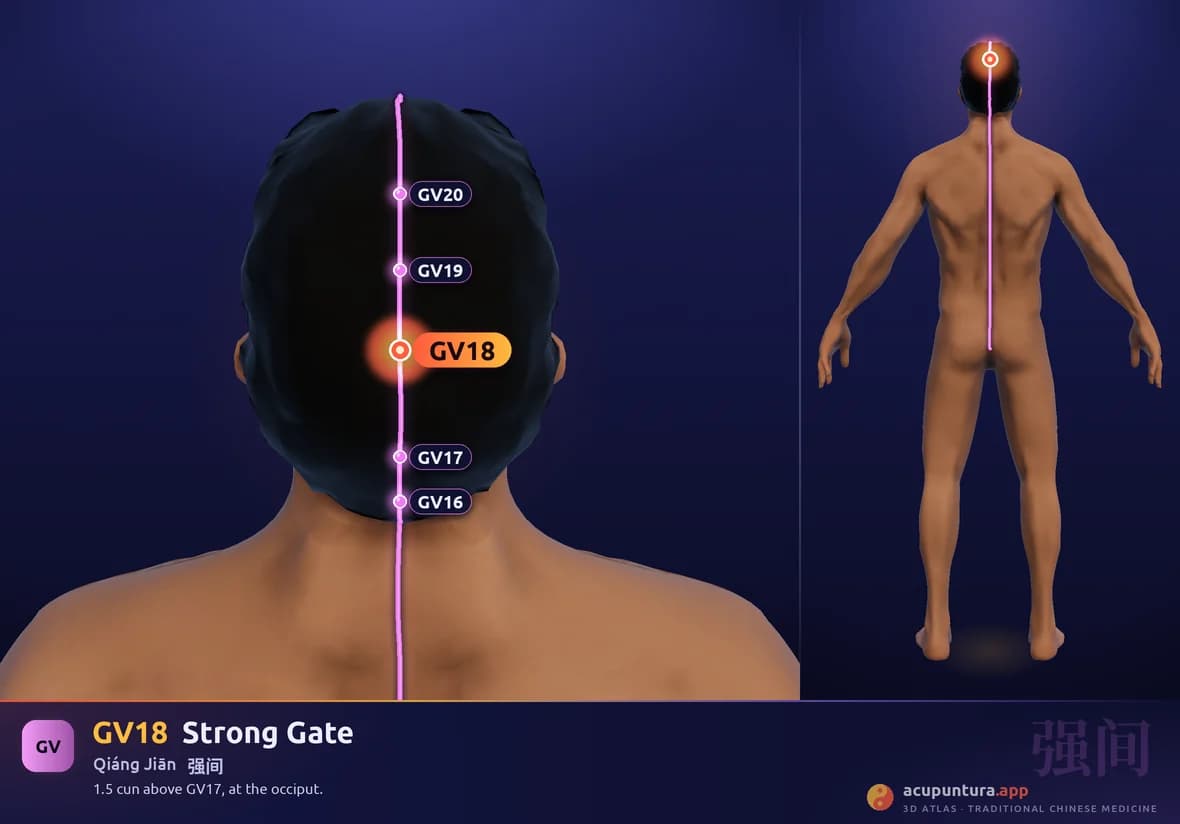
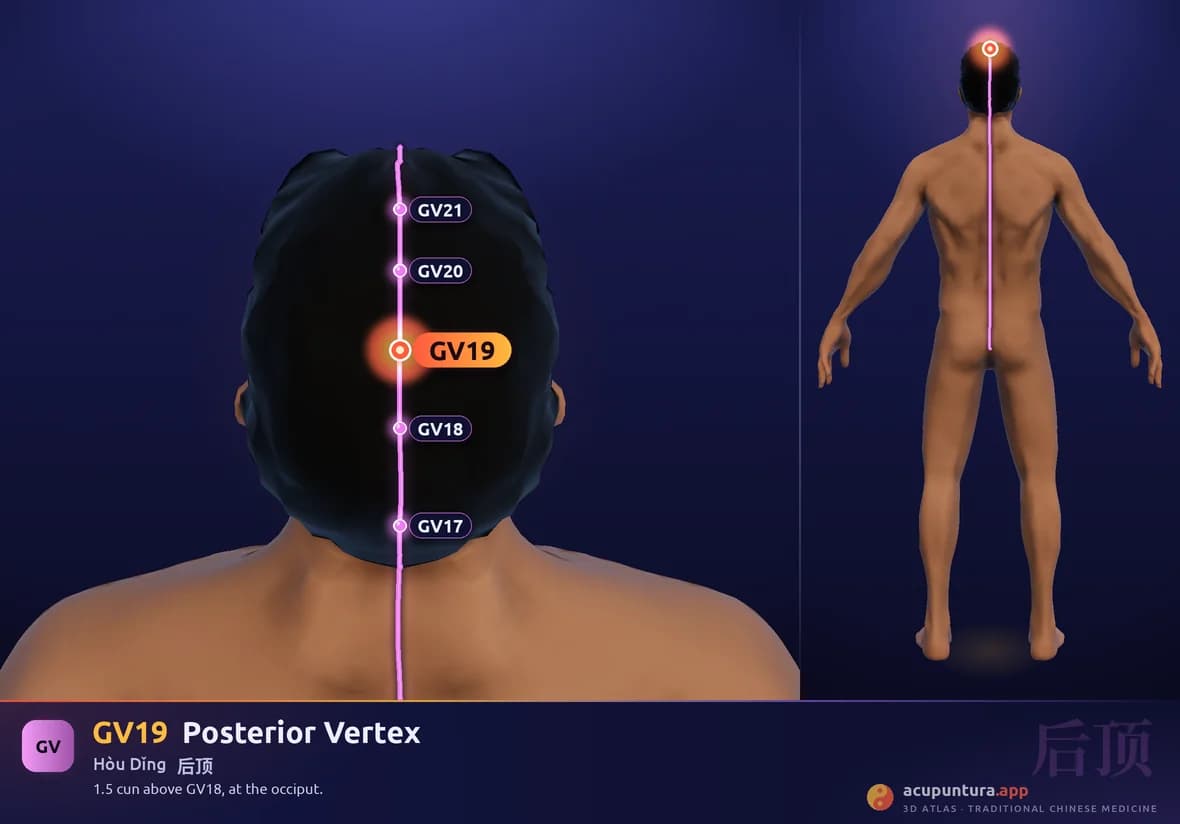
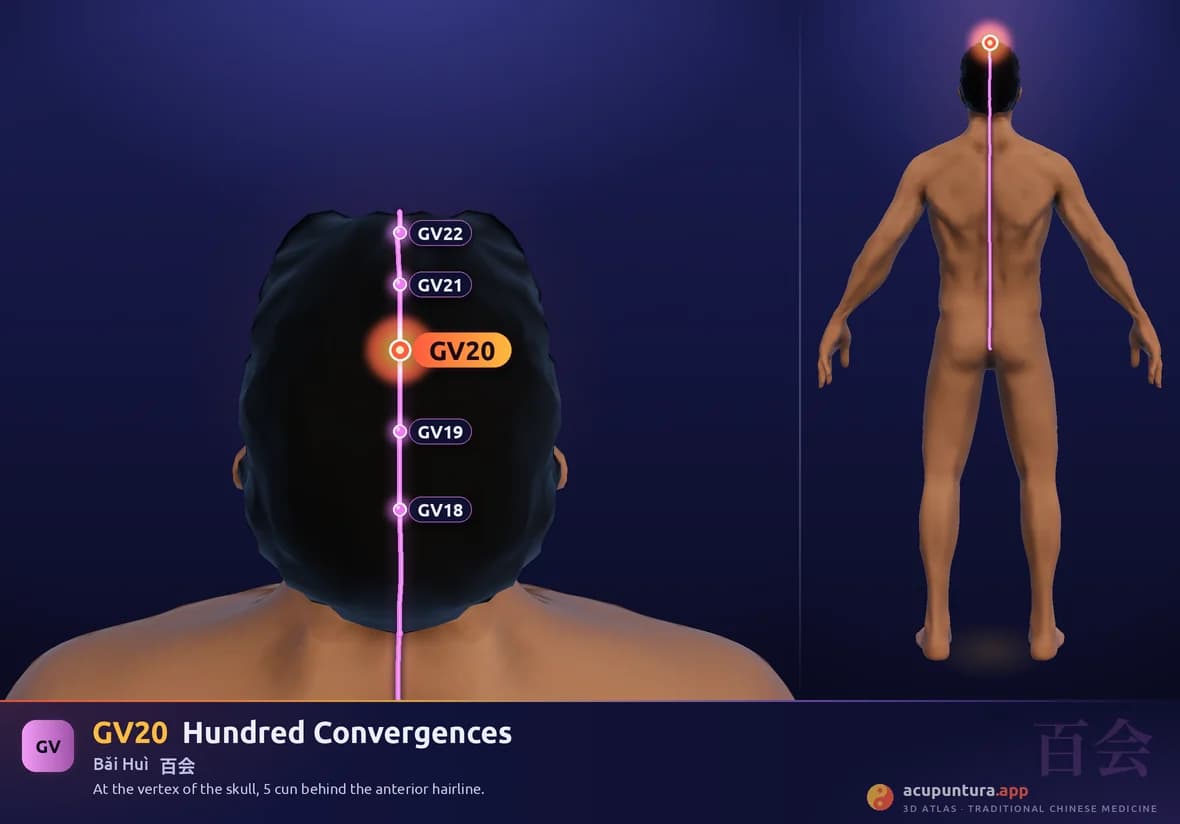
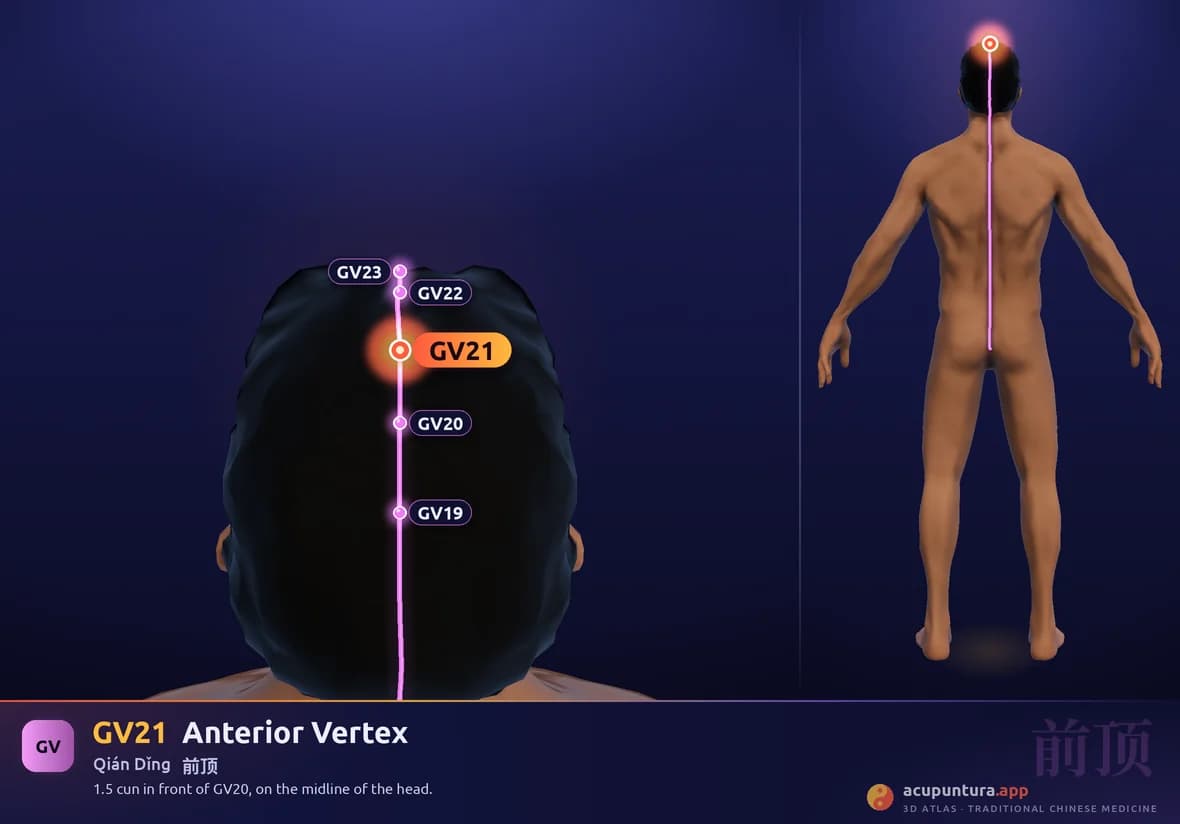
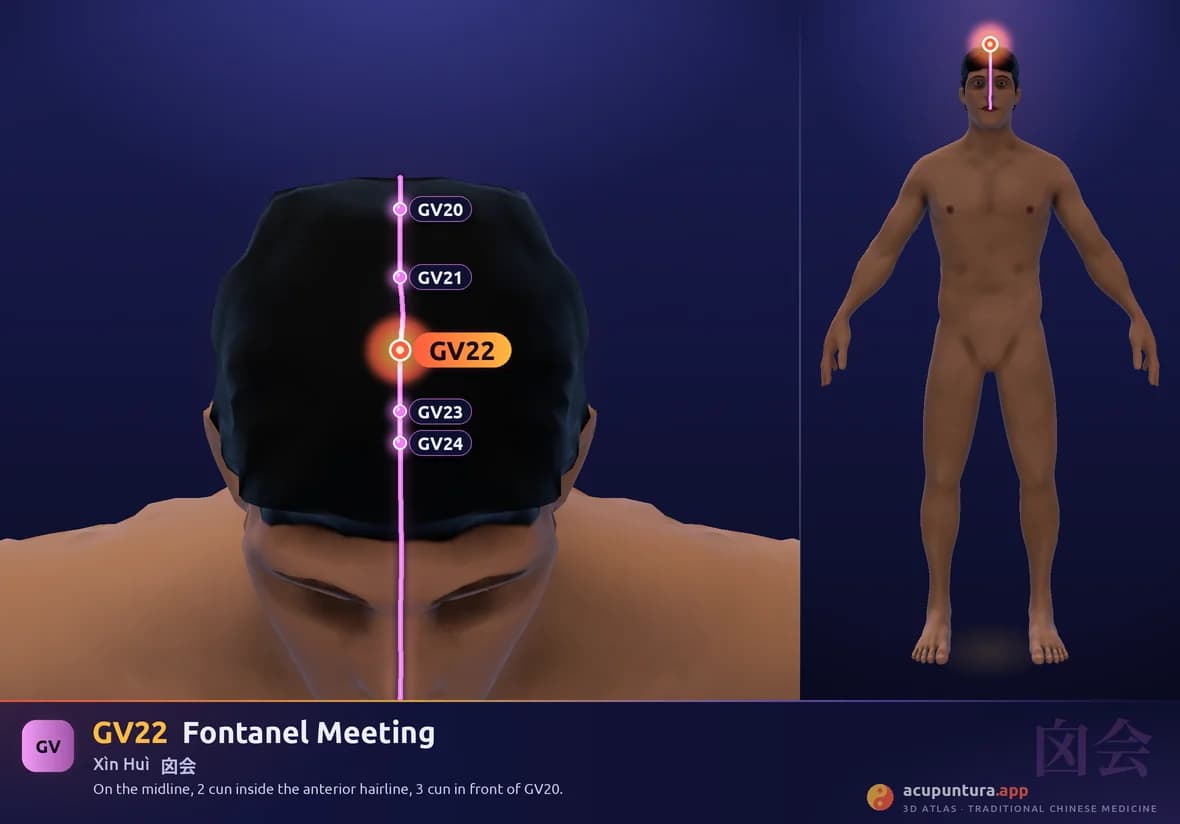
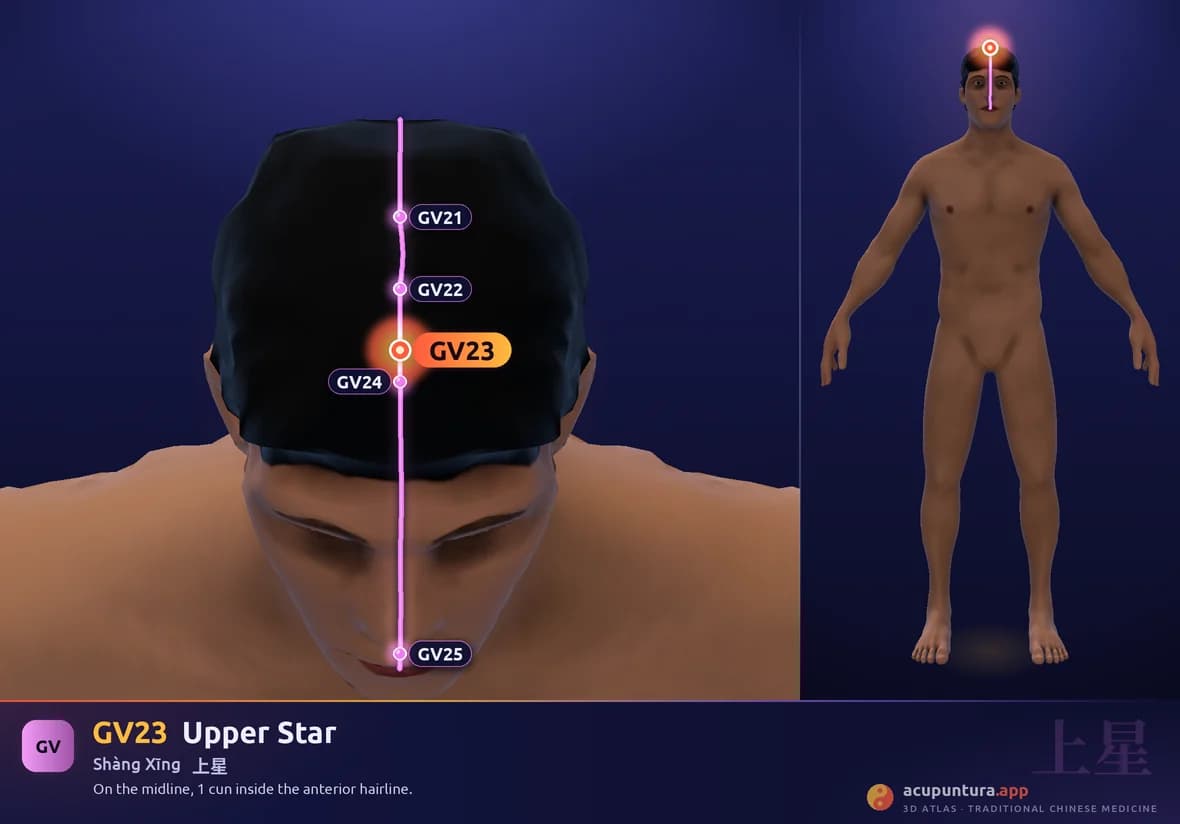
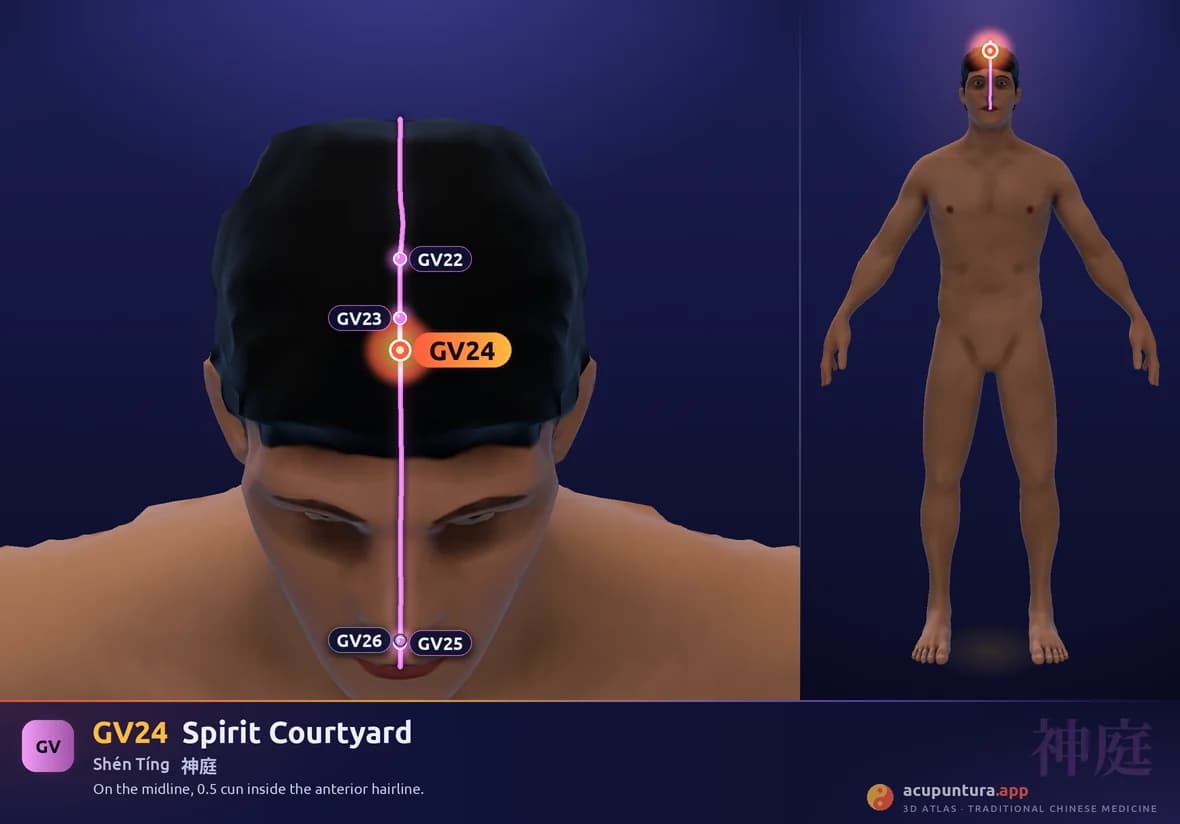
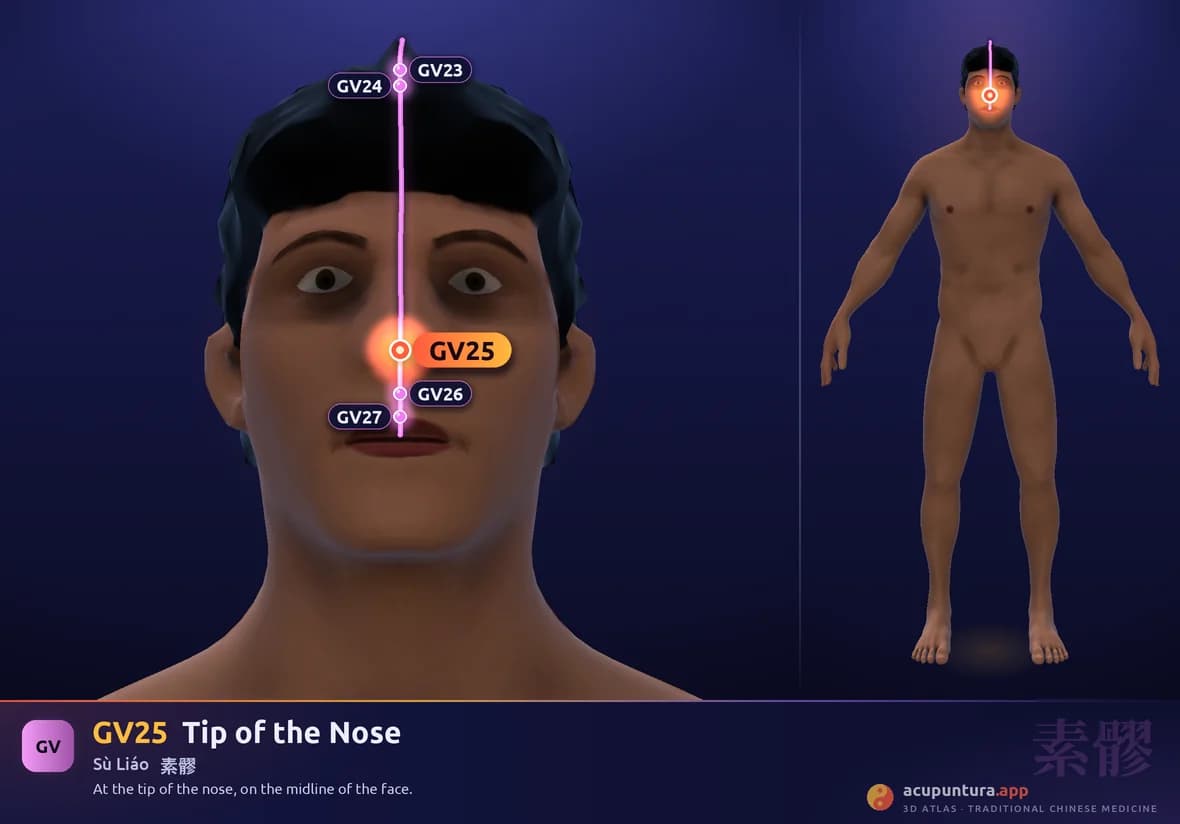
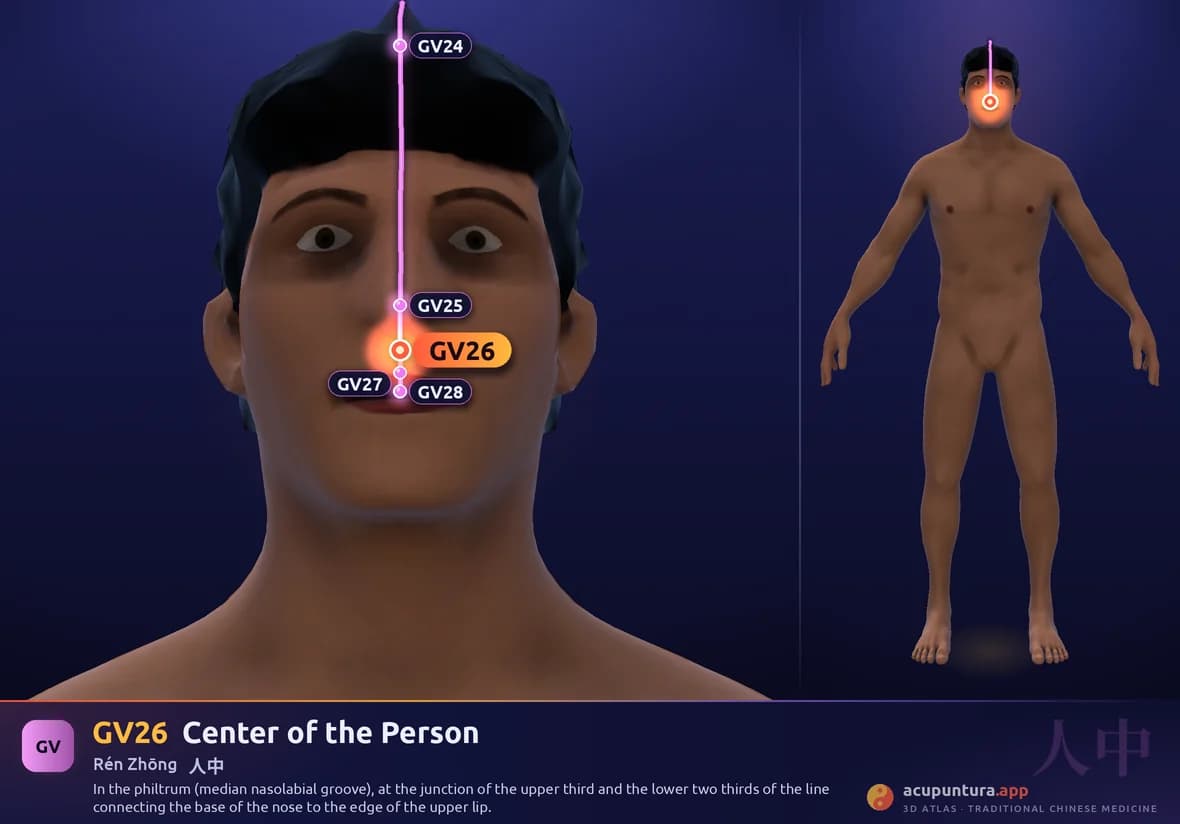
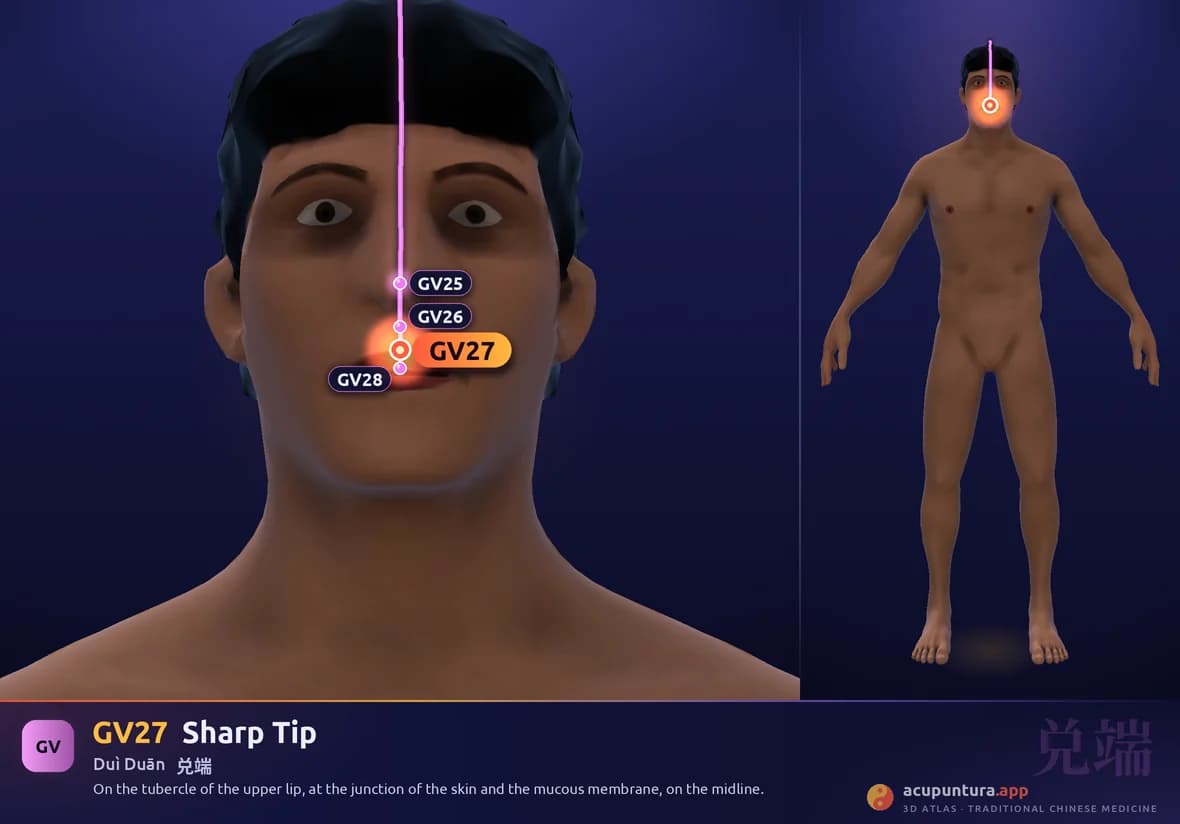
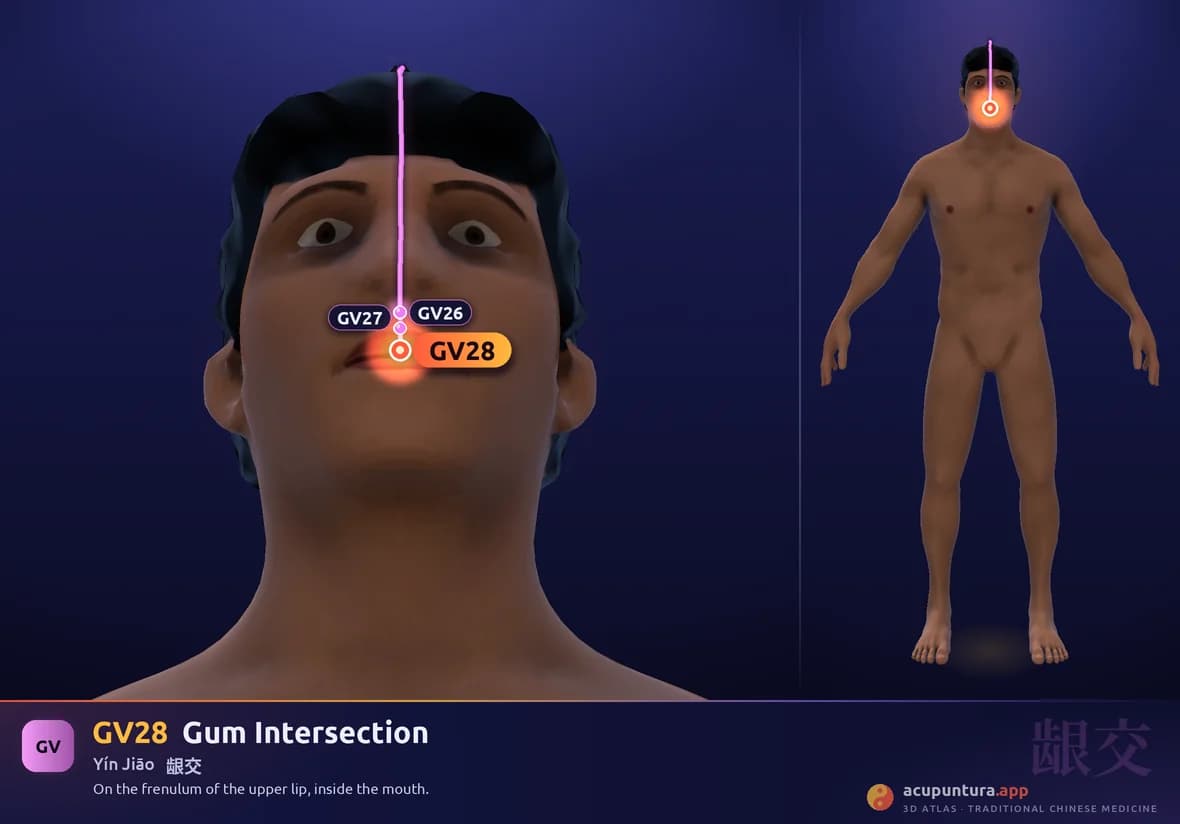
It begins at the perineum, ascends along the posterior midline of the body over the spine, passes over the head, and ends at the upper lip, in the gingival groove.
The vessel in the classics
The Du Mai is not among the twelve channels of the Jing Mai chapter, and the Lingshu (Spiritual Pivot) describes it only in pieces. The most complete description is in the Suwen (Basic Questions), in the Gu Kong Lun chapter (骨空論): «督脈者,起於少腹以下骨中央», the Du Mai arises in the center of the bone below the lower abdomen. From there the text gives it a surprising course: it encircles the genitals and the anus, rises inside the spine, «貫脊屬腎», passes through the spine and belongs to the Kidney, and with the Taiyang rises from the eye to the vertex, enters the brain, and descends again along the nape. Another branch ascends along the front, passes through the navel and the heart, and reaches up to beneath the eyes. It is a vessel that encircles the trunk both in front and behind.
The Nanjing (Classic of Difficulties), in Difficulty 28, gives the simplified version that prevailed: «督脈者,起於下極之俞,並於脊裡,上至風府,入屬於腦», it arises at the base, rises inside the spine to Fengfu, GV16, and enters the brain. This is the line of points that today runs from GV1, next to the coccyx, to GV28, on the upper gum. The Suwen assigns it a characteristic disease: «督脈為病,脊強反折», a stiff spine arched backward.
The Jing Mai chapter does give it one branch: «督脈之別,名曰長強», Changqiang, GV1, which rises along both sides of the spine to the nape and spreads over the head. Together with the Ren Mai, it forms the midline circuit that Taoist tradition turned into the microcosmic orbit.