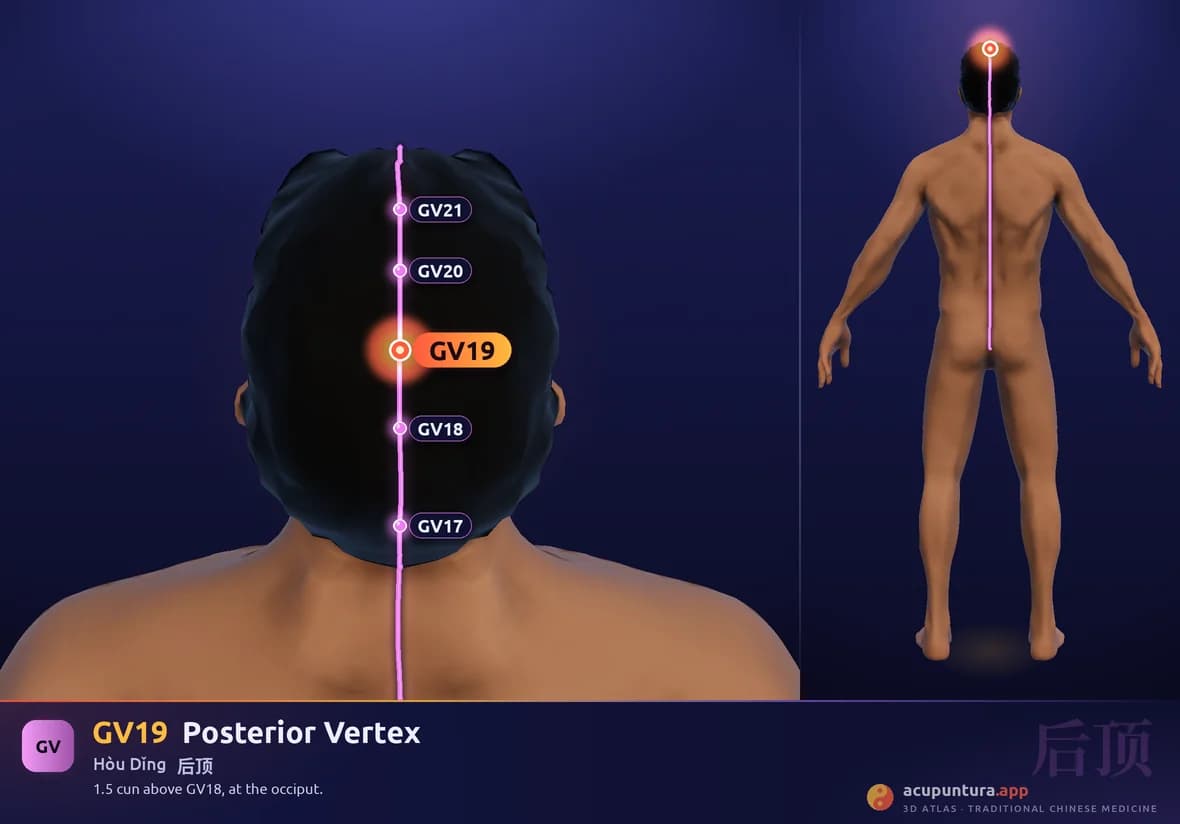
Du Mai (Governing Vessel) Channel
Posterior Vertex
后顶Hòu DǐngAnatomical location
1.5 cun above GV18, at the occiput.
Main function
Calms Internal Wind, benefits the head, calms the Shen.
Therapeutic indications
- Headache
- vertigo
- epilepsy
- insomnia
- Cephalalgia
- Mania
Name and classical tradition
Houding, 后顶, is the “vertex behind.” 后 (後) is behind; 顶 (頂), the crown. The name is topographic: the point is on the head, behind GV20, Baihui, on the posterior part of the vertex. It pairs with GV21, Qianding, the “vertex in front,” on the other side of Baihui.
The sources attribute it to the Zhenjiu Jiayi Jing (Systematic Classic of Acupuncture and Moxibustion) and assign it classical indications such as vertigo due to Wind, pain at the top of the skull, epilepsy, convulsions, agitation, and stiffness of the neck, probably from that work, although no literal citation has been confirmed. Reference works record the alternative name 交衝.
Other names
- 交沖Jiayi Jing