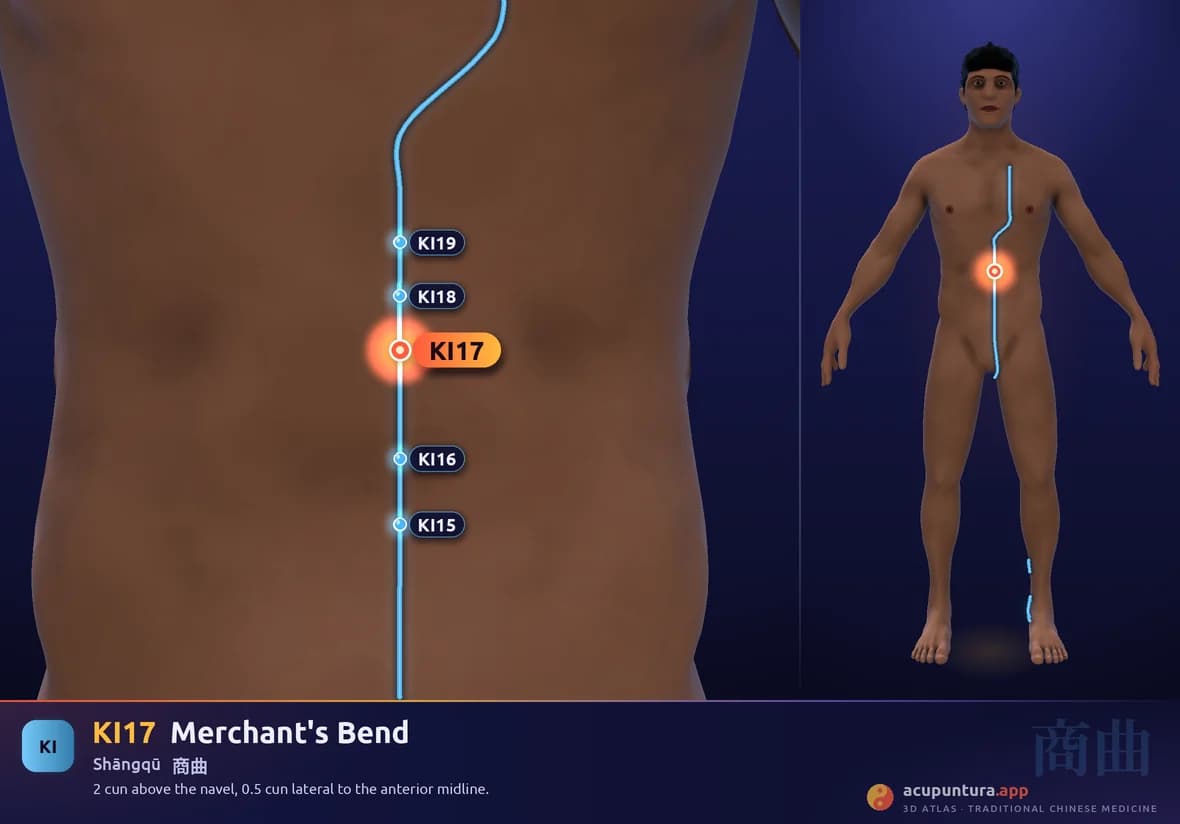
Kidney Channel
Merchant's Bend
商曲ShāngqūAnatomical location
2 cun above the navel, 0.5 cun lateral to the anterior midline.
Main function
Regulates Kidney Qi, strengthens the Spleen and Stomach, harmonizes the Middle Jiao, and treats digestive disorders.
- Crossing point with the Chong Mai
Therapeutic indications
- Abdominal pain
- diarrhea
- dyspepsia
- nausea
- epigastric fullness
- constipation
- poor appetite
Name and classical tradition
Shangqu, 商曲, has two explanations that cannot be reconciled. In the first, 商 is the musical note that the Five Phases associate with Metal and the Large Intestine, and the point would correspond internally to the bend of the colon: the "bend of Shang." In the second, 商 would refer to the clepsydra, the water clock, and allude to a slow, imperceptible flow, with 曲 in the sense of hidden. The two come from different schools of commentary, neither ancient, and it is best not to merge them into one.
The surviving quotation from the Zhenjiu Jiayi Jing (Systematic Classic of Acupuncture and Moxibustion) is more concrete: "衝脈、足少陰之會。腹中積聚,時切痛"; it is the meeting point of the Chong Mai and the Foot Shaoyin, and treats accumulations in the abdomen with intermittent stabbing pain. It comes from an aggregating source and has not been checked against other texts.
Shangqu is part of the series of points along which the Chong Mai rises through the abdomen beside the Kidney channel. The reference works give it the alternate names 高曲 and 商谷.