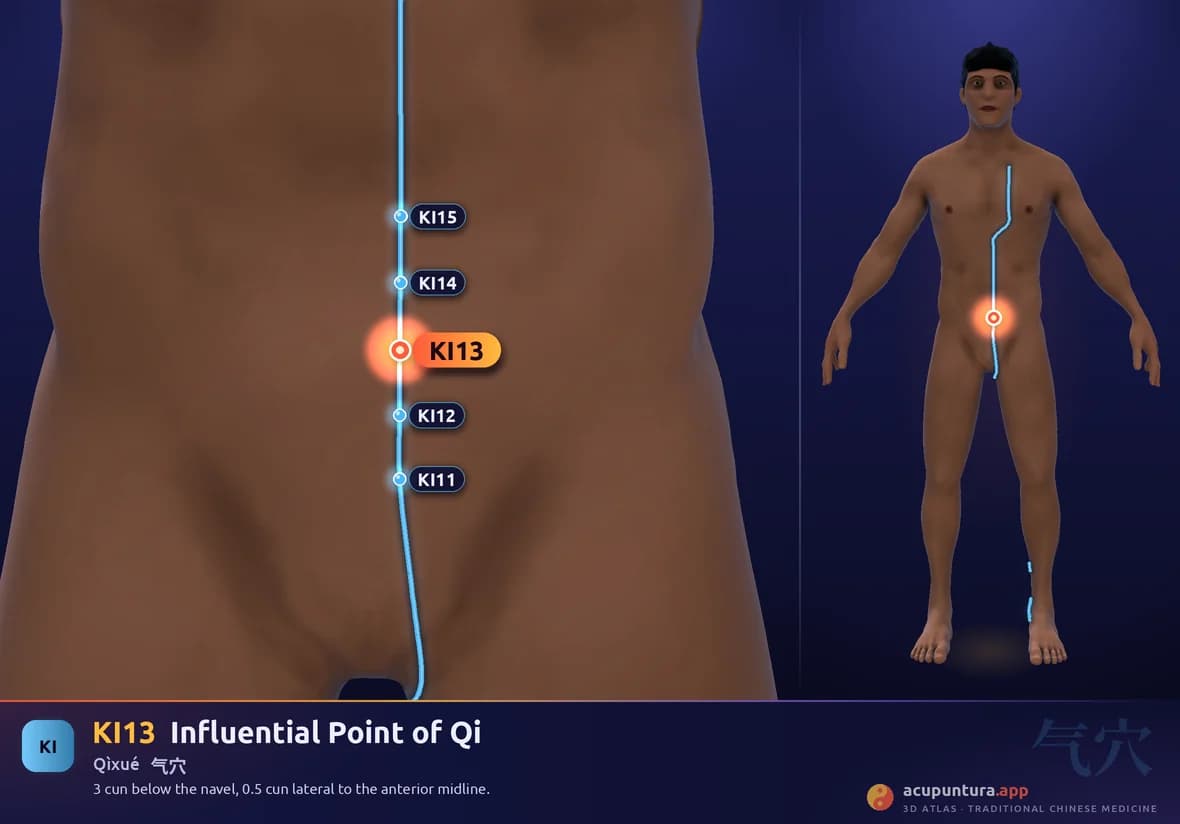
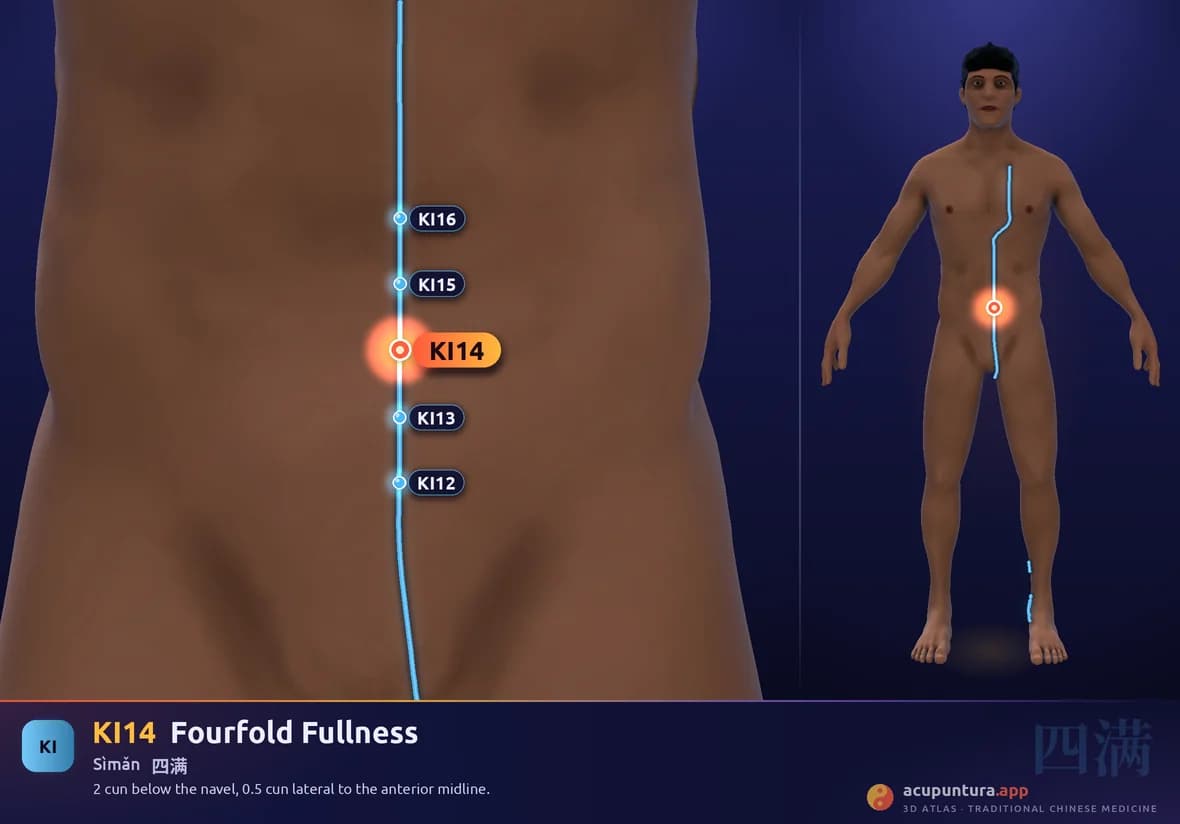
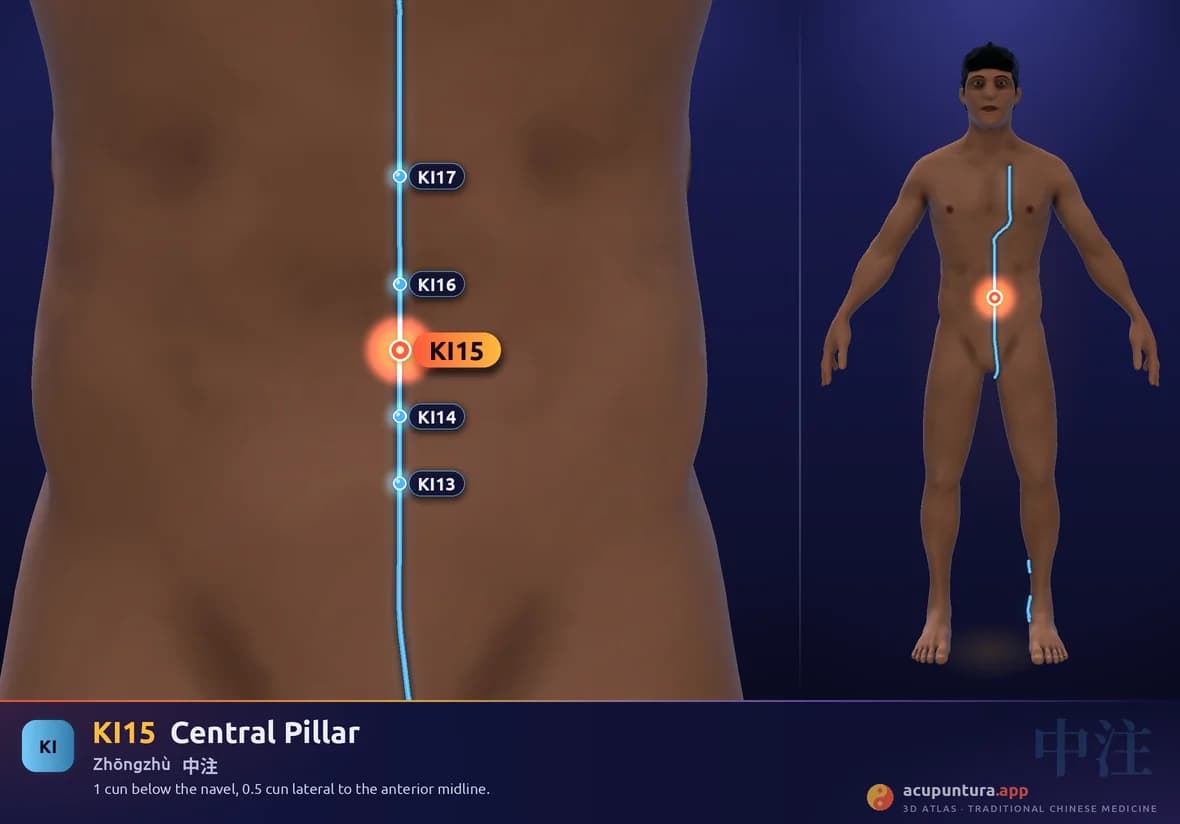
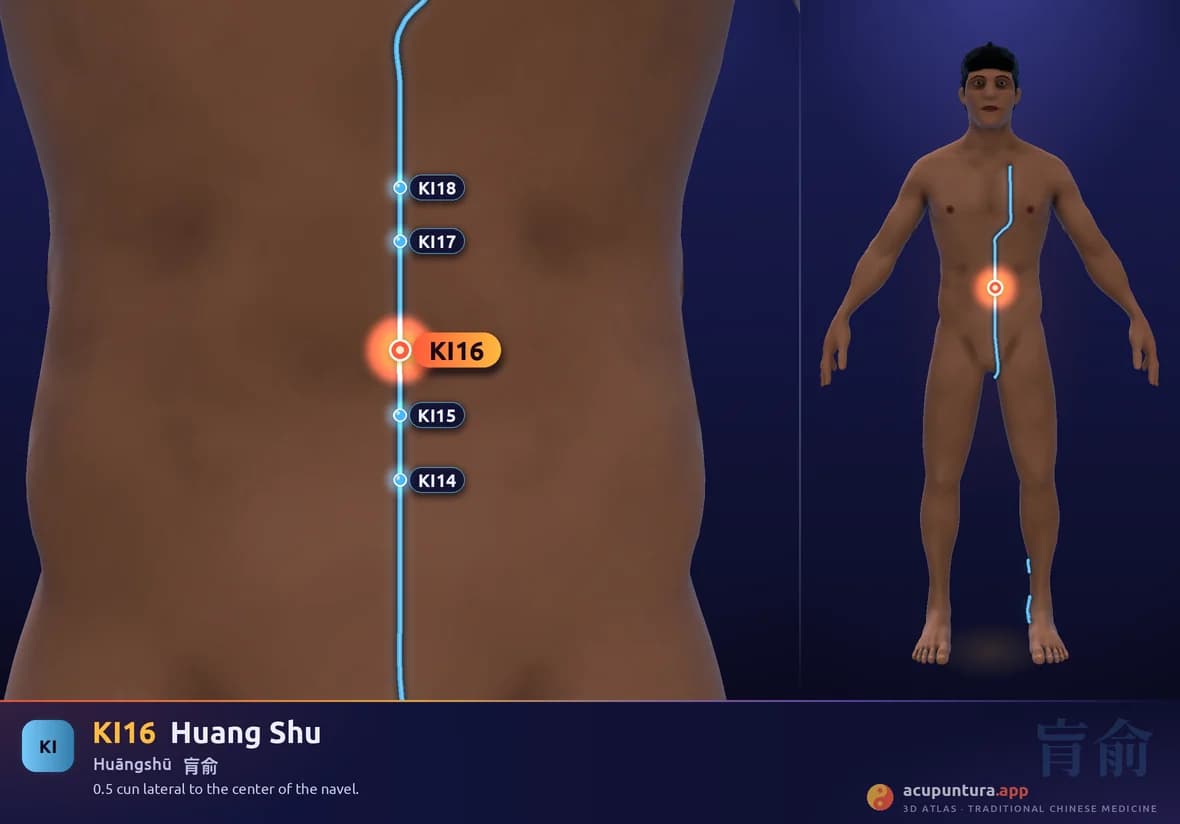
Traditional Chinese Medicine channel
Kidney Channel
足少阴肾经Water17:00 - 19:0027 pointsKI1 → KI27
Description
The Kidney channel stores Essence (Jing) and is the root of Yin and Yang for the entire body. It governs birth, growth, reproduction, and development. It produces marrow and nourishes the brain. It regulates Body Fluids, controls the reception of respiratory Qi, strengthens the bones, manifests in the hair, opens into the ears and the lower orifices, and houses Willpower (Zhi). Imbalances can manifest as lumbago, tinnitus, deafness, urinary and reproductive problems, excessive fear, chronic fatigue, and premature aging.
Main functions
- Stores Essence (Jing)
- Regulates birth
- Growth
- Reproduction
- And development
- Produces marrow
- Nourishes the brain
- Controls Body Fluids
- Regulates the reception of Qi
- Strengthens the bones
- Manifests in the hair
- Opens into the ears
- Controls the lower orifices (anus and urethra)
- And houses Willpower (Zhi)
Pathway
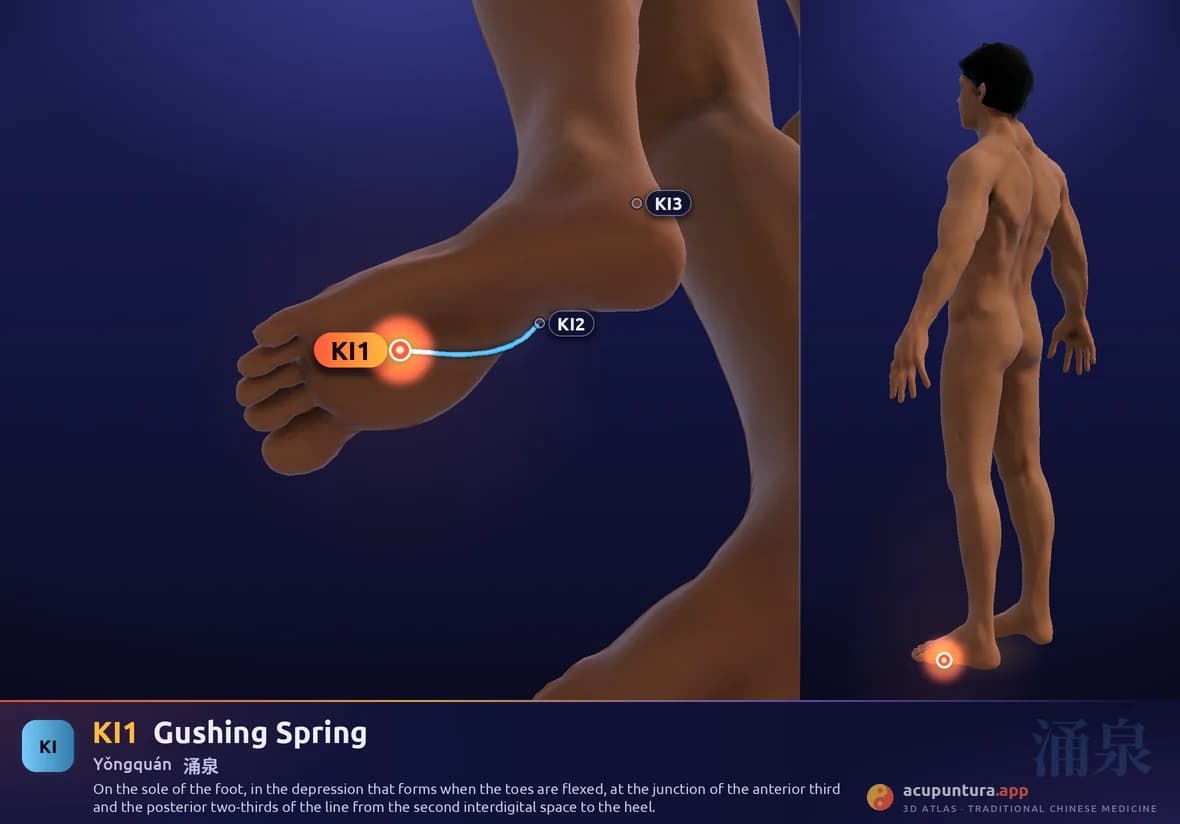
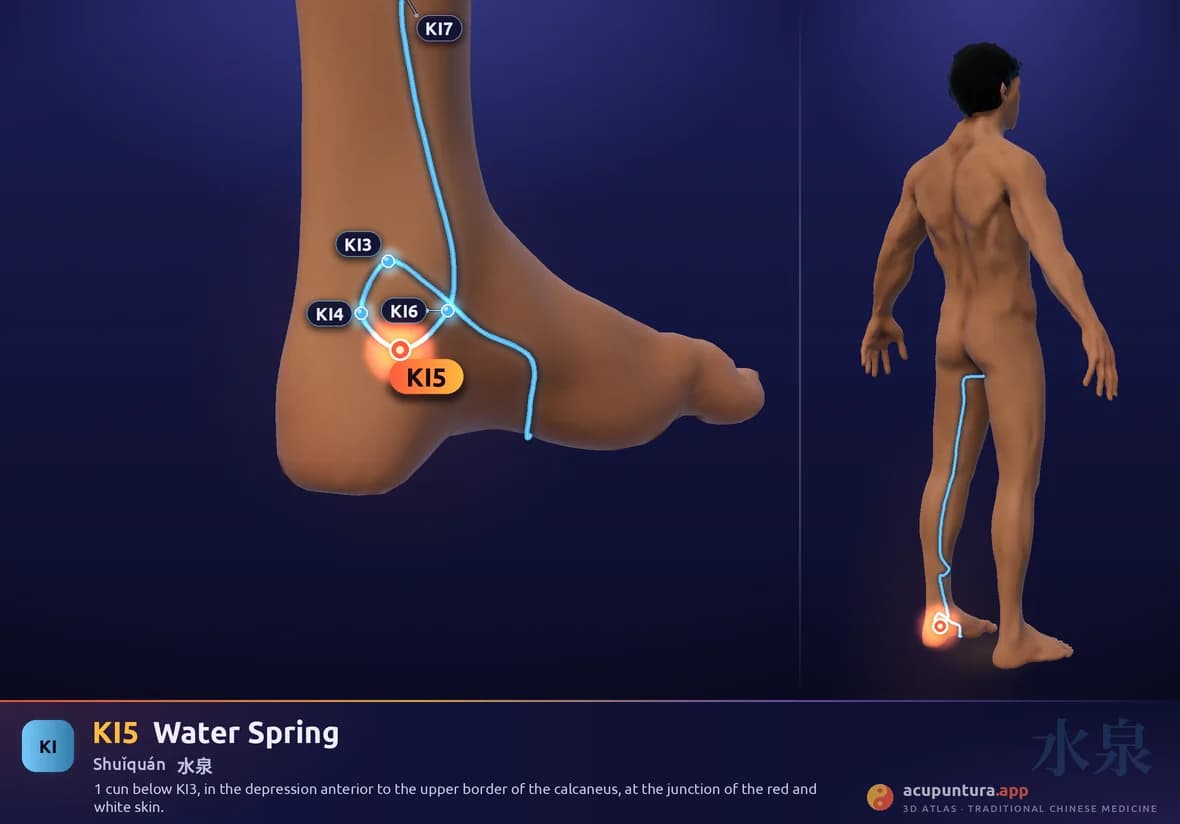
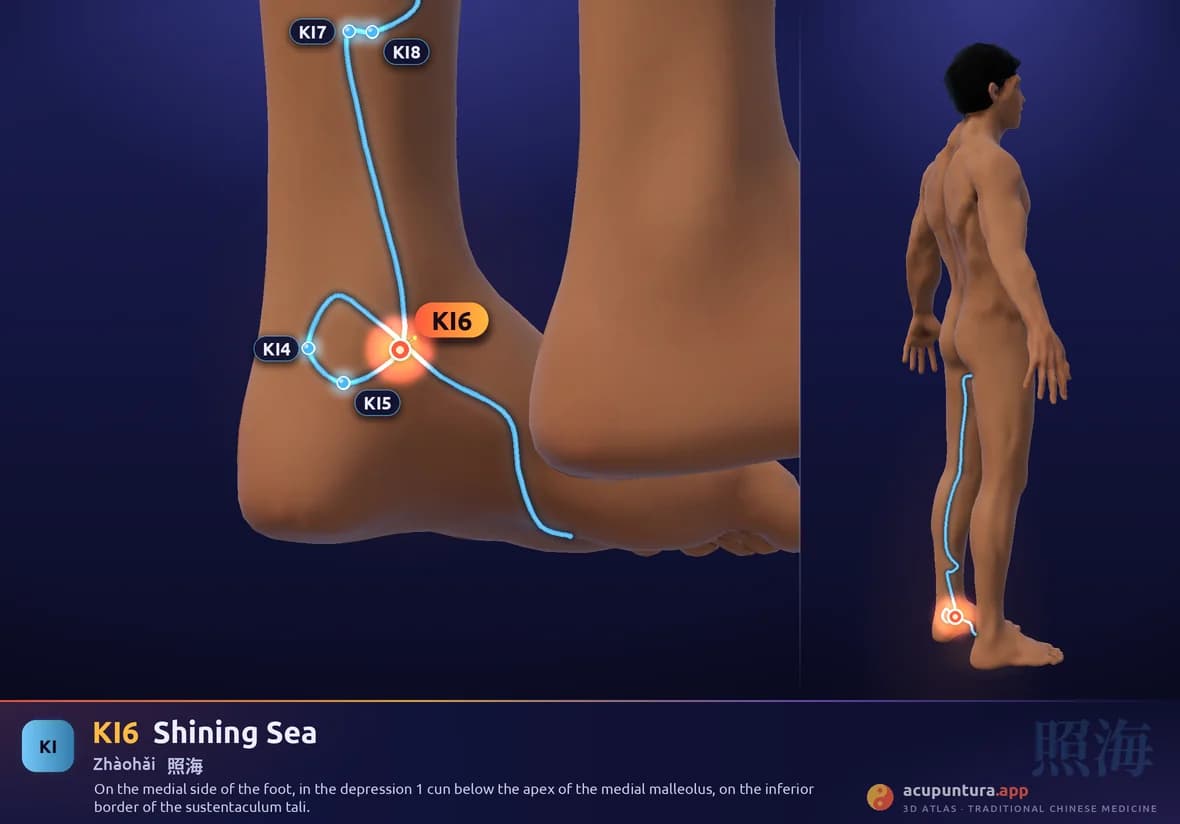
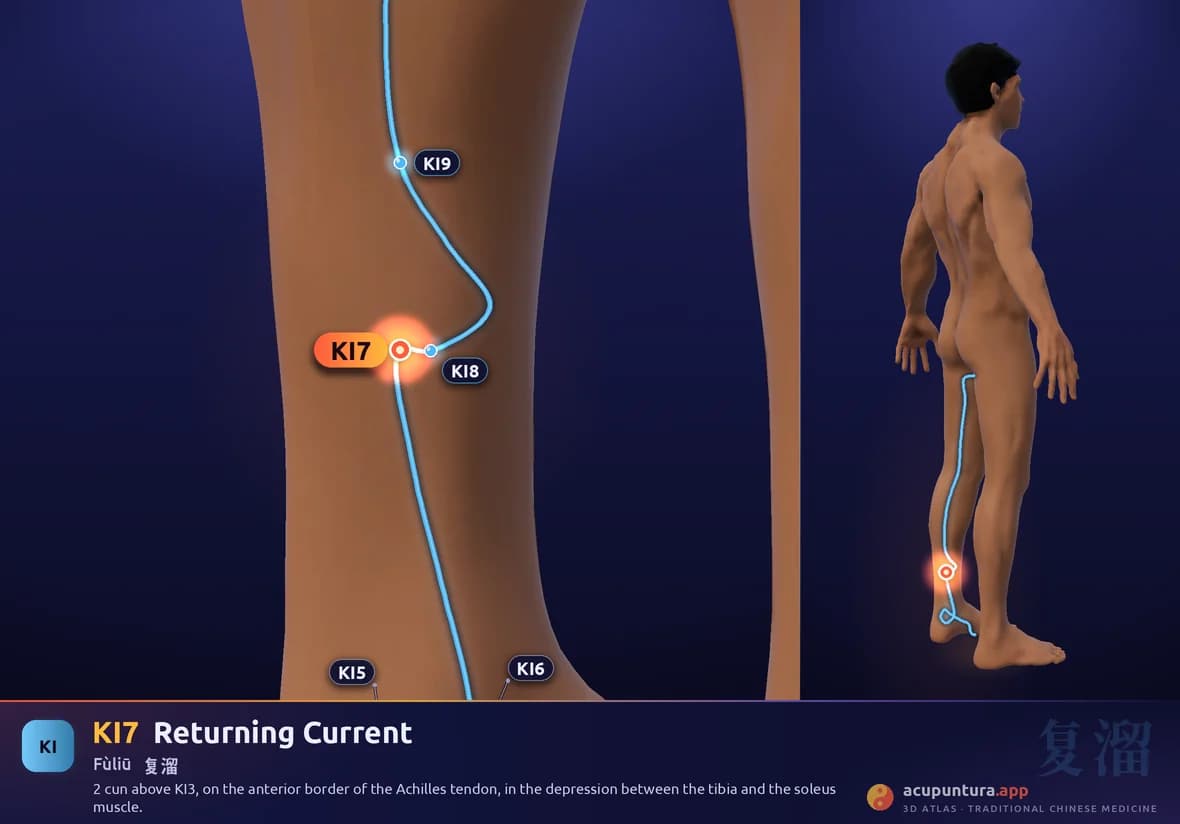
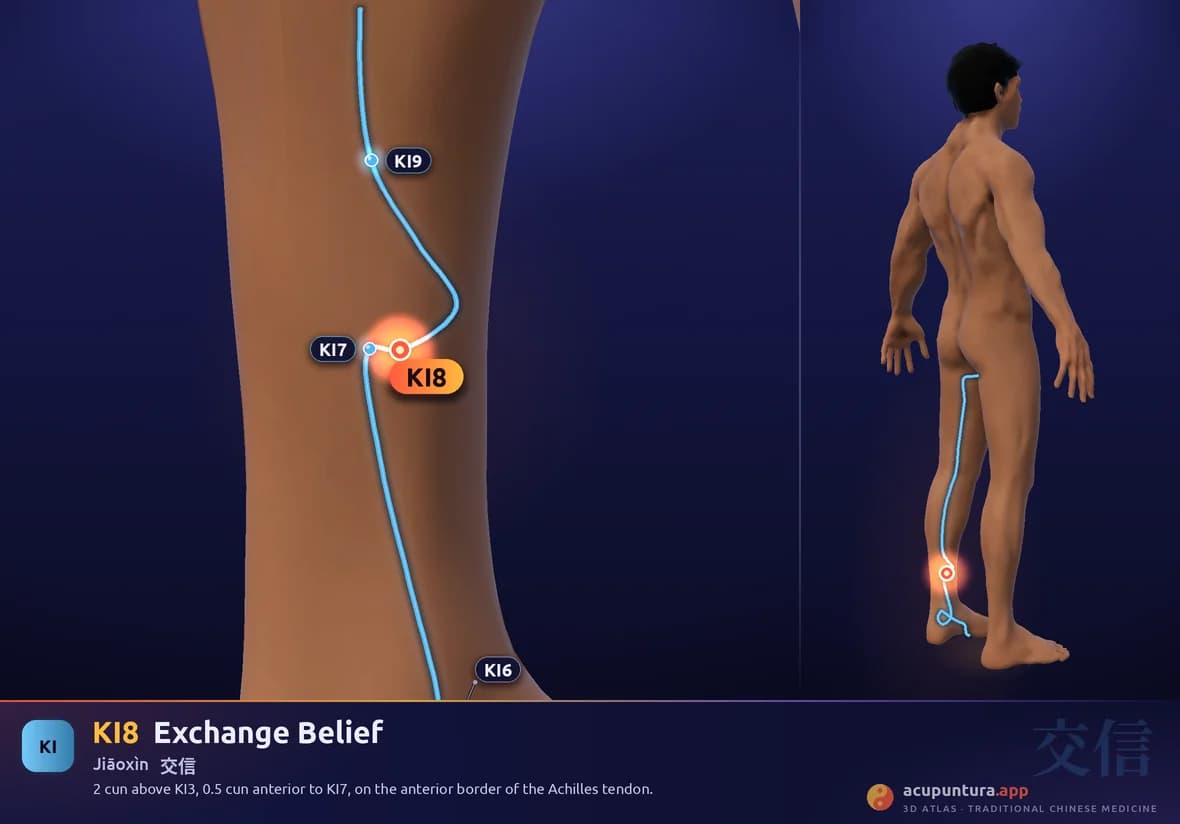
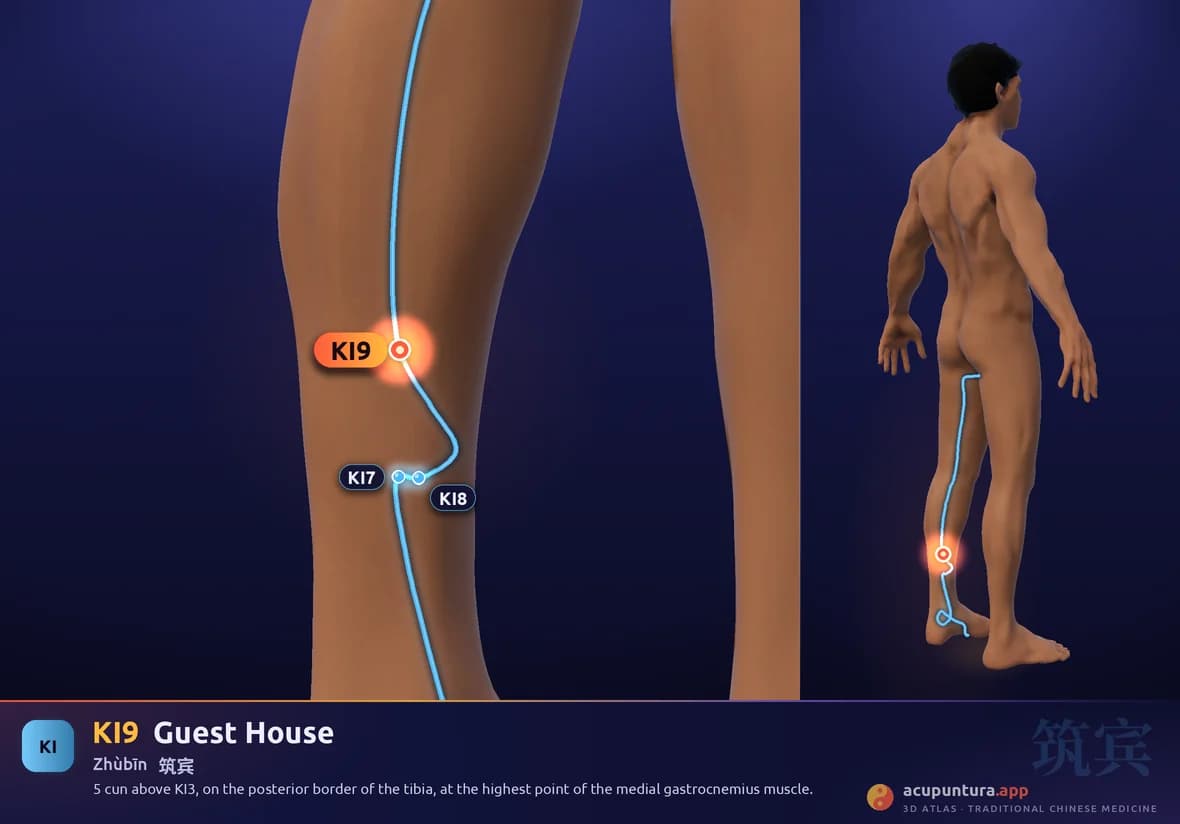
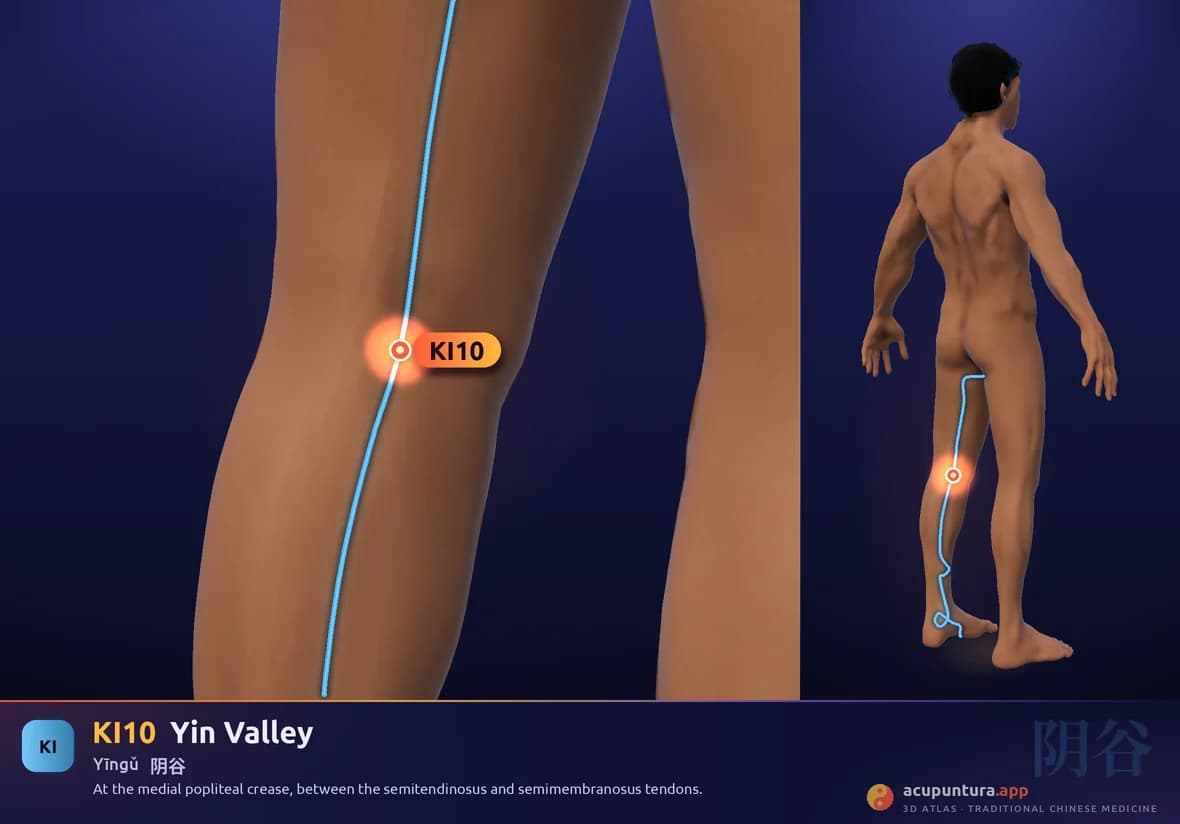
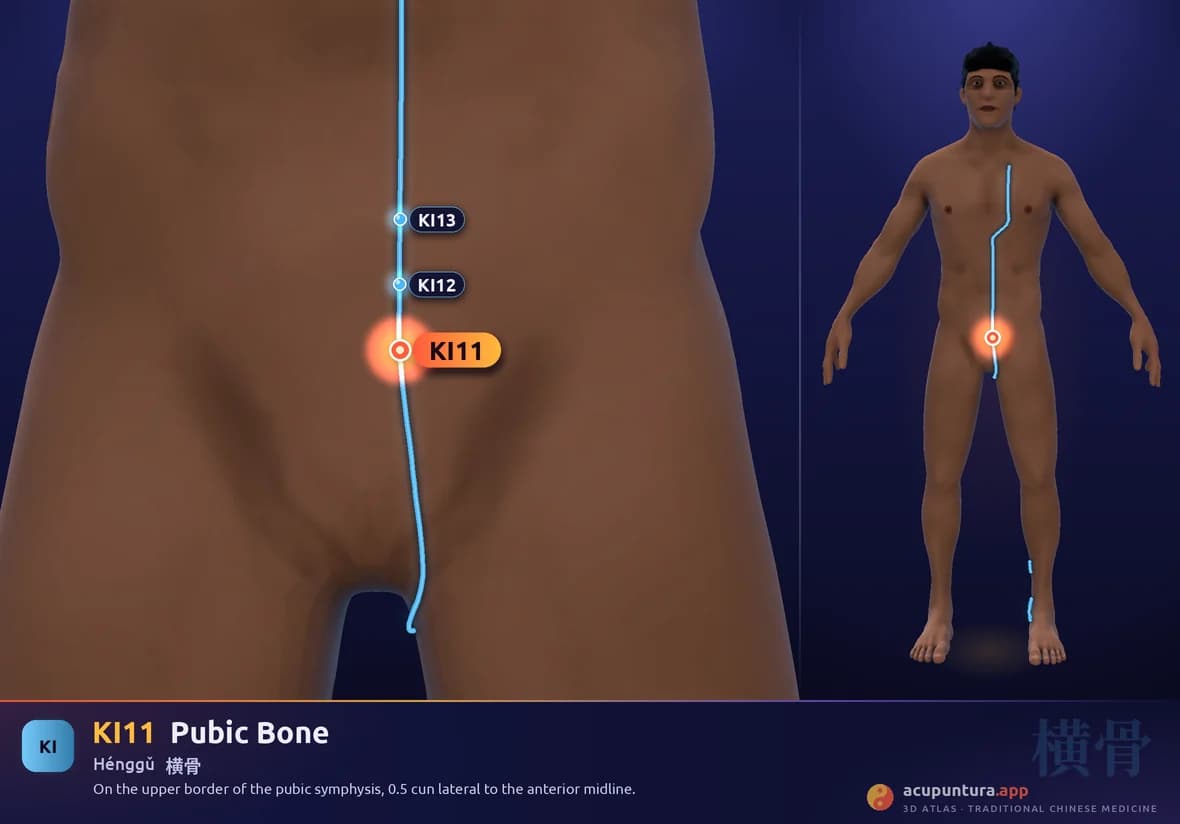
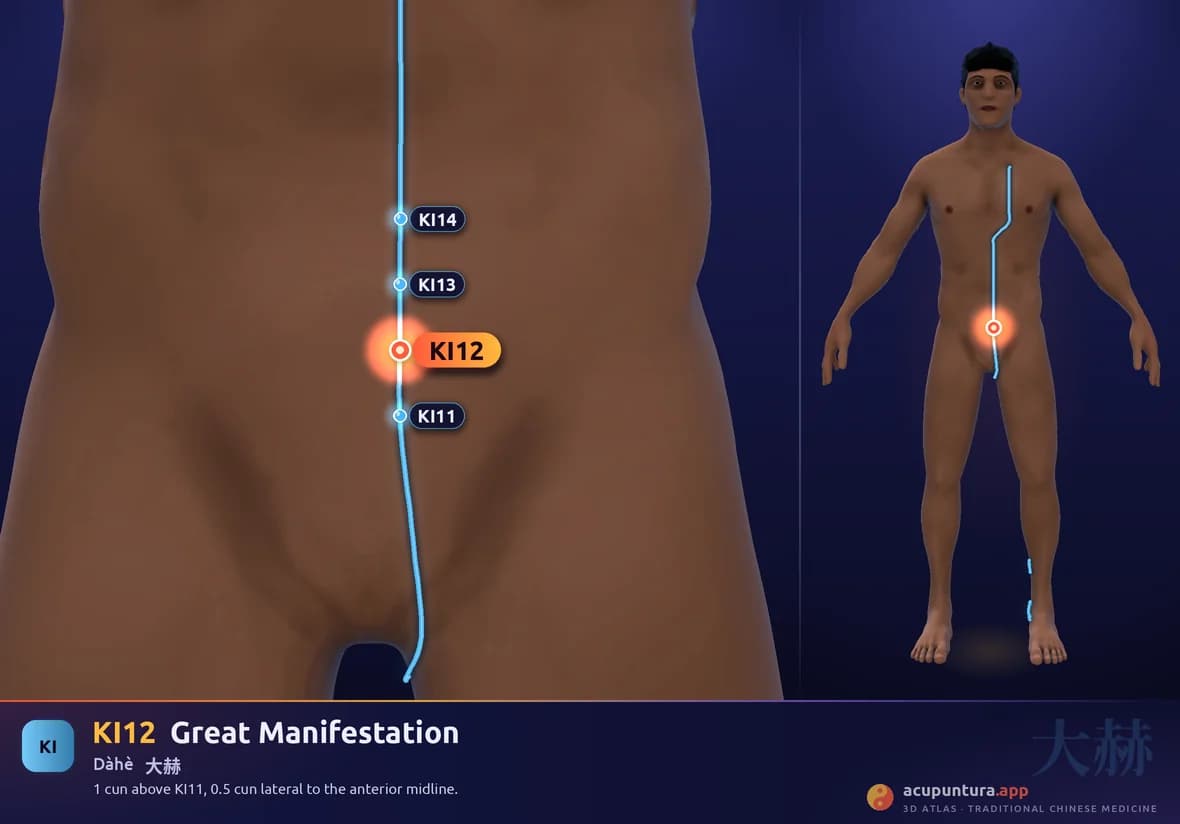
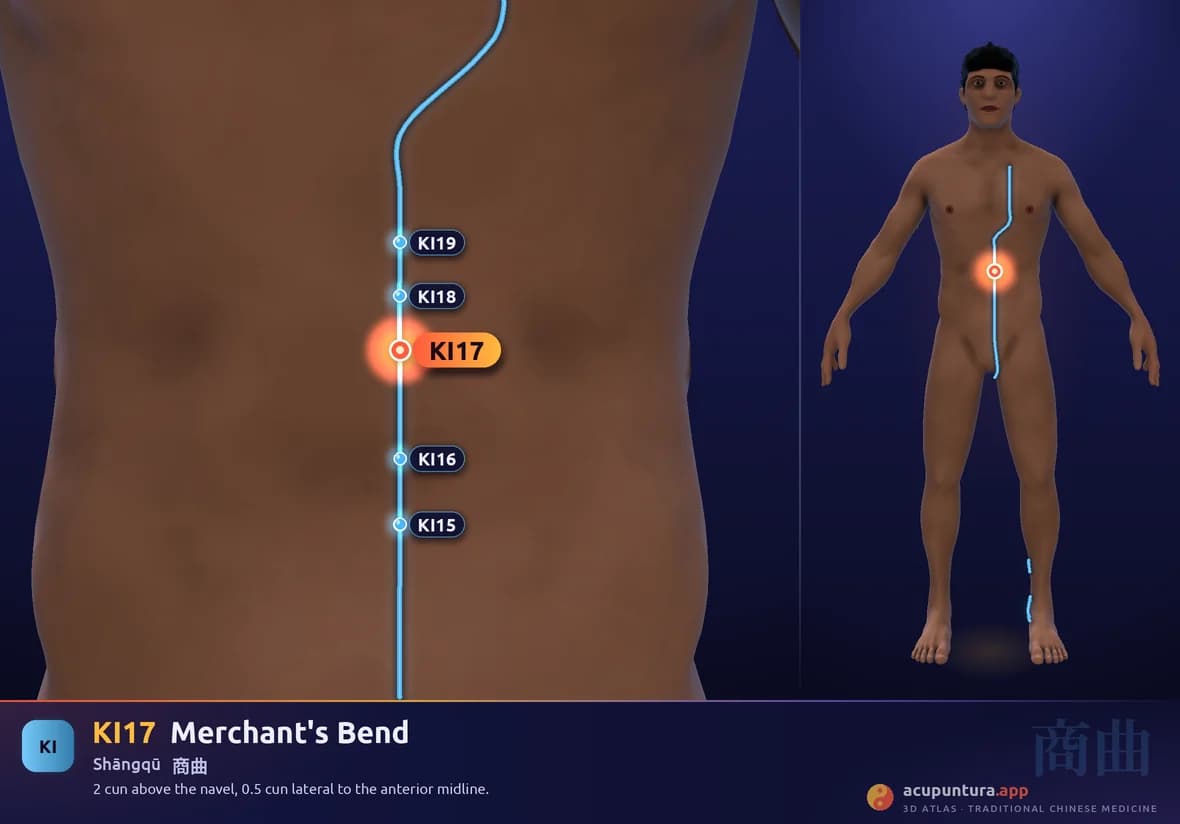
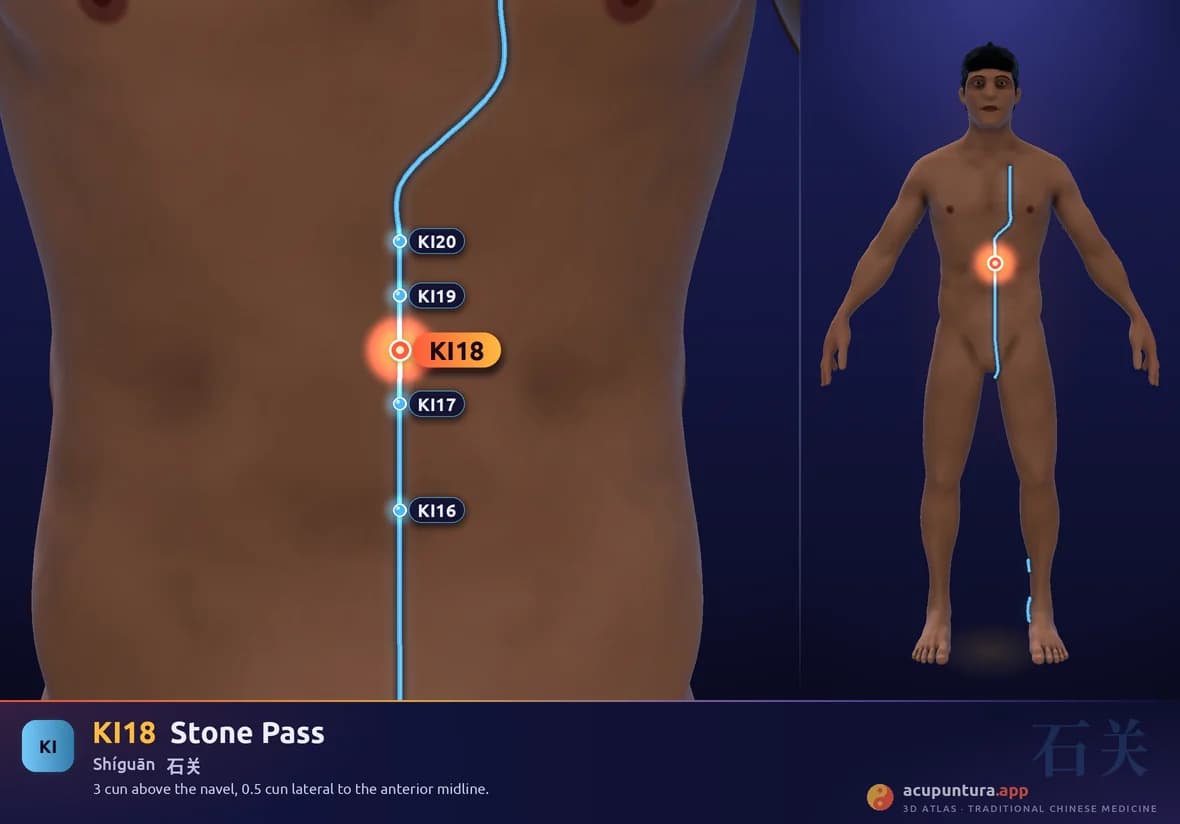
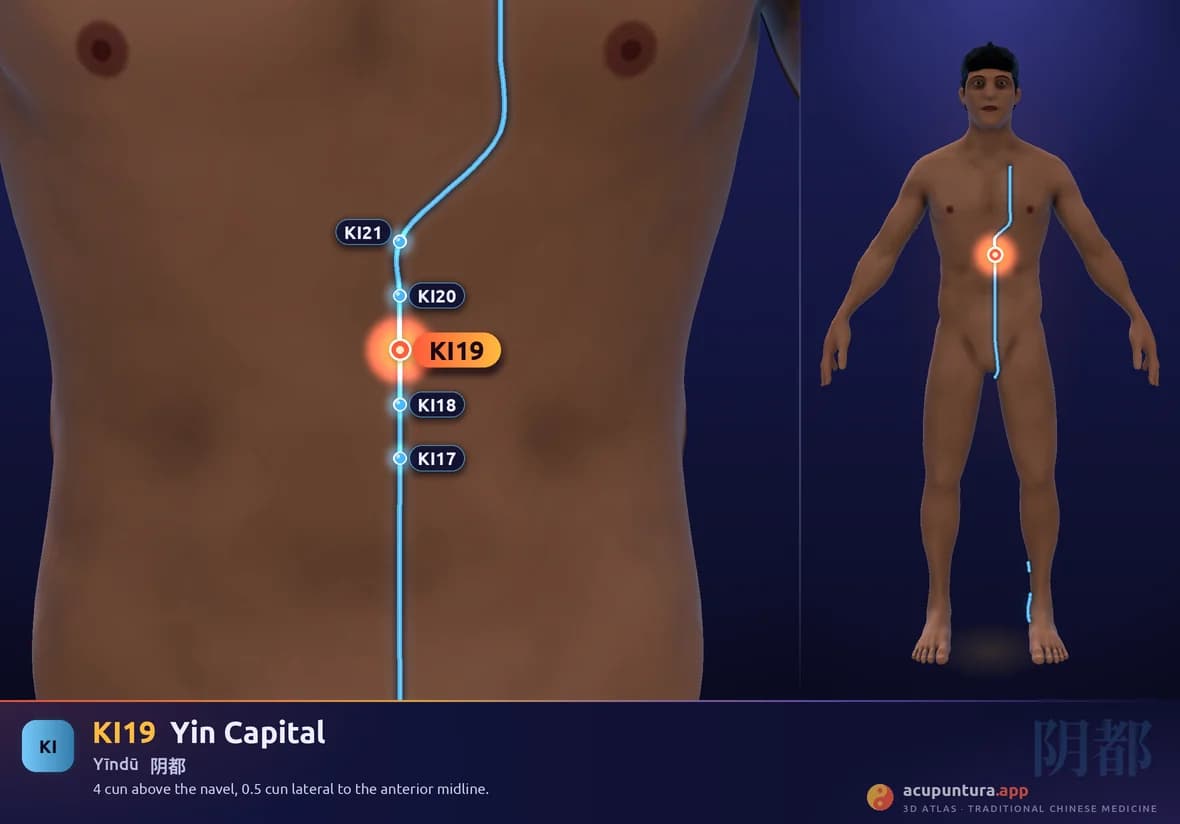
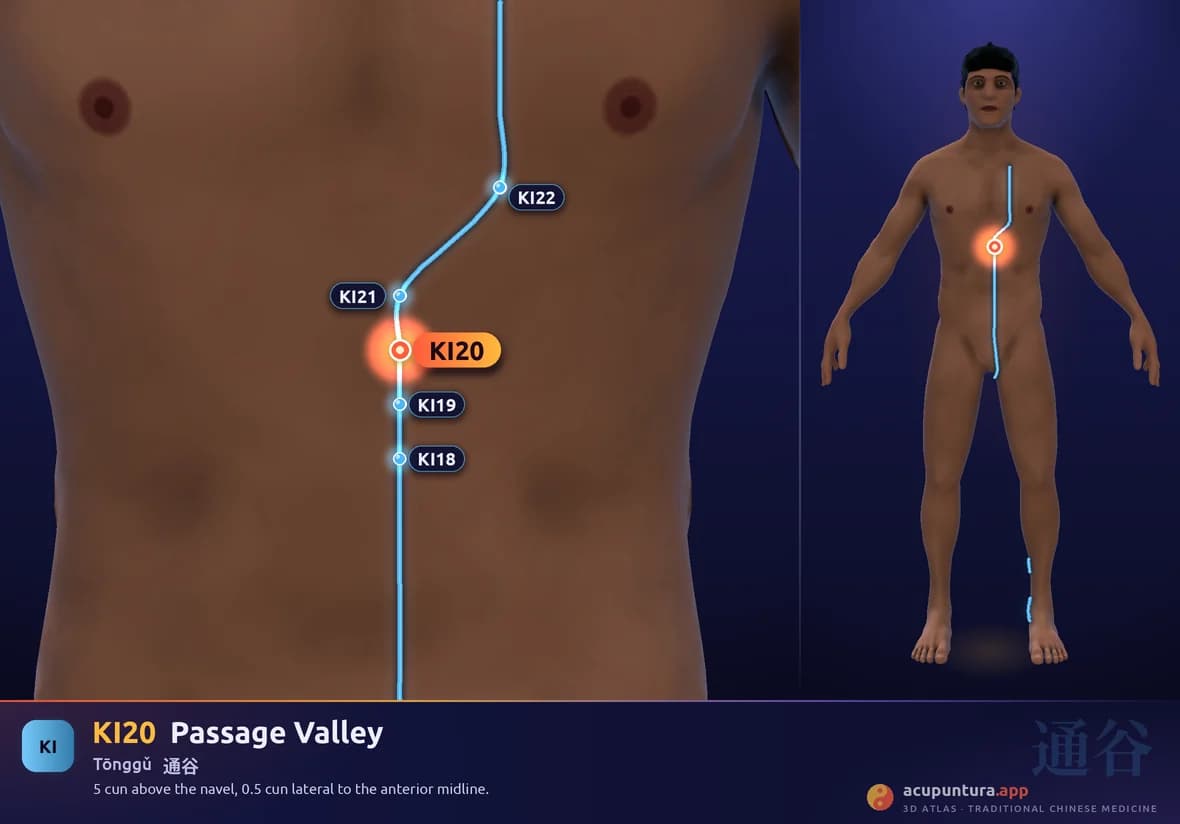
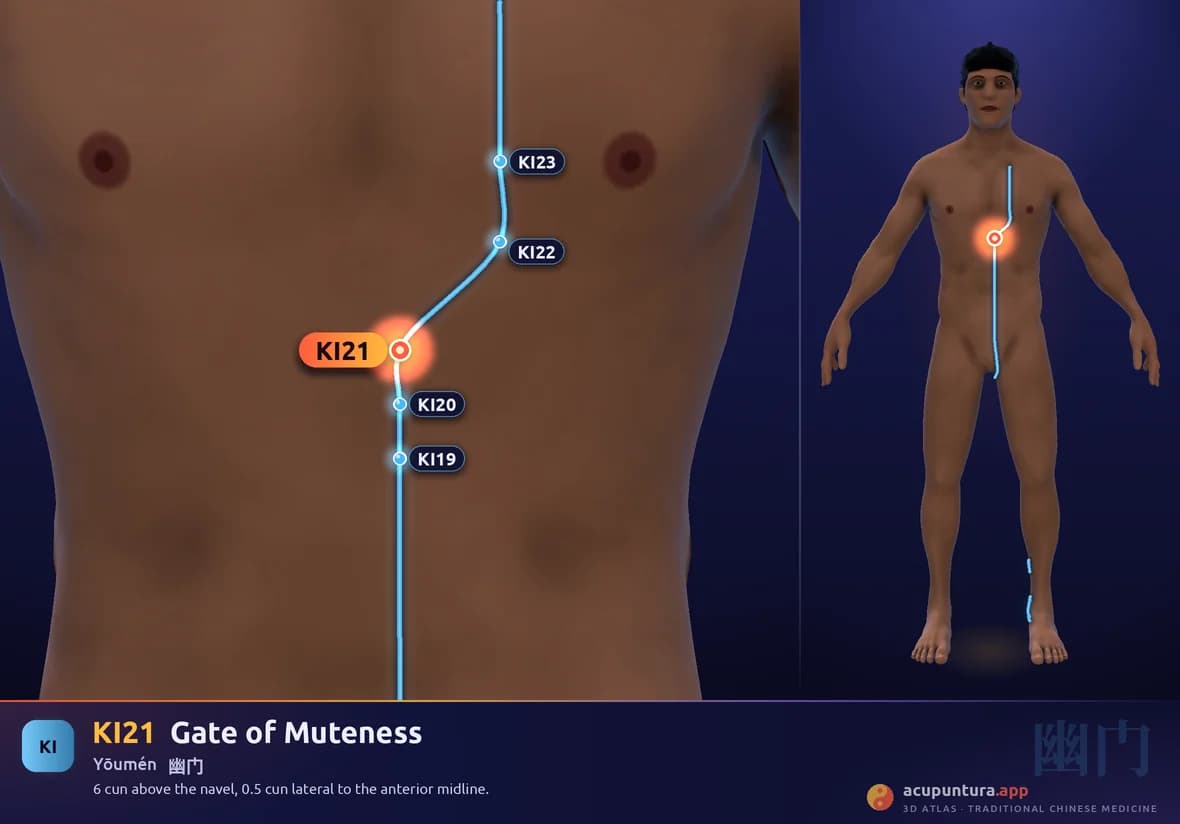
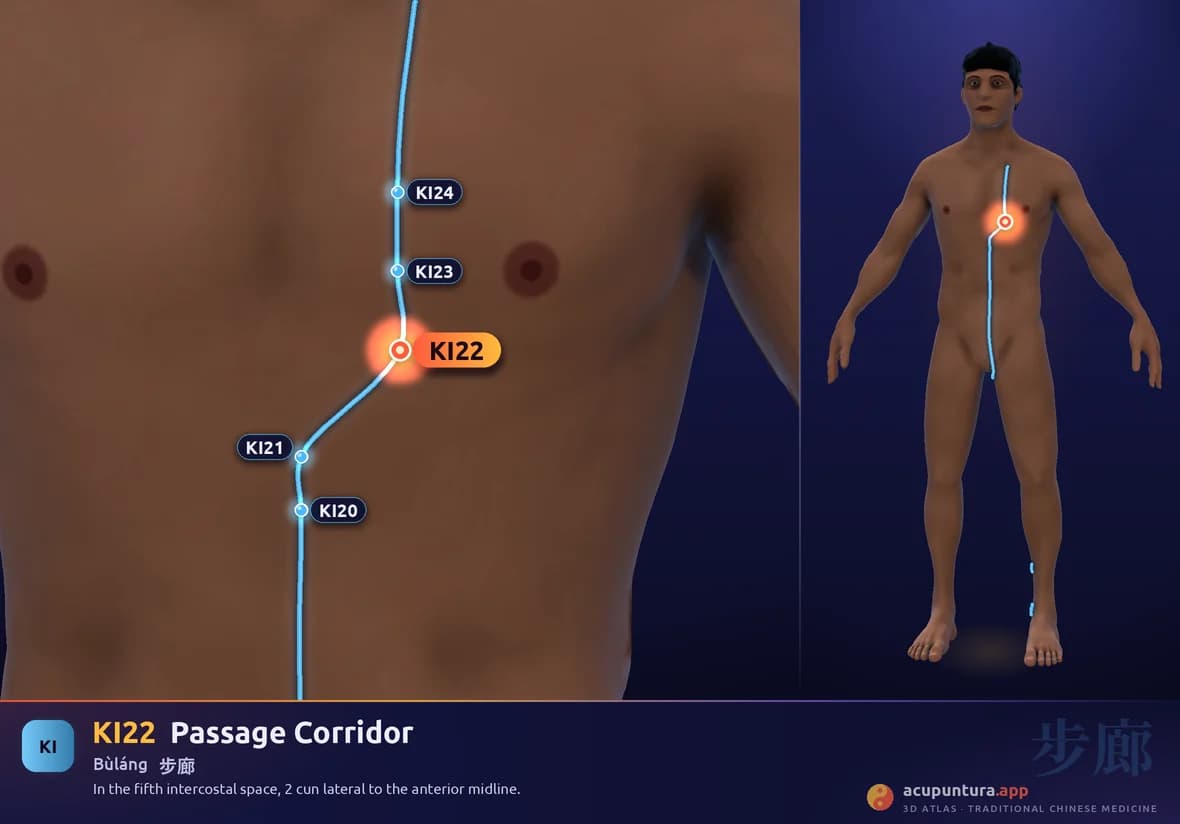
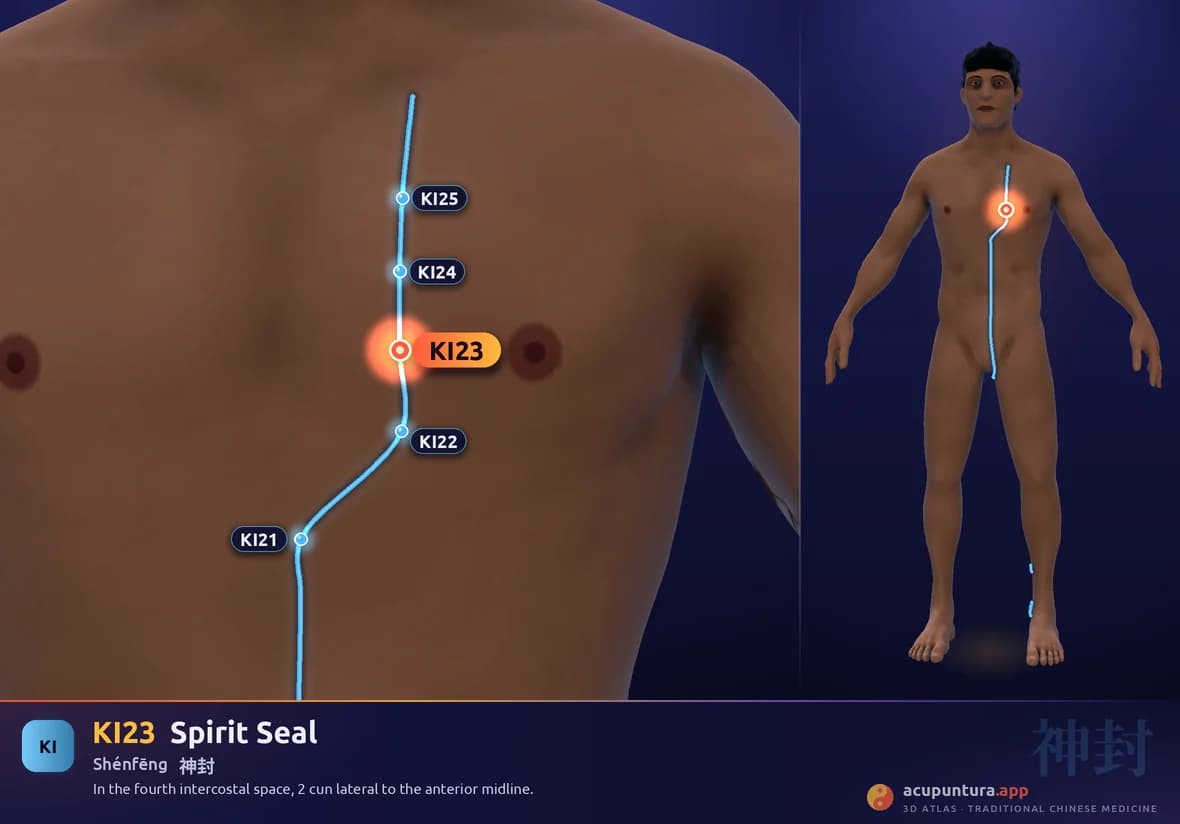
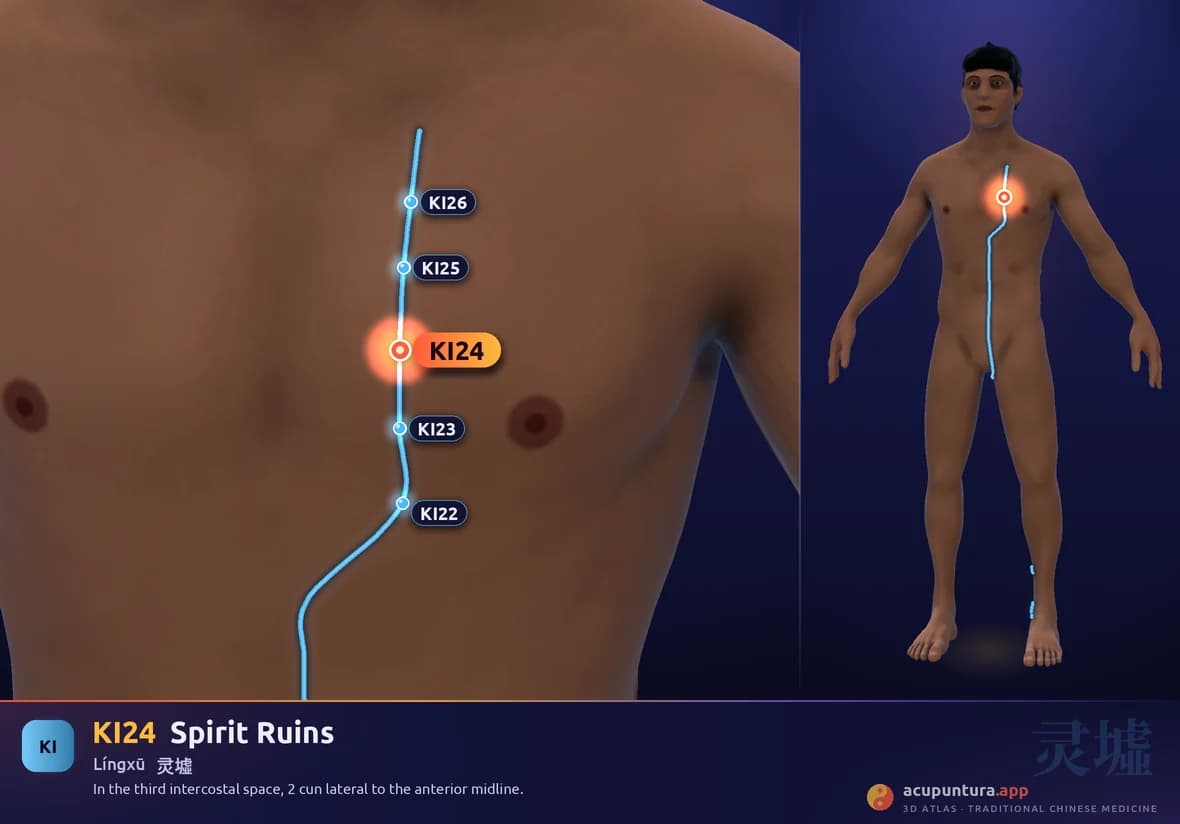
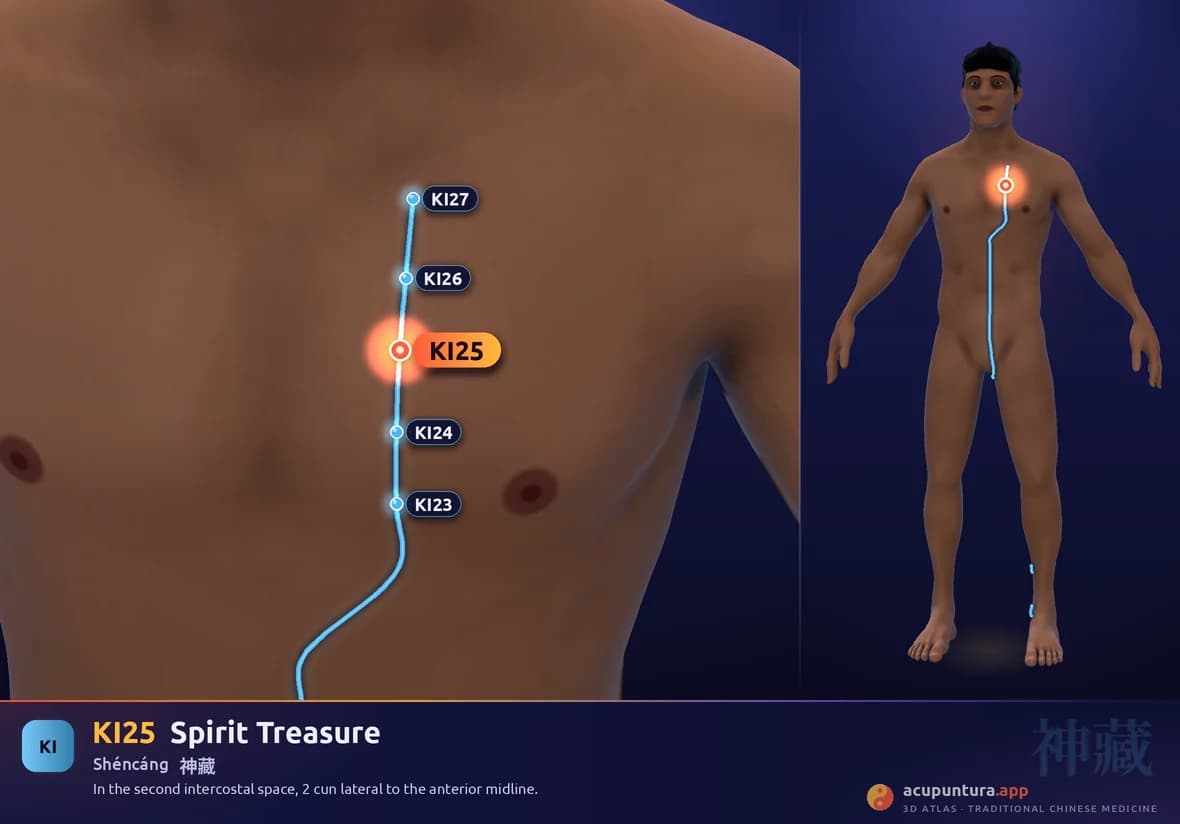
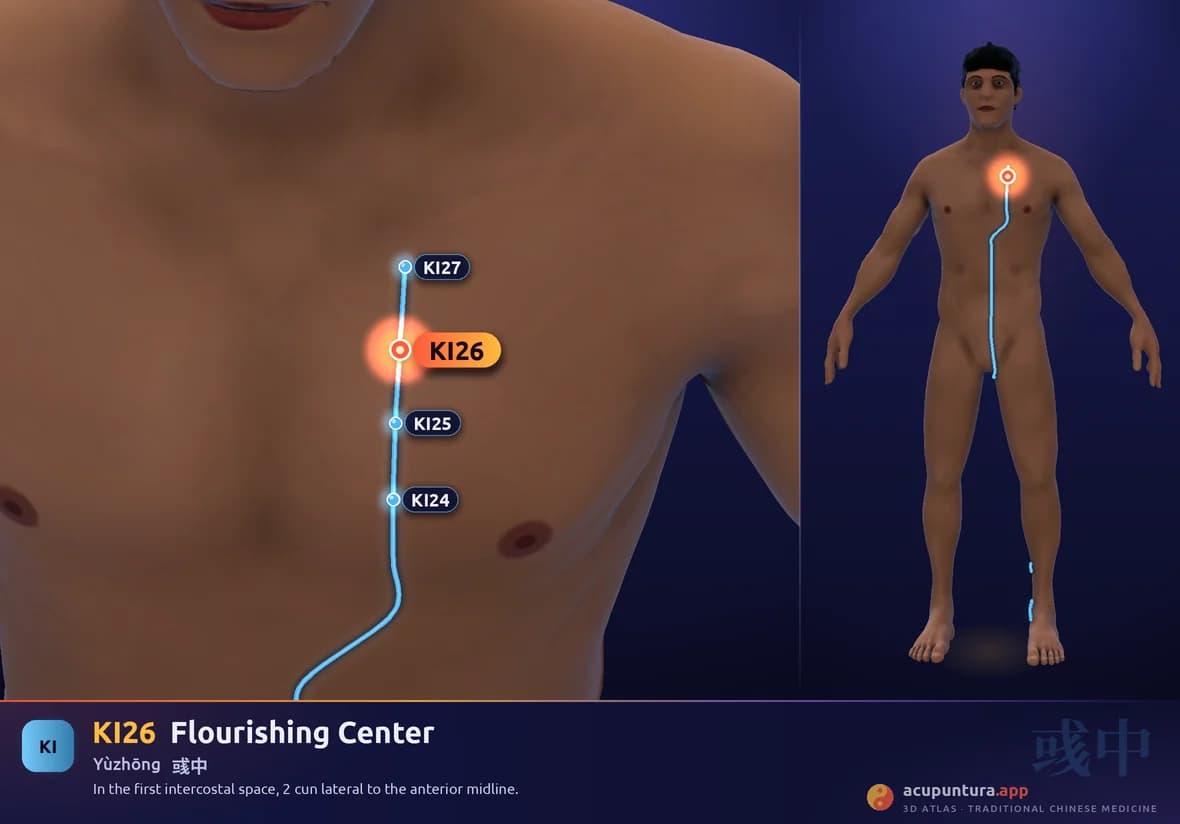
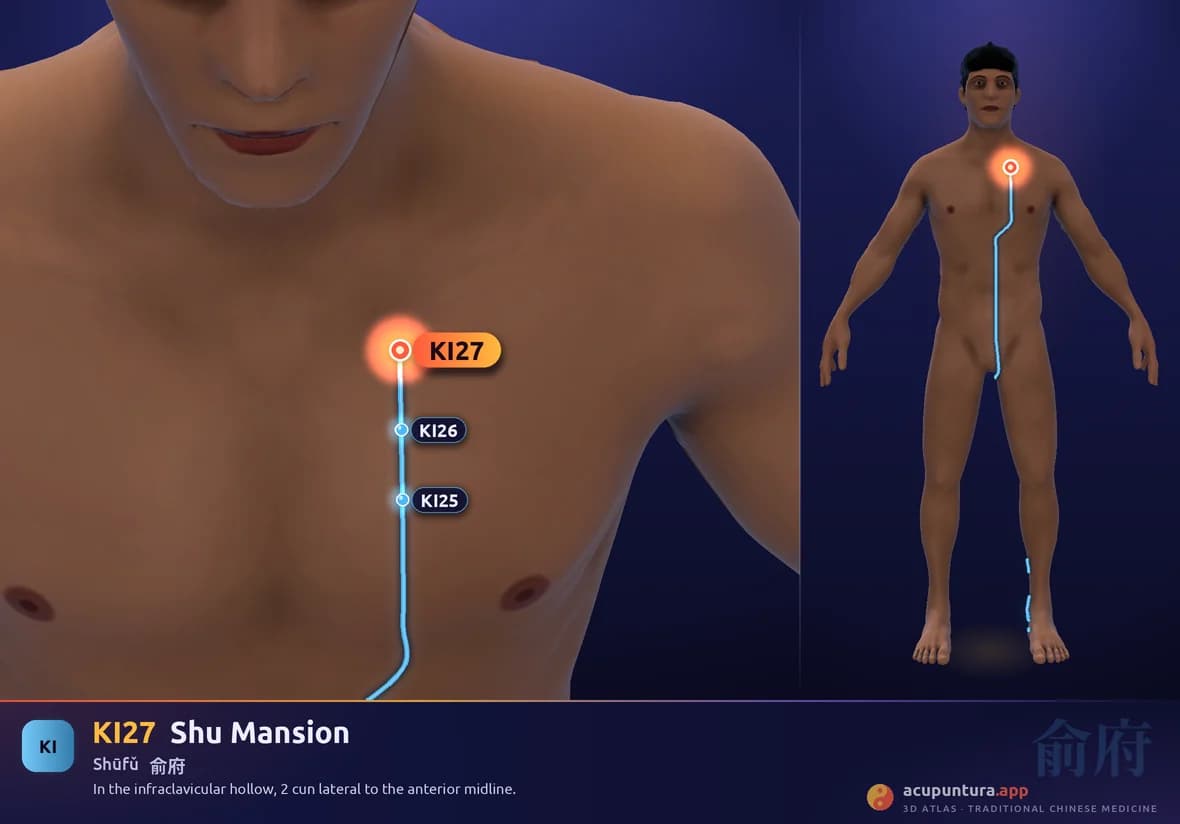
Begins on the sole of the foot (KI1), ascends along the inner side of the leg, passes through the genital region, rises through the abdomen and chest, and ends in the infraclavicular hollow (KI27).
The channel in the Lingshu
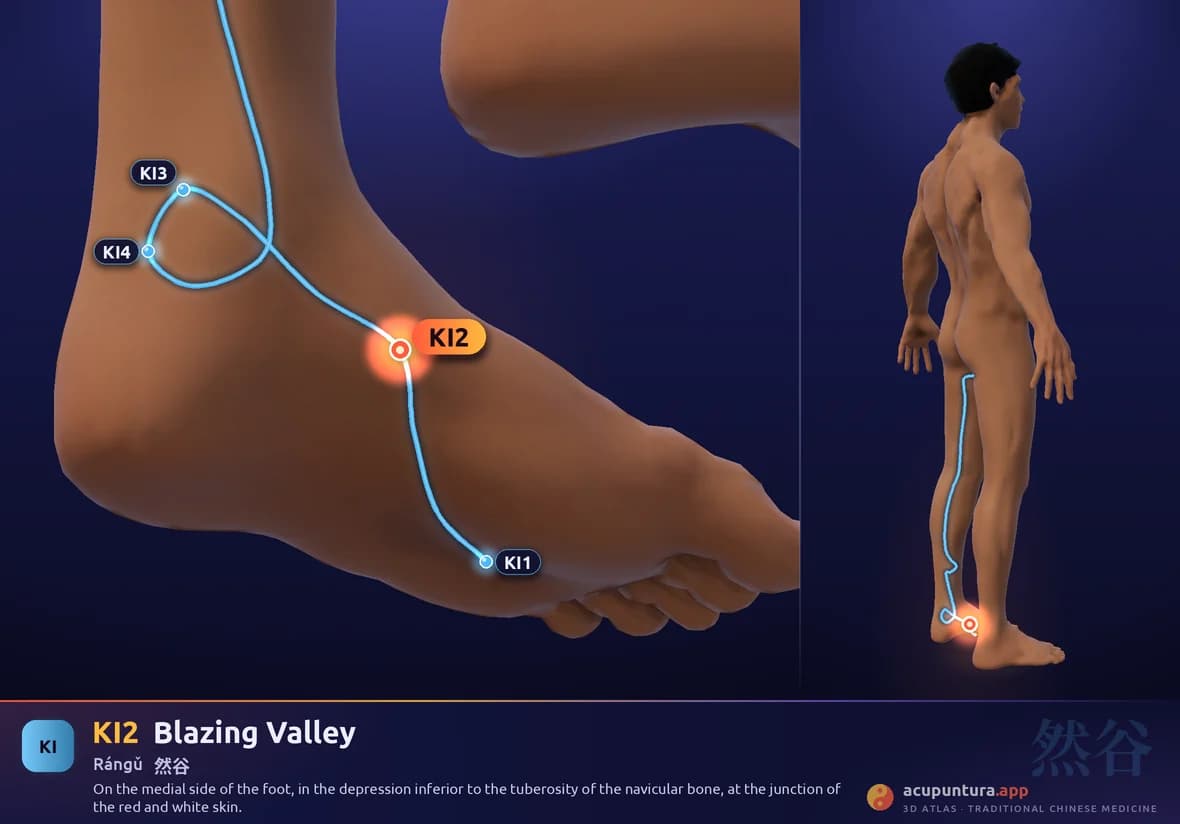
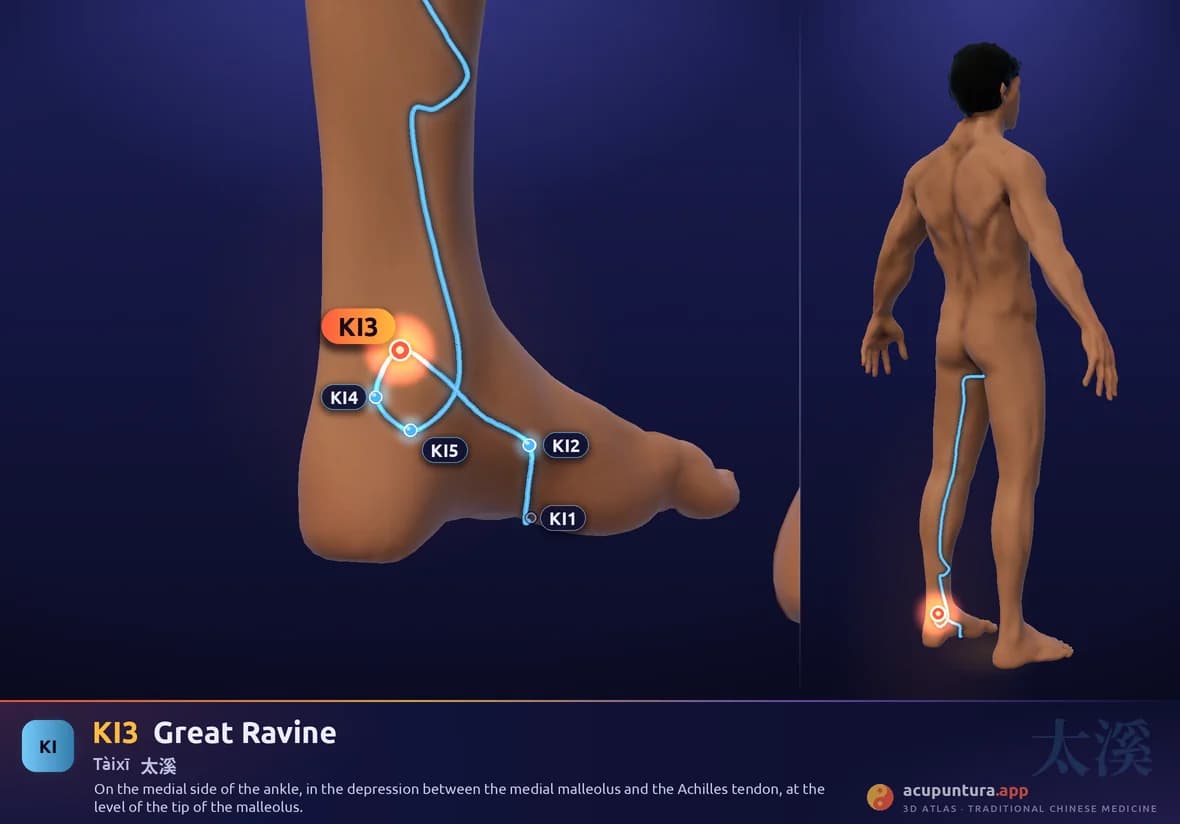
«腎足少陰之脈,起於小指之下,斜走足心». The Kidney channel begins beneath the little toe and crosses diagonally toward the sole, where KI1 is located, the only point among the fourteen channels on the sole of the foot. The Lingshu (Spiritual Pivot) has it emerge «出於然谷之下», below Rangu, KI2, and carries it behind the medial malleolus, with a detour to the heel, before it climbs the inner side of the leg and thigh. Then it does something no other yin channel does in the text: «貫脊,屬腎,絡膀胱», it runs through the spine, belongs to the Kidney, and connects with the Bladder.
The direct line rises from the Kidney to the Liver, passes through the diaphragm, enters the lung, and continues along the throat to the root of the tongue. One branch leaves the lung to connect with the heart and pours into the chest, where the Pericardium channel begins.
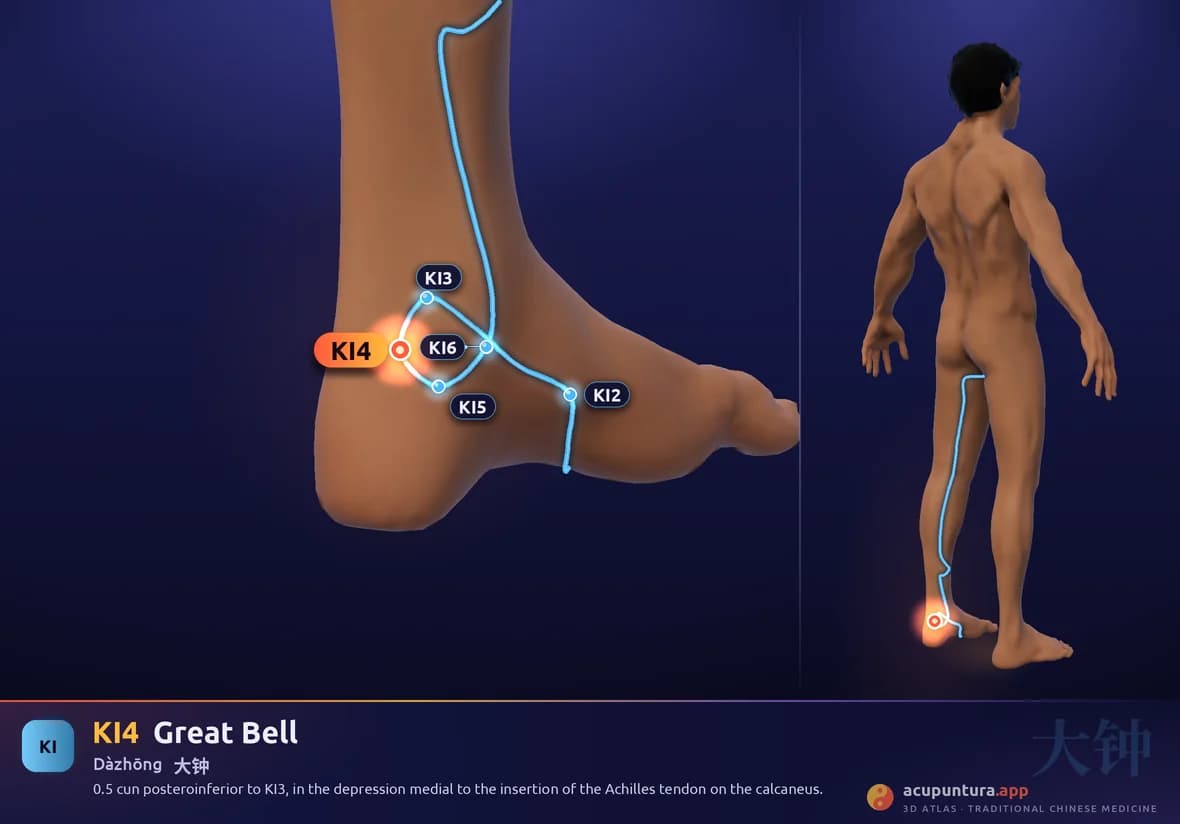
Its «是動» disorders are among the most dramatic in the chapter: hunger with no desire to eat, a face «如漆柴», like blackened firewood, coughing blood, panting, blurred vision, and a fear that the text describes precisely: «心惕惕如人將捕之», the heart startled as if someone were about to seize it. It is also the only channel for which the chapter gives advice on daily life alongside treatment: after moxibustion, loosen the belt, let the hair down, and walk with a large staff and heavy shoes («緩帶被髮,大杖重履而步»). Its collateral is «足少陰之別,名曰大鍾», Dazhong, KI4, which circles the heel and splits off toward the Taiyang.