Kidney Channel
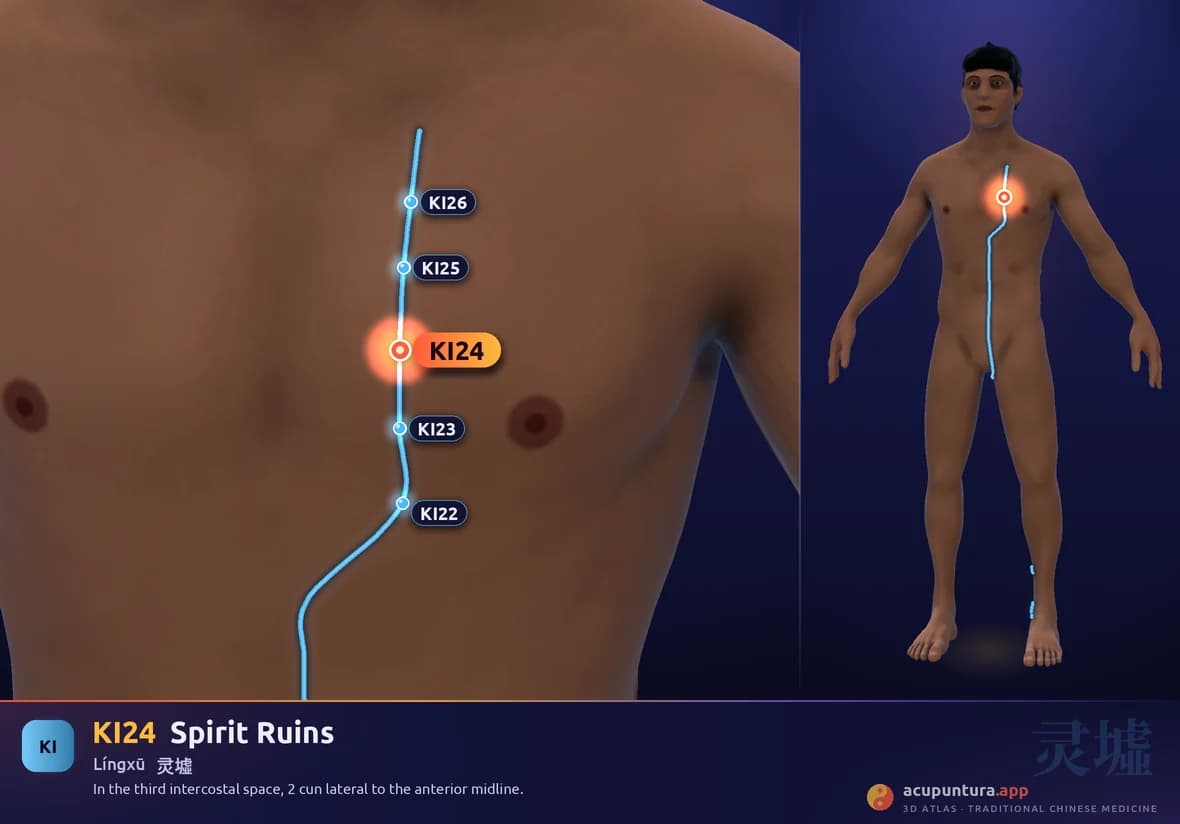
Spirit Ruins
灵墟LíngxūAnatomical location
In the third intercostal space, 2 cun lateral to the anterior midline.
Main function
Regulates Lung Qi, benefits the chest, and treats respiratory and thoracic disorders.
- Crossing point with the Lung
Therapeutic indications
- Cough
- asthma
- chest pain
- anxiety
- nausea
- Mastitis
- Vomiting
Name and classical tradition
Lingxu, 灵墟, combines 灵 (靈), the spiritual or numinous, and 墟, the wasteland, the ruins, the abandoned place. It is one of the most enigmatic names on the chest. The modern gloss explains it with an image of emptiness: the Qi that arrives from KI23 is minimal and evaporates with the heat, leaving the point like a deserted site. No ancient text supports this.
The same 墟 appears in GB40, Qiuxu, with the sense of a great hill. Lingxu lies in the third intercostal space, in the series of spirit names on the channel between KI23 and KI25. The first work to record it is the Zhenjiu Jiayi Jing (Systematic Classic of Acupuncture and Moxibustion), and no alternate names are known.