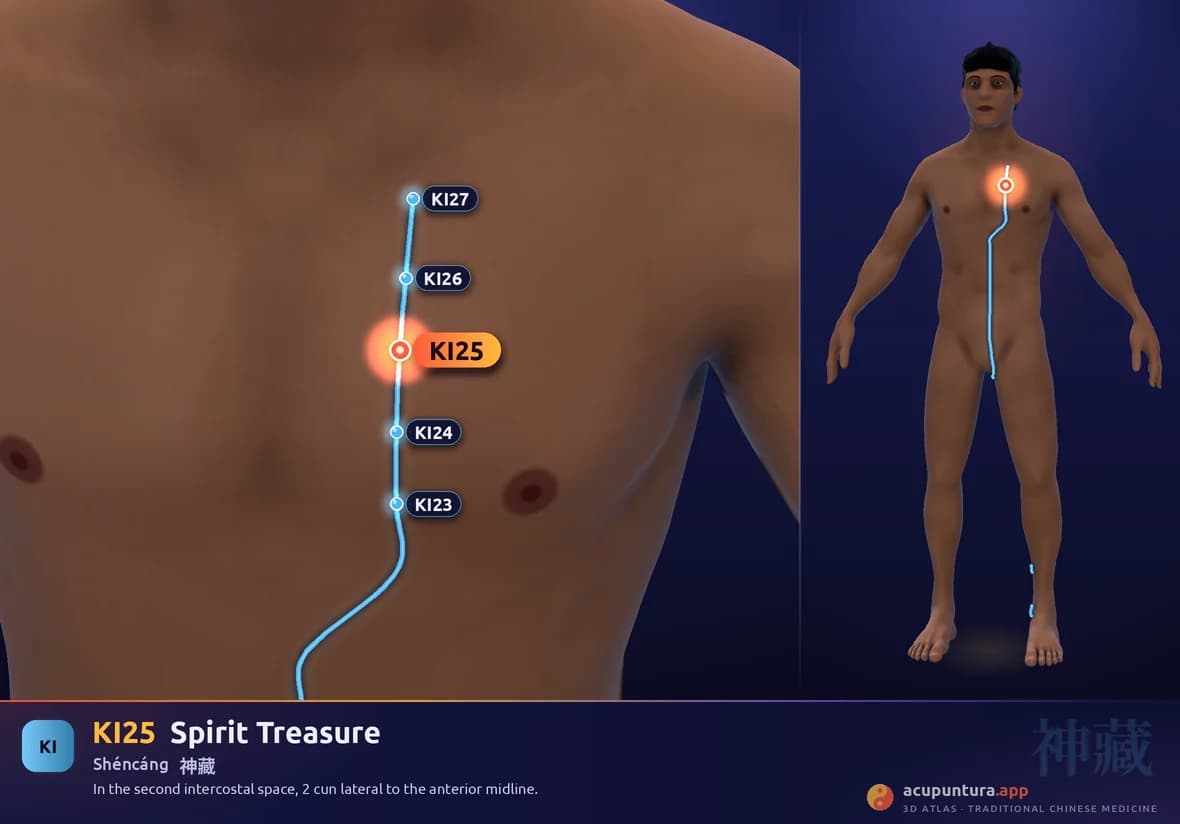
Kidney Channel
Spirit Treasure
神藏ShéncángAnatomical location
In the second intercostal space, 2 cun lateral to the anterior midline.
Main function
Regulates Heart Qi, calms the Shen, benefits the chest, and treats emotional and thoracic disorders.
- Crossing point with the Heart
Therapeutic indications
- Palpitations
- anxiety
- insomnia
- chest pain
- cough
- asthma
- vomiting
Name and classical tradition
Shencang, 神藏, is the "storehouse of the spirit." 神 is the spirit; 藏 means to keep or store, the same character used for the Yin organs, the 臟, which store the essences. The usual reading describes it as the place where spirit Qi is kept. The point lies in the second intercostal space, two cun from the midline, and closes the series of three spirit names that begins at KI23.
The first work to record it is the Zhenjiu Jiayi Jing (Systematic Classic of Acupuncture and Moxibustion), and the indications assigned to it are those of the chest: cough, dyspnea, chest pain, vomiting. No alternate names are known. On the midline, at its level, the Ren Mai has CV19, Zigong, the "purple palace."