Spleen Channel
Abdominal Knot
腹结Fù JiéUse caution during pregnancy
Lower abdomen; avoid deep needling.
Anatomical location
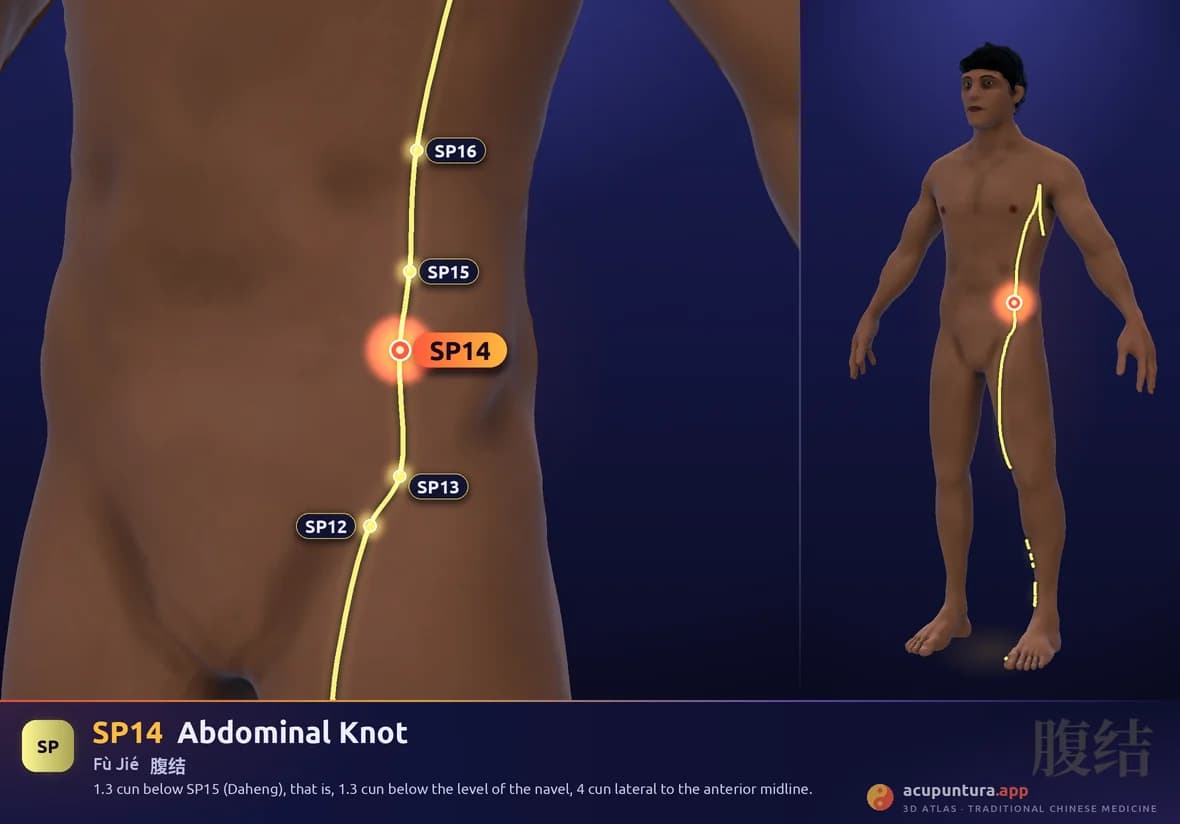
1.3 cun below SP15 (Daheng), that is, 1.3 cun below the level of the navel, 4 cun lateral to the anterior midline.
Main function
Regulates the Qi of the Lower Jiao, strengthens the Spleen, relieves pain.
Therapeutic indications
- Abdominal pain
- diarrhea
- constipation
- dysentery
- periumbilical pain
- hernia
- cough
Name and classical tradition
Fujie, 腹结, is the “Abdominal Knot.” 腹 is the belly; 结 (結) means to tie or gather. A modern gloss explains that Qi and Blood, as they descend from SP13, knot together here. What is most interesting about the point, however, is not that interpretation but the history of its name.
According to the sources consulted, the Zhenjiu Jiayi Jing (Systematic Classic of Acupuncture and Moxibustion) originally called it 腹屈, “Abdominal Fold,” and gave 腹結 as an alternative name. It was from Sun Simiao’s Beiji Qianjin Yaofang (Essential Formulas for Emergencies Worth a Thousand Gold), in the seventh century, that 腹結 became the main name. The change between two works of known dates, one from the third century and the other from the seventh, shows how the nomenclature gradually settled. The literal quotations from both texts have not been verified. The same pattern recurs at SP20.
The reference works also record the names 肠结, “Intestinal Knot,” 肠窟, “Intestinal Cave,” and 临窟.
Other names
- 腹結Jiayi Jing