Traditional Chinese Medicine channel
Spleen Channel
足太阴脾经Earth09:00 - 11:0021 pointsSP1 → SP21
Description
The Spleen channel governs the transformation and transportation of nutrients and fluids in the body. It is essential for the production of Qi and Blood and for holding the organs in place. Imbalances can cause digestive problems, fatigue, abdominal distension, easy bruising, and difficulty concentrating. Closely tied to the capacity for reflection and a balanced concern for others, it influences our ability to process information and thoughts clearly.
Main functions
- Governs the transformation and transportation of food and fluids
- Controls the Blood
- Strengthens the muscles and limbs
- Governs the lips
- Opens into the mouth
Pathway
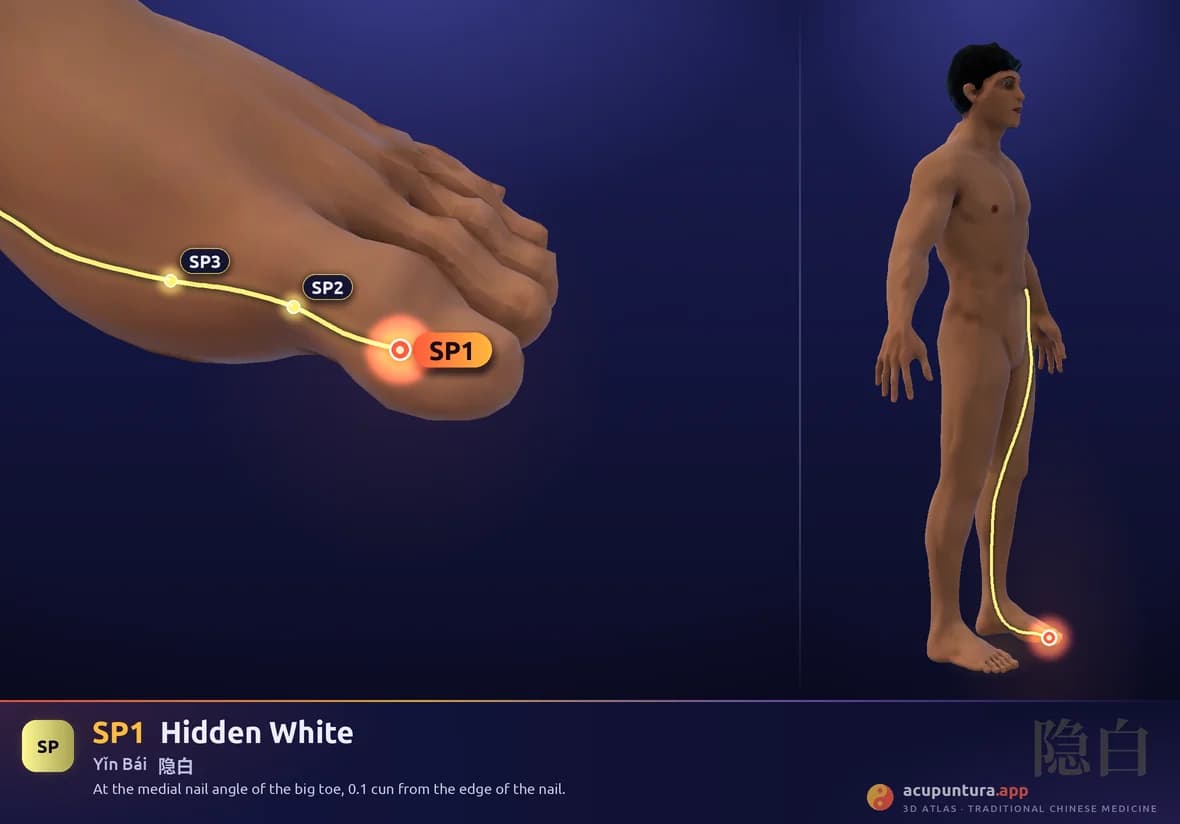
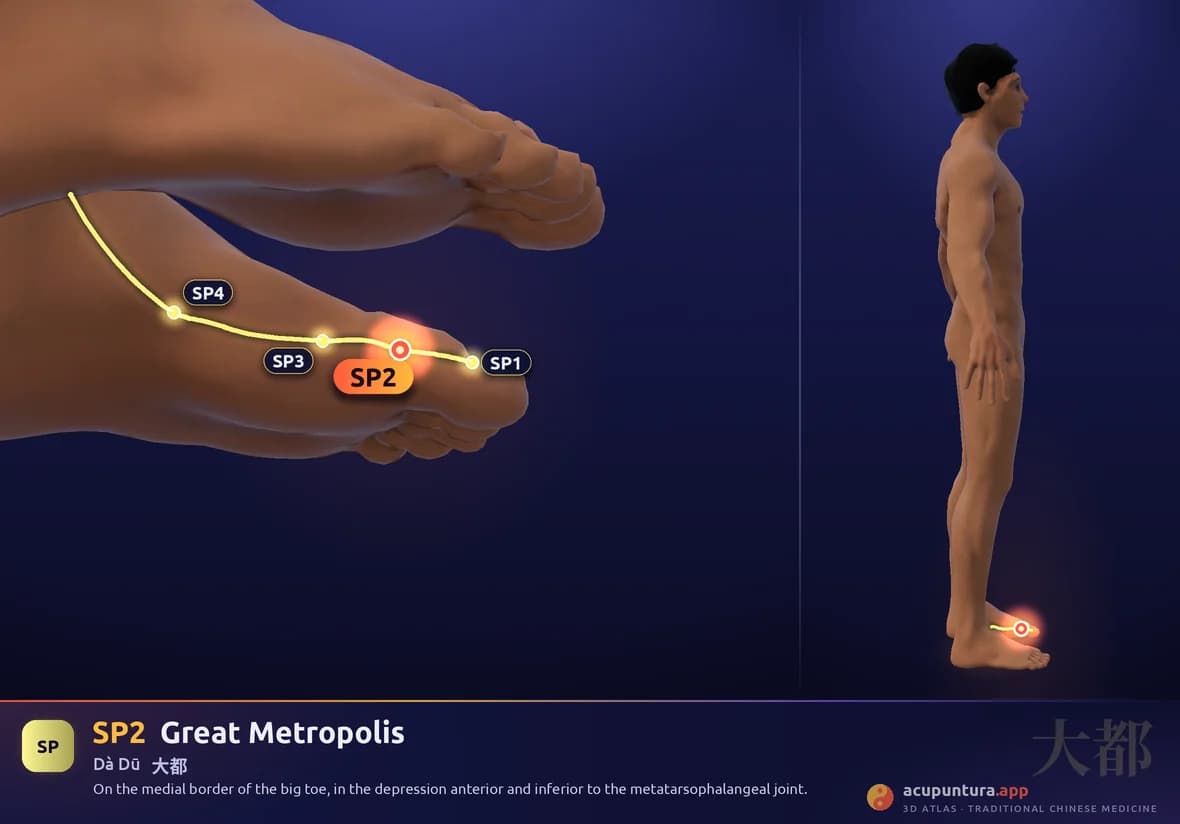
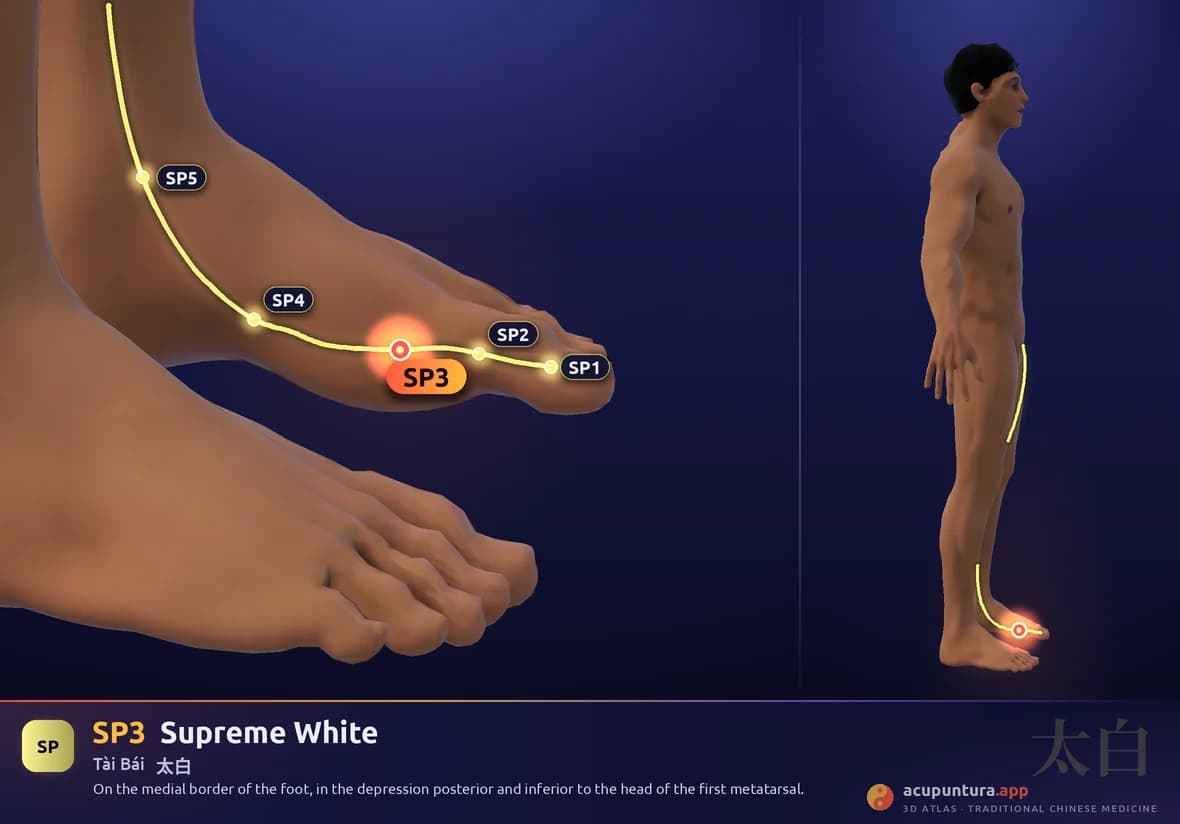
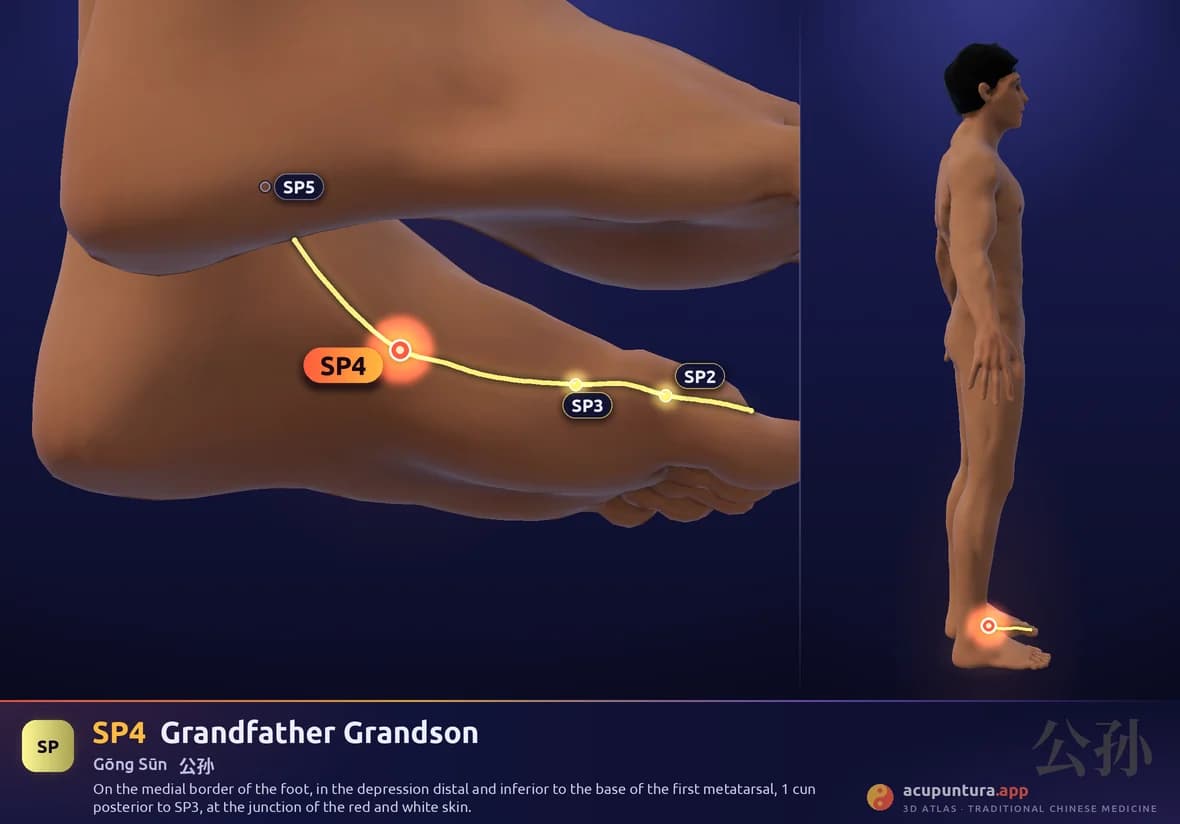
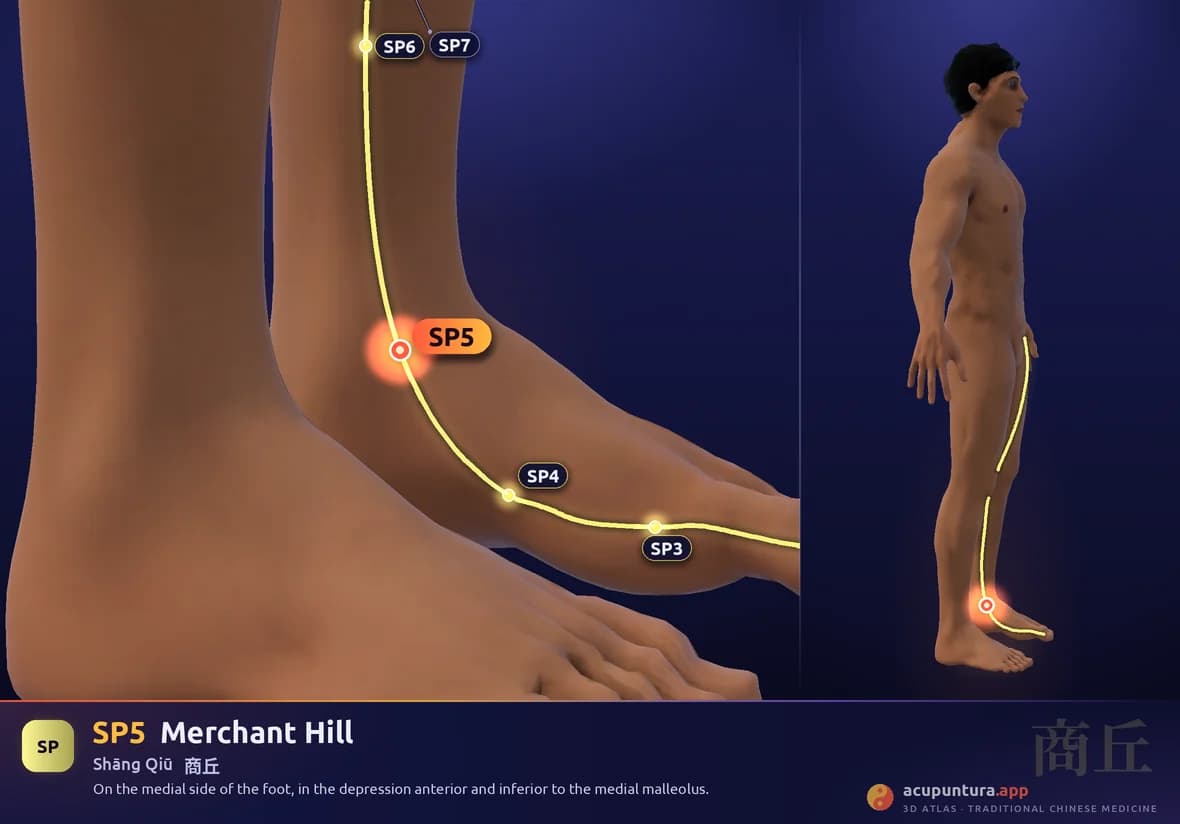
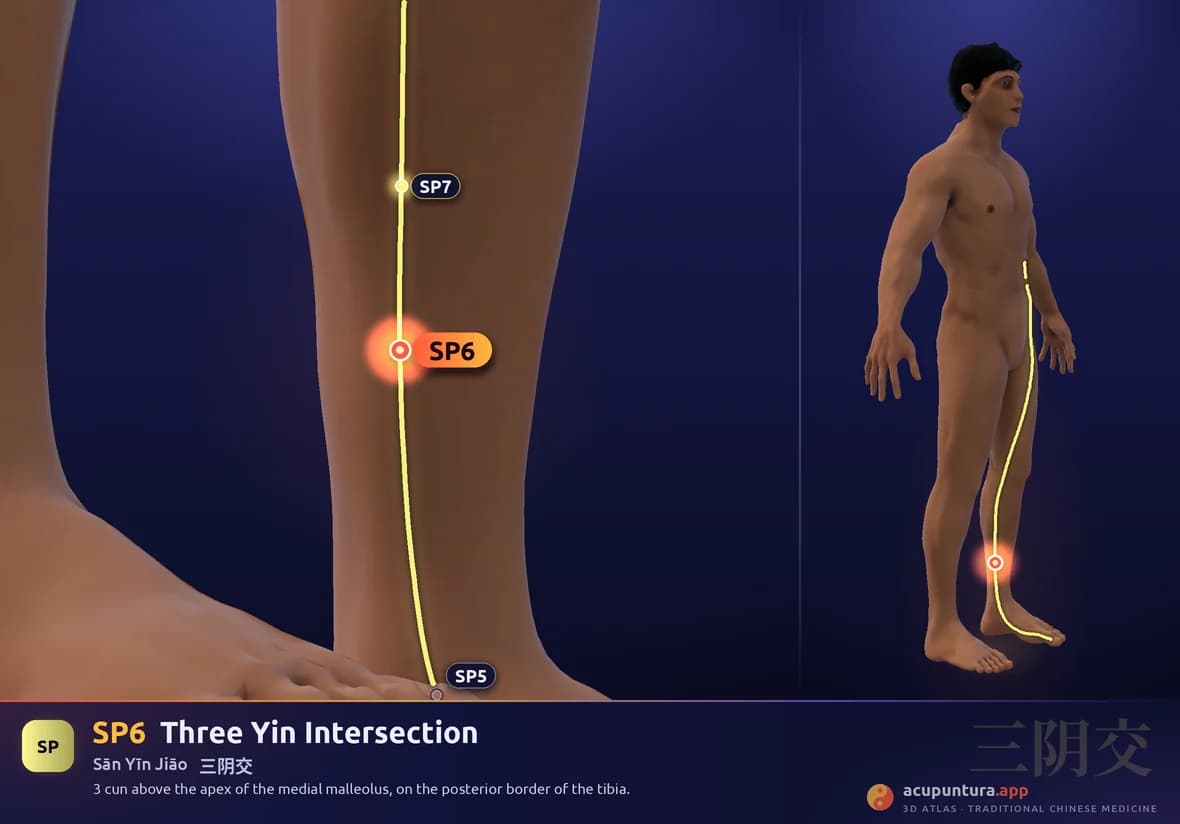
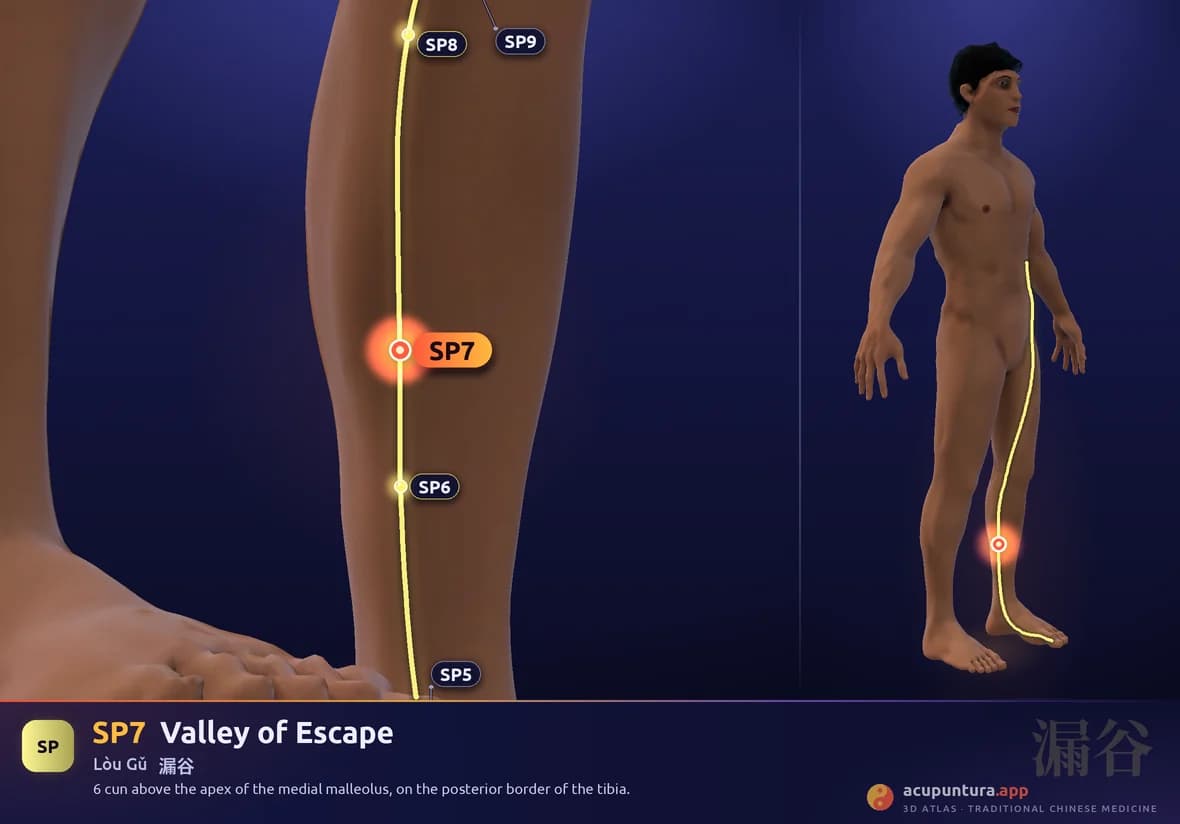
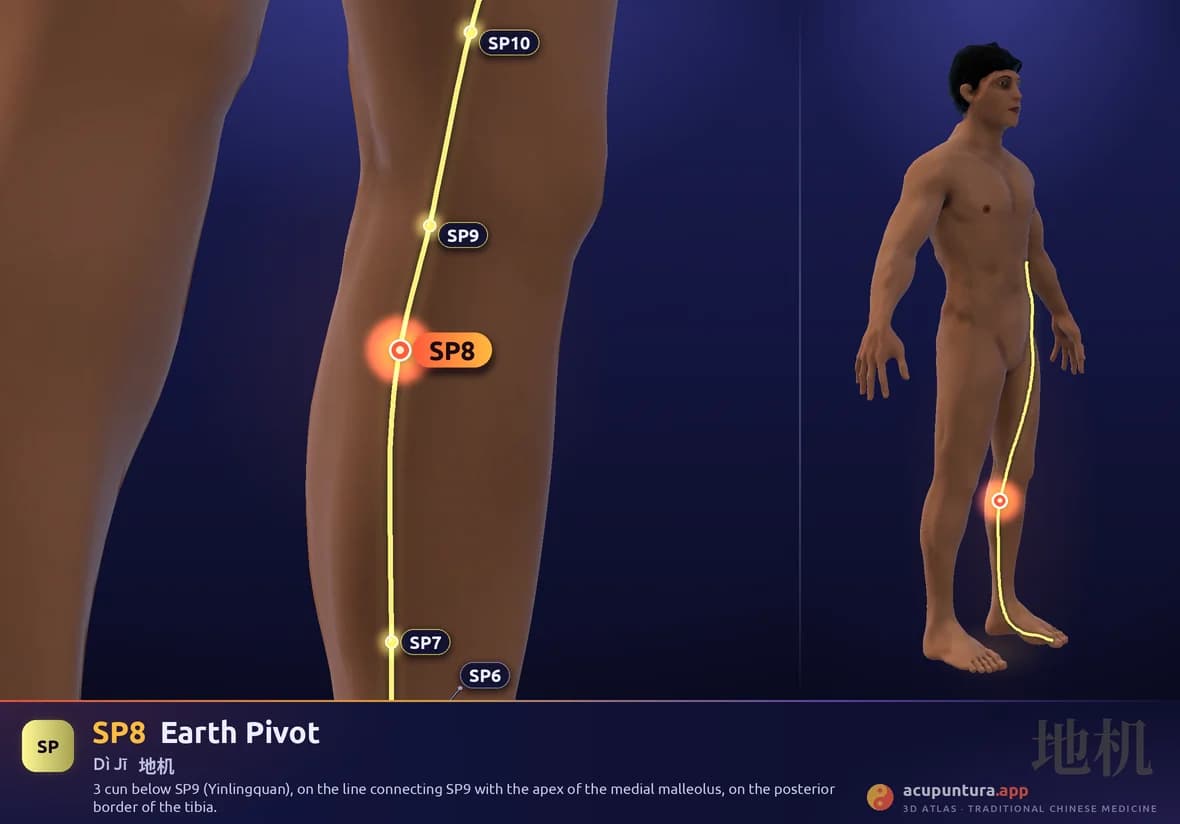
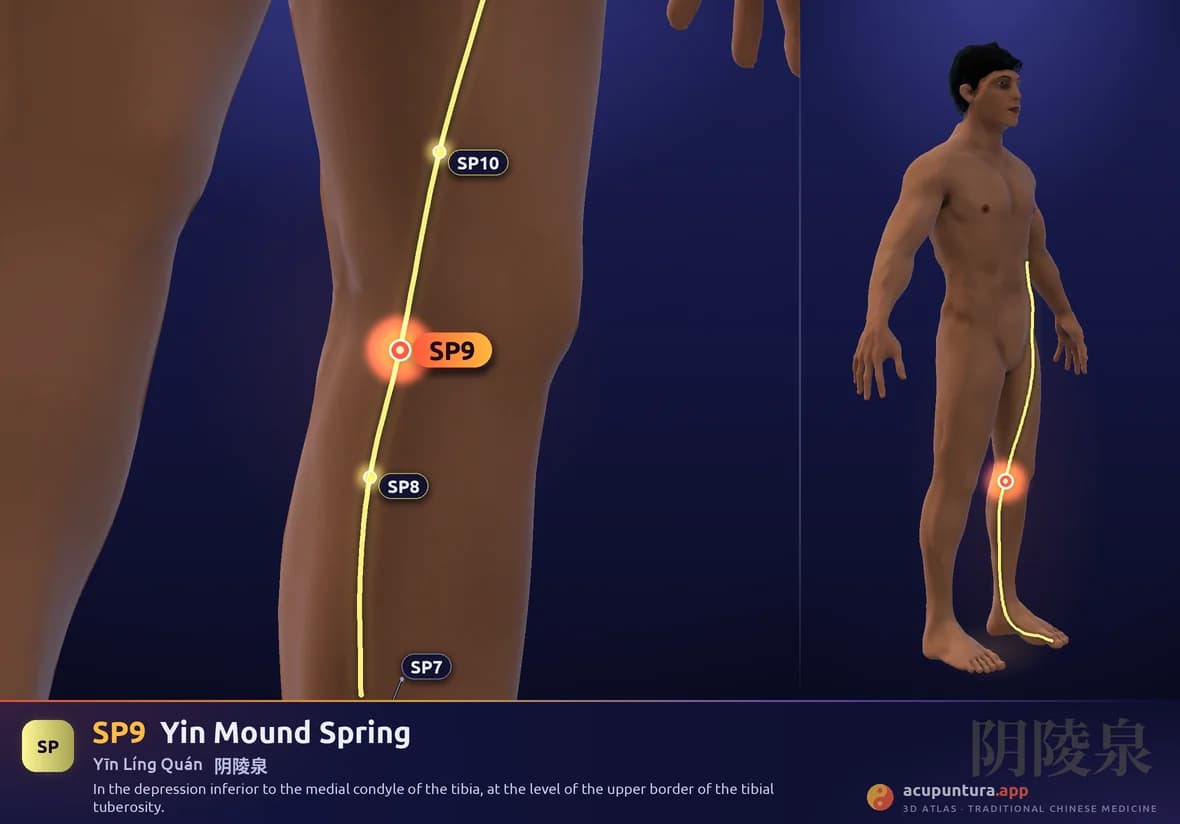
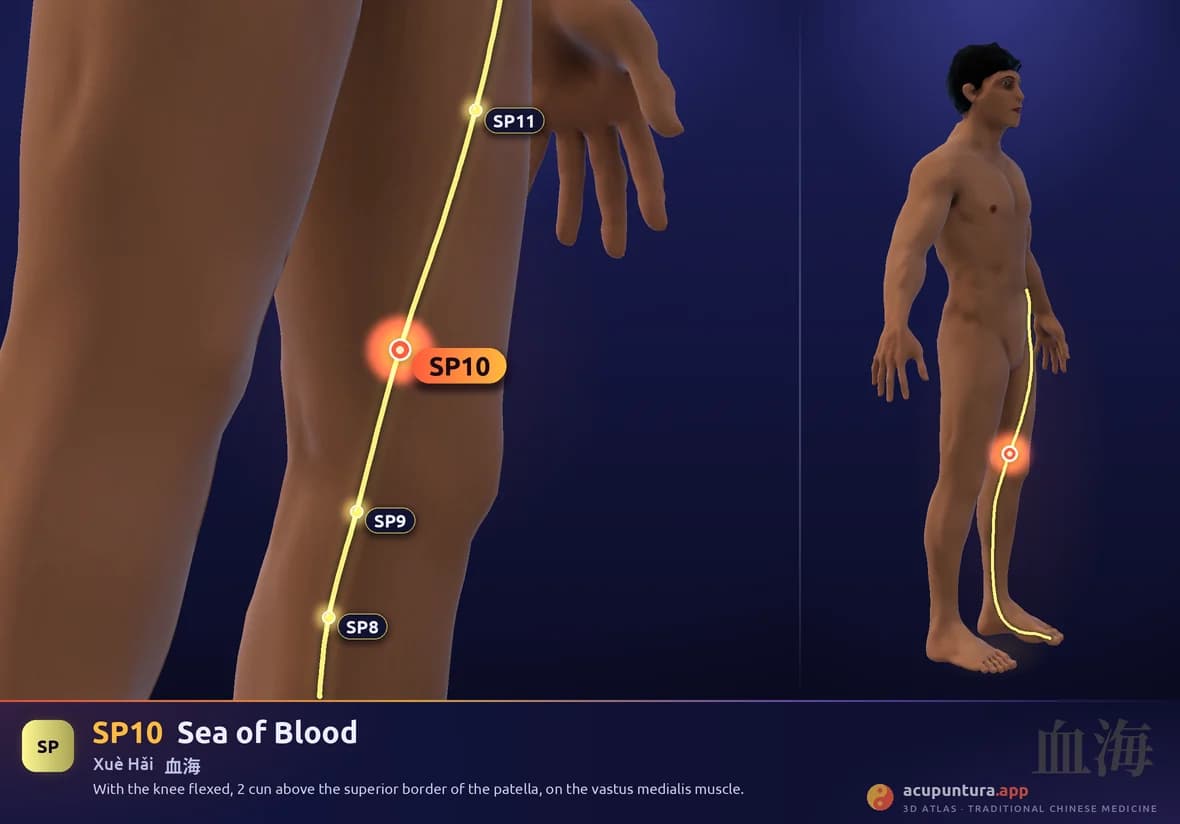
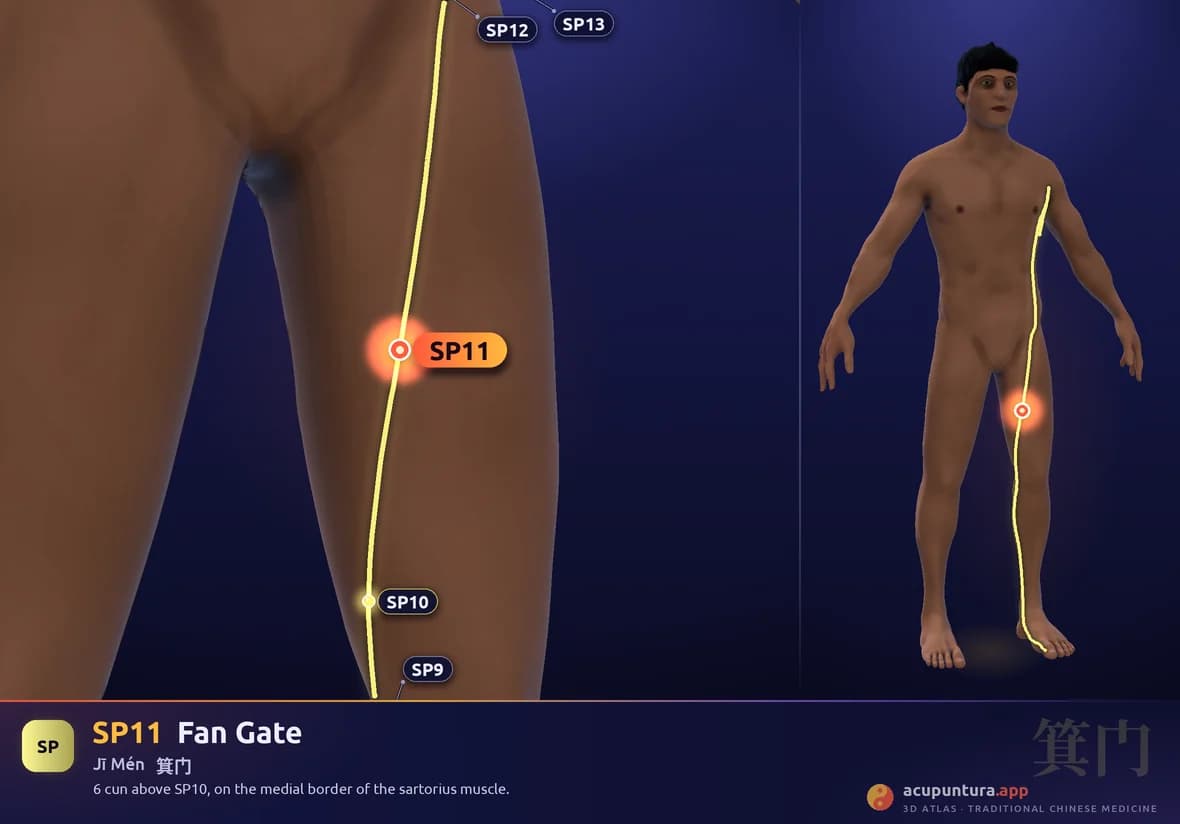
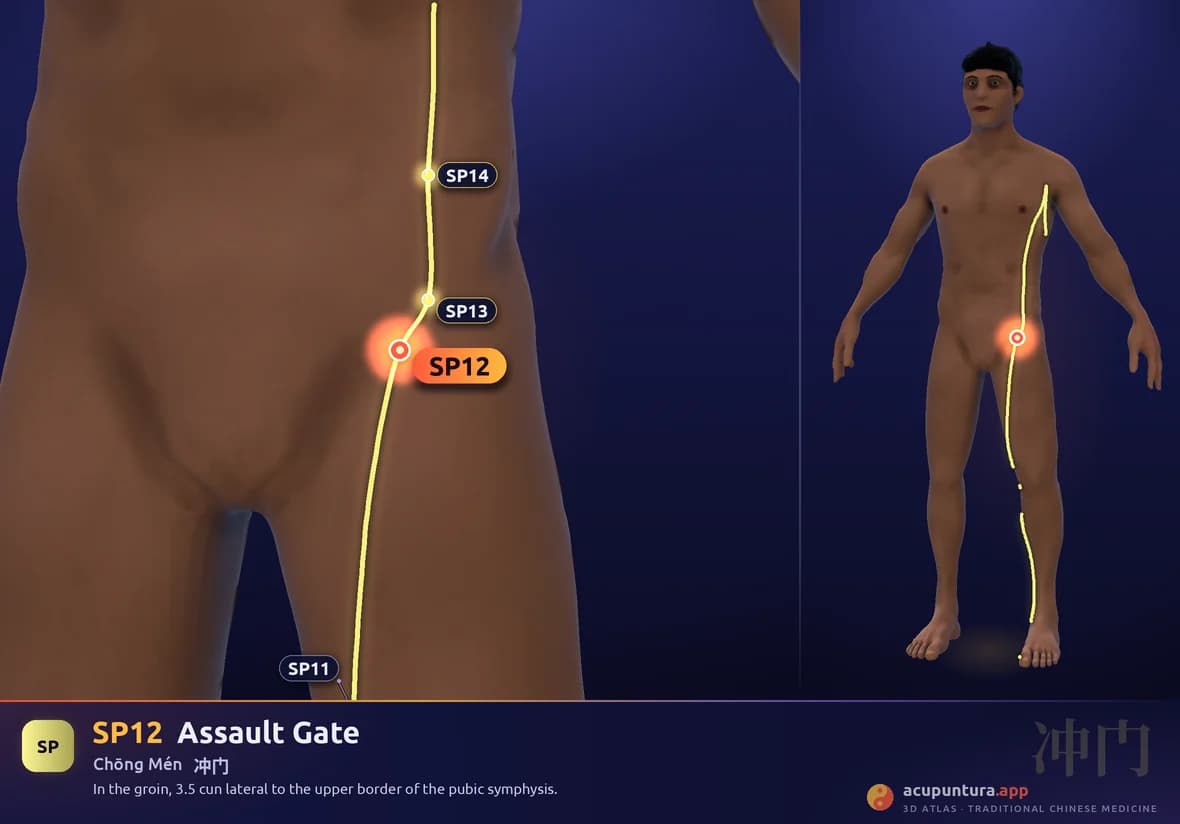
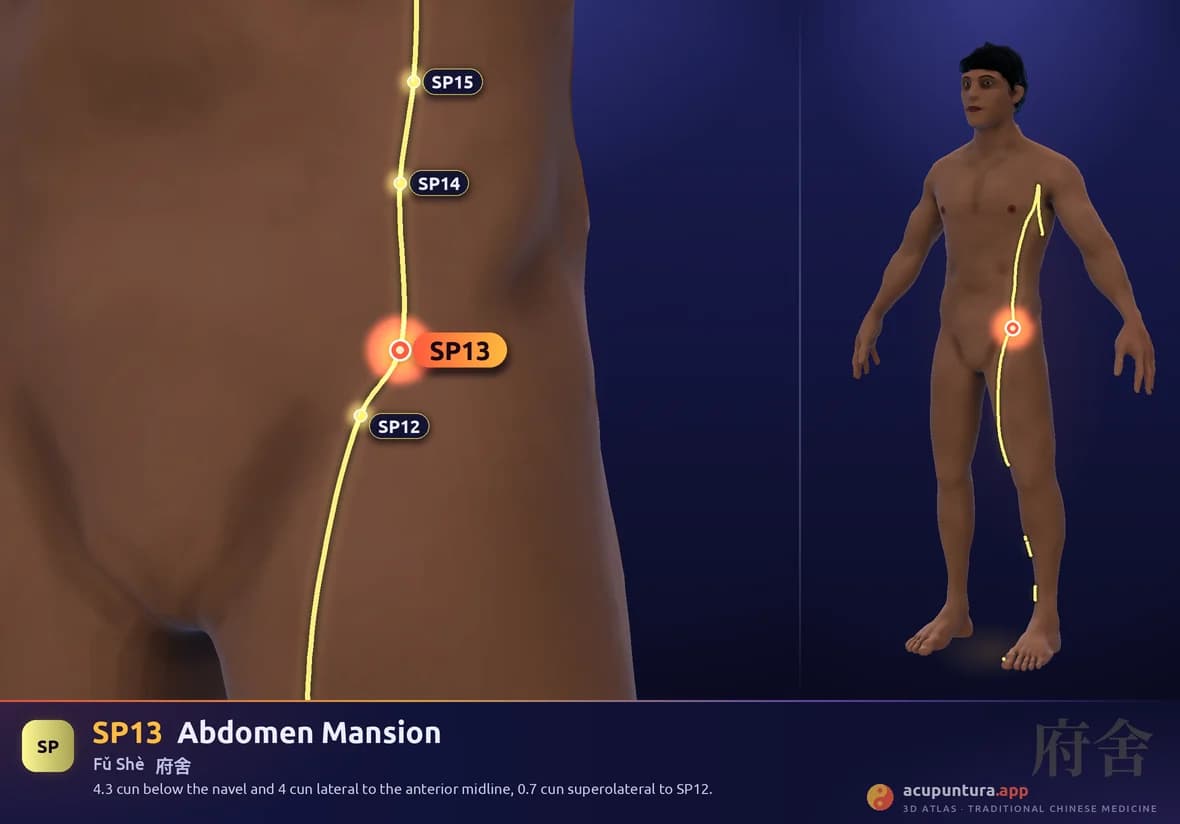
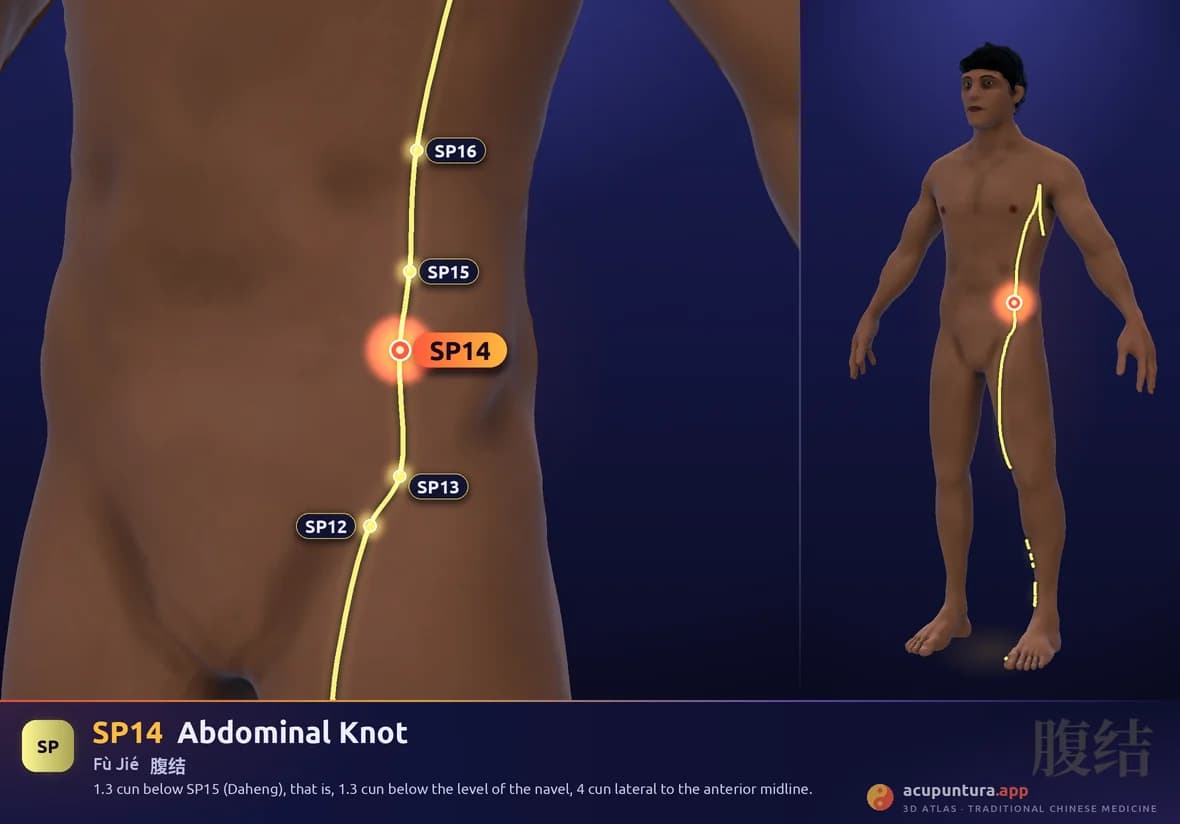
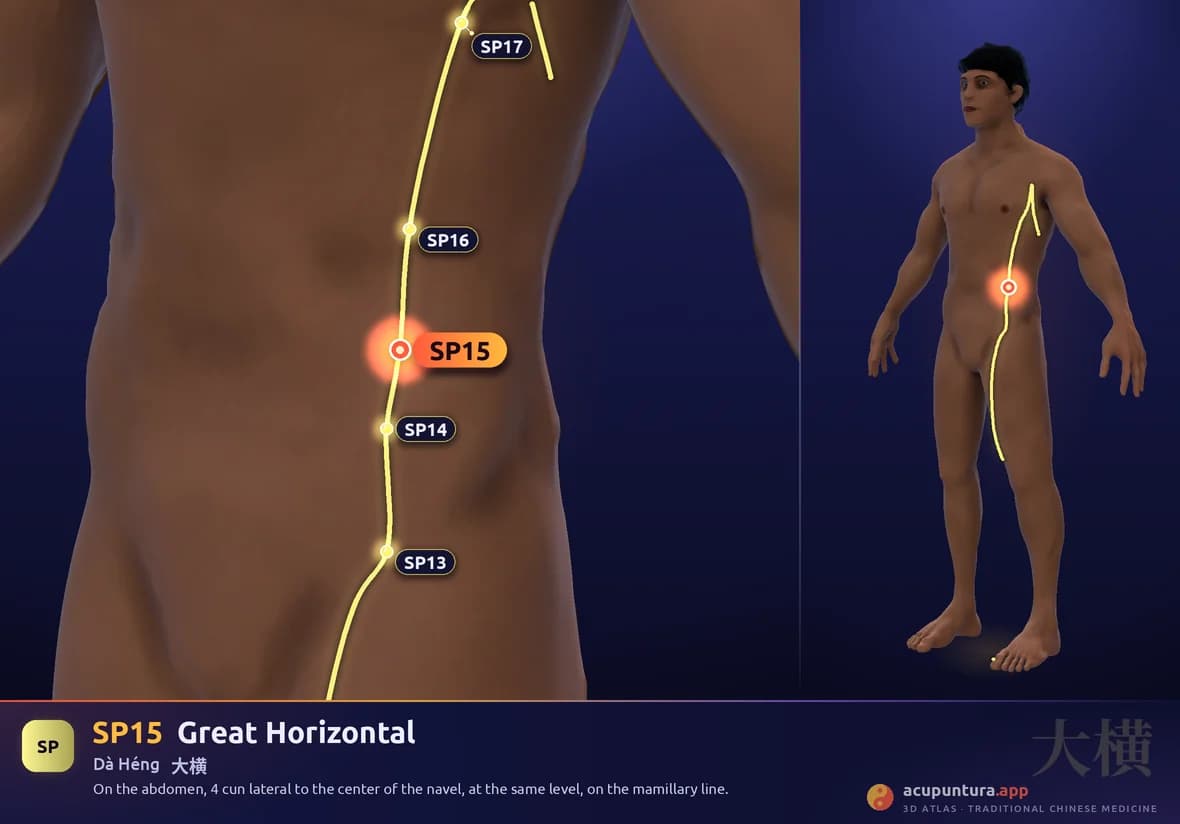
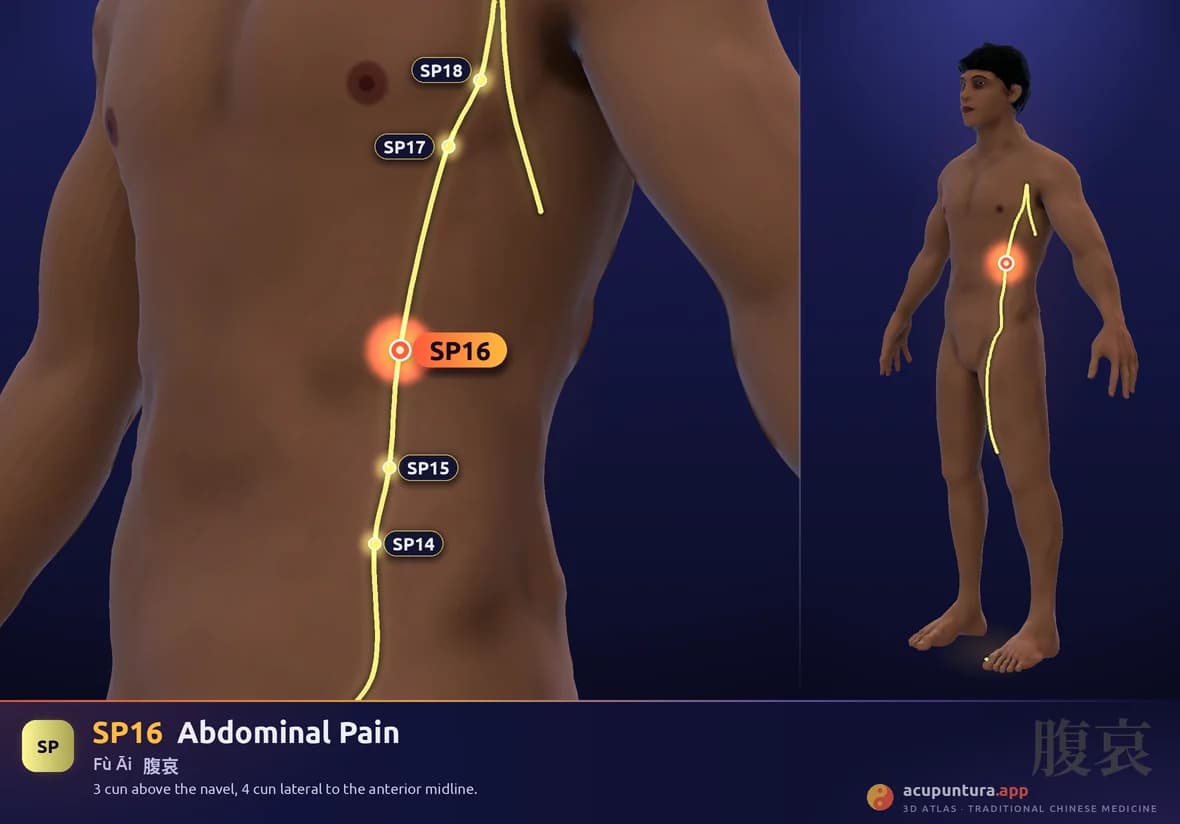
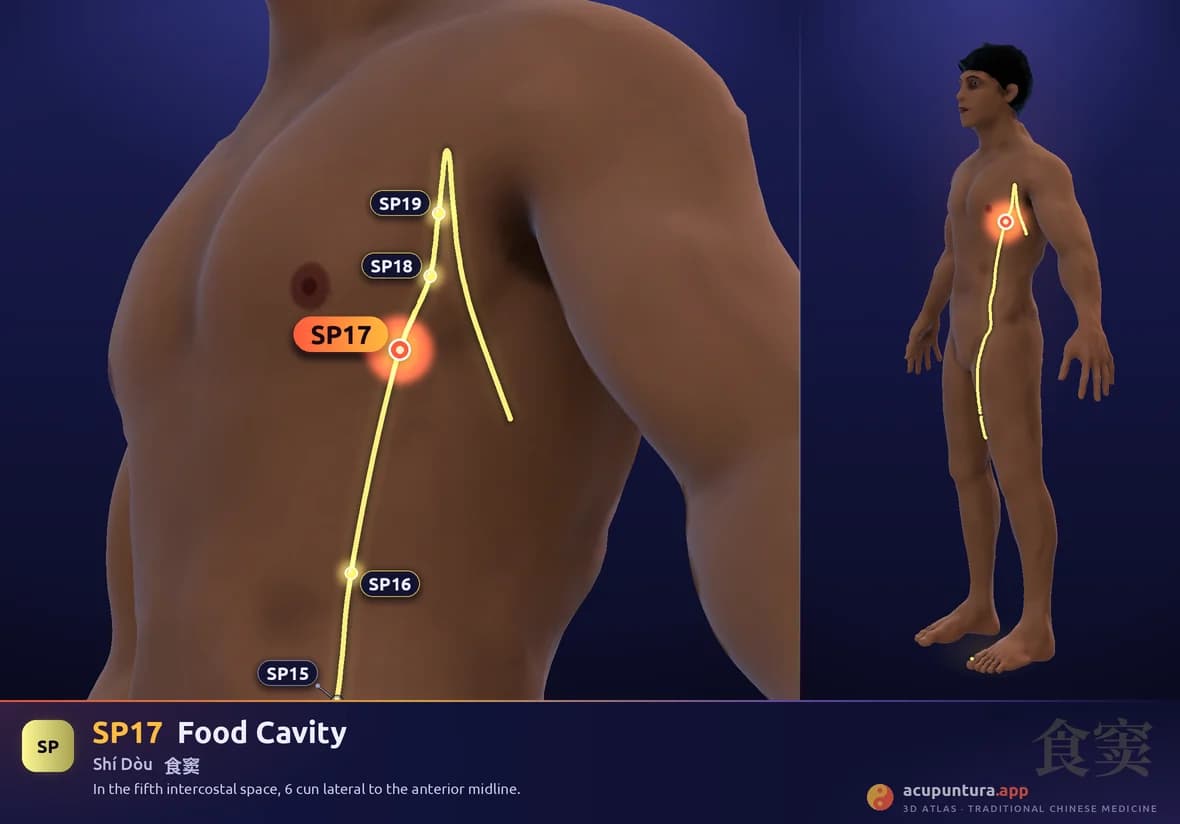
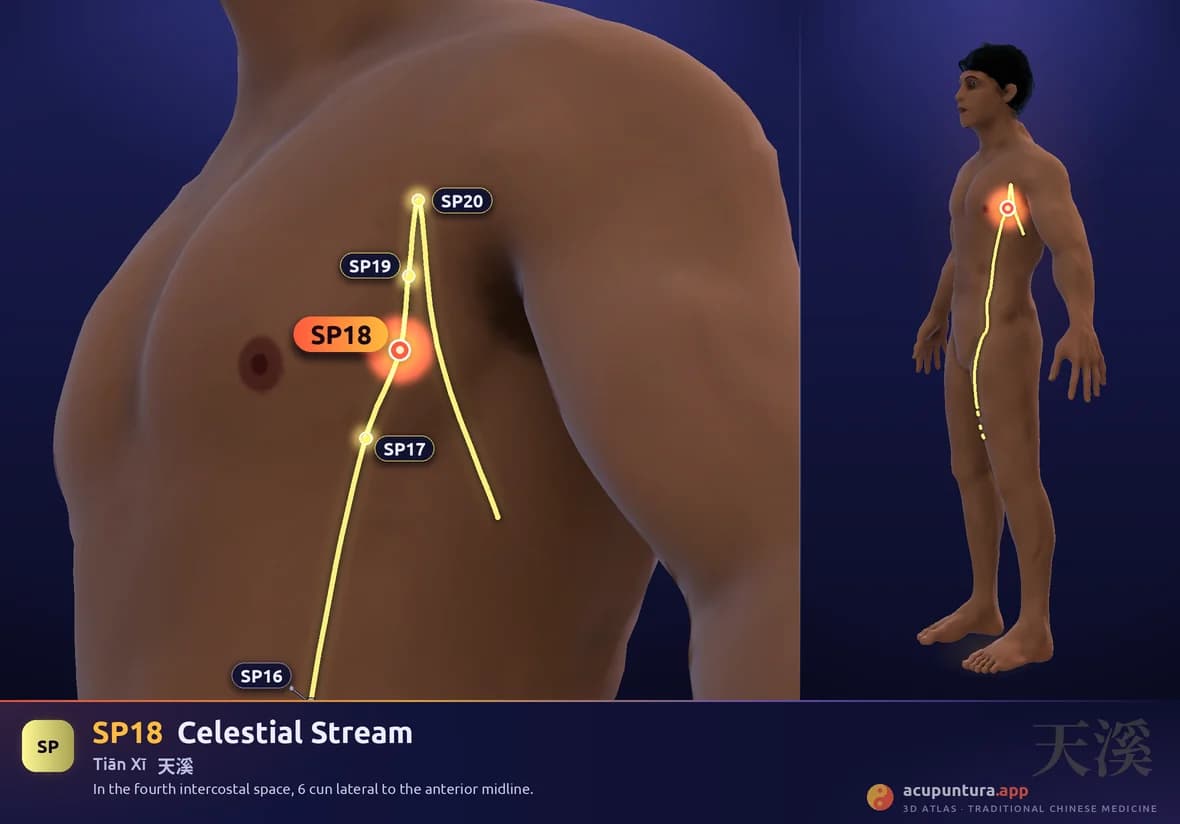
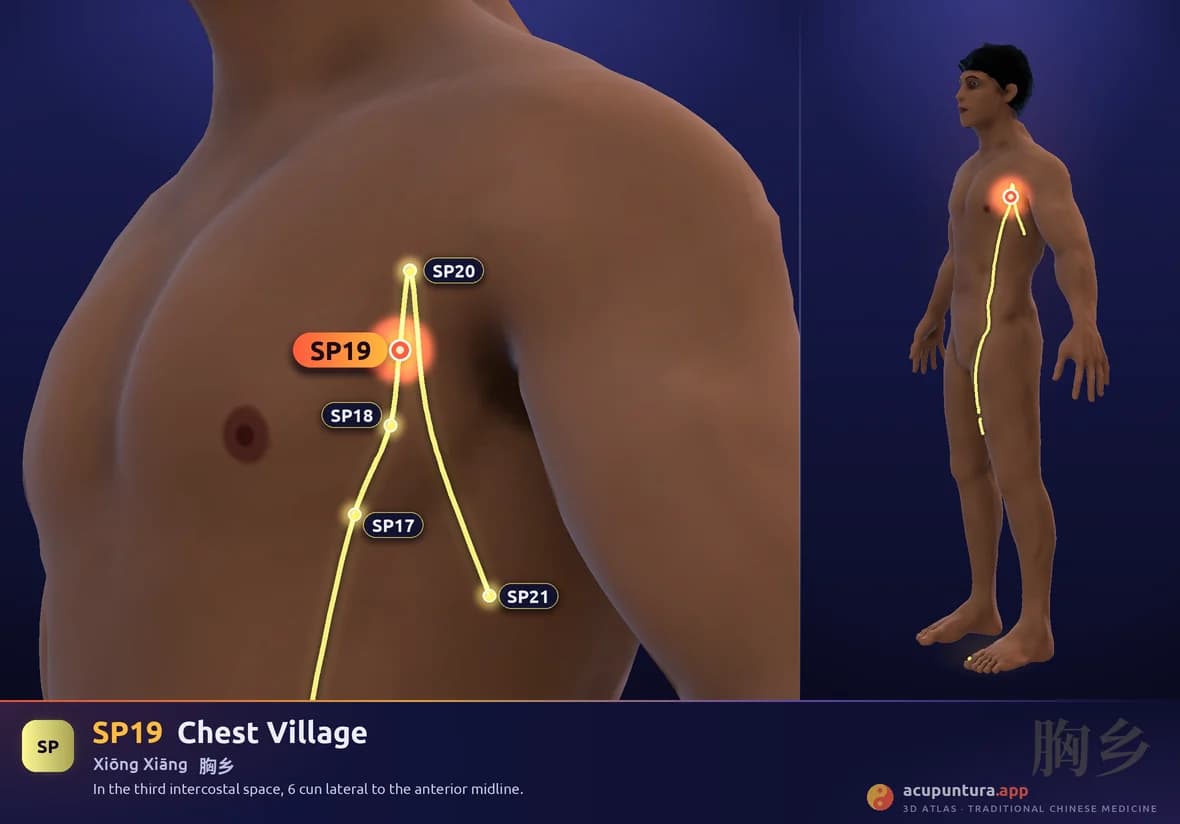
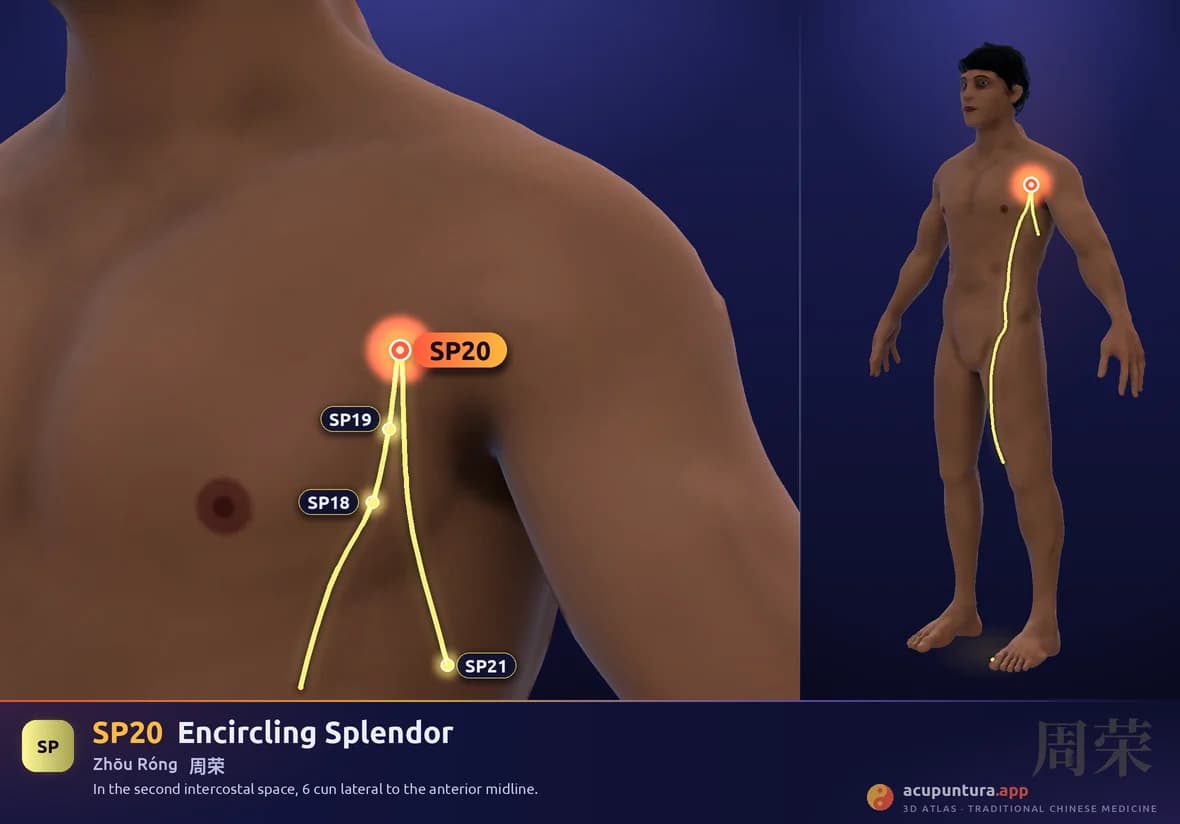
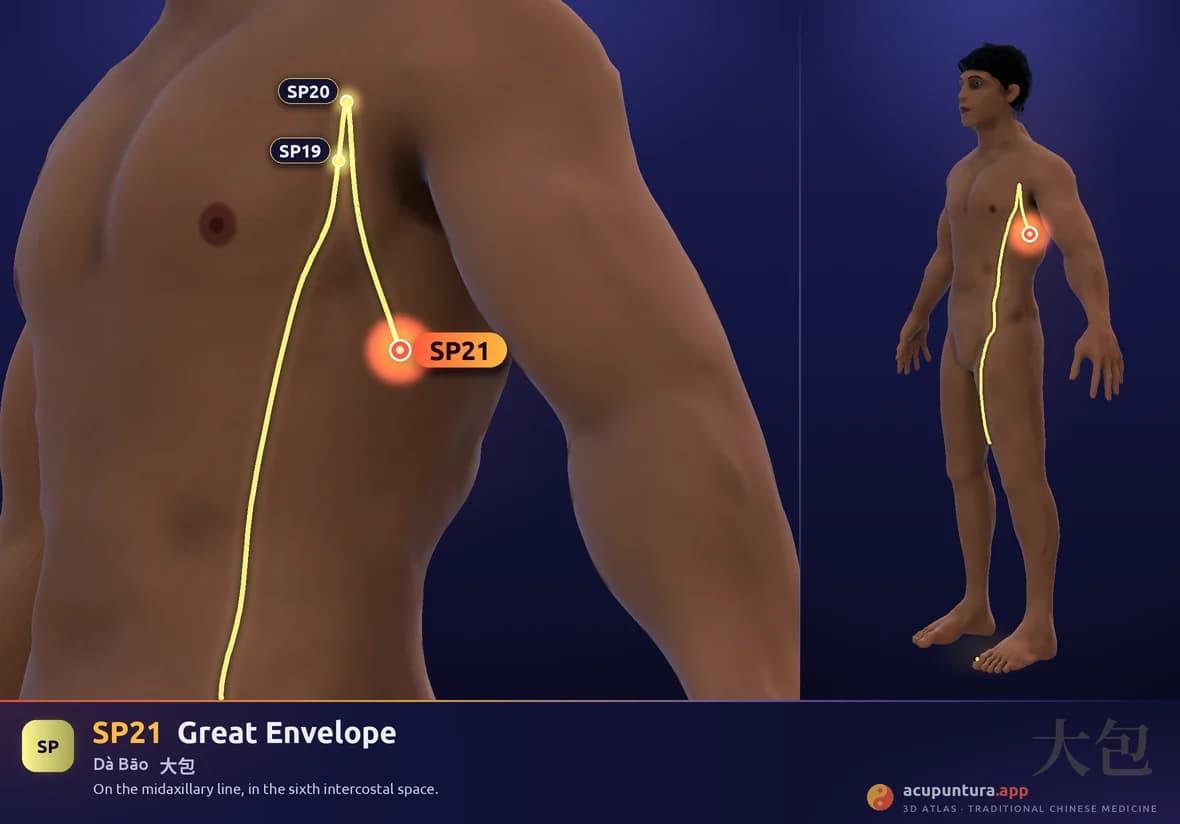
It begins at the medial nail angle of the big toe (SP1), ascends along the inner side of the foot, leg, thigh, abdomen, and chest, and ends on the midaxillary line, in the sixth intercostal space (SP21).
The channel in the Lingshu
“脾足太陰之脈,起於大指之端.” The Spleen channel begins at the tip of the big toe, at SP1, follows the border of the white flesh, passes behind the round bone at the base of the toe, and climbs in front of the medial malleolus. On the leg the Lingshu (Spiritual Pivot) specifies a crossing: “交出厥陰之前,” at mid-shin it emerges in front of the Jueyin of the Liver, which until then had run ahead of it. It rises along the inner thigh, enters the abdomen, belongs to the Spleen and connects with the Stomach, crosses the diaphragm and reaches the tongue: “挾咽,連舌本,散舌下,” it skirts the throat, joins the root of the tongue, and spreads out beneath it. A branch runs from the Stomach to the heart, where the next channel begins.
The root of the tongue explains the first of its disorders. Those of the “是動” group begin there, with “舌本強,” a stiff tongue, and go on to digestion: vomiting after eating, stomach pain, a swollen abdomen, belching, and a characteristic relief, “得後與氣,” on passing stool or gas. The disorders of the Spleen itself add jaundice, diarrhea, and swelling of the inner knee and thigh.
The chapter gives this channel two collaterals, something it does for no other channel. One is the ordinary one, “足太陰之別,名曰公孫,” Gongsun, SP4, which separates toward the Yangming. The other is the great collateral, “脾之大絡,名曰大包,” Dabao, SP21, which emerges three cun below the armpit and spreads across the chest and flanks.