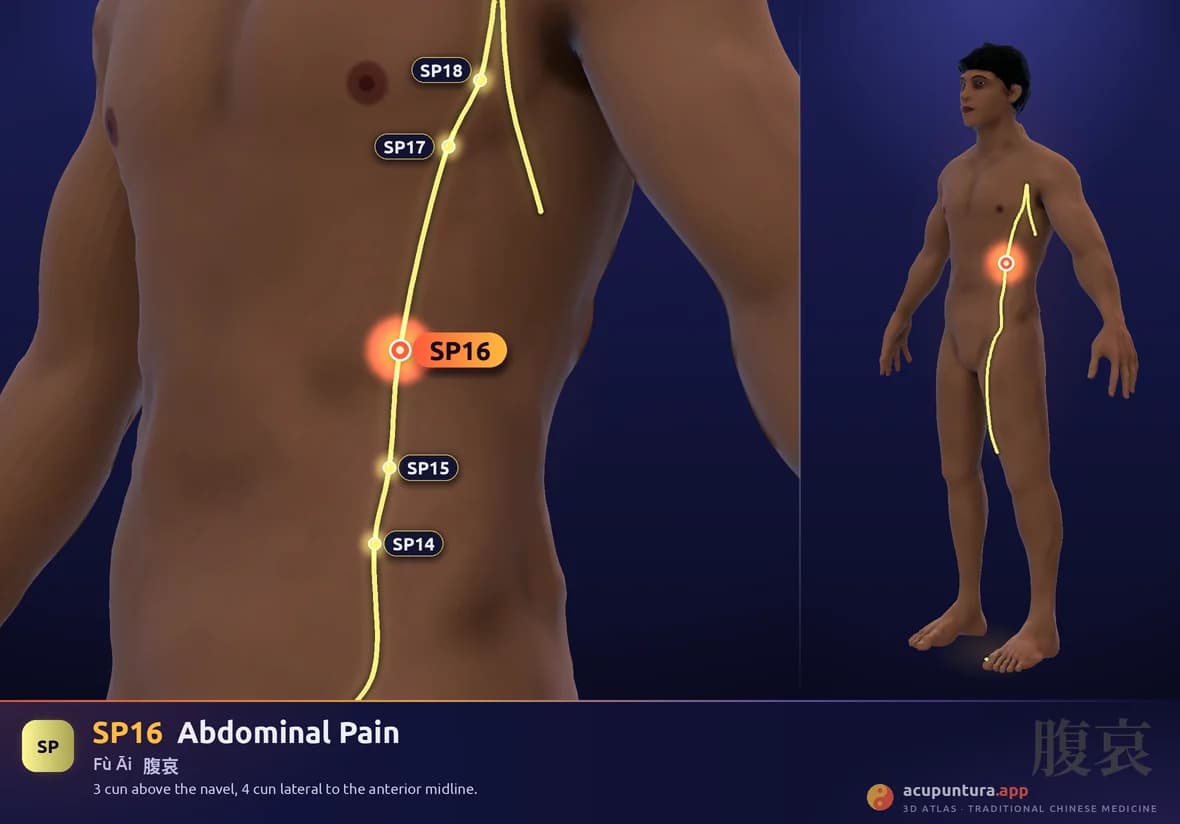
Spleen Channel
Abdominal Pain
腹哀Fù ĀiAnatomical location
3 cun above the navel, 4 cun lateral to the anterior midline.
Main function
Regulates the Spleen and Stomach, relieves abdominal pain.
Therapeutic indications
- Abdominal pain
- diarrhea
- constipation
- vomiting
- Indigestion
- Dysentery
Name and classical tradition
Fuai, 腹哀, combines 腹, the abdomen, and 哀, grief or lament. The usual translation, “abdominal sorrow,” comes close to the sense of a belly that complains. A very elaborate modern gloss circulates in which Dampness arriving from SP15 would damage the Earth of the Spleen, and the Spleen would then lament that it cannot nourish its child, the Lung. It is the most speculative interpretation in the whole channel, and it should not be given more weight than it deserves.
What is known with more certainty is that the point is a crossing point of the Spleen channel with the Yin Wei Mai, like SP15 and SP13, and that sources refer it back to the Zhenjiu Jiayi Jing (Systematic Classic of Acupuncture and Moxibustion), without a literal citation. The Jiayi Jing itself uses it as a reference to locate Daheng three cun below.