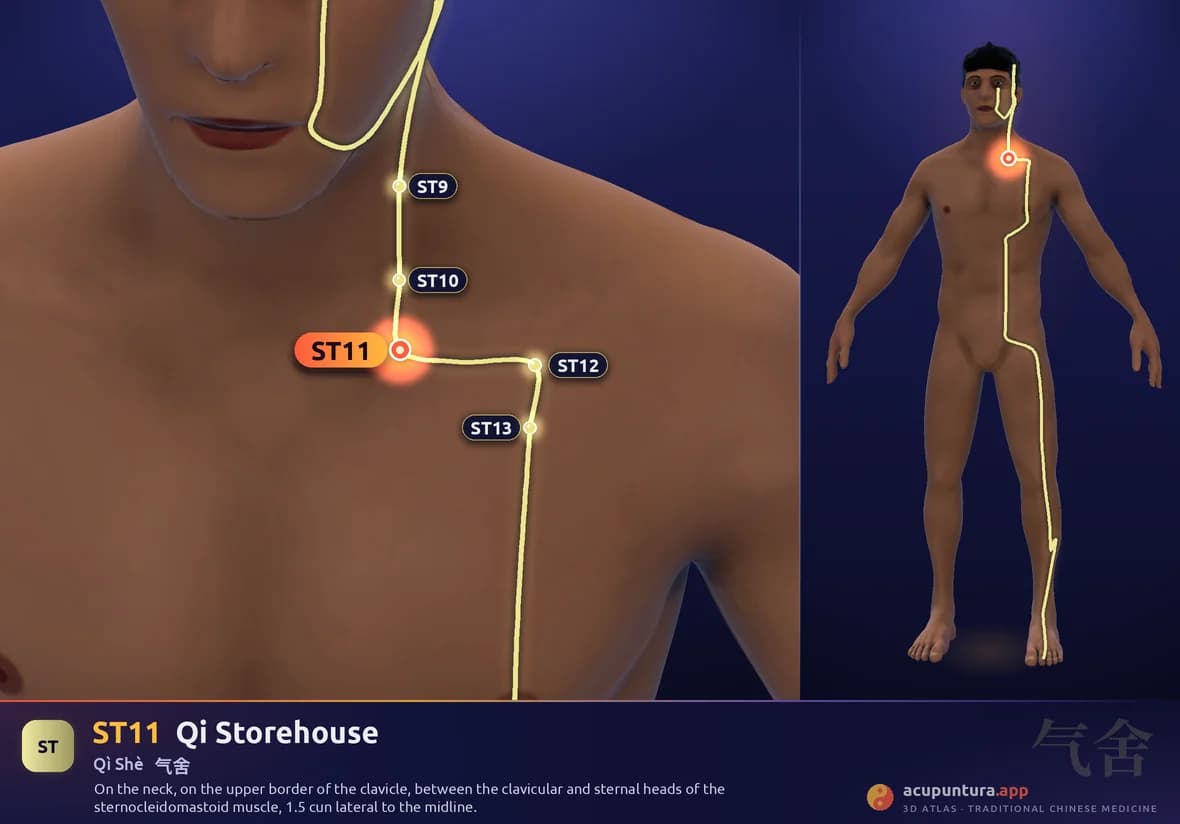
Stomach Channel
Qi Storehouse
气舍Qì ShèAnatomical location
On the neck, on the upper border of the clavicle, between the clavicular and sternal heads of the sternocleidomastoid muscle, 1.5 cun lateral to the midline.
Main function
Regulates Qi, benefits the throat, relieves cough, descends rebellious Qi.
Therapeutic indications
- Sore throat
- cough
- asthma
- hoarseness
- goiter
- scrofula
- neck stiffness
- hiccups
Name and classical tradition
Qishe, 气舍, is the “dwelling of the breath.” 气 (氣) is Qi and also the air of respiration; 舍 is the house, the lodging where one stops. The point lies at the base of the neck, beside the trachea, above the clavicle, and the plain reading of the name, the place where the breath lodges, is the most credible. A modern energetic gloss without classical citation also circulates.
The first work to record it is the Zhenjiu Jiayi Jing (Systematic Classic of Acupuncture and Moxibustion). No alternative names or classical commentaries are known. It opens the series of points that the Stomach channel devotes to Qi in the upper trunk and which continues with ST13, the “door of Qi.”