Stomach Channel
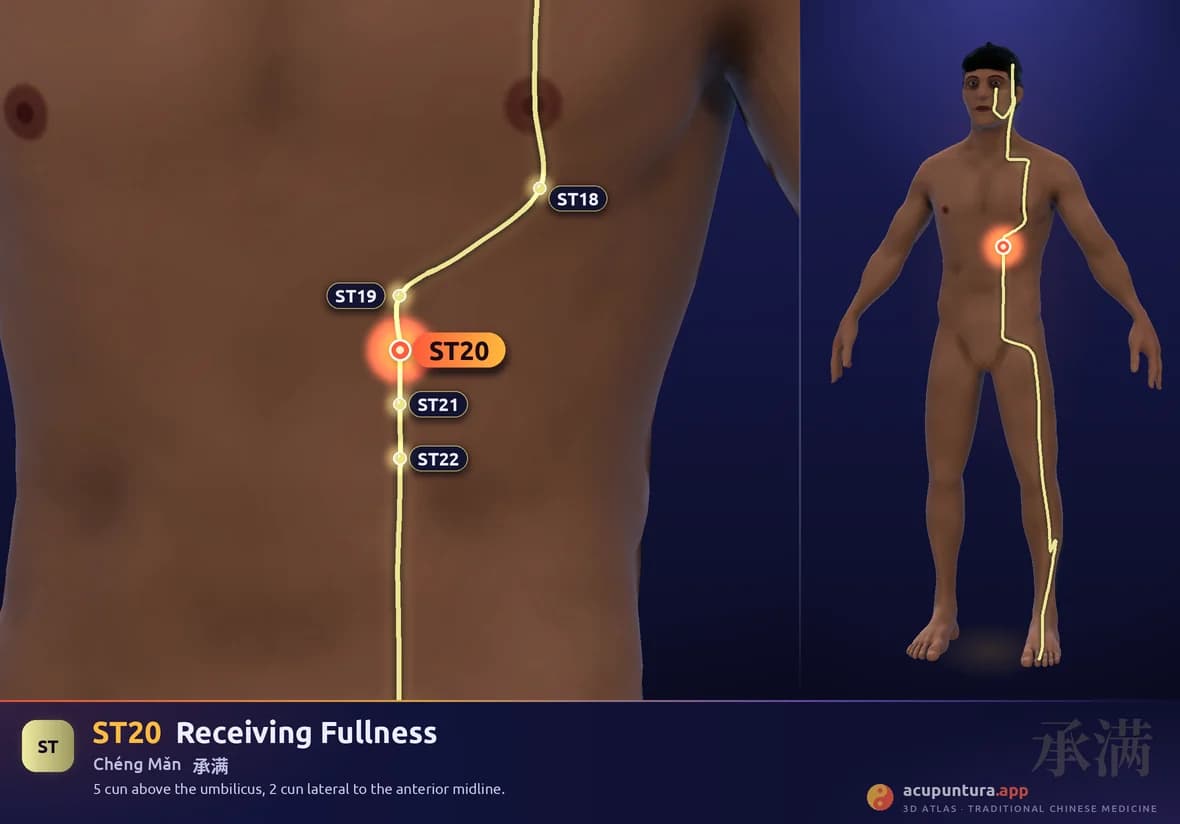
Receiving Fullness
承满Chéng MǎnAnatomical location
5 cun above the umbilicus, 2 cun lateral to the anterior midline.
Main function
Regulates Stomach Qi, descends rebellious Qi, relieves epigastric pain, strengthens the Spleen.
Therapeutic indications
- Epigastric pain
- nausea
- vomiting
- loss of appetite
- jaundice
- gastric pain
- abdominal distension
- lack of appetite
Name and classical tradition
Chengman (承满) is “receiving fullness.” 承 means to receive; 满 (滿) means full, filled to the brim. It lies five cun above the umbilicus, just below ST19, Burong, “no room.” The two names form a logical pair: above, the stomach can take in no more; here, the arriving food is brimming and is received. The reading rests on the coherence between the two points rather than on a citation.
The first work to record it is the Zhenjiu Jiayi Jing (Systematic Classic of Acupuncture and Moxibustion). No alternative names or ancient commentaries are known for it. It is the second piece in the sequence of digestive names of the epigastrium, which continues with ST21.